
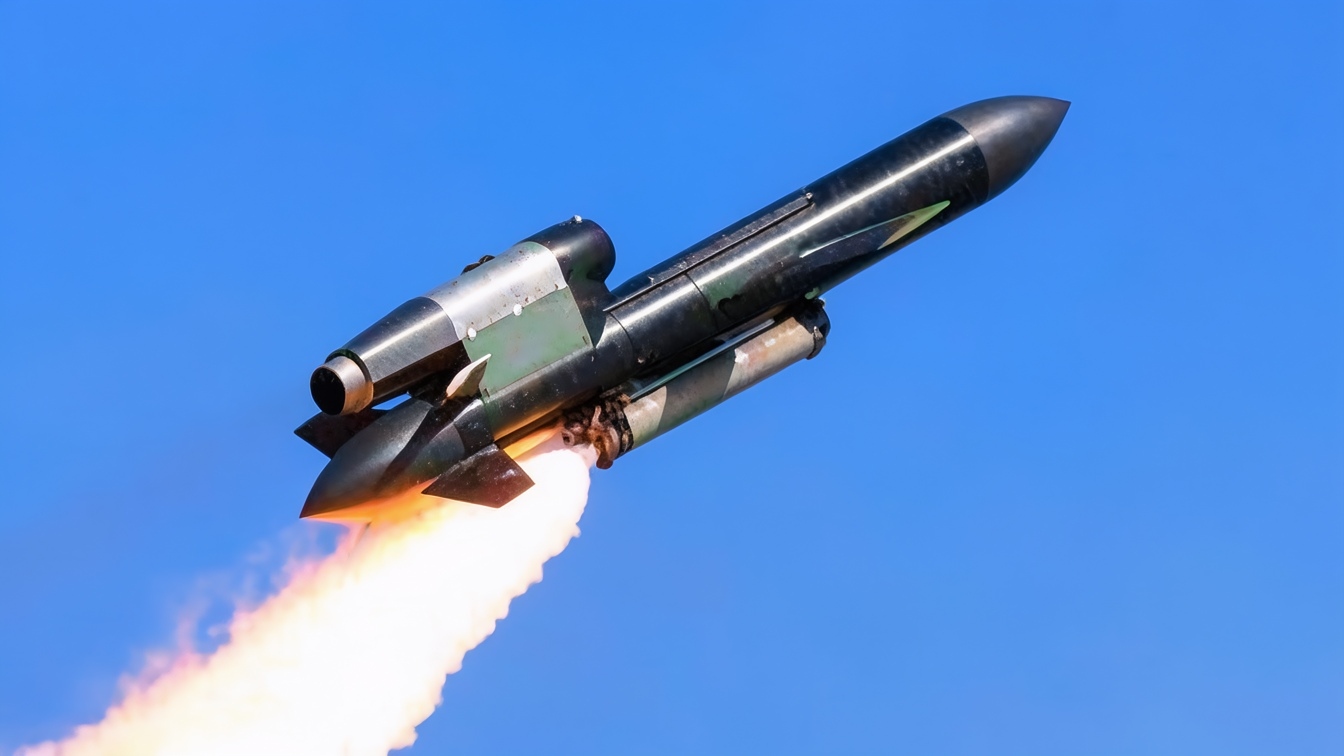
Ukraine’s long-range drone and missile strike campaign intensified yet again overnight on June 24-25, striking two oil refineries in Ufa, some 1,500 kilometers from the front lines.
Additional strikes occurred at an oil depot in the Krasnodar region, some 300 kilometers from Ukraine. Ukrainian President Volodymyr Zelenskyy addressed the strikes in his evening address on Wednesday, describing them once again as part of a “long-range sanctions” pressure campaign designed to neutralize Russia’s wartime economy.
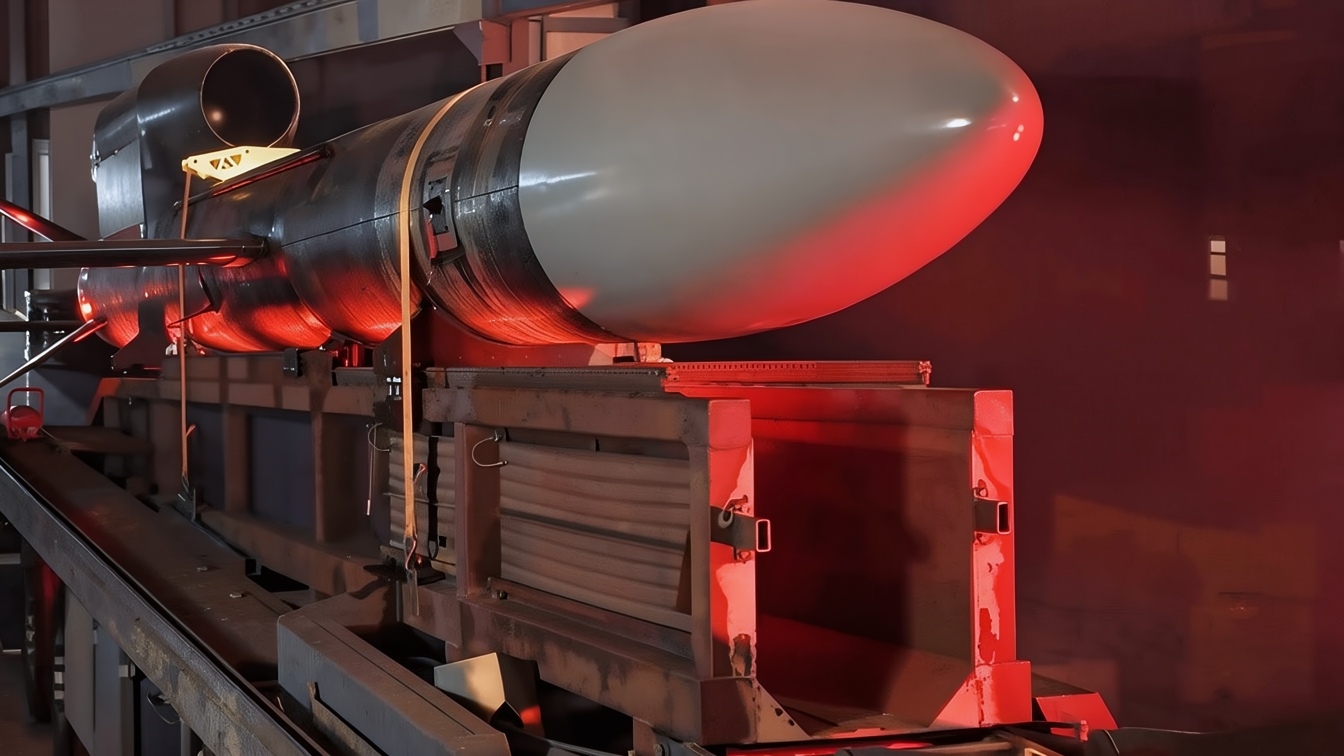
Ukraine Cruise Missile 2026. Image Credit: Creative Commons.
During the address, he also announced that Moscow is redeploying large numbers of air defense systems to protect Moscow, Valdai, and the Kerch Bridge.
Newfound Confidence
Ukraine’s newfound confidence is based on the country’s burgeoning drone manufacturing industry and domestically manufactured long-range missiles – and after weeks of proving it can cause damage, Kyiv is now setting out to win the war.
Ukrainian attacks are knocking out major refineries and causing fuel shortages so severe that Moscow is looking to its neighbors, including Kazakhstan, to help plug the gap.
Authorities in Crimea have also suspended civilian fuel sales altogether.
And by not attempting to match Russia shell-for-shell on the battlefield, Kyiv is proving that its strategy of long-range precision strikes can win the war.
But there’s more to it than just economic pressure: these long-range strikes are creating conditions that make gains on the front lines even harder to achieve.
Ukraine Was Told It Could Not Win
For much of the war, even many of Ukraine’s supporters argued that outright victory was unrealistic. That view was most explicitly expressed after Donald Trump returned to office.
During the now-infamous Oval Office meeting in February 2026, Trump repeatedly pressured Zelenskyy to make concessions to Moscow and insisted he was gambling with “World War Three.”
Vice President JD Vance even famously lectured Zelenskyy in front of the world’s media, telling the Ukrainian president he should be more thankful for the support he has received from the U.S. so far.
It was shocking, but it was nothing new.
The skepticism already existed.
During Ukraine’s failed 2023 counteroffensive, senior Western military officials acknowledged that Russia’s extensive defense systems and fortifications made a decisive Ukrainian breakthrough unlikely. But then things changed.
Now, Ukraine is producing millions of drones per year and even manufacturing its own long-range drones, striking high-value targets more than 1,500 kilometers into Russia.
And instead of attempting to defeat Russia on the front lines, Kyiv is systematically taking out critical infrastructure that supports its wartime economy.
And the effect is now being seen and felt by regular Russian citizens in economic terms, but also on the front lines.
Russia’s offensive has slowed dramatically, and air defenses are being withdrawn from the front to defend the homeland and Crimea – Moscow’s most important military hub that is now becoming difficult to use.
Russia’s Offensive Loses Momentum
During the first few weeks of the 2022 invasion, Russian forces rapidly seized large areas of southern Ukraine, capturing Kherson and soon establishing a land corridor that linked Russia to occupied Crimea.
Despite Russia’s failure to achieve its goals so far, significant gains have been made throughout the war – but since then, Moscow has seen diminishing returns on the battlefield.
According to the Institute for the Study of War, Russian forces advanced only around 40 square kilometers between December 2025 and May 2026. That’s less than 8% of the territory gained during the same period a year earlier.
Moscow Is Protecting Itself
As the offensive slows, Moscow is also reprioritizing its resources in a way it never expected.
Following strikes in Moscow and elsewhere in Russia, Pantsir air defense systems are being deployed across the capital, and Zelenskyy claims that hundreds more are being moved to Moscow and other major population centers.
Every air defense system moved to a major city is one that cannot be deployed on or near the front lines, creating a cycle that not only hurts Russia’s economy but also diminishes battlefield gains sufficient to justify the damage incurred.
Ukraine Could Win This Now
Since Russia annexed the peninsula in 2014, Crimea has benefited from enormous investment from Moscow.
Beyond its tourist attractions, the peninsula has also served as a critical military hub in southern Ukraine, with everything from fuel and ammunition to troops and armored vehicles moving across it to the front lines.
That logistical advantage is now being steadily eroded by long-range Ukrainian strikes.
In recent days, Ukraine struck bridges over the North Crimean Canal and attacked energy infrastructure and fuel facilities. Military communications sites across the peninsula have also been hit.
The attacks have left roughly half of the peninsula without electricity and forced the banning of fuel sales to civilians.
The damage we’re seeing now proves that the strikes work, but their impact goes beyond the economy. While Ukraine once couldn’t win the war, today it is proving that long-range, precision strikes are forcing Russia to defend its economy, infrastructure, and even its capital city.
The war is not being decided in the trenches as Moscow had hoped, and it may now be decided by drones.
About the Author: Jack Buckby
Jack Buckby is a British researcher and analyst specializing in defense and national security, based in New York. His work focuses on military capability, procurement, and strategic competition, producing and editing analysis for policy and defense audiences. He brings extensive editorial experience, with a career output spanning over 1,000 articles at 19FortyFive and National Security Journal, and has previously authored books and papers on extremism and deradicalization.


