

Israeli Defense Minister Israel Katz sparked concern about renewed fighting with Iran on Monday, warning that Israel could resume military operations against Iran “within two days.”
Katz did not indicate that Israel was looking to initiate aggression, but warned that Iranian missiles or drones targeted at Israeli territory would be enough to reignite the war, regardless of the memorandum of understanding (MOU) and the Hezbollah-Israel ceasefire.

An Israeli F-35I Adir assigned to 140 Squadron, Nevatim Air Base, taxis out for a mission during Red Flag-Nellis 23-2 at Nellis Air Force Base, Nevada, March, 15 2023. Red Flag is an opportunity to build on the success of JUNIPER OAK 23-2, JUNIPER FALCON, and additional combined exercises to enhance interoperability with Israel, strengthen bilateral cooperation, and improve capabilities in ways that enhance and promote regional stability and reinforce the United States’ enduring commitment to Israel’s security. (U.S. Air Force photo by William R. Lewis
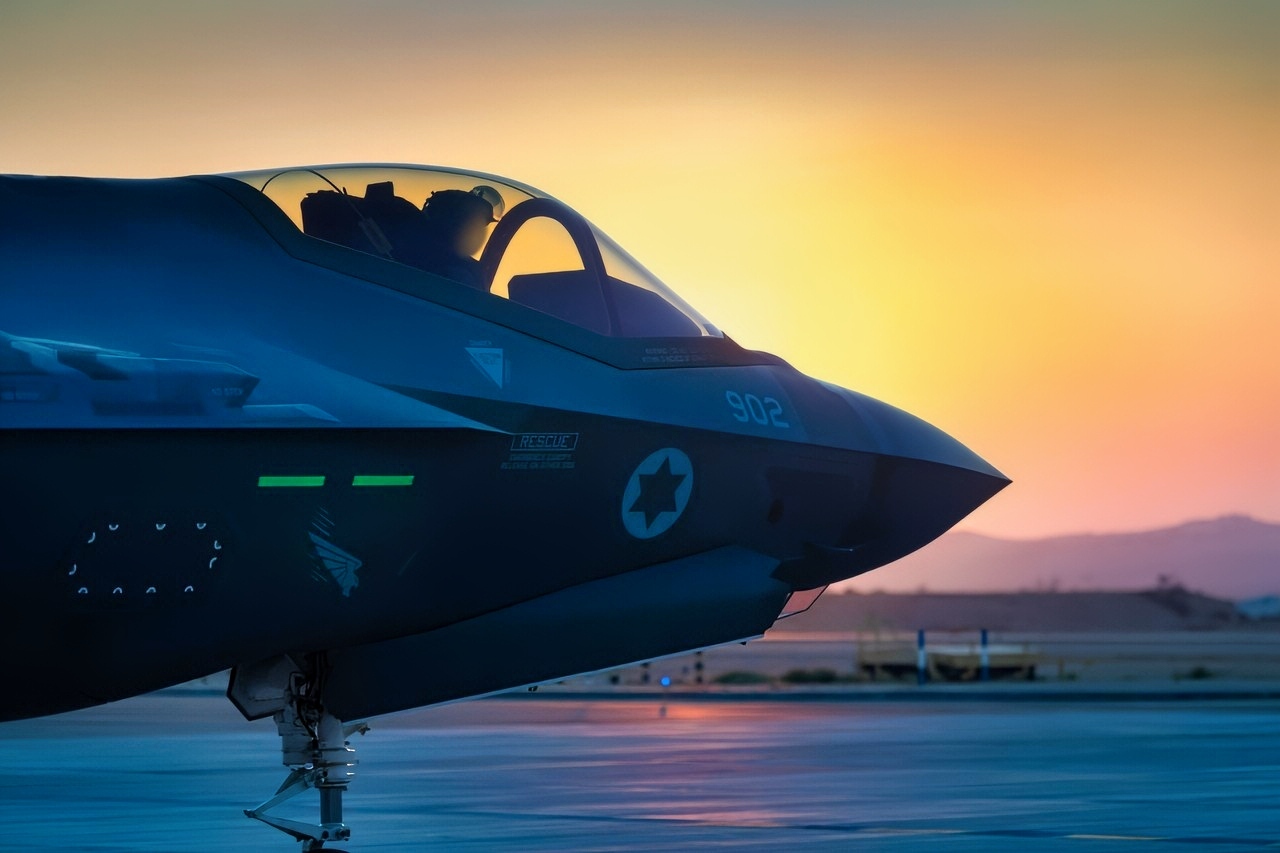
F-35I Adir Israel Stealth Fighter. Image Credit: IDF
While speaking to reporters about potential scenarios in which the war with Iran could reignite, Katz offered a theoretical situation in which President Trump says negotiations have not been successful and that military strikes are the only option left.
“If Iran attacks, that is the third Iran war. The situation is very clear,” Katz said.
“There is no reality in which Israel will allow missile fire at its territory without responding with force. It could happen within two days,” he continued.
Katz also said that he is instructing the Israeli Defense Forces (IDF) to prepare for a “blue-and-white operation in Iran” – a term that refers to an Israeli-led operation, rather than one organized by the United States.
In other words, Katz confirmed that Israel plans to act independently against Iran where necessary, and appeared to suggest that he would not take orders from the U.S. president.
Israel Wants Negotiations To Succeed
Speaking to reporters, Katz also indicated that Israel wants to see negotiations with Iran succeed. Katz said that he does not want to disrupt ongoing negotiations between the White House and Tehran, but insisted that defending Israel is a separate matter and that he will not accept “compromises” in Lebanon or Iran.
He said that Israel is prepared for the possibility that Iran will directly attack Israel, noting that the IDF is “prepared both defensively and offensively.”
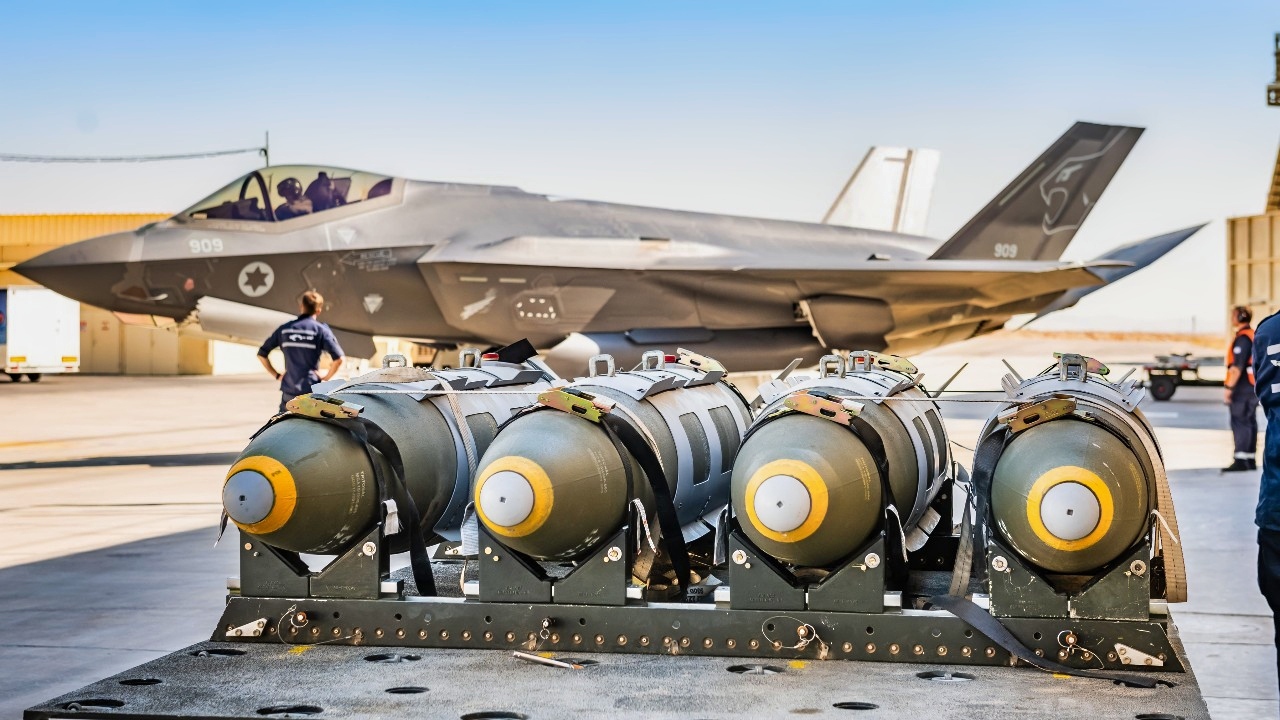
Israel F-35I Adir Stealth Fighter. Image Credit: IAF.

An Israeli Air Force pilot walks to an F-35I Adir prior to a Red Flag-Nellis 23-2 mission at Nellis Air Force Base, Nevada, March 15, 2023. Red Flag is an opportunity to build on the success of JUNIPER OAK 23-2, JUNIPER FALCON, and additional combined exercises to enhance interoperability with Israel, strengthen bilateral cooperation, and improve capabilities in ways that enhance and promote regional stability and reinforce the United States’ enduring commitment to Israel’s security. (U.S. Air Force photo by Airman 1st Class Trevor Bell)
“The IDF is prepared to repel and attack. If necessary, we will put the home front on alert as we did in the last confrontation. We will not hesitate to do so based on the IDF’s recommendations. If we see a concrete danger, we will alert the home front and launch an attack,” he said.
Netanyahu Says Israel Will Keep Acting
Katz’s comments don’t reveal anything new about Israel’s position on the conflict. In fact, they’re entirely consistent with the position Prime Minister Benjamin Netanyahu has maintained since the MOU was signed.
While he has welcomed the opportunity for diplomacy, Netanyahu has repeatedly insisted that the agreement does not restrict Israel’s ability or willingness to engage in military action wherever it believes Iran or Iranian-backed actors threaten Israel.
On Monday, during a visit to southern Lebanon, Netanyahu said that Israeli forces would remain deployed until Hezbollah no longer posed a threat.
“We are very proud of what we have achieved here, thanks to your brave action and also the decisions made.
Our insistence is that we do not leave southern Lebanon until the threat is neutralized. As long as Hezbollah is here, armed, threatening us, we will remain,” Netanyahu said.
“You have done huge work here; we have taken the Iranian axis and begun to crush it. We attacked Iran itself, something no one believed, and we removed an existential threat,” he continued.
That same message has been repeated by other Israeli political leaders even before the MOU was signed, with Katz long arguing that Israel must retain total operational freedom in Lebanon and against Iran regardless of the status of negotiations.
Fragile Negotiations Hang in the Balance
Katz’s warning comes as the United States attempts to keep negotiations with Iran alive, with meetings scheduled to take place in Doha, Qatar.
Reports so far indicate that U.S. officials will meet mediators, but Iranian officials refuse to attend, citing alleged violations of the MOU.
The United States similarly accuses Iran of breaking the terms of the agreement after launching drones at the merchant vessel Ever Lovely in the Strait of Hormuz last week.
Iran said on Monday that no meeting had been scheduled after a weekend of missile fire from both sides. President Donald Trump confirmed that his son-in-law, Jared Kushner, had been sent to Qatar alongside envoy Steve Witkoff.
Iranian officials were also sent to Qatar this week, but Foreign Ministry spokesperson Esmaeil Baghaei claimed that the visit had “no relation” to the presence of American negotiators.
Israel is not an official party to the U.S.-Iran peace talks, though the results – should there ever be an agreement – will have implications for Israeli security.
Jerusalem has distanced itself from the agreement and has even engaged in military operations against Lebanon, even after President Trump insisted that the ceasefire agreement would prevent ongoing strikes between Lebanon and Israel.
Speaking about the upcoming Doha meeting, President Trump did not indicate that he expected a breakthrough. The president insisted that the U.S. is “winning militarily” and that the meeting in Doha “is going to be perhaps important, perhaps not.”
About the Author: Jack Buckby
Jack Buckby is a British researcher and analyst specializing in defense and national security, based in New York. His work focuses on military capability, procurement, and strategic competition, producing and editing analysis for policy and defense audiences. He brings extensive editorial experience, with a career output spanning over 1,000 articles at 19FortyFive and National Security Journal, and has previously authored books and papers on extremism and deradicalization.


