


Oil is closing out its weakest quarter in five years on Tuesday, with Brent crude down roughly 30 percent over the three months and off about 20 percent in June alone, the steepest quarterly fall since the pandemic crash of 2020. The slide has carried both major benchmarks back to where they traded just before the United States and Israel began striking Iran on February 28. West Texas Intermediate sat near $70.75 a barrel and Brent near $73.22, a remarkable round trip for a market that watched prices climb above $120 at the height of the war.
The drop rests almost entirely on the hope that the worst of the Iran crisis is behind it, and that hope is built on a deal that does not yet exist.
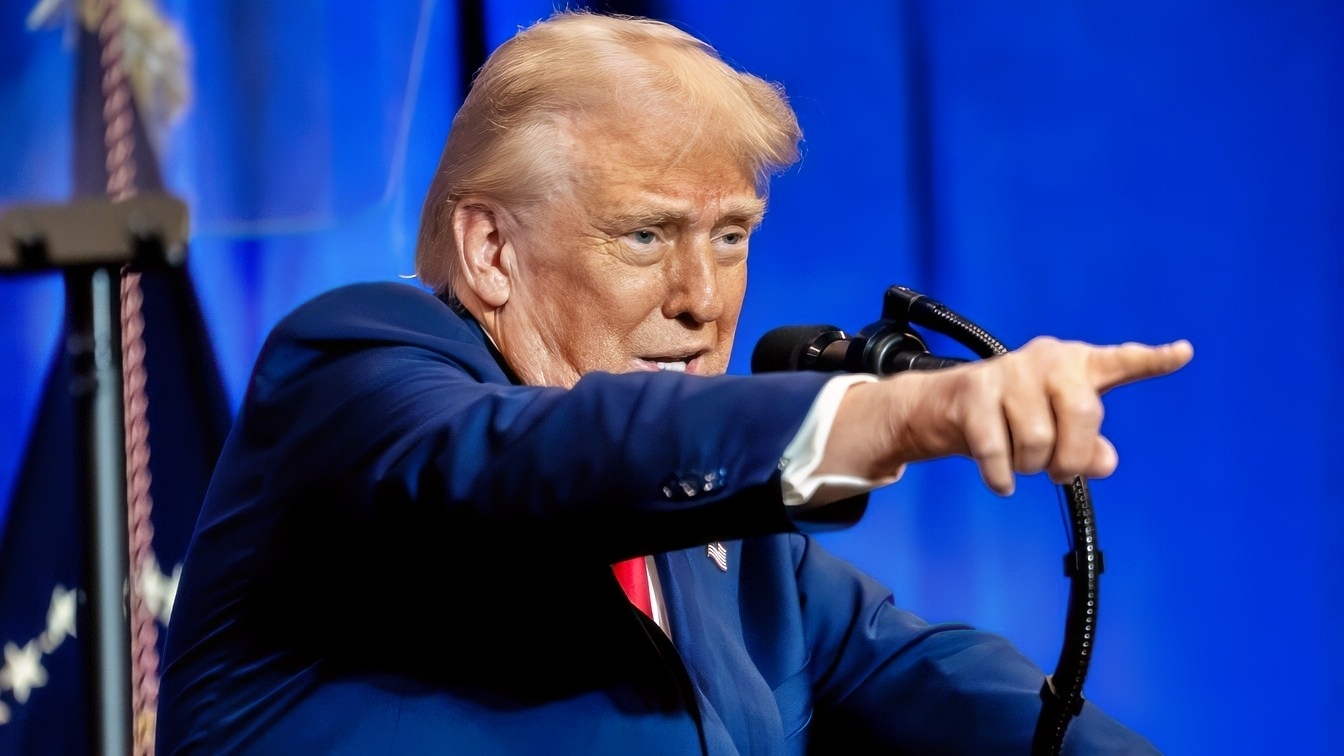
President Donald Trump delivers remarks at the Department of Justice in Washington, D.C., Friday, March 14, 2025. (Official White House Photo by Joyce N. Boghosian)
A Risk Premium Priced Almost to Zero
The fall has been driven by the mid-June memorandum of understanding between Washington and Tehran, an agreement to continue negotiations toward a possible peace deal by August, and by the resumption of tanker traffic through the Strait of Hormuz.
As geopolitical fear drained from the market, traders erased nearly the entire war premium they had built into the price over the spring. Several analysts think they have gone too far. Warren Patterson, head of commodities strategy at ING, wrote this week that the market is pricing the interim truce as though it were a permanent settlement, and that at close to $70 a barrel, oil now carries almost no geopolitical risk premium at all.
Fabien Yip, a market analyst at IG, made a similar point, telling Al Jazeera that oil had nearly unwound its entire war premium despite an agreement with no enforcement details and ongoing strikes.
There Is No Iran Peace Deal Yet, Only a Memorandum
The market is pricing in an outcome that the two governments have not reached and, as of Tuesday, cannot even describe the same way.
President Donald Trump said on June 29 that Iran had requested a meeting and that talks would take place the next day in Doha. Within hours, Iran’s deputy foreign minister said no technical working group was scheduled to meet this week, and a Foreign Ministry spokesman said Tehran would not negotiate a final settlement until the United States implements parts of the memorandum, including provisions tied to the conflict in Lebanon.
The memorandum set up a 60-day window to tackle the hard questions, above all Iran’s nuclear program, and that clock is running against two sides that are still publicly contradicting each other over whether they are talking.
Iran Problems: The Strait of Hormuz Keeps Opening and Closing
The physical picture is just as unsettled as the diplomatic one. Over the weekend, U.S. Central Command struck Iranian targets after attacks on commercial vessels in the Strait of Hormuz, and Iran answered with missiles and drones aimed at American forces in Bahrain and Kuwait.
Tanker traffic through the strait, which had been recovering, slowed sharply again, and Brent rose about 0.9 percent on Monday as the renewed hostilities punctured some of the ceasefire optimism. Iran’s Revolutionary Guard has continued to warn that vessels crossing the strait without its authorization will be dealt with.
The recovery in flows is real but shallow, with crude shipments to Asia still running well below pre-war levels and full normalization weeks away, dependent on clearing mines from the shipping lanes.

Donald Trump In a Meeting. Image Credit: Creative Commons.
Through the spring, Iran demonstrated that a handful of attacks and threats could choke off the waterway that carries about a fifth of the world’s seaborne oil, without having to fire on every ship that tries to pass.
Why Prices Could Snap Back
A market that has priced out almost all risk has no cushion against a shock, and that is the danger in the current calm.
With the war premium gone, any serious reversal, a renewed closure of the strait, a major tanker attack, a collapse of the Doha track, or an Iranian move to formally restrict transit again, would force traders to rebuild the risk premium they have just stripped away, and the move higher could be sharp precisely because so little is priced in now.
The same chokepoint vulnerability that drove Brent above $120 earlier this year has not been resolved, only set aside on the strength of an interim understanding that both governments are still contradicting each other on. None of this guarantees a spike, and the base case across much of Wall Street is genuinely for lower prices, with rising Middle East supply, recovering flows, and banks cutting their forecasts.
Morgan Stanley trimmed its Brent target to $75 this week. But oil priced at pre-war levels is a bet that the calm holds, and as of Tuesday, the two governments could not agree on whether they were even sitting down to talk.
About the Author: Harry J. Kazianis
Harry J. Kazianis (@Grecianformula) was the former Senior Director of National Security Affairs at the Center for the National Interest (CFTNI), a foreign policy think tank founded by Richard Nixon based in Washington, DC. Harry has over a decade of experience in think tanks and national security publishing. His ideas have been published in the NY Times, The Washington Post, The Wall Street Journal, CNN, and many other outlets worldwide. He has held positions at CSIS, the Heritage Foundation, the University of Nottingham, and several other institutions related to national security research and studies. He is the former Executive Editor of the National Interest and the Diplomat. He holds a Master’s degree focusing on international affairs from Harvard University.


