
Saudi Oil Exports Reach Post-Ceasefire High Through the Strait of Hormuz: Saudi Arabia is now exporting crude oil through the Strait of Hormuz at its fastest pace since the U.S.-Iran ceasefire came into effect. It’s good news for U.S. President Donald Trump, who has remained consistently optimistic about restoring the flow of oil through the Strait, and for the global economy. Gulf energy exports are, for now, recovering after months of disruption – and even after a weekend of continued military hostilities.
Ship-tracking data show that multiple Saudi supertankers exited the Strait carrying millions of barrels of crude oil, and that additional vessels are still loading at the country’s primary export terminal.
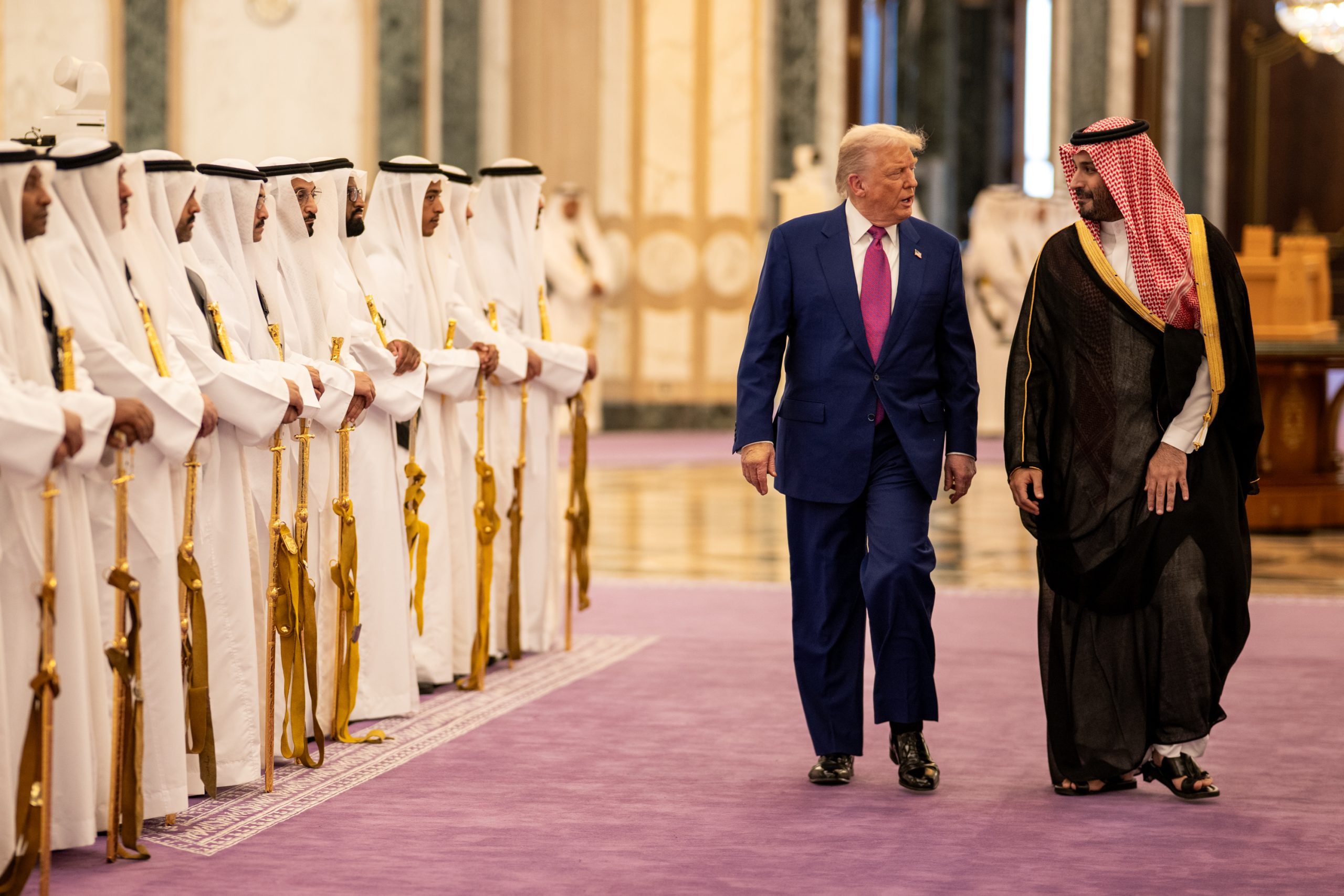
President Donald Trump participates in a welcome ceremony with Saudi Crown Prince Mohammed Bin Salman Al Saud at the Royal Court Palace in Riyadh, Saudi Arabia, Tuesday, May 13, 2025. (Official White House Photo by Daniel Torok)
The news comes as U.S. and Iranian negotiators continue technical talks over the recent strikes in the Gulf, with a view to returning to full negotiations under the conditions of the memorandum of understanding (MOU) agreed last month. Although shipping has resumed for now, maritime traffic is still below pre-war levels, and renewed strikes could bring it to a grinding halt again.
Saudi Tankers Return
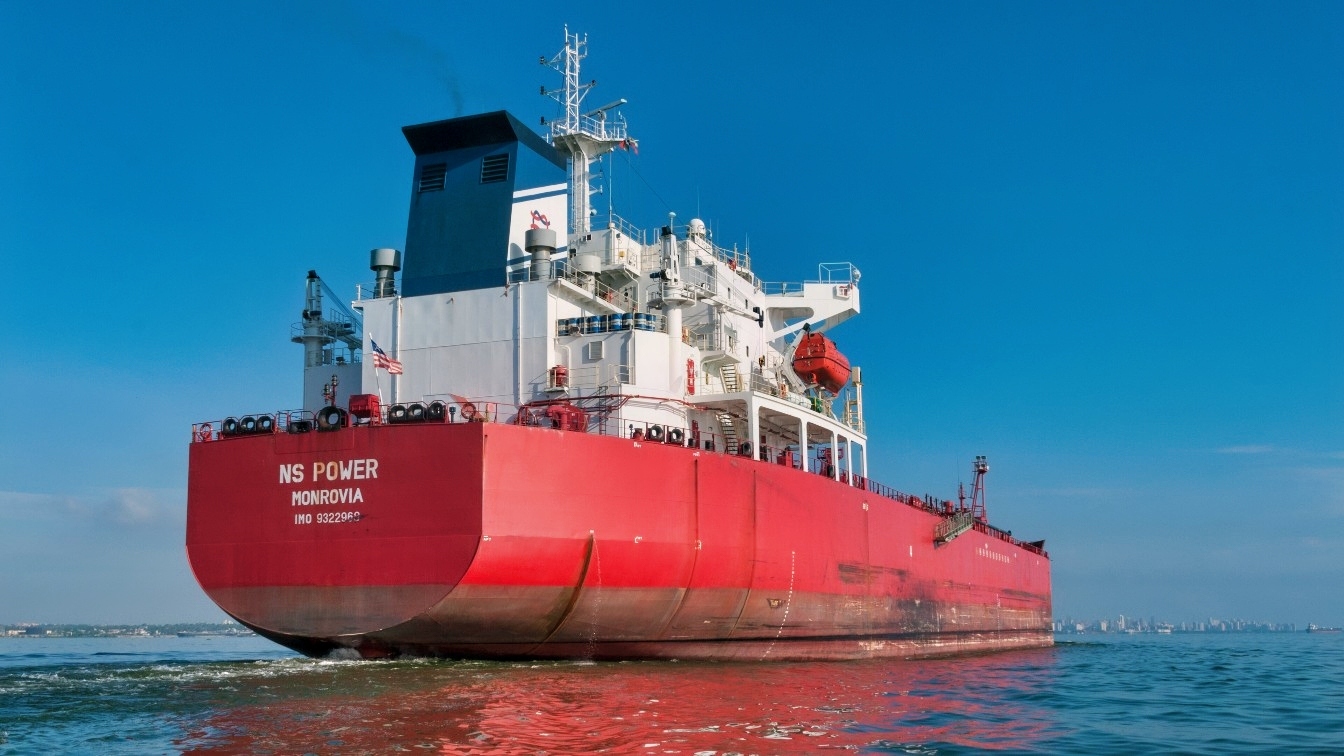
Shipping data shows that at least five Saudi-owned Very Large Crude Carriers (VLCCs) have departed the Strait of Hormuz after being spotted entering the Strait in recent days. The vessels loaded crude oil at Ras Tanura – the largest oil export terminal in Saudi Arabia.
The vessels are transporting roughly 10 million barrels of crude, with destinations likely including China and Japan. An additional four VLCCs are still understood to be in the vicinity of Ras Tanura, either fully loaded or waiting to take on cargo.

Generic Oil Tanker Image. Image Credit: Creative Commons.
The departures mark a significant turnaround for the passage of oil through Hormuz, after the waterway was effectively closed again following two drone strikes launched by Iran against commercial shipping vessels and subsequent U.S. strikes on military infrastructure on the coast.
And in recent months, as the waterway was effectively closed for long periods, Saudi Arabia began to redirect as much oil as it could through its East-West Pipeline, which transports crude to its Red Sea export facilities. While the alternative route offered some relief, it could only handle up to seven million barrels of crude oil per day – a fraction of the 21 million barrels of oil that once passed through Hormuz in the same period from various oil-producing countries.
Ras Tanura Resumes Operations
Ras Tanura resumed loading crude on June 26 after almost four months of disruption. Operations were initially suspended after the Iran War began, and Tehran began its blockade of the Strait of Hormuz. Saudi Aramco was forced to reroute as much of its exports as possible through the East-West pipeline to the port of Yanbu on the Red Sea.
The refinery, which processed 550,000 barrels per day, was also shut down as a precaution.
The disruption led to a significant decline in Saudi Arabia’s oil exports, which fell to roughly 4 million barrels per day over the past three months, down from more than 7 million barrels per day before the conflict. Before the war, Ras Tanura alone also handled more than five million barrels of crude exports every day, making it the world’s largest export terminal.
Shipping Confidence Improves
Commercial shipping through the Strait of Hormuz has trended upward since the ceasefire was agreed, with occasional dips during periods of military fire. Operators, however, continue to exercise caution.
The vessels that continue to transit the Strait of Hormuz are reportedly traveling in convoys, while others are using a U.S.-managed maritime corridor in Omani waters that avoids sailing close to the Iranian coastline. The Omani route, however, is highly contentious, with Tehran insisting that vessels must only move through Iranian-approved routes in its waters. Some tankers also continue to switch off their Automatic Identification System (AIS) transponders while passing through the Strait, then reactivate them upon entering the Gulf of Oman.
According to Lloyd’s List data cited by Reuters, 242 cargo vessel transits were recorded during the week ending June 28 – a figure that’s far above wartime levels and still substantially lower than the 700 weekly crossings seen before February.
Oil Prices Ease – For Now
As more crude begins to reach international markets, oil prices have continued to fall. Brent crude has dropped to around $70 per barrel after trading as high as $120 during the height of the conflict. That falling price is directly linked to greater confidence in Gulf export conditions, but it’s not a guarantee that disruption will not occur again.
Technical talks between Washington and Tehran have continued in Doha, Qatar, as negotiators work through the details of the MOU signed in June before moving on to even more contentious issues, such as Iran’s nuclear program. According to the June agreement, traffic through Hormuz should ease as Iran permits safe and toll-free passage – but Tehran continues to insist that it will begin to charge a toll to ships for passage once the negotiating period comes to an end.
About the Author: Jack Buckby
Jack Buckby is a British researcher and analyst specializing in defense and national security, based in New York. His work focuses on military capability, procurement, and strategic competition, producing and editing analysis for policy and defense audiences. He brings extensive editorial experience, with a career output spanning over 1,000 articles at 19FortyFive and National Security Journal, and has previously authored books and papers on extremism and deradicalization.


