

As the Iran War appears to enter a lull, the Ukraine War is heating up once more. It seems that the war fever gripping the arc of Eurasia and the Middle East will not be stopped.
Russia had been effectively holding the line against Ukraine, while the Ukrainian Armed Forces at the front were diminishing with each intense engagement.
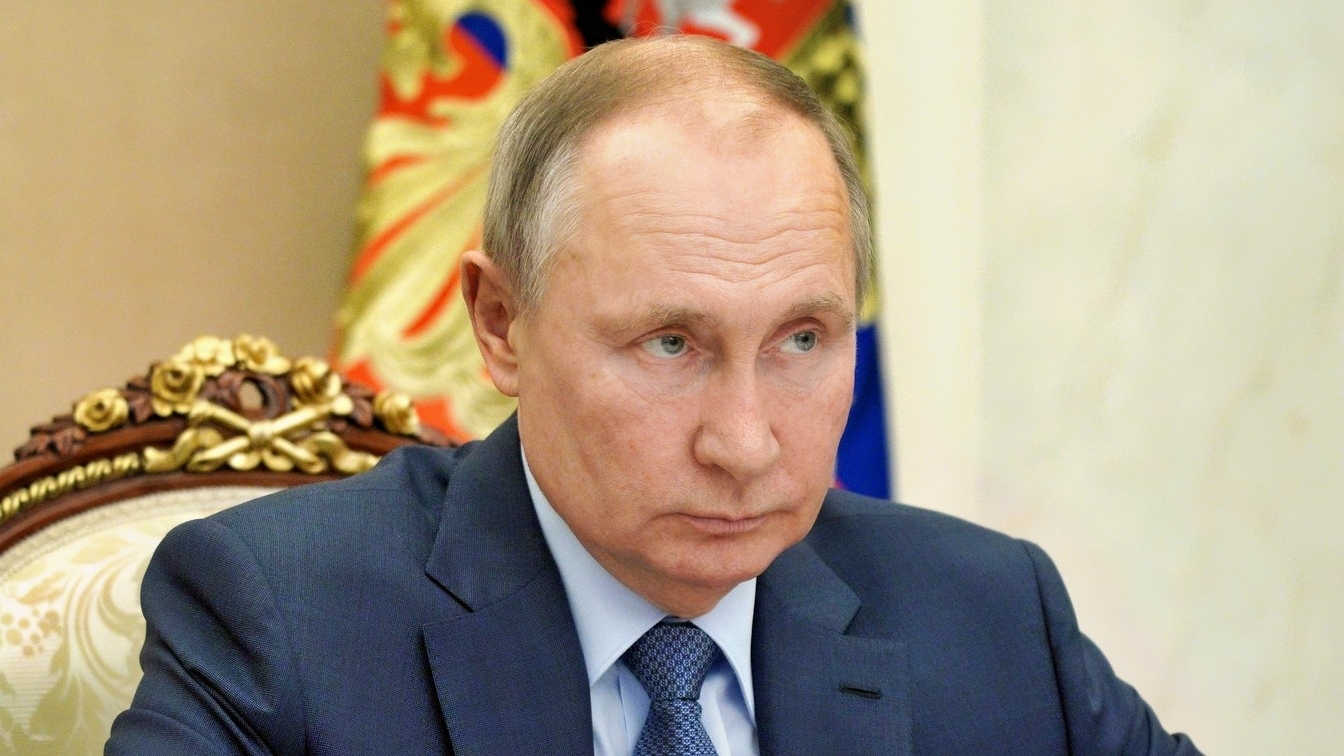
Putin in March of 2021 Russian Federation Photo
Russia was engaging in its traditional tactic of encircling targets, bombarding them, and attriting them until they broke. This is a laborious but methodical process.
Much to Ukraine’s credit, Kyiv recognized that its front was unsustainable.
Ukraine Changes the Battlefield
So, Kyiv changed tactics to take some of the relief off the buckling frontline forces.
Ukraine brought its drone swarms to bear.
Drones have become the silver bullet for both sides, at different times and in slightly different ways, since the start of the war.
In this case, the Ukrainians, realizing that they were on the brink of being routed by the methodically moving Russian Armed Forces along the front, opted for deploying drones to smash critical Russian infrastructure.
Specifically, Ukraine spent months identifying and shaping the infrastructure battlefield in Russia by targeting oil refineries, fuel storage depots, pipeline infrastructure, rail terminals, and other logistics hubs.
Kyiv gave up on striking Russian crude oil production, which is at the heart of Russia’s commodity-based economy.
So, Ukrainian forces targeted the arteries linking that crude energy production to the rest of Russia and the world.
Under the current dynamic, Russia can still pump crude oil out of the ground, but turning that crude into gasoline and diesel is becoming increasingly difficult, per Reuters.
Indeed, a recent Reuters report indicates that drone strikes have knocked out roughly a quarter of Russia’s refining capacity, forcing Moscow into emergency measures.
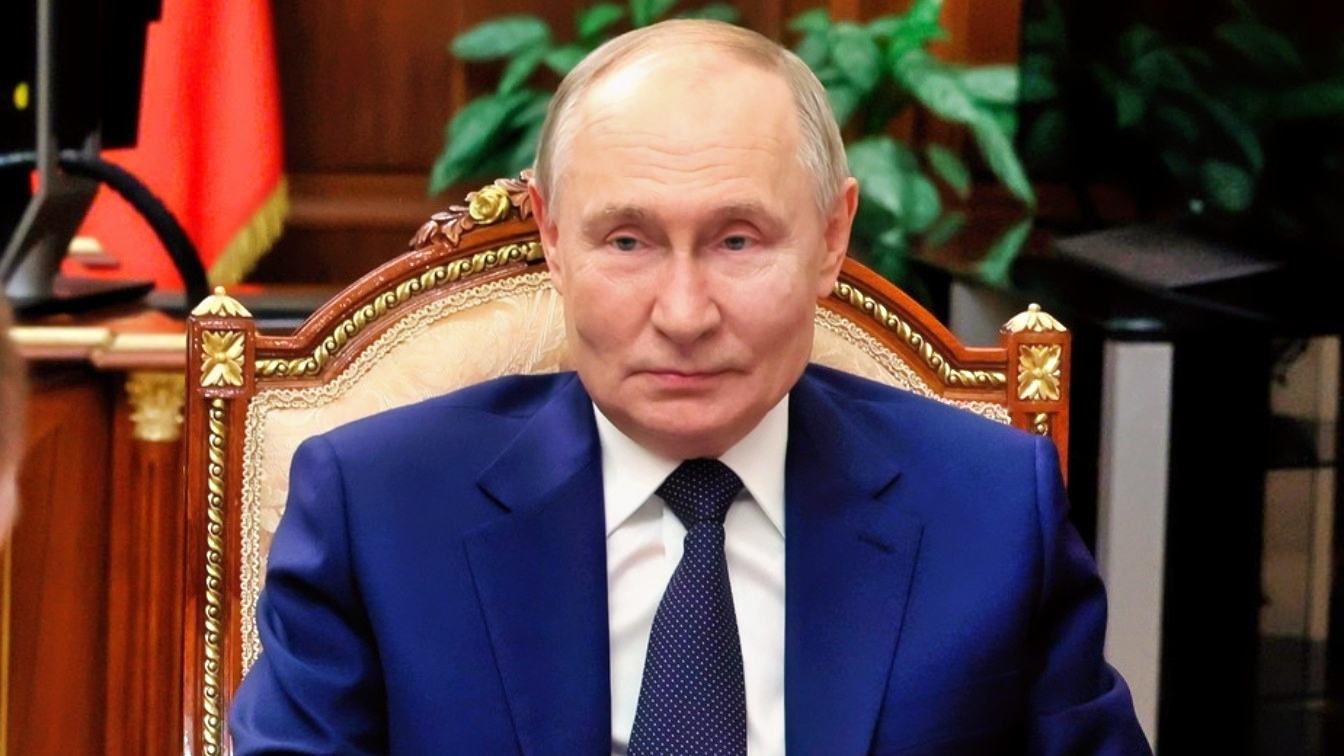
Putin in Important Meeting Russian Federation Photo
The Strategy Behind the Strikes
The implementation of emergency measures, of course, is the reason that Ukraine is striking Russia the way they are.
The whole concept is to make life so unbearable inside Russia, notably for Russian citizens, that they will pressure the Russian government to make President Vladimir Putin end the war lest he be removed from power.
This is, of course, a misreading of the domestic situation in Russia by Ukraine. And that misunderstanding of the Russian domestic scene by both Ukraine and its NATO backers is a direct result of their own desperation to end the war as quickly as possible, before the Russians can break through that weakening frontline and before the Americans under President Donald Trump opt to abandon Europe entirely (which Trump is readying to move away from Europe permanently).
Having spoken in the last year with Russians living in rural parts of the country, where entire villages have seen the men sent to war–and countless of those men returning home in body bags–ordinary Russians are overwhelmingly in favor of ending the war…but not through a negotiated settlement that sees the Zelenskyy regime of Ukraine still standing.
These ordinary Russians, many of them middle- and working-class types, are the core of Vladimir Putin’s support base.
Contrary to popular opinion in the West, the Russian leadership does concern itself with public opinion. Putin, more than anything, is a politician. And, therefore, he is keenly aware of where the Russian people’s hearts are.
Most Russians are angry that the war has persisted.
Many want the deaths of their loved ones to mean something.
For these individuals and families, many of whom support Putin politically, they want a decisive military victory over Ukraine, ensuring that the perceived threat from Kyiv can never return (most Russians, including Putin, genuinely believe that the West was preparing to absorb Ukraine into NATO and then use it as a base from which to launch strikes or to threaten to launch strikes against Russia).
The likelihood that these Ukrainian attacks on Russian energy sources will do anything other than further inflame the populace against Kyiv is low.
What’s more, as another election cycle arises in the Russian Federation, Vladimir Putin will need to be seen as standing tougher against Ukrainian attacks.
For years, Putin has resisted the urge to so much as even call the Ukraine conflict a “war,” preferring instead to label it by the Orwellian-sounding “Special Military Operation” (SMO).
Most Russians fully believe their Armed Forces can defeat Ukraine, and they think that Putin, for political reasons, has been holding the Russian military back, preventing it from achieving total victory.
With an election underway, whether it is legitimate or not, Putin and his government will seek to demonstrate resolve and a commitment to victory. This is especially true as Ukraine targets critical civilian infrastructure.
Since the last round of Ukrainian attacks against civilian infrastructure in Russia, the Russian military has launched devastating strikes on Kyiv–a city that Putin has restrained his forces from attacking too heavily since their initial abortive invasion of Western Ukraine because of its cultural symbolism for Slavs everywhere.
Those restraints, however, are being removed.
A Fuel Crisis Inside an Oil Superpower?
The consequences of Ukraine’s wildly successful attacks on Russian energy infrastructure are increasingly visible.
Gasoline shortages are gripping much of Russia. Rationing has spread across numerous regions. Motorists face long lines. The price at the fuel pump has exploded. In fact, some stations simply run out of fuel.
In some locations, gasoline reportedly costs about $2.42 per liter, which is considered extraordinarily high by Russian standards.
Typical of the Russian psyche, many Russians are embracing what can best be described as gallows humor to get through this most uncomfortable crisis. Some Russians joke that gasoline is now a luxury item. Others are simply siphoning fuel.
And in scenes reminiscent of post-Soviet Russia in the 1990s, arguments and full-blown fistfights are erupting at gas stations over finite fuel supplies–and their exorbitant prices.
Shortages are affecting everyday life rather than simply being an abstract problem. That’s when political pressures increase their influence on military decisions in the war.
Farmers Are Being Hit Hard
The Ukrainian attacks are especially hitting Russia’s agricultural heartland. Harvest season depends on diesel fuel.
Without diesel, combines cannot harvest wheat. Tractors cannot move grain. Nor can trucks transport crops.
Russian farmers have told the press they may not have enough fuel to complete this year’s harvest.
So, the fuel crisis that Ukraine has created in Russia could lead to a full-blown food inflation problem, as there is an imbalance between agricultural supply and demand.
Again, under these conditions, though, the chances that a negotiated settlement is crafted between Kyiv and Moscow decrease, especially since most Russians believe their government has held the Russian Armed Forces back from achieving total military victory over tiny Ukraine.
At this rate, it doesn’t really matter if that’s untrue or not. Perception is power in politics–notably during a critical moment, such as the one that the Russians today find themselves in.
Russia Is Importing Gasoline
Russia, like the United States, is a net exporter of oil. Yet Russia today has to import gasoline. Moscow has started purchasing gasoline from India while seeking supplies from neighboring countries to stabilize domestic inventories.
The Kremlin has already initiated export restrictions. Gasoline exports are now restricted, and there is some consideration of banning diesel exports altogether.
Meanwhile, the Kremlin has discussed allowing lower-quality fuels to be sold domestically while exploring additional imports.
These are emergency stabilization measures intended to prioritize Russian consumers over foreign buyers.
The Economic Impact Could Grow
Fuel shortages rarely remain isolated. A lack of diesel has knock-on effects for the rest of the country.
Without diesel fuel, critical freight trucks cannot be used, rail transport slows, agricultural production collapses, mining ceases, construction stops, and industrial equipment shuts down.
As shortages cascade across the economy and society, the cost of everything rises, forcing demand to slow and industrial production to halt.
This is the makings of a true economic catastrophe for Russia that will destabilize the political order if the Kremlin is not careful, especially as economic pessimism and frustration increase among ordinary Russians.
Strategic Significance
To be clear, contrary to what many Western analysts would have you believe, the situation in Kyiv is bleak, too. Ukrainian defensive lines are starting to crumble more consistently.
Troop levels are dissipating, and recruits are increasingly hard to find in wartime Ukraine.
Ukraine’s strategy to strike hard against Russian soft targets is both an escalation and a measure of its desperation to stunt whatever gains the Russians are enjoying along the frontline.
Yet, it seems as though these attacks are going to steel the Putin government’s resolve to end the war with a decisive military victory, which, even with the ongoing pressures on Russian society, appears to be in the offing.
There is no indication that Putin can negotiate a peace deal to end the war sooner than his troops will, and there’s little incentive among the Russian people to seek a mutually beneficial end to the conflict in light of recent events.
As for Ukraine, nothing they have done has had the intended impact.
Their actions ensure that Putin will be unable to negotiate a settlement to the war.
Russia’s recent increases in attacks on Ukraine–especially Kyiv–highlight that Moscow intends to weather this economic storm. Putin and his advisers have likely surmised that, for all their rah-rah, the Ukrainians simply cannot withstand the assault.
Lastly, as an aside, if Russia does significantly curtail its diesel exports to protect its domestic market, that move will tighten global diesel supplies just as markets are still recovering from earlier disruptions everywhere, putting renewed upward pressure on fuel prices internationally.
About the Author: Brandon J. Weichert
Brandon J. Weichert is the Senior National Security Editor. He also manages The Weichert Brief on Substack. Weichert also hosts “National Security Talk” on Rumble. He is the author of four bestselling national security books, the most recent of which is A Disaster of Our Own Making: How the West Lost Ukraine (Encounter Books). Follow him via Twitter/X @WeTheBrandon.


