
The United States announced the revocation of its authorization for Iranian oil sales on Tuesday, July 7, following a series of Iranian attacks on commercial tankers in the Strait of Hormuz.
The U.S. Treasury Department’s Office of Foreign Assets Control said that it was revoking Iran-related General License X, the June 21 authorization that allowed the “production, delivery, and sale” of Iranian crude oil, petrochemical products, and petroleum products. The authorization has been replaced with General License X1 for a wind-down period, which is expected to run until July 17.

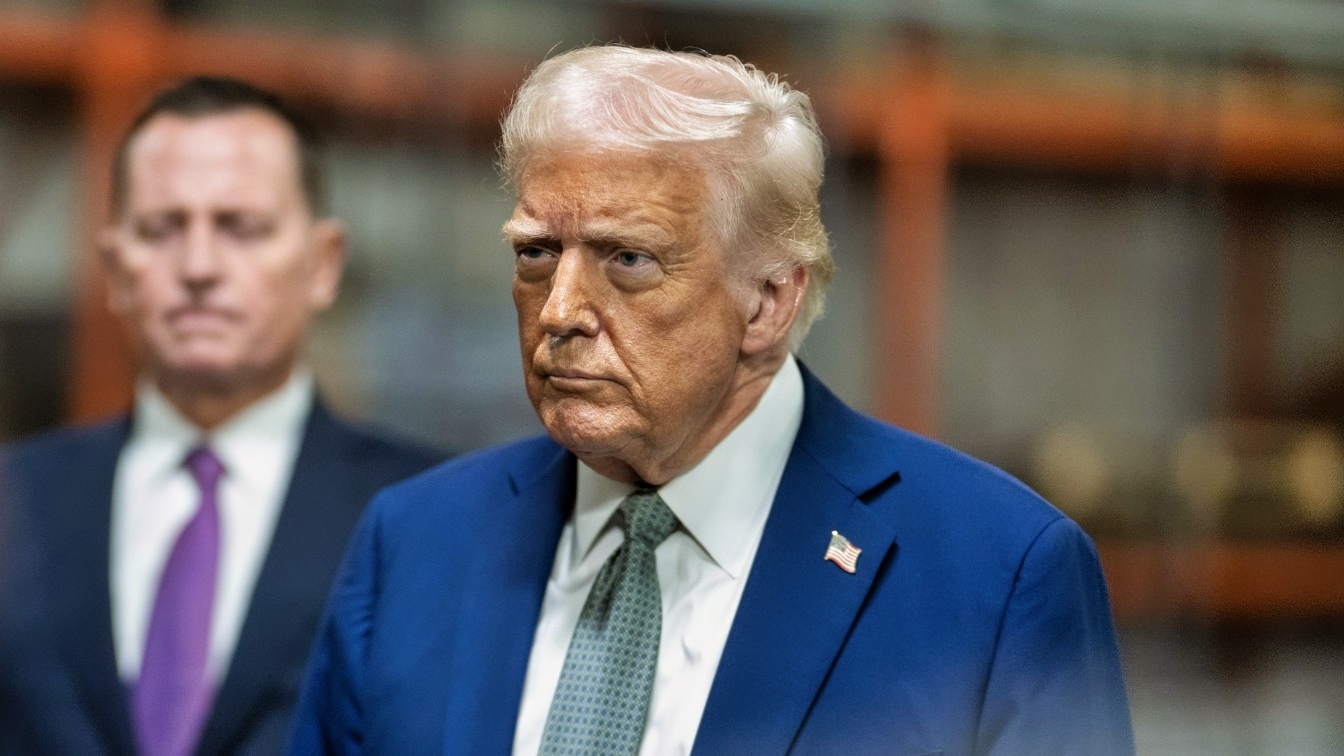
Donald Trump with Law Enforcement. Image Credit: White House.

President Donald Trump holds a Cabinet meeting, Wednesday, April 30, 2025, in the Cabinet Room. (Official White House Photo by Molly Riley)
“Iran will only reap benefits if they exhibit good behavior,” a U.S. official told CNBC. “Iran’s actions in the Strait were wholly unacceptable to the United States and will be met with consequences.”
Why Washington Pulled the License
The decision is a dramatic reversal from June 22, when the Treasury issued a temporary 60-day license – which lasted the length of the memorandum of understanding (MOU) ceasefire – that allowed Iranian oil sales through August 21.
Treasury Secretary Scott Bessent said at the time that Iran had committed to “free and open transit in the Strait of Hormuz” and that Tehran had agreed to allow International Atomic Energy Agency (IAEA) inspectors into the country.
“As part of the framework, Treasury has issued a temporary 60-day general license authorizing the production, delivery and sale of Iranian oil,” he said.
The deal came as a shock to many analysts, with critics suggesting that Trump was giving in to too many Iranian demands in hopes of convincing Tehran to agree to a deal.
Those critics who warned that Iran would not easily make a deal on terms favorable to the United States were proven right this week when it launched fresh strikes in the Strait of Hormuz that violated agreements that have already been made. Iran has effectively forfeited – for the time being – a badly needed hard currency boost that allowed the country to resume sales of one of its most readily available and in-demand products: crude.
But since the latest strikes in the Strait of Hormuz and the U.S. announcement of the return of its blockade on Iranian oil, prices have risen again. Reuters reported that oil prices have gained more than 5% since the announcement.
Three Tankers Hit Near Hormuz
The decision was made following a string of attacks by Iranian forces on commercial vessels in the Strait of Hormuz. Qatari liquefied natural gas (LNG) tanker Al Tekayyat was among those hit and left at risk of exploding after a fire broke out in its engine room.
A Saudi crude tanker was also damaged near the Strait of Hormuz. U.S. and Qatari officials agreed that Iran was responsible for the strike, although Tehran did not immediately comment on the incident.
The Joint Maritime Information Center (JMIC) responded by raising its threat level for vessels transiting the Strait to “severe,” warning that Iran was engaging in deliberate hostile action. The U.S. Navy-led JMIC also said that recent incidents in the waterway showed that the threat environment remained elevated, despite Iran’s commitments under the MOU signed last month, and that all vessels passing through the waterway should exercise “extreme vigilance.”
A third tanker was later struck by an unknown unmanned aerial vehicle, according to UK Maritime Trade Operations (UKMTO). According to the organization, the vessel in question sustained only minor structural damage, and no pollution or casualties were reported.
MOU Violated Again
The attacks should come as no surprise by now, as they are by no means the first violation of the MOU.
Nonetheless, they are another example of Iran ignoring the terms of the agreement made in June, which was intended to open the Strait of Hormuz and restore commercial traffic, thereby creating space for talks on Iran’s nuclear program and sanctions relief.
However, those talks were already on hold after earlier Iranian strikes on commercial vessels traveling through the Strait in Omani waters – attacks that prompted a U.S. military response and the suspension of direct talks in Switzerland.
The negotiations now continue in Doha, where indirect talks are underway to bring both sides back to the table for direct conversations.
While the MOU called for both Iran and the United States to permit shipping to resume through the Strait, including Iranian exports, the problem seems to come from the fact that neither Tehran nor Washington fully agreed on what “reopening” Hormuz meant.
Iran insists that it maintains control over ship traffic and approved routes, even if ships choose to sail through Omani waters.
What comes next remains to be seen. The U.S. has already committed to refraining from additional strikes on Iran during the ongoing funeral ceremonies for the country’s late supreme leader, and the revocation of Iran’s export license could be the extent of Washington’s response for now. But if Iran responds again, it could spell the end for these fragile negotiations.
About the Author: Jack Buckby
Jack Buckby is a British researcher and analyst specializing in defense and national security, based in New York. His work focuses on military capability, procurement, and strategic competition, producing and editing analysis for policy and defense audiences. He brings extensive editorial experience, with a career output spanning over 1,000 articles at 19FortyFive and National Security Journal, and has previously authored books and papers on extremism and deradicalization.


