

Iran and Oman Could Use a Hormuz Fee to Build a Way Out of the War: Iran and Oman are moving toward a financial compromise that could help reopen the Strait of Hormuz: charge selected ships for defined maritime services while preserving free passage. A Fortune examination of the proposals found growing interest in a fee that could bridge Tehran’s demand for a regional role and Washington’s insistence that Iran cannot tax an international waterway.
The urgency is visible in the traffic data. Only four commodity vessels crossed Hormuz on July 20, down from seven the previous day, and no very large crude carriers or liquefied natural gas tankers were visible. The Kpler figures reported by Reuters show that military escorts and repeated U.S. strikes have not restored normal commercial movement.
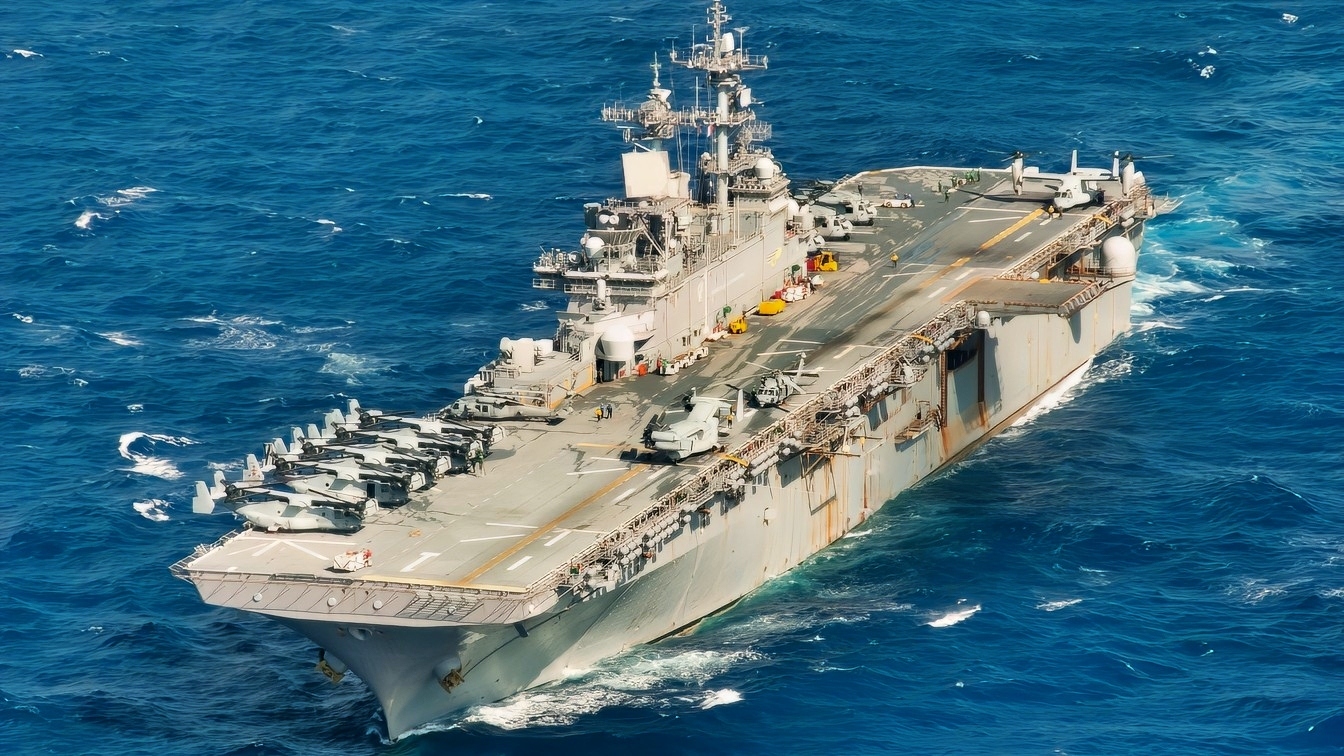
The amphibious assault ship USS Wasp (LHD 1) sails in the Philippine Sea Aug. 26, 2018 during a Passing Exercise (PASSEX) with the Japan Maritime Self Defense Force. PASSEX enabled the Wasp ARG and the JMSDF a chance to practice communications and maneuvering procedures. The Wasp Amphibious Ready Group is currently operating in the region to enhance interoperability with partners and serve as a ready-response force for any type of contingency. (U.S. Navy photo by Mass Communication Specialist 3rd Class Taylor King)
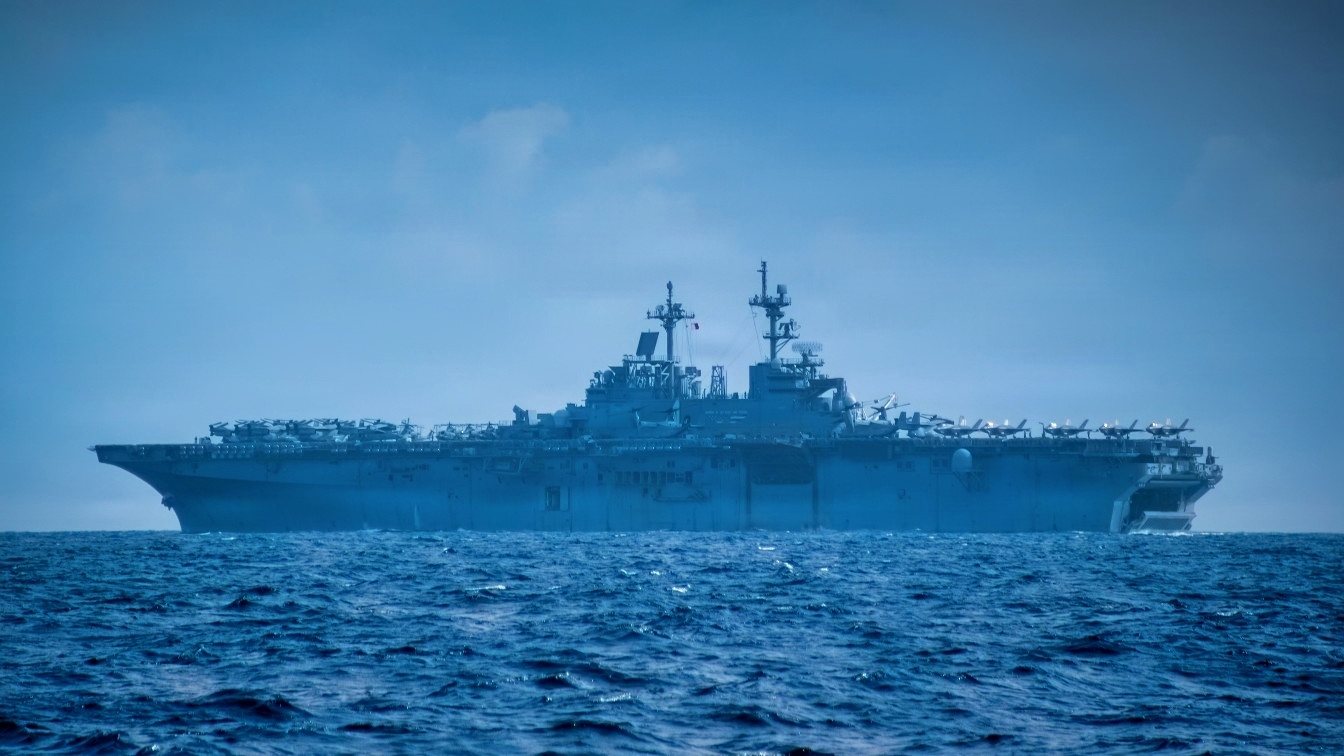
Wasp-class amphibious assault ship USS Boxer (LHD 4) transits the South China Sea, June 4, 2026. Boxer, flagship of the Boxer Amphibious Ready Group, is underway with the 11th Marine Expeditionary Unit in the U.S. 7th Fleet area of operations. U.S. 7th Fleet, the Navy’s largest forward-deployed numbered fleet, routinely interacts and operates with allies and partners to preserve a free and open Indo-Pacific (U.S. Navy photo by Mass Communication Specialist Seaman Eliora Sims)
International law creates the central limit. The International Maritime Organization says governments cannot impose mandatory charges simply because a vessel passes through a strait used for international navigation. Its legal objection to compulsory tolls leaves room for charges tied to specific services, but not for payment as the price of transit.
A separate proposal from the Bourse & Bazaar Foundation would charge large tankers when they lift oil from Gulf ports, with the money paid to a body representing all eight Gulf coastal states. The regional-service model would fund navigation safety and environmental work without giving Iran or Oman unilateral control.
Iran and Oman Need a Legally Defensible Service Fee
The legal distinction will decide whether the proposal can survive negotiations. Washington and Tehran have already spent weeks disputing whether a service fee is a toll under another name. A charge collected by Iran for permission to cross would face immediate opposition from the United States, Europe, Gulf exporters, and shipowners.
A fee connected to navigation support, emergency response, pollution control, or mine clearance has a stronger case. Chatham House says payments must remain proportionate and nondiscriminatory. Iran’s earlier effort to make every ship pay for passage created the impression that Tehran wanted revenue and control rather than a shared safety system.
A Multilateral Authority Could Give Both Sides a Political Exit
Oman and Iran formed a working group in June to discuss navigation, maritime services, and future administration. The bilateral process was expected to include Bahrain, Iraq, Kuwait, Qatar, Saudi Arabia, and the United Arab Emirates.
A joint institution would give Iran formal standing without granting it a veto. Oman would retain its role as mediator, Gulf exporters would oversee rules affecting their trade, and Washington could accept the arrangement without recognizing exclusive Iranian control. Earlier proposals envisioned joint Iranian-Omani administration and fee collection.
The institution would need public accounts, shipping-industry representation, and rules preventing any member from suspending passage alone. European and Gulf governments have already rejected permits and tolls imposed as conditions of transit.
The Fee Proposals Cover Very Different Amounts
The larger concept discussed by Oxford Economics would amount to roughly $2 million for a fully loaded crude tanker, or about $1 per barrel. At prewar volumes, Fortune reported that Iran and Oman could collect about $6.8 billion annually. That would create a major revenue stream and would be difficult for other Gulf exporters to accept.
The Bourse & Bazaar model is far smaller. A charge comparable to environmental fees at major ports could generate about $26 million a year, while a $100,000 annual license for roughly 600 large tankers could raise about $60 million. Those sums could operate a regional safety body without becoming a large source of Iranian state revenue.
A compulsory tax backed by military pressure would be unacceptable to most Gulf states. A smaller surcharge tied to specific services has a more credible route to agreement.
Shipping Companies Need Security Before They Need a Price
A fee will not persuade crews to sail while tankers are being struck. The crisis is driven by physical danger, insurance restrictions, and uncertainty over which route Iran will accept. The United States can damage coastal launchers and radars, but airstrikes cannot remove the geography that gives Iran leverage.
The arrangement therefore has to sit inside a ceasefire. Iran would need to stop attacks, cooperate with verified mine clearance, and accept every flag on equal terms. The United States would need to define which strikes, blockade measures, and sanctions changes follow compliance. Trump’s abandoned 20 percent proposal showed how quickly an unworkable fee can collapse under regional opposition.
The measure of success will be regular VLCC and LNG crossings, lower war-risk premiums, and crews willing to transit without extraordinary bonuses. A modest service charge could finance a regional authority and give each government a reason to uphold the settlement. It cannot substitute for an enforceable end to attacks.
About the Author: Harry J. Kazianis
Harry J. Kazianis (@Grecianformula) was the former Senior Director of National Security Affairs at the Center for the National Interest (CFTNI), a foreign policy think tank founded by Richard Nixon based in Washington, DC. Harry has over a decade of experience in think tanks and national security publishing. His ideas have been published in the NY Times, The Washington Post, The Wall Street Journal, CNN, and many other outlets worldwide. He has held positions at CSIS, the Heritage Foundation, the University of Nottingham, and several other institutions related to national security research and studies. He is the former Executive Editor of the National Interest and the Diplomat. He holds a Master’s degree focusing on international affairs from Harvard University.


