


You likely remember the Houthis when the U.S. military was fighting an uprising in which the Iran-backed terrorists attempted to block the Red Sea and the Gulf of Aden and attacked merchant ships there.
The Yemeni insurgents quarantined the location and also plagued U.S. Navy warships with ballistic missiles and drones.
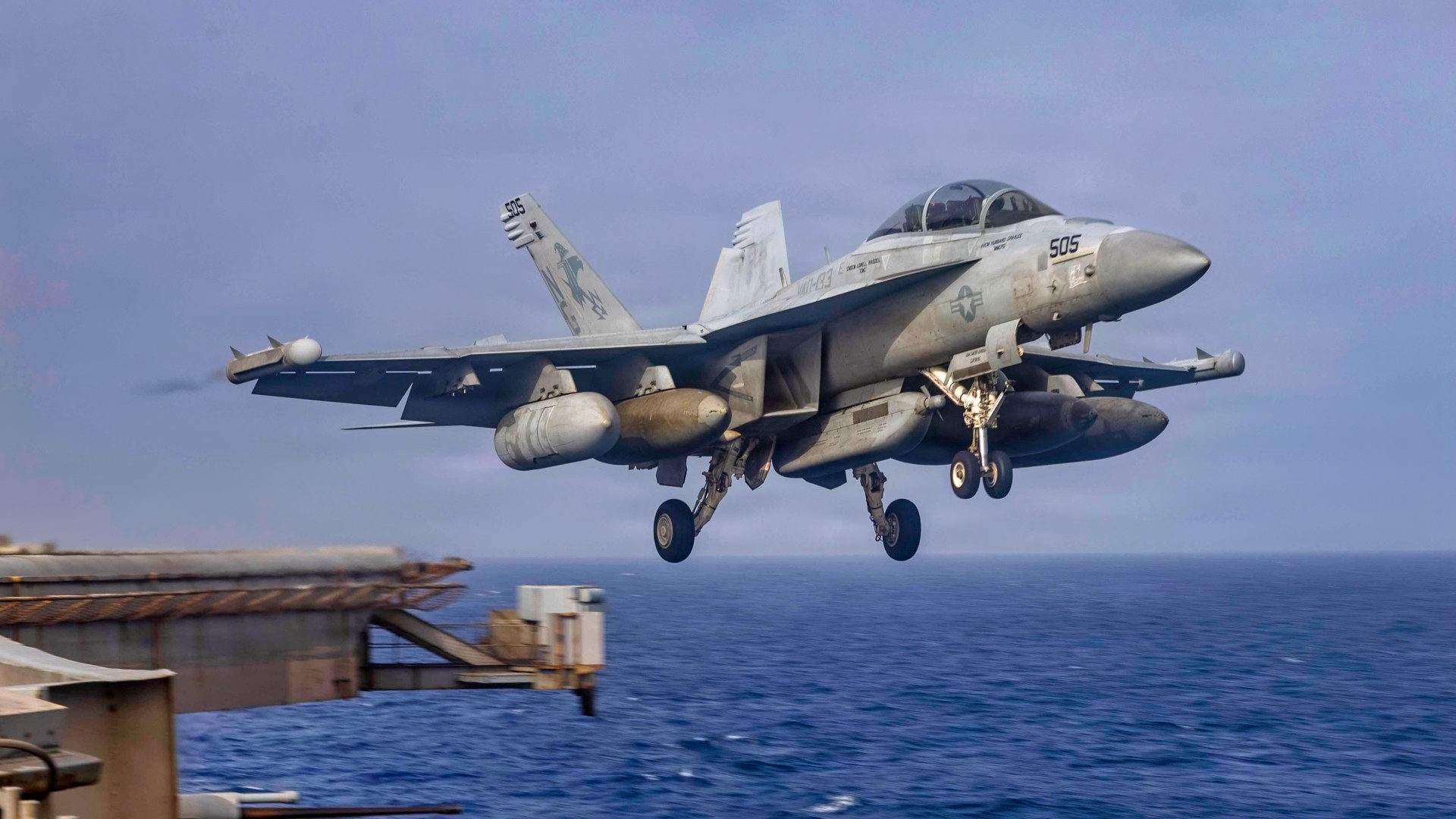
An EA-18G Growler, attached to Electronic Attack Squadron (VAQ) 133, takes off from the flight deck of Nimitz-class aircraft carrier USS Abraham Lincoln (CVN 72), May 21, 2026. Abraham Lincoln is deployed to the U.S. 5th Fleet area of operations to support maritime security and stability in the Middle East. (U.S. Navy photo)
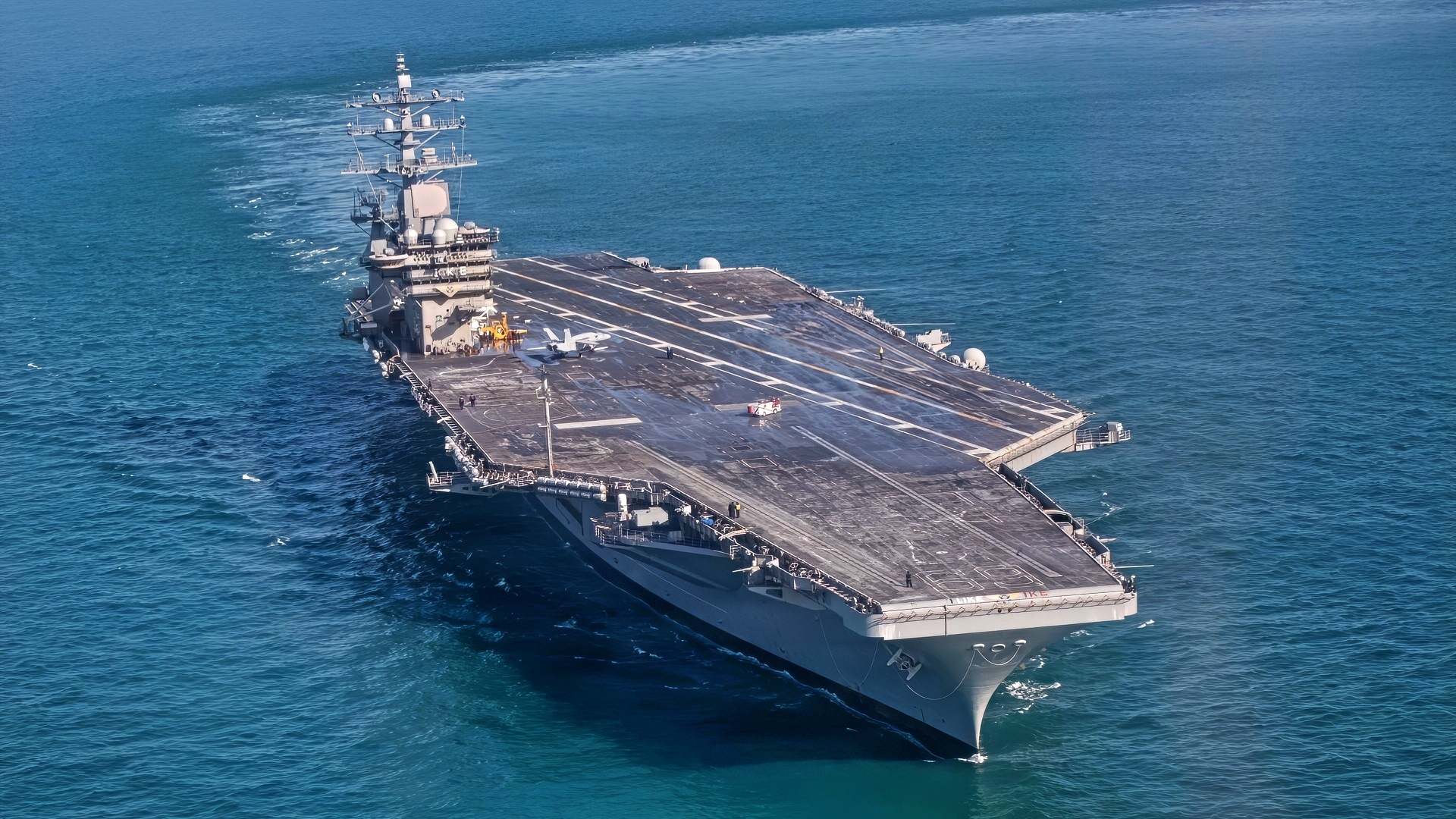
U.S. Navy Nimitz-class aircraft carrier USS Dwight D. Eisenhower (CVN 69) conducts a full power demonstration during Sea Trial in the Virginia Capes, Apr. 22, 2026. Eisenhower returned to sea and is now in the Basic Phase in the Optimized Fleet Response Plan. (U.S. Navy photo by Mass Communication Specialist Seaman Nicole Schweigert)
The United States clawed back with Operation Rough Rider in March 2025 and used air strikes to flatten Houthi surface-to-air missile systems, radar installations, and missile launch sites.
What’s the Problem Now?
The terrorists took a break but are now agitating again.
This time they want to blockade another strategic waterway called the Bab el-Mandeb Strait at the southern end of the Red Sea, off the coast of Yemen.
This is where 15 percent of global trade transits. There are numerous Houthi militia members located in the country who can keep this strait closed, and the target is now Yemen’s arch-enemy, Saudi Arabia.
The Saudis Thought They Had the Problem Solved
Saudi Arabia made a smart move by creating a pipeline that avoided the blocked, volatile, and dangerous Strait of Hormuz, which would carry oil from one end of Saudi Arabia to the next, sending millions of barrels of crude from eastern Saudi Arabia to the western edge.
The problem is that the kingdom needs the Bab el-Mandeb Strait continuously open to send its hydrocarbons to East Asia. This was once considered a safe and smart route to avoid problems in the Strait of Hormuz.
But the Houthis have a vote in the matter and are now threatening to cause mischief in the Bab al-Mandeb.
If that happens, the global oil market would be robbed of more crude, decreasing supply, and sending the price of oil even higher.
The price of West Texas Intermediate crude increased 3.7 percent to $87.01 as of noon ET on July 22. This is bad news for President Donald Trump, who is trying to whip inflation and keep the Strait of Hormuz and the Red Sea open for commerce.
Houthis Prove Resilient and Dangerous
There is another pipeline across Egypt that the Saudis use to send crude to bypass the Suez Canal to enter the Red Sea called the Northern route.
This bypass is seen as slow and expensive. That’s why the Saudis prefer their cross-country pipeline, and a new Houthi blockade of the Bab el-Mandeb is already causing problems.
“Two oil tankers, the Rodos and the Xin Long Yang, that were headed toward the Bab al-Mandab made U-turns on July 21,” according to the maritime data firm Kpler, the New York Times reported.
Oil Prices Climb
Trump said on Tuesday that the United States would “take care of things” if the Houthis make good on their threats.
Iran is reportedly behind the Houthi blockade and has convinced their Yemeni allies to quarantine the area if the Americans struck more civilian targets in Iran. The Houthis have attacked shipping 190 times since 2023. Some vessels have decided to take the much longer route around Africa to bypass the danger.
This could open up another front in the U.S. war against Iran and cause the Navy to deploy more scarce ships to that Red Sea location.
This reinforcement would expend additional cruise missiles such as the Tomahawk that are running lower in number after the resumption of hostilities against Iran.
It is not clear if the Navy could send an aircraft carrier strike group to “take care of things” versus the Houthis.
Trump: We’ll Take Care of It
Trump is characteristically defiant. “So far, it hasn’t happened, might happen, but we take care of things,” Trump said at the White House. “If something like that happens, we take care of it.”
The Saudis are already reacting against the Houthis.
They hit Sanaa International Airport on July 20 with air strikes and forced an airplane carrying the terrorists’ leadership to divert. The aircraft may have been carrying weapons for the insurgents.
Double Closure Is Hazardous
Meanwhile, military planners are peering into the future and trying to figure out a way to deal with two potential closures of the Strait of Hormuz and the Red Sea.
Even more traffic from oil tankers and cargo ships will likely be reduced, sending oil markets into a tizzy.
“Together, the routes normally carry roughly one-third of global seaborne oil trade and serve as critical arteries for energy shipments between the Middle East, Europe and Asia, according to U.S. Energy Information Administration data,” as noted by Fox News.
Iran Will Continue to Support the Houthis Militarily
Iran is likely to continue to resupply the Houthis and send rockets, drones, and missiles to them in western Yemen. The insurgents are happy to bring the fight to Saudi Arabia and block the Bab el-Mandeb.
This would plunge the Middle East into more uncertainty and violence. The United States did not factor the Houthis coming alive and being belligerent again, and Iran is happy to help their allies to open another front.
The Americans should have used better strategic foresight to predict what the Houthis would do.
Now Saudi Arabia is in a jam, oil prices could continue to rise, and the United States may have to redeploy more naval assets and munitions to the Red Sea.
Iran is playing its cards well, and the Houthis are happy to block another key waterway that will be detrimental to global trade and play the role of spoiler in the war against Iran.
About the Author: Brent M. Eastwood, PhD
Author of now over 3,500 articles on defense issues, Brent M. Eastwood, PhD, is the author of Don’t Turn Your Back On the World: A Conservative Foreign Policy and Humans, Machines, and Data: Future Trends in Warfare, plus two other books. Brent was the founder and CEO of a tech firm that predicted world events using artificial intelligence. He served as a legislative fellow for US Senator Tim Scott and advised the senator on defense and foreign policy issues. He has taught at American University, George Washington University, and George Mason University. Brent is a former US Army Infantry officer. He can be followed on X @BMEastwood.


