
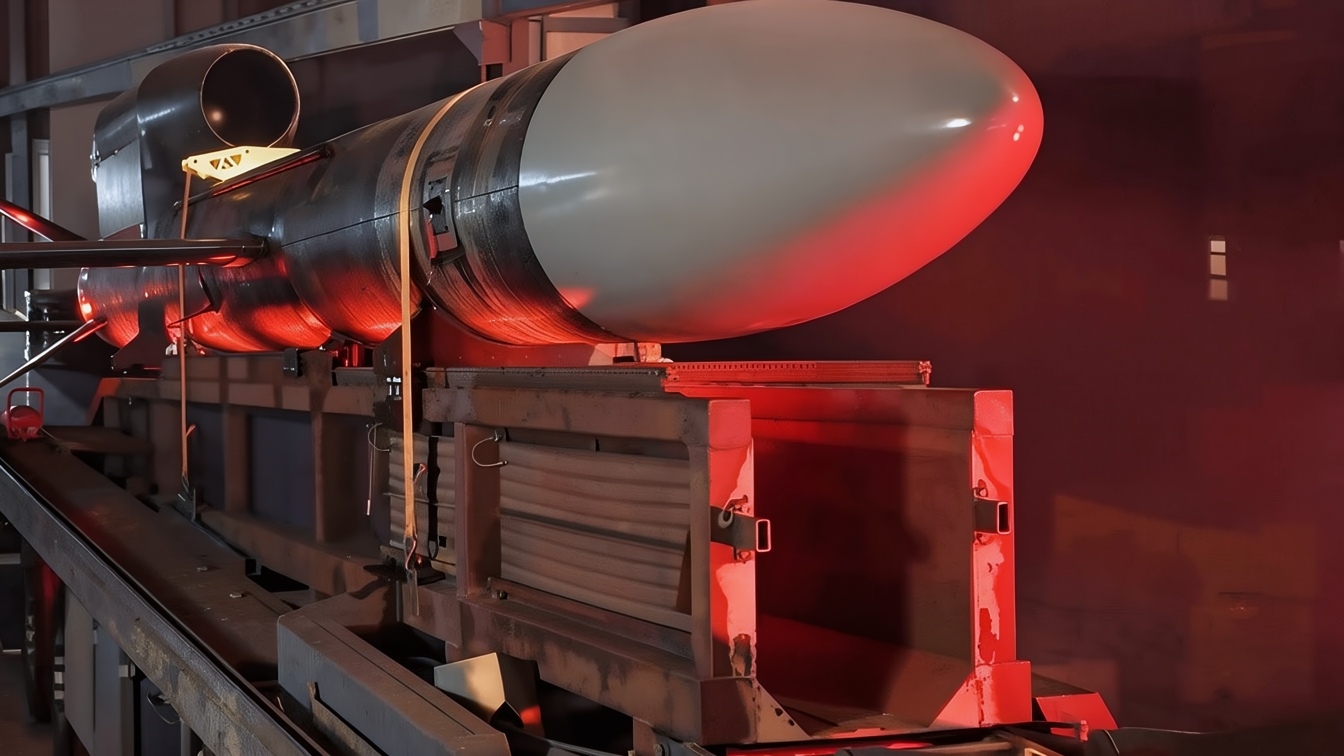
When Russian President Vladimir Putin announced his “special military operation” against Ukraine, it was touted as a short, intense invasion in which Kyiv would capitulate within weeks, if not days.
It was deemed incomprehensible that Ukraine would ever be fighting the war inside Russia’s borders when Russian tanks rolled through border checkpoints across the country.
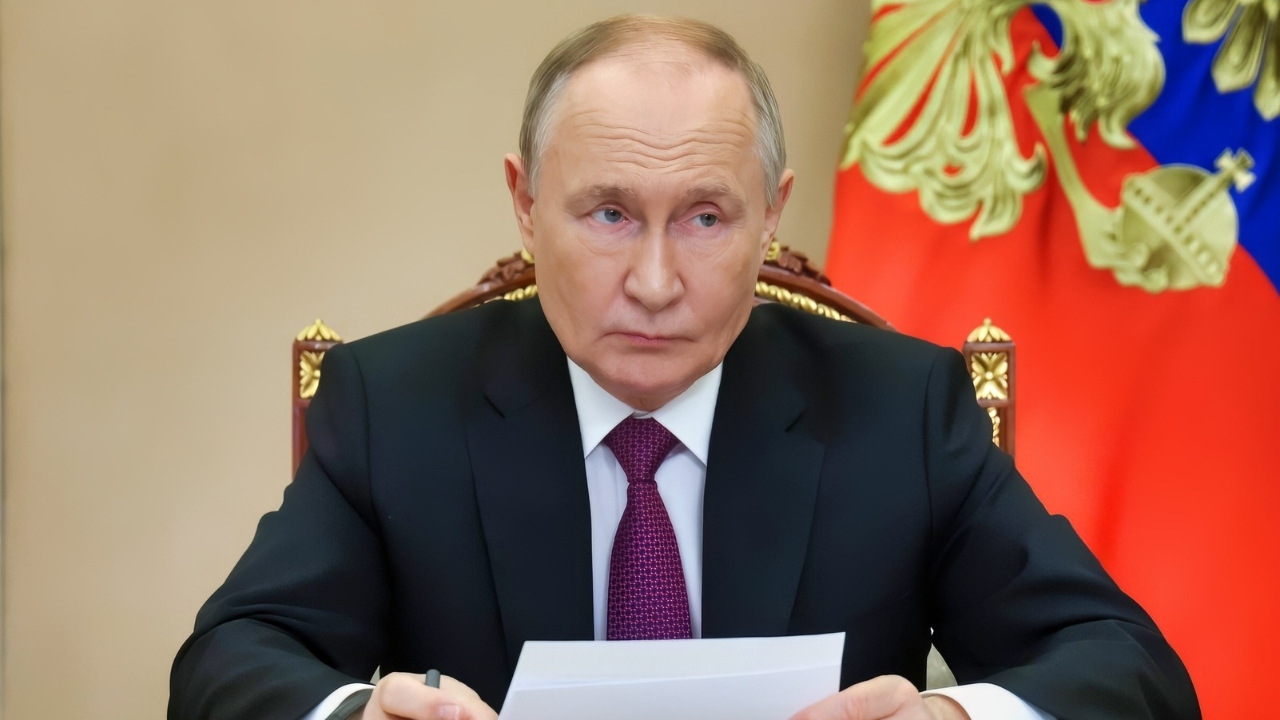
Russia’s President Putin Sitting at a Desk. Image Credit: Creative Commons.
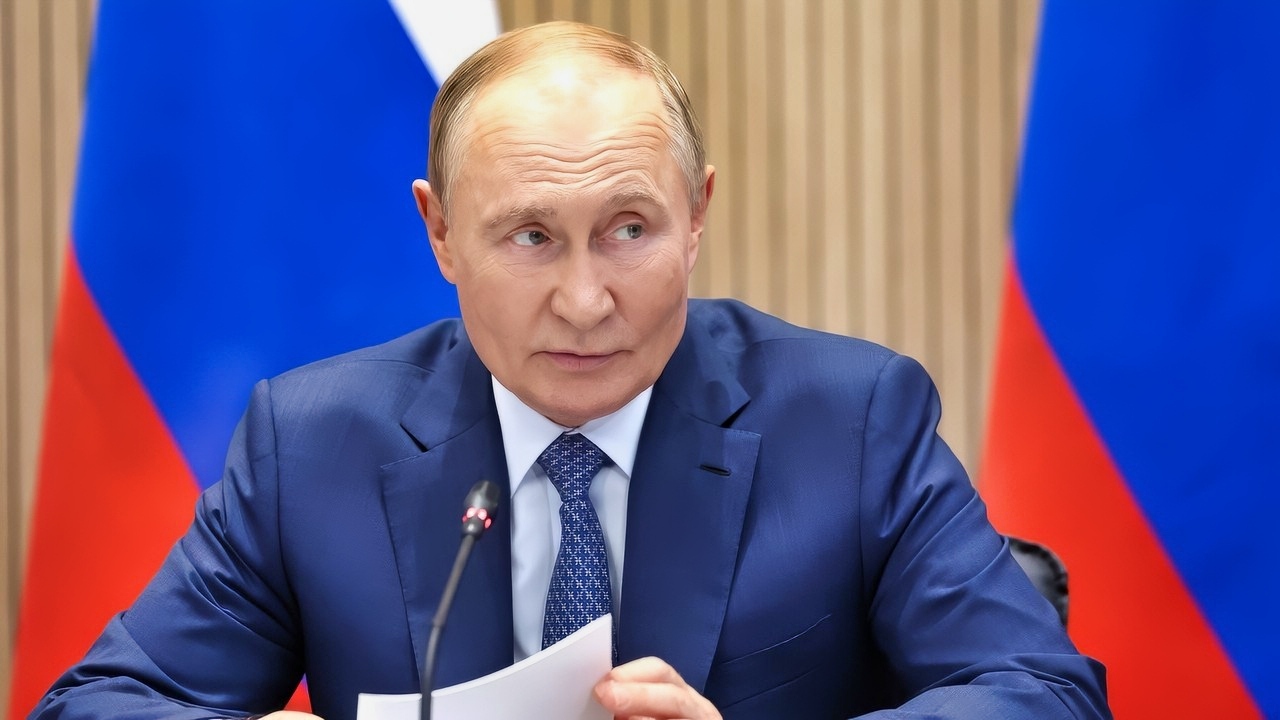
Putin Reading a Statement. Image Credit: Russian Government.
Yet, four and a half years later, Ukraine is inflicting serious damage deep inside Russian territory, bringing the full-scale invasion home to the nation that started it.
But everyday Russians have felt the consequences of conflict not through occupation.
For the past year, Ukraine has waged a campaign against Russian energy infrastructure so damaging that even U.S. President Donald Trump has been forced to wade in.
Massive Strike in Moscow
An example of how devastating this campaign can be was best demonstrated on Sunday, 20th September, when Ukraine launched an enormous attack on Moscow.
The city’s mayor Sergey Sobyanin said more than 1,600 drones had been intercepted, 450 of which were aimed towards the Russian capital, in strikes that took place on the last day of Russia’s State Duma election.
In a social media post, Ukraine’s General Staff said that as part of the attacks, the Gazpromneft-Moscow Refinery was damaged, striking the AVT-6 and isomerization units.
“As of September 21, 2026, after the strike on the Moscow Refinery, more than 45% of the planned capacities of the Russian oil refinery were put out of commission,” it claimed. “As one of the consequences, the Russian Federation is facing a shortage of high-quality fuel. Among other things, there is a sharp decline in the production volumes of gasoline and diesel fuel of the Euro-5/K5 standard.”
Refineries Struggling
A report from the International Energy Agency (IEA) backs the Ukrainian claim. 27 of Russia’s 32 major oil refineries have been attacked since the conflict began, some of which have been struck 15 times.
Those that have escaped Kyiv’s drone assault lie well beyond the frontline, with some refineries more than 4,000 miles from the border.
This strategy, according to the IEA, has intensified in recent months. As a result, output of gasoline has dropped by 20% compared to 2024, while diesel production is down by almost one-third.
It’s created an uncomfortable situation for President Putin and the Kremlin’s tightly controlled propaganda machine. Large queues outside gas stations are becoming more frequent, with 92% of the country reporting fuel shortages at some point since February 2022.
Two-thirds of Russia has also been forced to introduce fuel rationing measures, while the government has restricted oil exports to protect domestic supplies.
“Ukraine is increasingly using multiple waves of drones against individual refineries, seeking to overwhelm protective netting and other largely passive drone defense measures,” wrote the IEA. “Its long-range capabilities and targeting have also advanced rapidly, particularly during the first half of 2026.”
The Disruption of Damage
Ukraine, the IEA writes, is “increasingly targeting specific refinery units to maximize the impact of each strike,” adding that crude distillation units (CDUs) and secondary units are equally targeted.
The former takes Russia a fortnight to repair, but the more complex secondary units can take as long as eight months.
A Costly Conflict
The widespread damage makes it difficult to estimate how much Ukraine’s refinery campaign has cost Russia, but John Lough, Chief of Foreign Policy at the New Eurasian Strategies Centre, estimated it to be around $20 billion.
Russia has benefited from an increase in global oil prices stemming from the Iran war and the subsequent closure of the Strait of Hormuz.
Russia’s oil and gas revenue, according to Reuters, was up 60% year-on-year in July, negating some of the damage inflicted by Ukraine.
Nevertheless, the war remains very much at home for millions of Russians.
“It’s hardly a coincidence that the authorities had to remove the Yabloko party from last weekend’s Duma elections.
It was the only party campaigning for ending the war against Ukraine,” Lough told the Independent. “It was supposed to receive only a tiny proportion of the vote, but the authorities concluded that its message risked resonating among the electorate.”
Kyiv’s campaign is also facing retaliation.
“For Ukraine, it has been a double-edged sword,” Lough added. “Russia has stepped up its own air campaign and has stopped the operation of the Black Sea ports – a lifeline for the Ukrainian economy. It has also intensified its attacks on other economic assets across the country.”
About the Author: Shay Bottomley
Shay Bottomley is a British journalist. He has written for the Western Standard, Business Insider, Maidenhead Advertiser, Slough Express, Windsor Express, Berkshire Live and Southend Echo.