


Donald Trump Declared Victory Over Iran. Three Months Later, the War Is Draining His Options: The White House declared victory over Iran on April 8, after 38 days of Operation Epic Fury. It said the U.S. military had met its objectives, Iran accepted a ceasefire, and the Strait of Hormuz would reopen. On July 27, after 13 more nights of bombing, President Donald Trump was holding fire while Tehran said the strait’s status had not changed and it was not seeking direct talks.
What the Experts Are Saying
Daniel Drezner argues that Trump is losing the Iran war repeatedly because each round leaves the United States in a worse strategic position. The charge sounds sweeping until the administration’s present choices are measured against the goals it announced at the war’s start.

President Donald Trump delivers delivers remarks to troops at Al Udeid Air Base, Thursday, May 15, 2025, in Doha, Qatar. (Official White House Photo by Daniel Torok)
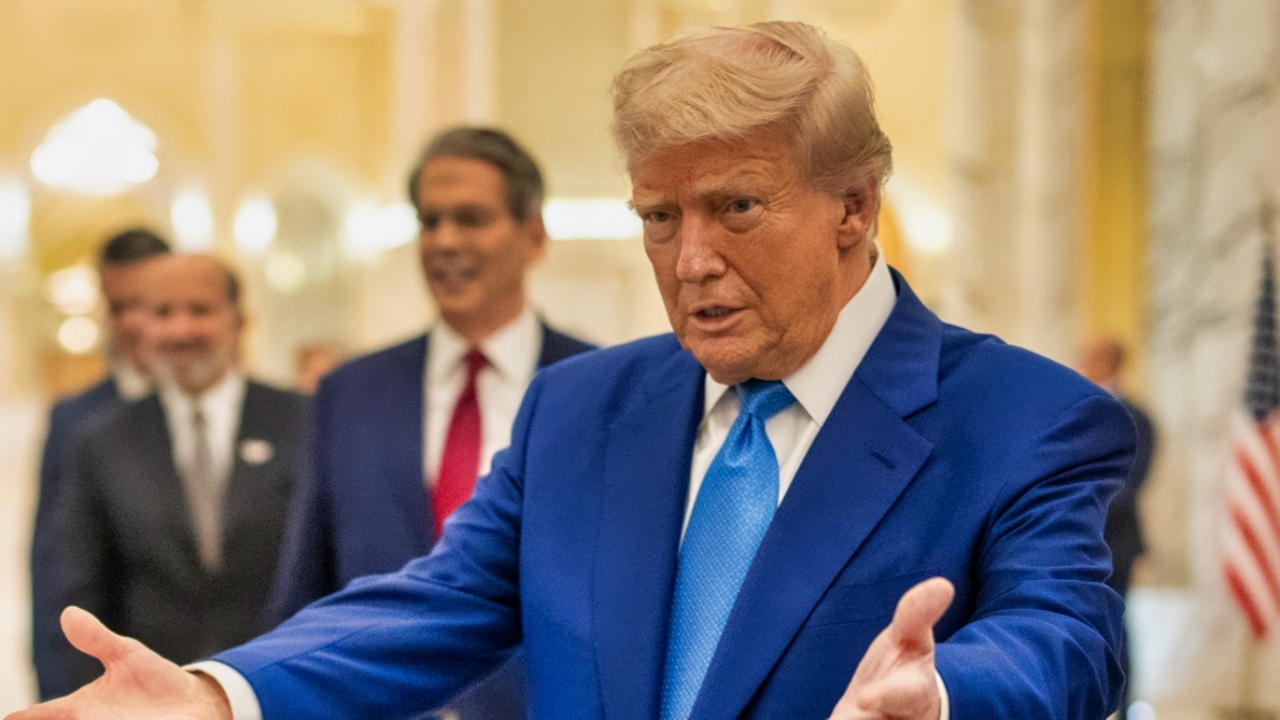
President Donald Trump participates in an welcome line at Qasr Al Watan in Abu Dhabi, United Arab Emirates, Thursday, May 15, 2025. (Official White House Photo by Daniel Torok)
American forces inflicted enormous damage on Iran’s missile, naval, air-defense, and industrial infrastructure.
Yet the nuclear dispute remains unresolved, Hormuz traffic is at a three-week low, and Iranian forces retain enough firepower to threaten shipping and bases across the Gulf. Tactical dominance has not produced a durable political result.
Axios reported that Adm. Brad Cooper, the head of U.S. Central Command, advised stopping the latest campaign because the designated targets were mostly exhausted. Gen. Dan Caine, chairman of the Joint Chiefs of Staff, warned that shrinking air-defense interceptor stocks raised risks for American forces and allies.
The Wall Street Journal reported that an escalation lasting up to two weeks was postponed during that debate.
The White House Declared Victory Before Iran Accepted the Outcome
The administration’s original objectives were explicit: destroy Iran’s ballistic missiles, cripple its navy and defense industry, and stop Tehran from projecting power. In April, the White House said 85 percent of Iran’s defense industry and 97 percent of its naval mines had been destroyed.
Three months later, Iran was again attacking regional bases and challenging commercial vessels.
That contradiction explains why running out of useful targets matters more than another strike count. The United States has demonstrated its ability to destroy fixed Iranian assets. The issue is whether additional destruction changes Tehran’s decisions. The latest pause suggests it does not, short of a larger war Trump and his advisers have declined to launch. The remaining military and diplomatic options all carry substantial costs.
Hormuz Gives Iran Leverage the Bombing Has Not Removed
The Associated Press reported Monday that Iran and Oman were discussing a mechanism to manage ship traffic, while Qatar and Pakistan tried to revive the interim ceasefire. Iran says the waterway remains closed and insists on a sovereign role in supervising passage. The nuclear program has been set aside while mediators focus on keeping vessels moving.
During normal conditions, Hormuz carries roughly one-fifth of global petroleum liquids consumption. Washington can hit coastal radars, missile sites, boats, and mine facilities, but airpower cannot remove the geography. Shipowners and insurers still decide whether the route is safe. Iran needs enough surviving capability to keep commercial operators uncertain, a danger reinforced by fresh claims involving mines and intercepted vessels.
The Missile-Defense Problem Narrows Trump’s Choices
Trump retains the power to order another major strike package. Each round consumes limited defensive missiles needed to protect U.S. personnel and allied territory from retaliation. The concern is how much regional protection Washington is willing to consume for a campaign delivering declining returns.
Pausing carries a cost. Iran says it will remain quiet only while the United States does the same and has threatened to expand the geography of the conflict if American attacks resume.
Trump faces two unattractive options: spend more scarce offensive and defensive weapons for diminishing gains or tolerate an armed pause that leaves Tehran’s leverage over Hormuz intact.
The Iran War Is Becoming a Political Loss at Home
A Washington Post-Ipsos poll found that 29 percent of Americans approved of Trump’s handling of the war, while 68 percent said it had not been worth fighting. A separate Reuters-Ipsos survey found that 79 percent expected extended U.S. involvement and only 37 percent approved of the strikes.
The political damage comes from the widening gap between the promised war and the one Americans are watching. Trump presented force as a way to end the nuclear threat, restore deterrence, reopen Hormuz, and compel a favorable settlement. By late July, the campaign had returned to bombing, retaliation, market anxiety, and indirect mediation.
The 60-day negotiating window created by the June agreement is already well into its second half. Iran’s nuclear program remains off the active agenda while Qatar, Pakistan, and Oman try to keep the latest pause from collapsing.
About the Author: Harry J. Kazianis
Harry J. Kazianis (@Grecianformula) was the former Senior Director of National Security Affairs at the Center for the National Interest (CFTNI), a foreign policy think tank founded by Richard Nixon based in Washington, DC. Harry has over a decade of experience in think tanks and national security publishing. His ideas have been published in the NY Times, The Washington Post, The Wall Street Journal, CNN, and many other outlets worldwide. He has held positions at CSIS, the Heritage Foundation, the University of Nottingham, and several other institutions related to national security research and studies. He is the former Executive Editor of the National Interest and the Diplomat. He holds a Master’s degree focusing on international affairs from Harvard University.


