
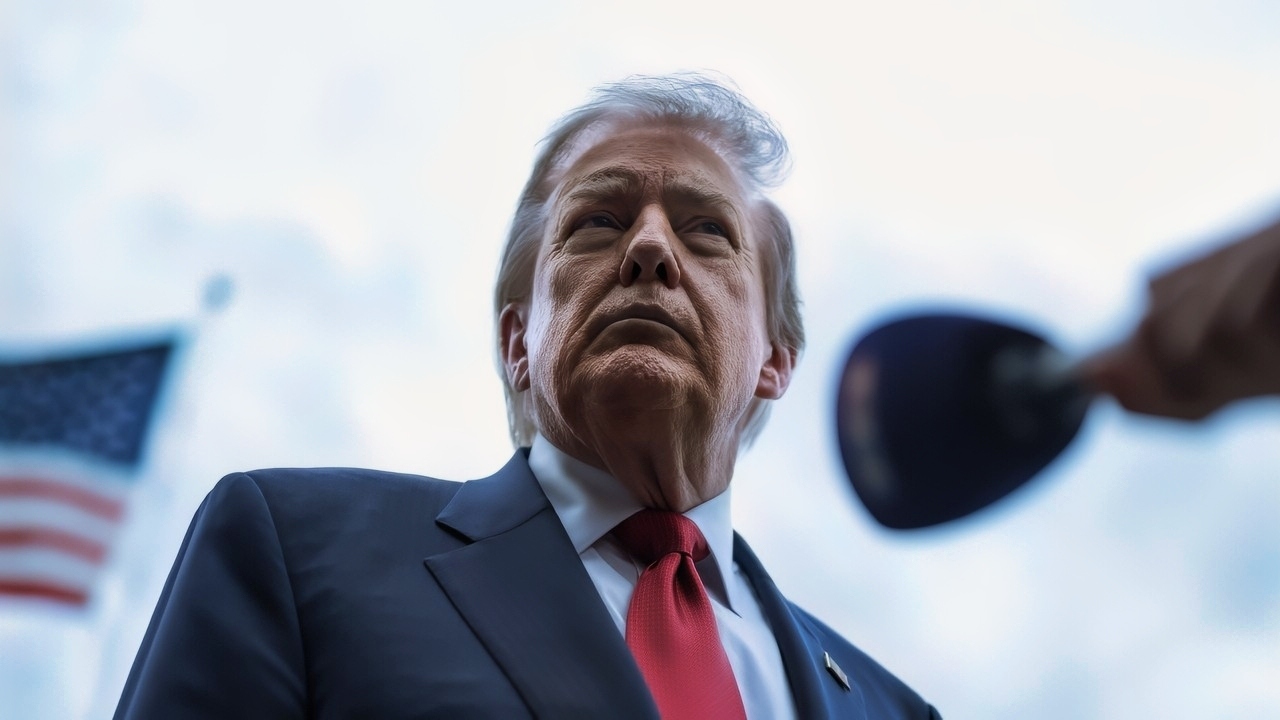
Iran says it has received Washington’s official response to its recent seven-day proposal for ending the war — and even though President Donald Trump publicly rejected the offer in its current form, the prospects of finding a diplomatic solution are not entirely gone.
Many analysts argue that a deal is the only way the conflict can end because several factors limit President Trump’s ability to keep escalating.

F-16 Fighting Falcons from both the 35th and 80th Fighter Squadrons of the 8th Fighter Wing, as well as from the 466th Fighter Squadron of the 419th Fighter Wing at Hill Air Force Base, Utah, demonstrate an elephant walk formation as they taxi down a runway during an exercise at Kunsan Air Base, Republic of Korea Dec. 2, 2011. The exercise showcased Kunsan AB aircrews’ capability to quickly and safely prepare an aircraft for a wartime mission. (U.S. Air Force photo by Staff Sgt. Rasheen Douglas/Released)

F-16 Fighting Falcons from the 35th and 80th Fighter Squadrons of the 8th Fighter Wing, Kunsan Air Base, Republic of Korea; the 421st Expeditionary Fighter Squadron of the 388th FW at Hill Air Force Base, Utah; the 55th EFS from the 20th FW at Shaw Air Force Base, S.C.; and from the 38th Fighter Group of the ROK Air Force, demonstrate an “Elephant Walk” as they taxi down a runway, during an exercise at Kunsan Air Base, Republic of Korea, March 2, 2012. The exercise showcased Kunsan Air Base aircrews’ capability to quickly and safely prepare an aircraft for a wartime mission. Image Credit: Creative Commons.
The Deal Trump Rejected
Iranian Foreign Minister Abbas Araghchi submitted the latest Iranian proposal to end the war through Qatari mediators on September 25.
Under the deal, Iran offered to reopen the Strait of Hormuz and restart negotiations with Washington if the United States met a series of conditions.
Tehran demanded that Washington lift its naval blockade of Iranian ports, temporarily waive sanctions restricting Iranian oil sales, and observe a ceasefire that would also extend to fighting involving Lebanon.
The proposal largely built on the failed memorandum signed in June.
On September 30, Iran confirmed it received a response from Washington via Qatar, though it did not publicly disclose the contents.
Insiders say, however, that negotiations are largely focused on the order in which the two countries would implement their respective commitments under the deal.
What He Will Do Next: Trump Could Start Bombing Again
Washington is open to a deal, but President Trump has made it abundantly clear at this point that a deal will not be made unless Iran agrees to end its nuclear program.
He has also publicly hinted that he is open to escalating to force Iran to meet his demands.
Speaking to Time in an interview published on October 1, Trump said that it was “possible” he would return to bombing Iran after the November 3 midterm elections.
“Yeah, I would do that. It’s possible,” Trump told Time, referring to a renewed bombing campaign. “Because by annihilating Iran, we’ve created peace in the world. With Iran, I don’t think you could ever have peace.”
A renewed campaign may need to focus on critical infrastructure, given that much of Iran’s military has already been targeted.
The United States and Israel have caused substantial damage to Iran’s military, including its navy, air defenses, and missile infrastructure.
Washington’s naval blockade has also restricted Iranian oil exports, limiting its ability to generate revenue from overseas trading partners.
But Tehran still possesses a substantial missile arsenal and still refuses to end its nuclear ambitions.
Trump, then, cannot simply escalate the war without expecting retaliation.
Washington is also running down its own critical weapons inventories, and America’s Gulf partners are exposed to Iranian attacks. Escalating, then, is risky.
America Runs Low On Interceptors
Arguably the most immediate problem for Washington is that it needs weapons not only to attack Iran, but to defend against the missiles that are fired back.
The scale of the problem is pretty substantial, too.
A September 15 Congressional Budget Office analysis estimated that the United States had already expended between one-half and two-thirds of its combined inventory of Patriot, THAAD, SM-3, and SM-6 missile-defense interceptors since June 2025, with the Iran war driving much of that depletion.
Replacing the interceptors won’t be easy, either.
Replacing them through August 1 alone was estimated to cost $13.1 billion.
The CBO also warned that rebuilding inventories could take at least five years, even if production continues to increase.
Separate analyses from CSIS in July put remaining U.S. stocks at fewer than 1,000 Patriot interceptors and roughly 250 THAAD interceptors, meaning Washington has far less capacity to absorb another sustained Iranian missile campaign than it did in the war’s early stages.
Gulf Allies Are Exposed
The second problem for Washington is that America’s Gulf allies are more vulnerable to Iranian retaliation — and with Tehran unable to directly strike U.S. soil and infrastructure, it will likely continue to target U.S.-linked assets and infrastructure in neighboring countries.
In recent weeks, Gulf officials have traveled to Washington to urge the Trump administration and Congress to avoid another major escalation in the war.
Saudi Foreign Minister Prince Faisal bin Farhan also met with Secretary of State Marco Rubio and senators after Trump publicly rejected Tehran’s seven-day proposal.
The concern from Gulf countries is this: another major American bombing campaign could inflict harm on Tehran, but those strikes would almost certainly be met with a retaliatory missile and drone campaign as Iran has less and less to lose.
Those strikes would likely target military bases and oil and energy facilities.
The U.S. Military Is Stretched Thin
Escalation also carries costs beyond the Middle East.
Sustaining the naval blockade for months more – which is another form of escalation – would divert ships from maintenance, training, and other missions, including deployments to the Pacific.
Escalating against Iran, therefore, could leave Washington less prepared for another crisis elsewhere. Trump knows it, and Tehran knows it, too.
About the Author: Jack Buckby
Jack Buckby is a British researcher and analyst specializing in defense and national security, based in New York. His work focuses on military capability, procurement, and strategic competition, and he produces and edits analysis for policy and defense audiences. He brings extensive editorial experience, with a career output spanning over 1,000 articles at National Security Journal, and has previously authored books and papers on extremism and deradicalization.


