
Three Oil Tankers Hit in Hormuz: While the United States continues to insist that the Strait of Hormuz is open, Iranian strikes continue — and on September 29, three oil tankers were struck by unknown projectiles while passing through the waterway.
The three Liberian-flagged vessels, Al Ruwais, Mersin Prosperity, and Sinbad, were traveling through the strait with their Automatic Identification System transponders switched off in an apparent effort to avoid detection, according to shipping intelligence service Marisks.
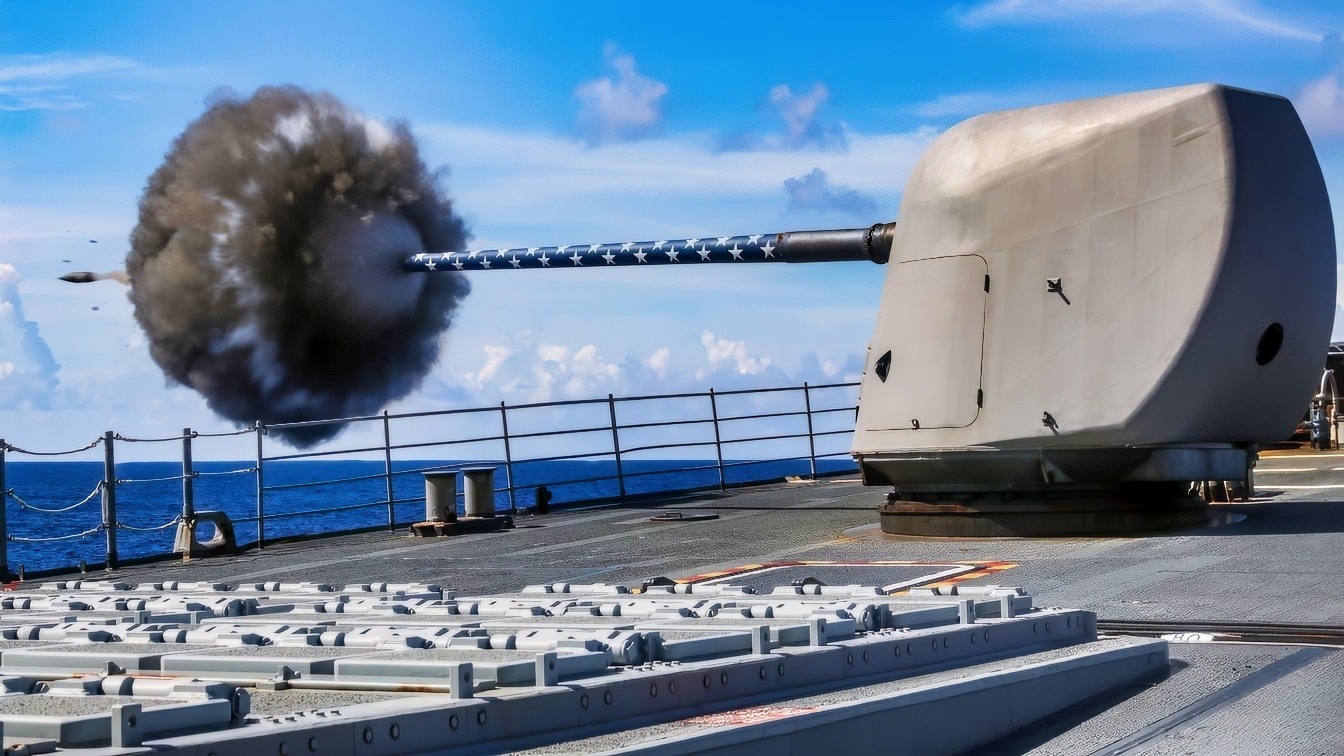
PACIFIC OCEAN (July 29, 2025) The Ticonderoga-class guided-missile cruiser USS Princeton (CG 59) fires its forward Mark 45 5-inch gun during a weapons maintenance shoot, July 29, 2025. The Carl Vinson Carrier Strike Group is underway conducting routine operations in the U.S. 3rd Fleet area of operations. (U.S. Navy photo by Mass Communication Specialist 1st Class Jacob I. Allison)
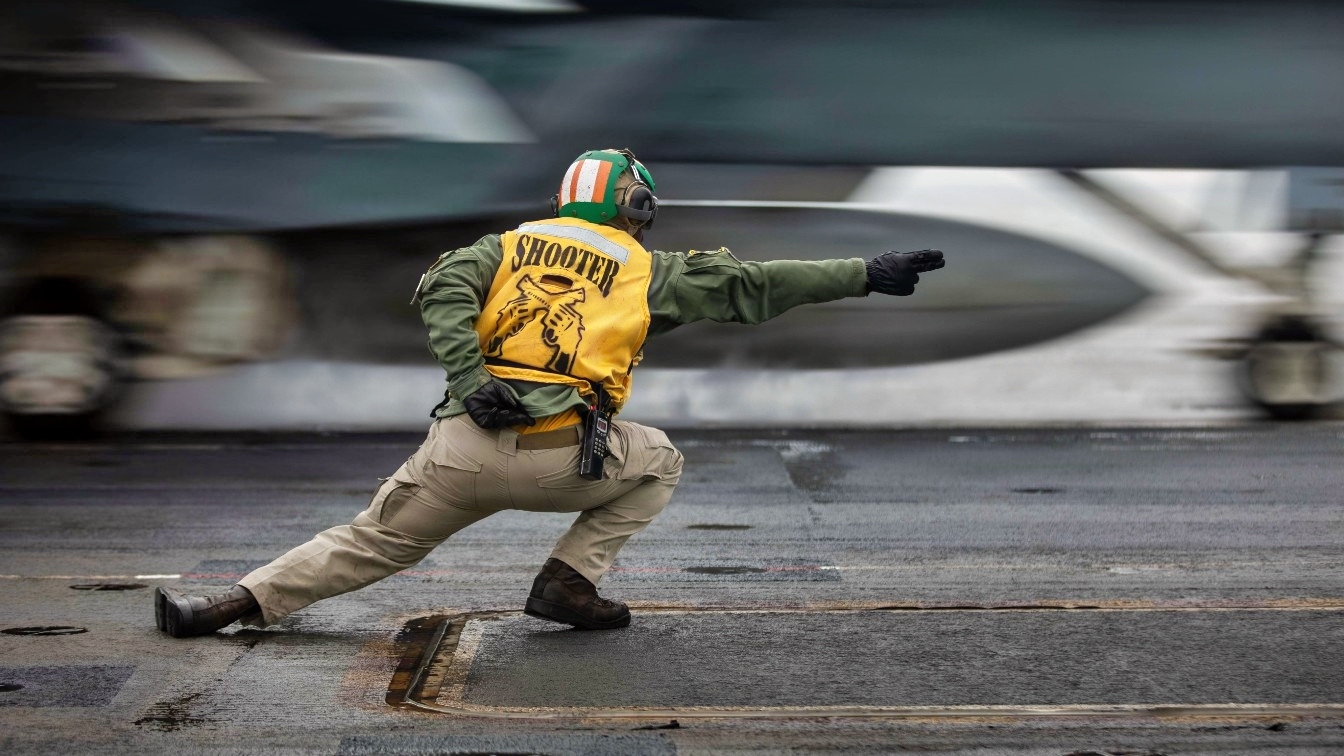
U.S. Navy Lt. Miguel Smith launches an F/A-18E Super Hornet, attached to the “Pukin Dogs” of Strike Fighter Squadron (VFA) 143, from the flight deck of Nimitz-class aircraft carrier USS Dwight D. Eisenhower (CVN 69) May 7, 2026. Eisenhower is underway conducting flight deck certification in the Atlantic Ocean in preparation for future operations. (U.S. Navy photo by Mass Communication Specialist 3rd Class Jamison Sutton)
The vessels were then struck by projectiles of an unknown type and origin.
The attacks came only one day after another tanker was struck while passing through the Strait of Hormuz, meaning four tankers were attacked over two days.
Three Tankers Hit
The United Kingdom Maritime Trade Operations Center revealed the strikes on Wednesday, and according to maritime security firm Vanguard Tech, the Mersin Prosperity was struck on its port side, while Sinbad was hit as it entered the Strait. The extent of the damage to the three ships is currently unconfirmed.
The vessels were carrying, or had recently carried, substantial quantities of petroleum products.
Kpler data also showed that Al Ruwais was conducting ship-to-ship transfers off Sohar, Oman, in late September—a method increasingly used in the region to reduce risk for ships operated by crews and companies less willing to transit the strait themselves.
Mersin Prosperity, a very large crude carrier, had also conducted a transfer near Sohar earlier in the month, moving roughly 2 million barrels of Iraqi Basrah crude onto another vessel. Sinbad, an Aframax tanker, had also loaded refined products at Saudi Arabia’s Jubail industrial port in early September.
ADNOC Logistics and Services, which manages Al Ruwais and Mersin Prosperity, declined to comment to Reuters.
Tanker Hit A Day Earlier
On Monday, September 28, an unknown projectile also struck another vessel as it passed through the Strait of Hormuz, causing a fire on board. The crew was reported safe and eventually extinguished the fire.
The International Maritime Organization’s official list of confirmed regional attacks identified the ship as Al Funtas, a very large crude carrier (VLCC) that is owned and operated by Kuwait Oil Tanker Company.
While the vessel took damage, no pollution was reported.
It is difficult, then, for Washington to honestly claim that the Strait of Hormuz is open. While the volume of oil moving through the Strait has recently increased thanks to U.S.-protected convoys, the strikes continue, and vessels transiting the waterway now face significant risk with every transit.
The attacks also follow claims from Iran that its forces attacked a total of 19 vessels on September 25 and 26.
Tehran Threatens Non-Compliant Ships
One of the three vessels that were attacked on Tuesday, Sinbad, had previously been publicly identified by Iran as a “non-compliant” ship, meaning that it was using a route that Tehran did not recognize as legitimate.
Iran’s Persian Gulf Strait Authority, administered by the Islamic Revolutionary Guard Corps, has repeatedly warned that ships on the non-compliance list could face consequences ranging from fines and detention to, ultimately, confiscation.
On September 26, the authority also warned charterers against using what it described as “illegal routes” through Hormuz, saying it could place companies on the same list if it established violations.
Ships are taking precautions in response to the threats, even as the United States attempts to restore exports by protecting ships moving through convoys closer to the Omani coastline. The three vessels attacked on Tuesday had reportedly turned off their AIS transponders, preventing their positions from being publicly broadcast and therefore making it more difficult for Iranian forces to track them.
Oil Is Moving Again, Anyway
Despite the constant risk, evidence suggests substantially more oil is moving through the Persian Gulf, with preliminary shipping data from Kpler in late September showing crude exports from major Middle Eastern producers were on track to reach 16.328 million barrels per day by month’s end. That’s the highest monthly level recorded since the war began in February, and Saudi Arabia and the United Arab Emirates were identified as the primary drivers of the recovery.
Signs also indicate more tankers are moving through the waterway.
The Wall Street Journal reported a growing number of tankers crossing the strait with U.S. Navy assistance, along with rising volumes of oil moving through alternative pipelines. Ship-to-ship transfers are also becoming more common outside the Persian Gulf, reducing the time individual vessels spend in the most dangerous stretches of water. These measures are helping mitigate the problem, but they still raise prices by adding steps to ensure crude reaches international customers.
About the Author: Jack Buckby
Jack Buckby is a British researcher and analyst specializing in defense and national security, based in New York. His work focuses on military capability, procurement, and strategic competition, producing and editing analysis for policy and defense audiences. He brings extensive editorial experience, with a career output spanning over 1,000 articles at National Security Journal, and has previously authored books and papers on extremism and deradicalization.


Pingback: Iran War: Narratives Continue to Diverge Under 'President of Peace' Trump