

An airport ground worker discovered an explosive-laden drone sitting on the secure cargo apron of Leipzig/Halle Airport early Wednesday.
The unmanned aircraft had landed directly beside a Ukrainian Antonov An-124 freighter and had come to rest on the tarmac undetected.

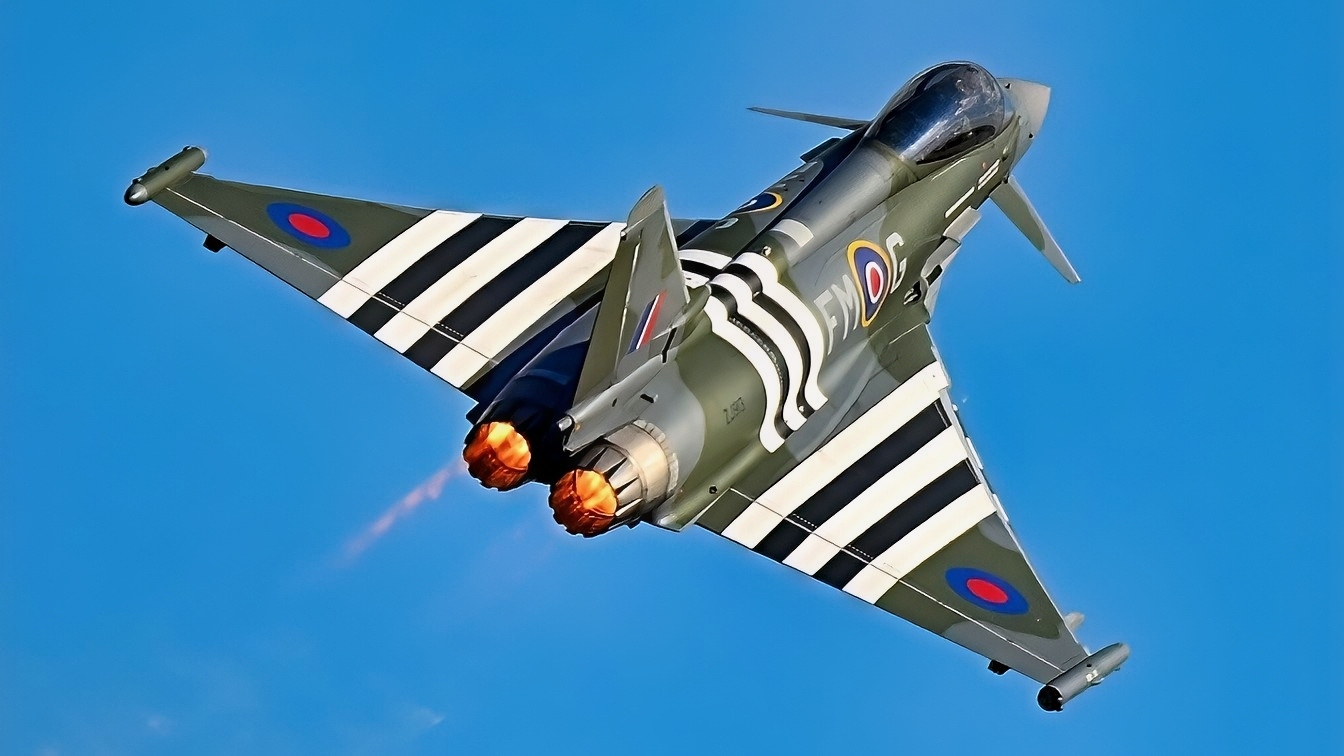
Eurofighter Typhoon Upgrade. Image Credit: Creative Commons.
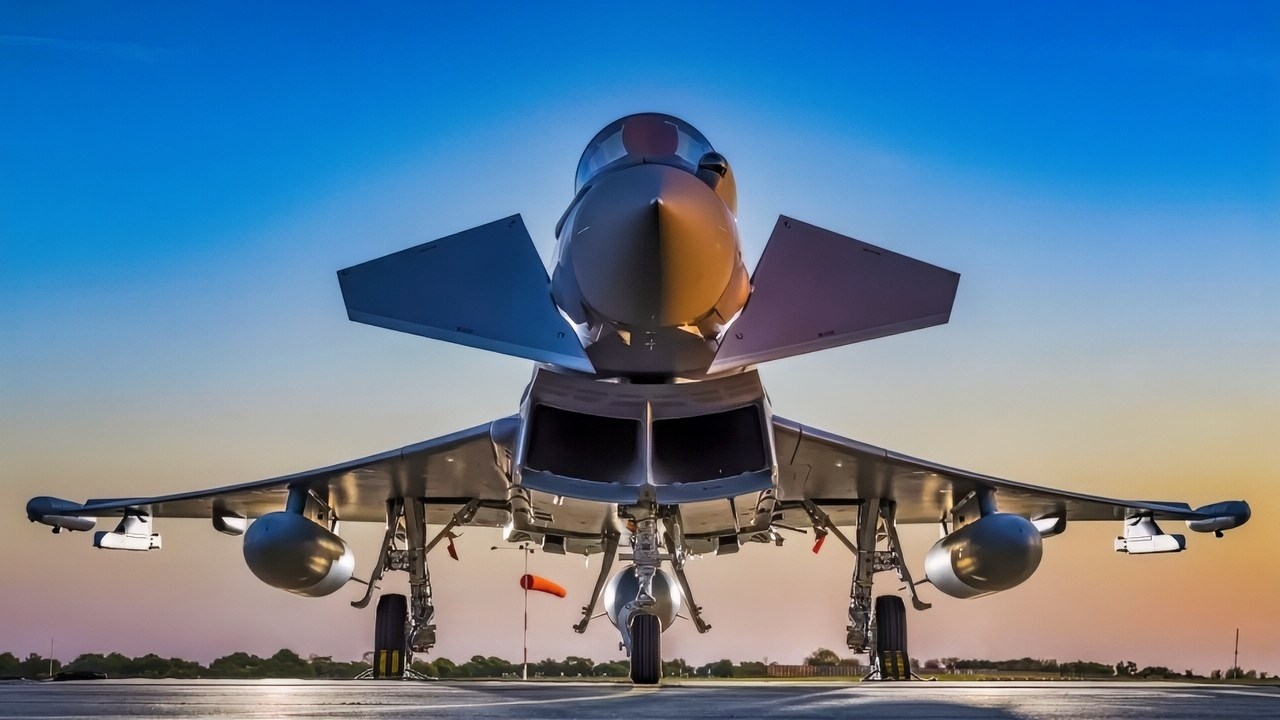
Eurofighter Typhoon on the Runway. Image Credit: Creative Commons.
German and NATO officials are calling the incident an escalation to a “next step” in both drone incursions into NATO airspace and Russian hybrid sabotage against European infrastructure.
This is according to both the Euronews channel and a NATO spokesperson. Simultaneously, the drone caused a DHL cargo aircraft to abort its landing approach.
The DHL aircraft reportedly struck an unidentified flying object roughly 6 kilometers (4 miles) from the airport and was flying at an altitude of approximately 400 meters (1,312 feet).
The DHL aircraft also suffered minor nose damage before safely diverting to Hanover.
The drone was discovered in a secured area of the cargo operations zone near the airport’s southern runway at 2345 hours on Tuesday, 4 August – information that was confirmed by CNN reporting.
Forensic tests have since confirmed the drone was carrying a package that tested positive for nitrates, which are used in explosives.
Additional X-ray imaging revealed a detonator attached to what authorities described as a homemade explosive payload.
In the end, the device did not explode because the detonator malfunctioned. Der Spiegel reported that police have classified the drone’s payload as an “improvised explosive and incendiary device.”
Not A Coincidence
Leipzig/Halle Airport “is not a coincidental target,” writes one German news service. In February 2022, Russian forces attacked and destroyed Antonov’s home base at Gostomel Airport near Kyiv during the opening assault of Moscow’s full-scale invasion.
Ukraine’s Antonov Airlines had based its aircraft at this facility near Kyiv and was able to relocate the surviving fleet of its cargo lifters to Leipzig.
That fleet includes the massive Antonov An-124 “Ruslan” freighters, which are one of the world’s largest cargo aircraft – having a maximum payload capacity of approximately 150 metric tons per aircraft (330,700 lbs).
These aircraft have always been in worldwide demand for their ability to transport oversized payloads. These loads have ranged from major civilian relief cargo flights to Western defense equipment.
At the time that the explosive drone was discovered on the tarmac, there were four of the Ukraine-owned Antonov aircraft parked on the apron near the device.
The mission for this drone appears to be that it was sent to destroy one or more of these Ukrainian aircraft, which are of strategic value to the nation.
An Attempted Russian Attack on Both NATO and Ukraine
These An-124 aircraft were retired decades ago and remain in demand. They are, for all practical purposes, irreplaceable.
There have been many proposals over the years to restart production of the aircraft due to the many customers for its services. This was always ruled as an impractical idea even in the days before the war with Russia.
Ukraine had decided to move its fleet to the former East German city’s airport as this facility had been the primary European maintenance center for the An-124s operated by the private Russian cargo company Volga-Dnepr.
Three of these An-124 cargo aircraft have been stranded and grounded at Leipzig/Halle Airport in Germany since February 2022 due to international aviation sanctions.
Sitting on the tarmac, they contrast sharply with the active Ukrainian An-124 fleet operated by Antonov Airlines, which still uses Leipzig as its temporary international base.
Ukraine operates approximately seven civilian An-124s. Russia operates roughly 40 variants of the same airframe but has been under Western sanctions since 2022 and has struggled to acquire spares from both Western suppliers and the Ukrainian OEM.
No comparable Western aircraft can substitute for the An-124’s combination of payload capacity and outsized cargo capability. Grounding or destroying even one of these Ukrainian aircraft would be a high cost to the NATO supply networks that depend on them.
Ukraine’s Ambassador to Germany, Oleksii Makeiev, did not hesitate to place culpability for the incident on Russia. “Who else could it be but Russia?” he said on Germany’s Welt TV, as also reported by RTE and AP.
German authorities have not confirmed Russia’s guilt in this matter, and Moscow has offered no immediate comment.
This is consistent with Moscow’s standard posture of denial when caught in the act of hybrid warfare operations.
About the Author: Reuben F. Johnson
Reuben F. Johnson has thirty-six years of experience analyzing and reporting on foreign weapons systems, defense technologies, and international arms export policy. Johnson is the Director of Research at the Casimir Pulaski Foundation. He is also a survivor of the Russian invasion of Ukraine in February 2022. He worked for years in the American defense industry as a foreign technology analyst and later as a consultant for the U.S. Department of Defense, the Departments of the Navy and Air Force, and the governments of the United Kingdom and Australia. In 2022-2023, he won two awards in a row for his defense reporting. He holds a bachelor’s degree from DePauw University and a master’s degree from Miami University in Ohio, specializing in Soviet and Russian studies. He lives in Warsaw.


