

According to multiple media reports, a deal is nearing between Iran and Oman that would, at least to some degree, reopen the Strait of Hormuz, marking a significant step toward an end to the war in Iran.
CBS News reported Thursday morning that Iran and Oman were “nearing a new arrangement” for managing traffic for the crucial waterway, but noted that Iranian state news agency IRNA is characterizing the agreement as “a new security model” for the Strait, rather than a full reopening.
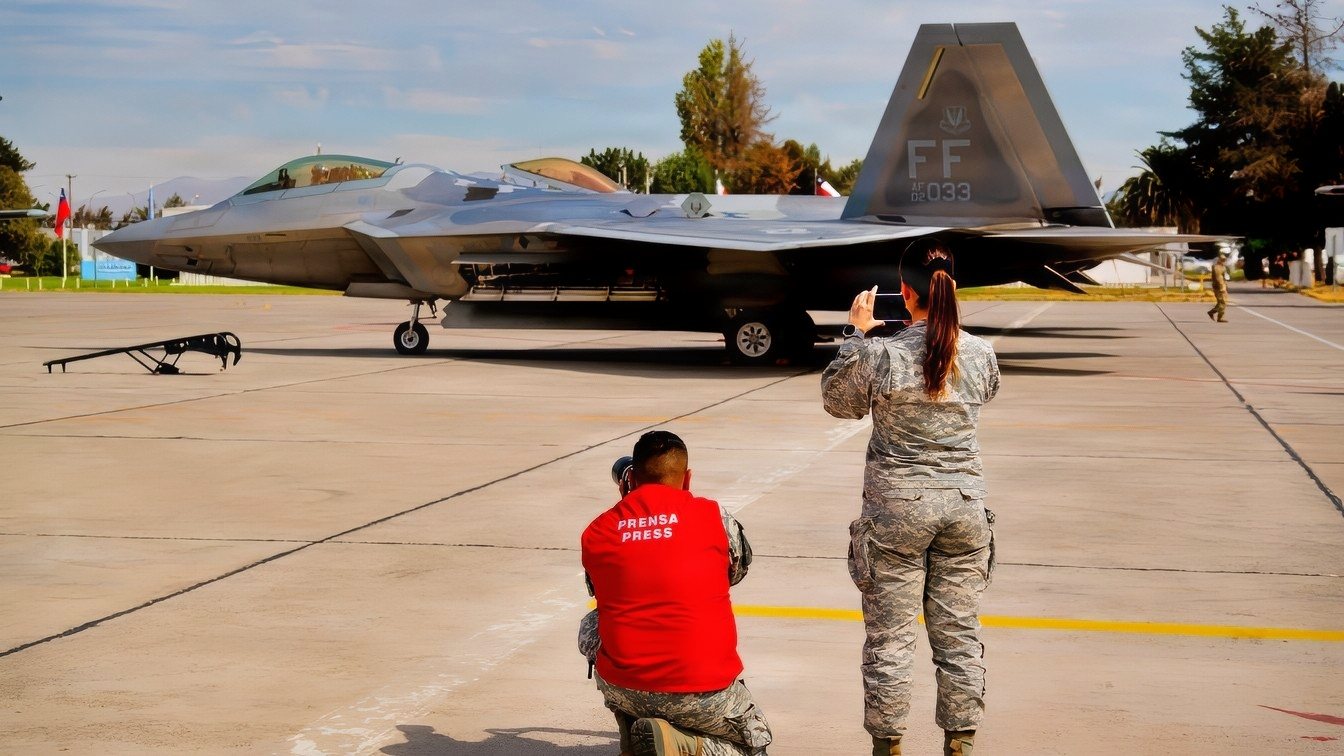
Members of the F-22 Raptor Aerial Demonstration Team perform at FIDAE 2024, Santiago, Chile, April 4th, 2024. The F-22 Raptor Aerial Demonstration showcases the unmatched maneuverability of the airframe by executing a series of combat maneuvers to inspire Americans and their allies, and deter foreign adversaries. (U.S. Air Force photo by Staff Sgt. Michael Bowman)
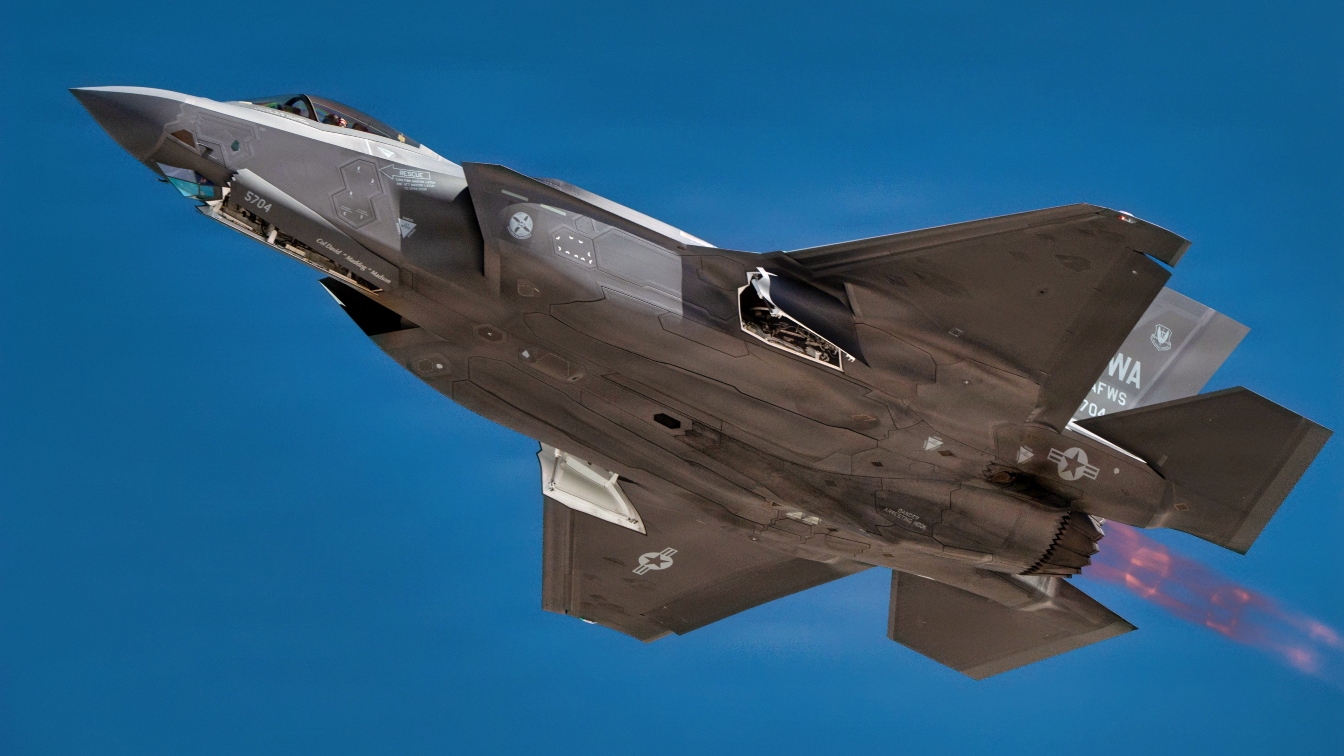
A U.S. Air Force F-22 Raptor aircraft assigned to the 433rd Weapons Squadron takes off during the U.S. Air Force Weapons School Integration at Nellis Air Force Base, Nevada, June 9, 2026. WSINT is a graduate-level training event that integrates multi-domain assets in large-force scenarios, enabling U.S. Air Force and joint service members to refine tactical expertise and employ advanced capabilities in a dynamic threat environment. (U.S. Air Force photo by Airman 1st Class Bella Swarr)
The deal has been reported as close, but there had been no announcement of a final agreement as of Thursday morning.
As reported widely on Wednesday, the deal entails Iran handling incoming traffic to the Strait and Oman handling outgoing traffic.
This differs from the status quo before the war, and IRNA calls the proposed agreement “a new model that is different from the 60-year-old practice of the past.”
Iran would control a channel of the Strait, closer to its own coast, while Oman would control a different channel, South of Iran’s.
Esmail Baghaei, a spokesman for Iran’s foreign ministry, had said on Tuesday that a joint statement by the two countries would be issued upon an agreement, “if certain third parties do not obstruct the process,” presumably referring to the United States.
A deal on the Strait of Hormuz, if it holds, could have major effects on global oil markets, as the waterway’s uncertain status has led to massive volatility in recent months, creating a major political problem for President Donald Trump.
What Comes Next?
If the reported deal comes together, the biggest question will be what comes after. Can the deal hold without collapsing, as the mid-June “memorandum of understanding” and other agreements have? Or will it lead to expanded talks on a more permanent peace, possibly involving the U.S. desire to curtail Iran’s nuclear ambitions?
According to The Independent, there are three likely scenarios for what could follow the proposed agreement: the deal could hold, allowing shipping traffic to pass through the Strait and allowing something resembling normalcy to take hold, including a fall in oil prices. In the last few days, oil prices haven’t changed much, although they’re down from recent highs.
Another scenario is a “cold peace,” in which the U.S. and Iran are not fully at war, but in which the newspaper describes “limited military operations on both sides hindering further progress towards a peace deal.” This has been a frequent status in the conflict in recent months, with occasional strikes and threats of even wider ones, but something less than a state of all-out war.
The other possible scenario? The full-on war resumes, while threatening to spread wider and ensnare more countries.
A Diplomatic Push
However, even with an agreement nearing the status of the Strait, a new report has emerged on the background diplomacy that led to this moment.
On Thursday, Reuters reported that Iran warned Gulf states late last month to convince President Trump to “end U.S. strikes on Iran and instead seek a negotiated end to the war”- or else face attacks on their energy infrastructure, including oil and power plants.
The diplomatic push, the report said, came in late July, around the time that Trump was threatening major attacks on Iran’s own infrastructure.
Reuters’ report, which cited officials from both the Gulf states and Iran, was that Iranian Foreign Minister Abbas Araqchi had spoken to his counterparts in Saudi Arabia, Turkey, and Qatar, as well as Pakistan’s army chief. Reuters notes that those countries’ leaders have been publicly vocal about seeking a diplomatic solution.
Those countries, Reuters reported, were asked by Araqchi to “use their influence with Trump to dissuade him from launching renewed strikes.”
It was after that push, the report said, that Saudi Crown Prince Mohammed bin Salman reached out to Trump to urge him to avoid a major military escalation, leading to the potential deal on the table this week.
“Saudi Arabia believes further escalation will only bring more destruction,” one Gulf source told Reuters. “That is why it urged Trump to give diplomacy a chance.”
About the Author: Stephen Silver
Stephen Silver is an award-winning journalist, essayist, and film critic, and contributor to the Philadelphia Inquirer, the Jewish Telegraphic Agency, Broad Street Review, and Splice Today. The co-founder of the Philadelphia Film Critics Circle, Stephen lives in suburban Philadelphia with his wife and two sons. For over a decade, Stephen has authored thousands of articles that focus on politics, national security, technology, and the economy. Follow him on X (formerly Twitter) at @StephenSilver, and subscribe to his Substack newsletter.


