

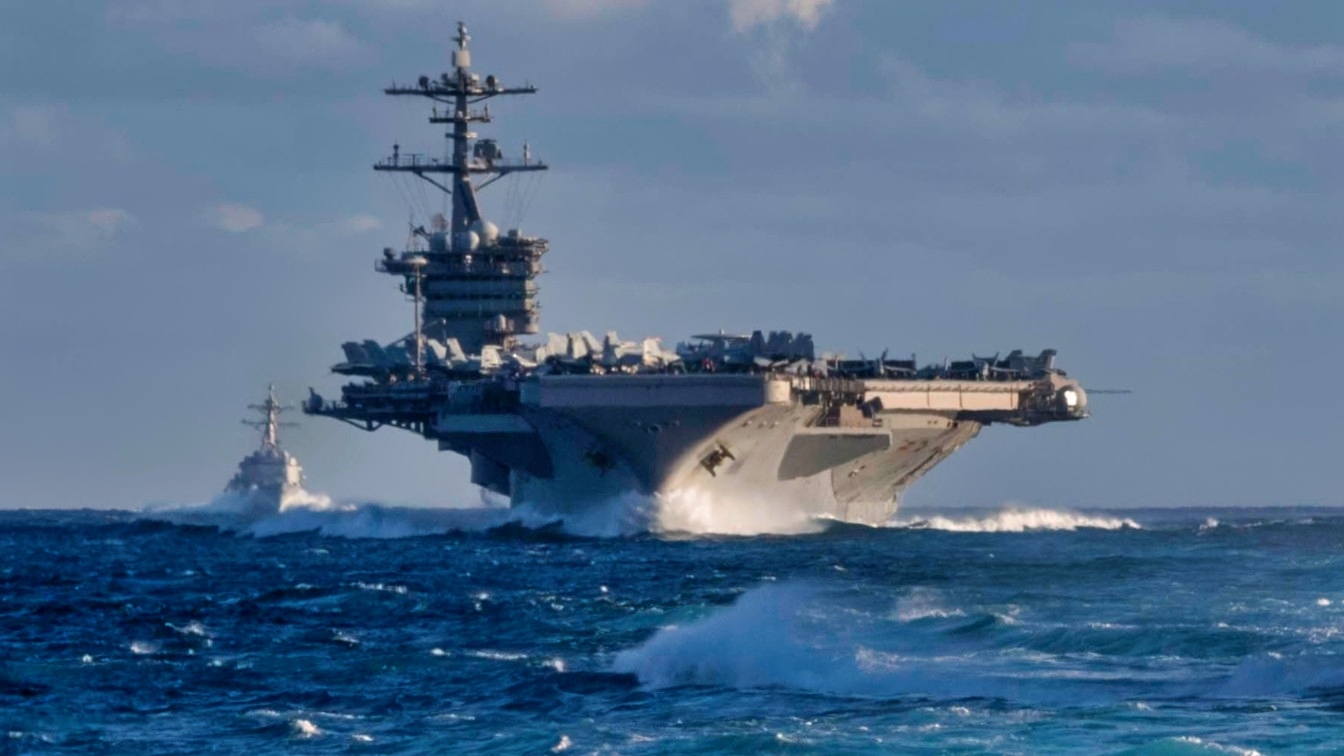
U.S. ‘Stealthily’ Moves Oil in War-Torn Strait of Hormuz – The United States military is quietly moving millions of barrels of oil through the Strait of Hormuz every day, despite Iran’s bid to strangle shipping in the strategic waterway.
Axios said the U.S. military has established a protected shipping corridor along the southern side of the strait, close to Oman. Two U.S. officials said between 15 and 20 tankers have been entering and leaving the Gulf through the route each night in recent weeks, moving close to 10 million barrels of oil per day.
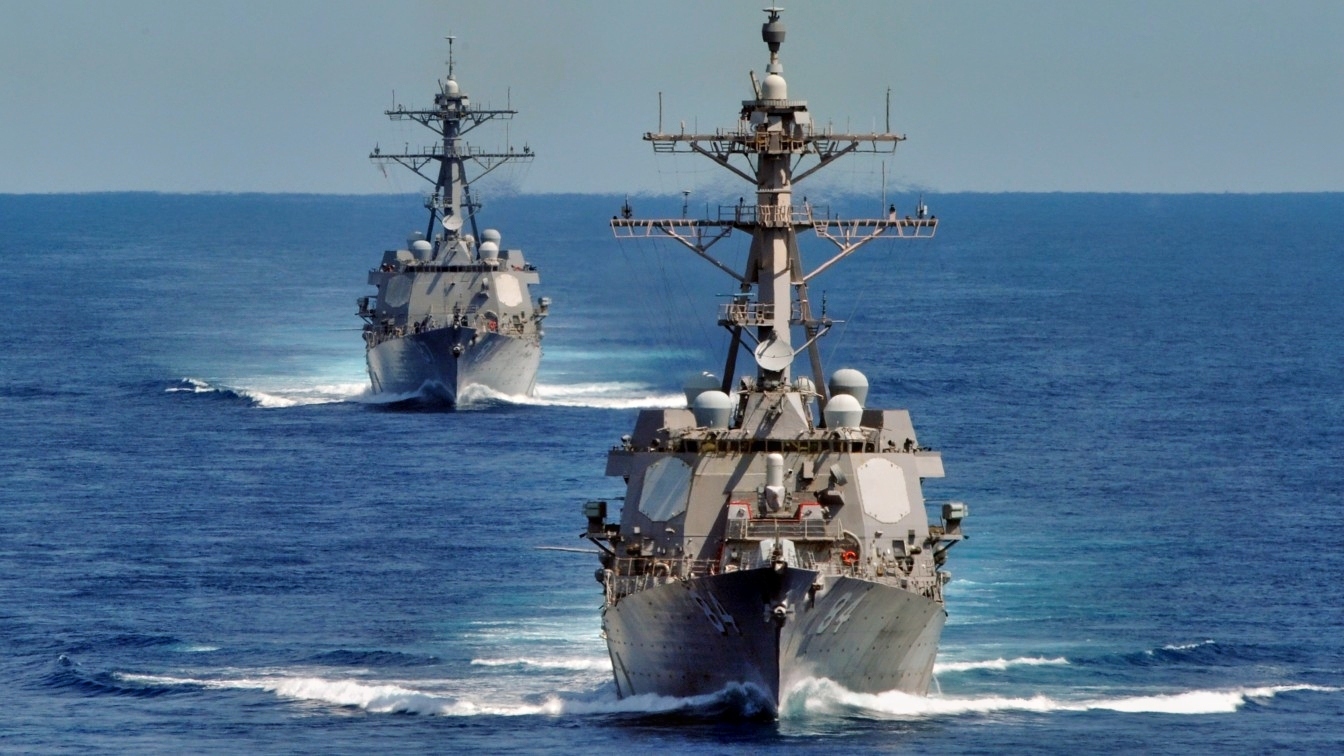
The Arleigh Burke-class guided-missile destroyers USS Bulkeley, right, and USS Mason participate in a strait transit exercise. Bulkeley and Mason are part of the Enterprise Carrier Strike Group and are conducting work-ups and flight operations in preparation for an upcoming deployment. (U.S. Navy photo by Seaman Jared M. King)
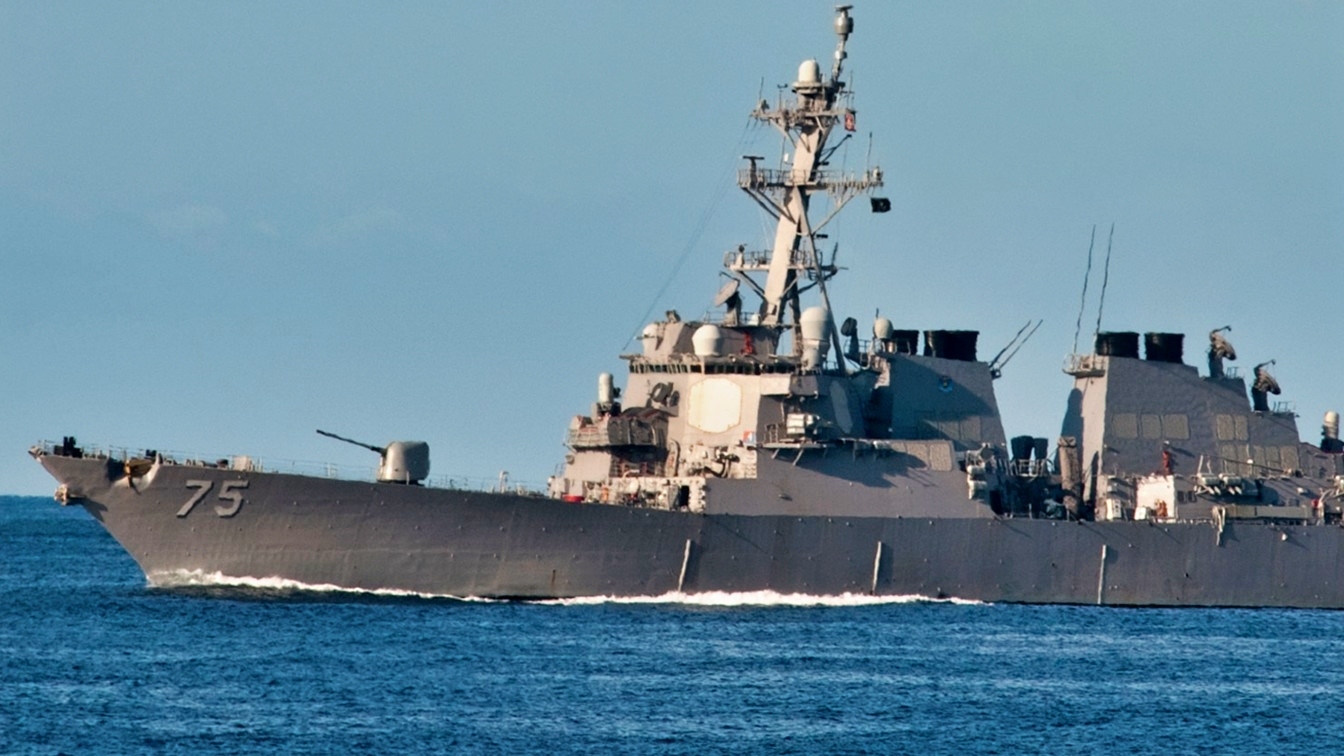
Arleigh Burke Class guided-missile destroyer USS Donald Cook is underway for a scheduled deployment in the U.S. Navy’s 5th and 6th fleet areas of responsibility. Donald Cook departed Naval Station Norfolk Monday, September 19th. (U.S. Navy photo by Petty Officer 3rd Class Scott Pittman)
U.S.: We Control the Strait
One U.S. official told the outlet: “The Islamic Revolutionary Guard Corps can be a nuisance, but they don’t control the strait. We do.” President Donald Trump similarly said there was a “tremendous amount of oil” now coming via Hormuz.
Prior to the war, the strait was one of the world’s most important energy choke points. The U.S. Energy Information Administration estimates that 20.9 million barrels of oil and petroleum products passed through the strait each day in the first quarter of 2025. The figure plummeted to a mere 4.9 million barrels per day by the second quarter of 2026.
Traffic Stays Slow
Kpler said that a measly nine commodity ships passed through the strait on Wednesday. Such figures obviously fail to account for ships traveling with their Automatic Identification System (AIS) transponders turned off.
The figures cannot capture every crossing. Some ships are moving with their transponders switched off to make them harder to track. But observable traffic remains a fraction of its pre-war level.
‘Going Dark’
Kpler data shows that more than 80% of liquid cargo movements over the last fortnight took the Omani route or went “dark.” “Dark shipping” refers to when boats switch off their transponders. In this case, many of them are likely traveling via the Omani route in order to avoid detection. Homayoun Falakshahi, head of Kpler’s prestigious crude oil analysis, has said that Iran seems to have “at least partially lost control of the strait.”
But such “dark shipping” is not the equivalent of ‘invisible shipping,’ and vessels are not totally undetectable just because they turn their AIS off. This suggests Iran may be able to detect them but is letting some through anyway.
U.S. Downgrades Iranian Capabilities
Empty tankers are reportedly being coordinated by a U.S. military task force to enter the Gulf through the Arabian Sea under cover of darkness. They then load up on oil at points in the Gulf before exiting near the Omani coast, rather than the Persian coast.
U.S. Air Force fighters, meanwhile, are providing the ships with protection against Iranian projectiles.
On Wednesday, the United Arab Emirates announced a suspension of trade ties with Tehran after accusing it of launching two missiles at commercial traffic off its coastline.
It comes after a fortnight-long CENTCOM campaign severely damaged Iran’s radar and maritime surveillance capabilities.
On Thursday, Brent Crude climbed to more than $93 a barrel, its highest price in over three weeks.
The Strait is plainly in an awkward predicament, with Iran failing to sabotage every single Gulf oil export, but Washington also failing to restore pre-war shipping levels.
Falakshahi’s claim that Iran has “partially lost control” is perhaps rather closer to the facts than the bombastic claims of Tehran and Washington, respectively.
Will Tehran Double Down?
On July 7, Trump said that the “memorandum of understanding” agreed in June was “over,” while Iran’s Foreign Ministry said it was “suspended” the following week.
Earlier this week, Trump told Fox News that: “They [Iran] should put up the white flag of surrender,” claiming that backchannel talks with the Islamic Revolutionary Guard Corps (IRGC) were ongoing.
The following day, Tuesday, he walked back the claim and said no talks with Iran were ongoing. He also quipped that the U.S. could bomb Oman, a U.S. partner, if it “gets in the way.” His comments come amid claims Oman and Iran could reach a deal to partially reopen the strait.
According to Arab intelligence cited by The Wall Street Journal, Iran is preparing to ramp up the war again, having used the relative lull in fighting to increase missile and drone production.
About the Author: Georgia Gilholy
Georgia Gilholy is a journalist based in the United Kingdom who has been published in Newsweek, The Times of Israel, and the Spectator. Gilholy writes about international politics, culture, and education.


