

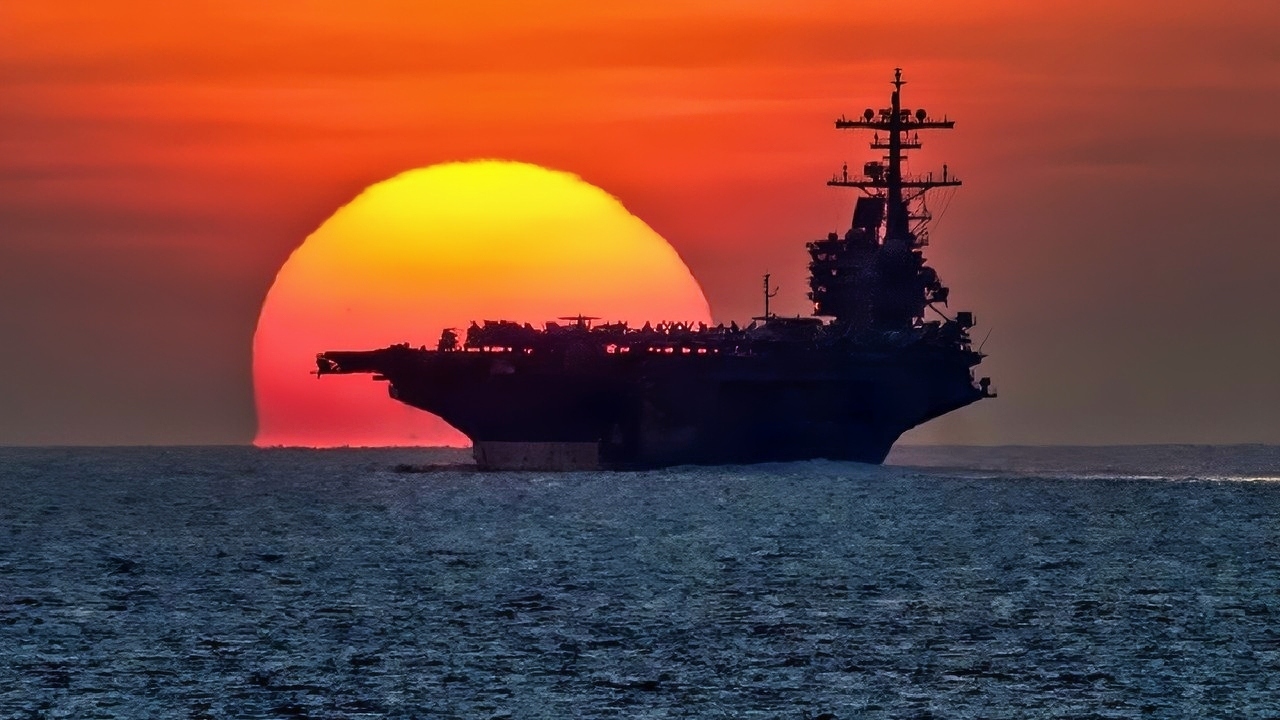
The Strait of Hormuz, despite President Donald Trump’s frequent claims to the contrary, remains almost completely closed, and the president has also said that no talks are planned between the U.S. and Iran. The president has even been musing of late about declaring the Strait of Hormuz a U.S. territory.
However, one new report says the United States has made a clandestine move, with some success, to get oil through.
Libre Aircraft Carrier Naval Group Image
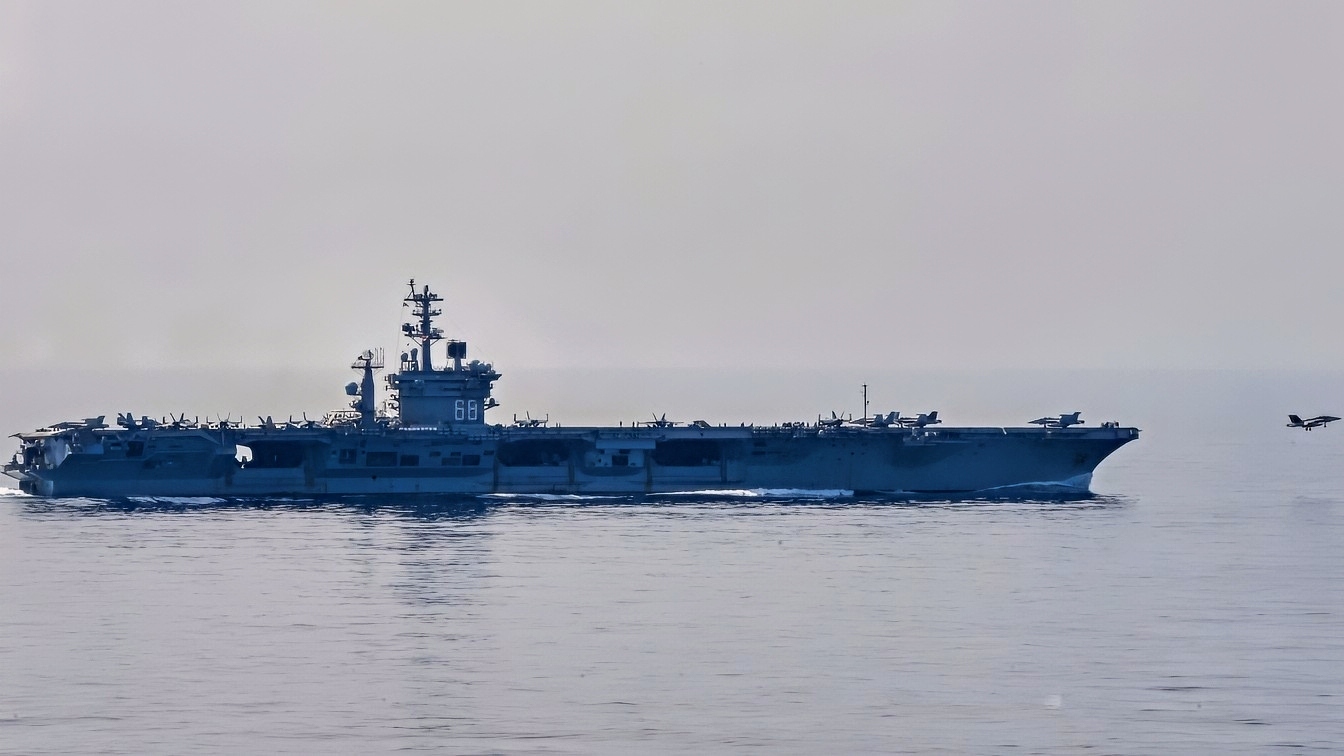
SOUTH CHINA SEA (Jan. 15, 2022) A U.S. Navy aircraft launches from the flight deck of the aircraft carrier USS Nimitz (CVN 68). Nimitz in U.S. 7th Fleet conducting routine operations. 7th Fleet is the U.S. Navy’s largest forward-deployed numbered fleet, and routinely interacts and operates with Allies and partners in preserving a free and open Indo-Pacific region. (U.S. Navy photo by Mass Communication Specialist 3rd Class Carson Croom)
Axios reported Wednesday that the military has “quietly established a shipping corridor” in and out of the Strait. Two U.S. sources told Axios the corridor is meant to transport “millions of barrels of oil each day.”
An Army task force at Fort Bragg supervises the secret corridor and tracks ships traveling through it each day.
The new shipping channel had not been reported before.
A Secret Channel
How did they do it?
According to the report, the channel has been in operation for “several weeks,” and 15-20 tankers have entered and exited each night through the Southern channel near Oman, rather than the Northern one closer to Iran.
Officials told Axios that 10 million barrels of oil a day have been transported through the Strait, which is about half the typical daily volume from before the war, with that oil entering the global energy market.
And the U.S., per the report, isn’t just escorting outbound tankers; it is “helping empty tankers enter the Gulf from the Arabian Sea through the strait, pick up oil from countries in the region, and then exit.”
One source made it clear that this is what Trump meant by declaring that the U.S. controls the Strait of Hormuz.
“We have been controlling the southern lane of the Strait of Hormuz for two months now,” one official told Axios. “The Islamic Revolutionary Guard Corps can be a nuisance, but they don’t control the strait. We do.”
The secret channel, Axios says, is protected by U.S. fighter jets against the threat of Iranian missiles and drones. The U.S. also claims that it has “degraded” Iran’s radar systems, reducing their visibility and making it easier for the U.S. to run the clandestine channel.
The New York Times also reported on Wednesday more about the clandestine efforts to get ships through the Strait.
“It’s one of the surprising successes,” Michelle Wiese Bockmann, a shipping analyst at maritime analysis firm Windward, told the Times. “They have been extraordinarily effective in keeping that southern corridor operating, despite the attacks.”
Joshua Tallis, an analyst at the Center for Naval Analyses, told the Times that the current method of getting oil through is “extremely labor-intensive,” much more so than before the war.
The Times positions the clandestine program as one of the efforts the U.S. is undertaking that is “aied at loosening Iran’s grip on the strait.” The other is the continuing Naval blockade of ships.
Why Reveal It?
One big question the Axios story raises is: why tell the press now? Why not keep the secret channel a secret, instead of revealing it publicly and possibly jeopardizing its continued existence?
The Times did report that Iran has been shooting at ships trying to traverse the Strait, and that just this week, one ship was hit this week while sailing near Oman, with one crew member killed. So Iran seems to know some effort is underway.
“Iran’s threat over the strait will remain significant for the foreseeable future,” Mona Yacoubian, a director of the Middle East Program at the Center for Strategic and International Studies, told the Times.
What of the Iran/Oman Talks?
The talks between Iran and Oman over the status of the Strait of Hormuz, reported as close to a deal a week ago, appear to have stalled, Semafor reported Thursday, with Trump earlier this week threatening to bomb the U.S. ally Oman.
According to Semafor, which cited a U.S. official and a White House official, “the administration believes the Iran-Oman discussions broke down weeks ago.” This raises the possibility that a deal between the two countries could jeopardize the newly created Strait of Hormuz channel.
About the Author: Stephen Silver
Stephen Silver is an award-winning journalist, essayist, and film critic, and contributor to the Philadelphia Inquirer, the Jewish Telegraphic Agency, Broad Street Review, and Splice Today. The co-founder of the Philadelphia Film Critics Circle, Stephen lives in suburban Philadelphia with his wife and two sons. For over a decade, Stephen has authored thousands of articles that focus on politics, national security, technology, and the economy. Follow him on X (formerly Twitter) at @StephenSilver, and subscribe to his Substack newsletter.


Pingback: Strait of Hormuz Stealth Oil Corridor | Rothman Report