
Ukraine has published a detailed assessment of Russia’s 3M22 Zircon missile, the two-stage Russian missile used in both naval and land-attack strikes.
The new assessment reveals not only how one of Moscow’s most advanced weapons works, but also the massive industrial network keeping it in constant production.
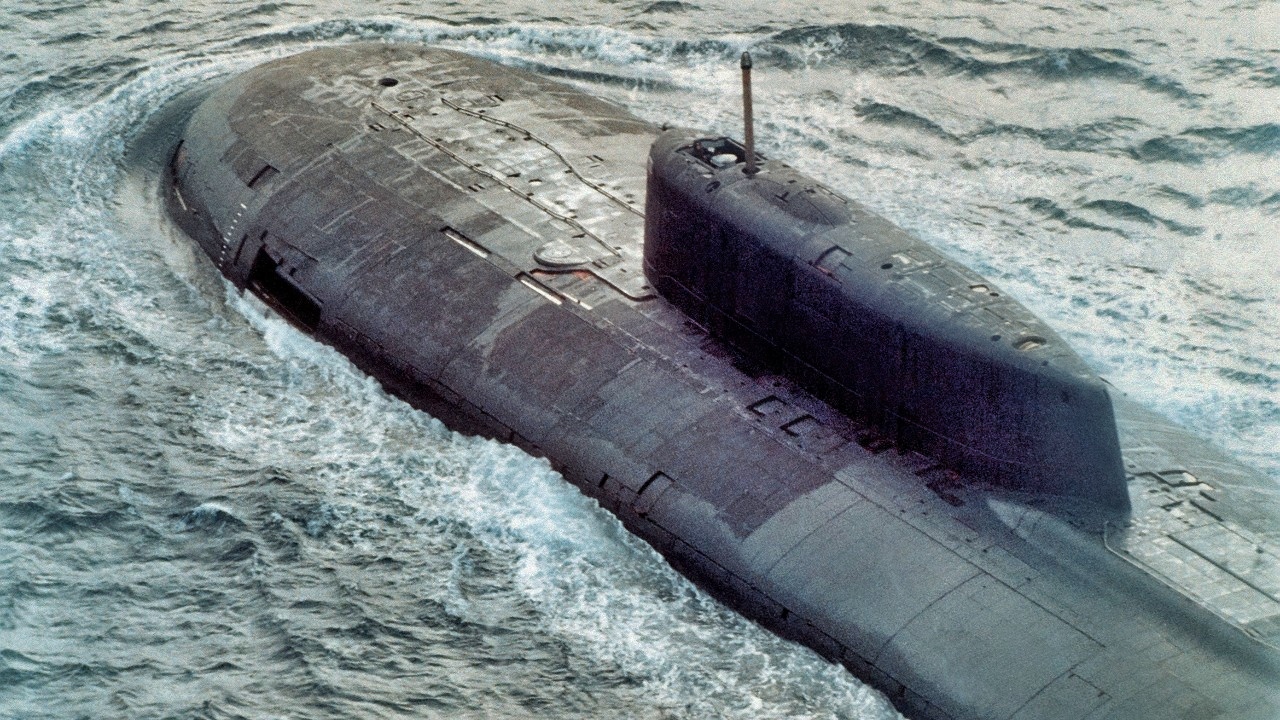
An elevated port side view of the forward section of a Soviet Oscar Class nuclear-powered attack submarine. (Soviet Military Power, 1986) Image Credit: Creative Commons.

Buk-M2E Air Defense from Russia. Image Credit: Creative Commons.
Ukraine’s Defense Intelligence agency, known as HUR, says that it has identified 70 Russian businesses involved in the manufacturing of the Zircon missile and its major components, including its engines, airframe, and solid rocket propellant.
The agency also released new information about 84 officials and employees working at companies connected to the program.
The latest information was added to the HUR War & Sanctions database on Monday, August 31, allowing the world to see exactly what companies are responsible for building weapons powering the Russian invasion of Ukraine.
The published assessment also includes a three-dimensional model that shows how the missile’s internal systems work.
That new intelligence not only reveals secrets about how one of Russia’s most advanced cruise missiles works, but also helps identify individuals and entities who may now be targeted by Western sanctions.
Ukraine Maps Out Zircon Production
Per the newly released data, Russia’s NPO Mashinostroyeniya is the primary developer of the Zircon missile. The company works with dozens of other companies that feed materials and parts into the program.
Ukrainian intelligence has revealed a vast network spanning Russia’s defense industry.
The network includes companies that build guidance equipment, others that build propulsion systems, and others that make everything from airframe components to specialized hardware.
Specifically, Ukraine identified Tactical Missiles Corporation as one of the companies involved in the program, along with Production Association Strela, which oversees the assembly of Zircone missiles before they are fitted with warheads and detonators.
Identifying Individuals
HUR also said it has begun identifying the people running or working in critical parts of the newly identified network, as well as any foreign equipment used by Russian manufacturers.
For the Zircon program, Ukrainian intelligence says it has identified 84 officials and employees at the principal enterprises involved in production.
Those individuals are logged separately in HUR’s War & Sanctions database alongside the 70 companies involved, thereby allowing investigators to link specific individuals to the industrial network responsible for manufacturing the missile.
The methods appear designed to make it harder for corporate entities to hide responsibility for missile production.
Instead of identifying only a factory, HUR is exposing executives, managers, engineers, and other personnel it believes are involved in keeping strategically important weapons programs operating despite sanctions.
Ukraine has done this before, too. Last week, officials published information relating to 108 officials and employees involved in the production of the Iskander-M ballistic missile.
That disclosure also identified foreign components and 121 pieces of foreign-made industrial equipment being used by participating businesses.
Russia Is Using More Zircons
After spending much of the early stages of the war avoiding using its most valuable and advanced weapons in Ukraine, Russia is now not only expending its more valuable weaponry and ammunition, but building more of them, too.
Russia has dramatically increased its use of Zircon missiles against Ukraine in recent months, and Kyiv is struggling to keep up.
Originally designed primarily as an anti-ship weapon, the Zircon is now more often being used to launch land attacks against Ukrainian cities and infrastructure. That became evident in early summer.
In the first 19 days of July alone, Ukrainian Air Force data suggests that Russia launched 20 Zircon missiles against Ukrainian targets.
That was roughly two-thirds of the number of Zircons Russia reportedly planned to manufacture during all of 2026.
Russia appears to have built a substantial stockpile of the weapon before its use, however, with HUR estimating in July that Moscow still possessed more than 120 Zircons in total.
That was down significantly from the roughly 230 that Ukrainian intelligence estimated Russia possessed in April.
The numbers suggest that Russia is now willing to burn through its accumulated reserves at a time when Ukraine is struggling to defend itself against large-scale attacks, drone swarms, and ballistic missile strikes.
Ukraine Has Proven the Zircon Can Be Stopped
Using the Zircon gives Russia major advantages, including its high speed, which leaves air defense crews with far less time to detect and intercept it than other missiles. But that doesn’t mean the weapon is unstoppable.
Patriot systems have played a central role in defending Kyiv against Zircon strikes, meaning Ukraine technically has at least one effective way to counter them.
But Russia’s urgency to expend those missiles now makes sense when you consider that Ukraine is still struggling with a major shortage of Patriot missiles, with reports in recent weeks describing how many Patriot air defense systems have sat unused for several weeks.
About the Author: Jack Buckby
Jack Buckby is a British researcher and analyst specializing in defense and national security, based in New York. His work focuses on military capability, procurement, and strategic competition, producing and editing analysis for policy and defense audiences. He brings extensive editorial experience, with a career output spanning over 1,000 articles at 19FortyFive and National Security Journal, and has previously authored books and papers on extremism and deradicalization.


