

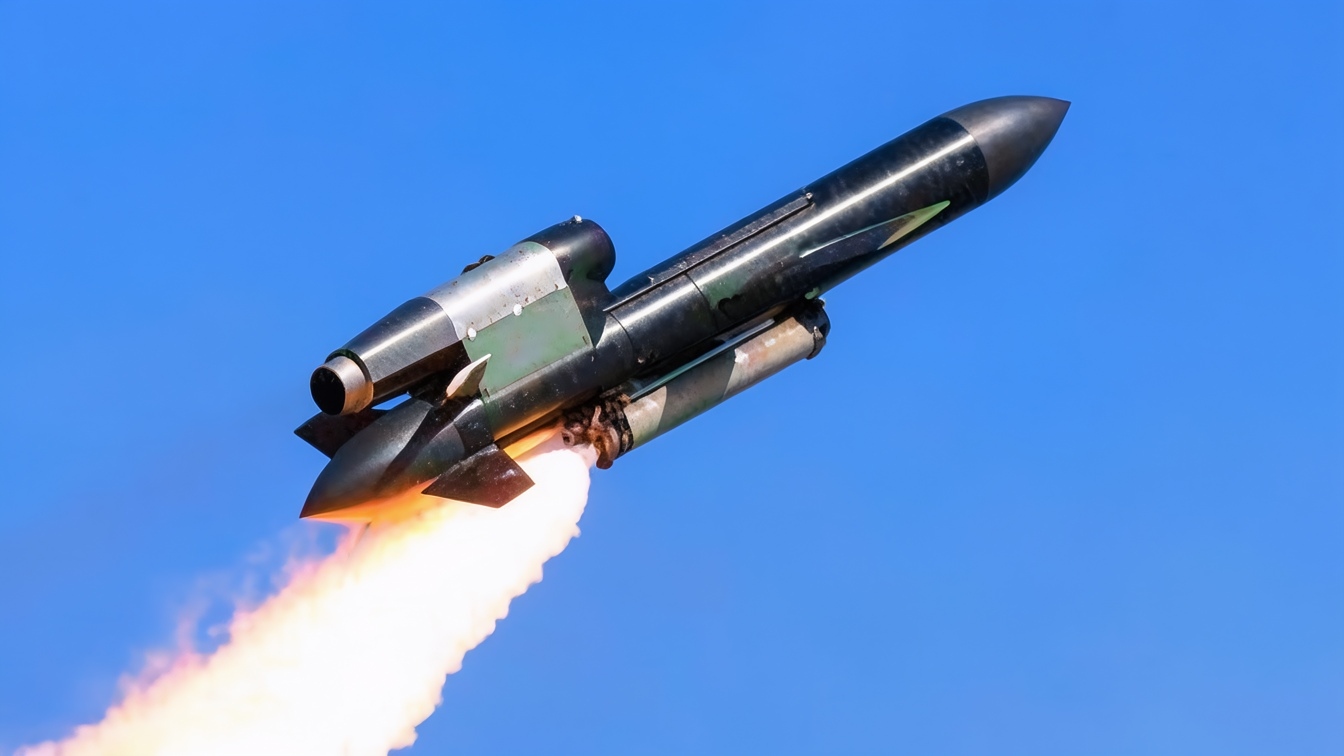
Ukraine has hit a major distribution center of Russia’s e-commerce giant Ozon in a drone strike that hit the southern republic of Adygea.
An attack on the logistics center in Adygeysk on November 4 led to staff evacuations and disrupted deliveries, an Ozon spokesperson and regional authorities said.
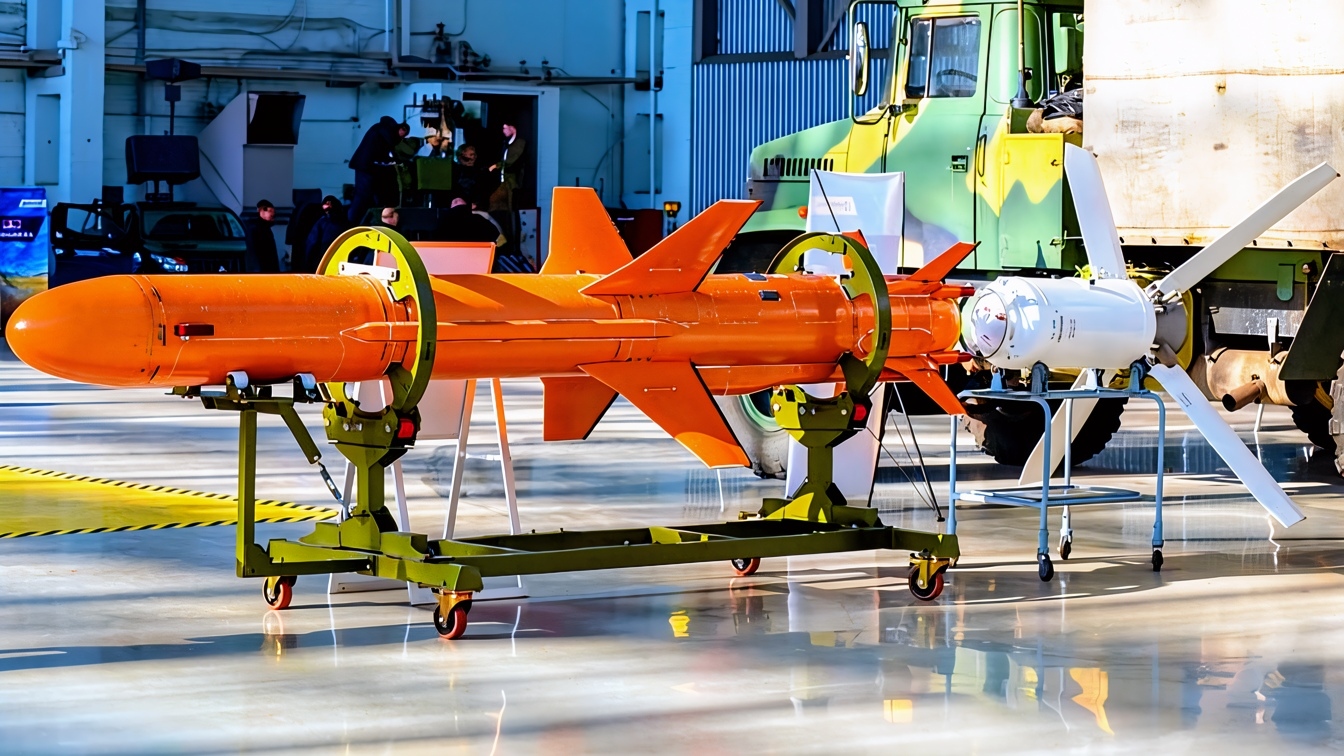
Neptune Cruise Missile Ukraine Government Photo
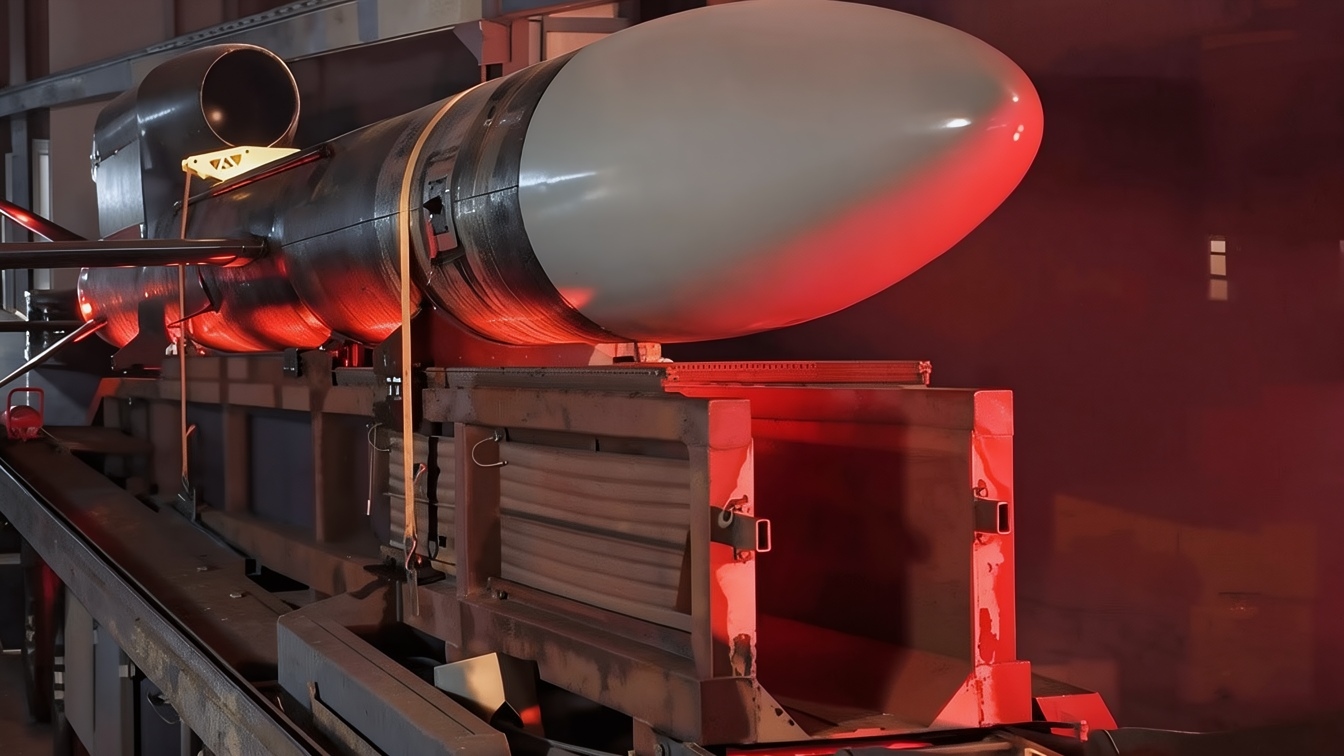
Ukraine Cruise Missile 2026. Image Credit: Creative Commons.
Video footage circulating online appeared to show the partial destruction of the building by fire.
It marks the latest blow to Russia’s biggest online retailers as Ukraine presses its attack on the companies’ warehouses.
Ozon said a total of 11 of its logistics centers had been attacked, causing an estimated 30.1 billion rubles ($367 million) in losses and provisions.
Ozon Warehouse Fire
The head of the Republic of Adygea, Murat Kumpilov, confirmed a drone strike caused the warehouse fire.
Firefighters were called to the incident, and police and regional officials were investigating.
Ozon said it “promptly evacuated all workers” and reported no injuries. “A fire broke out, and emergency services are working on site.”
The company later said it had halted deliveries from the center and removed items damaged in the fire from its website.
It said it will cancel orders it cannot fulfill from other facilities.
The center plays a key role in Ozon’s operations in southern Russia. Over 1,500 employees work at the center, which opened in late 2023.
This is not the first time that the center in Adygeysk has come under attack — the site was also evacuated back in August due to a drone threat.
Kumpilov said drone parts damaged a gas pipeline and the windows of a private home in the village of Petrov.
However, he said the leak had been resolved, and there were no injuries.
The debris also fell around the area of Takhtamukai. However, no injuries or damage were reported.
Russia Claims to Have Downed 100s of Drones
The attack was part of a much larger drone attack carried out by Ukraine overnight.
Russia’s Defense Ministry said it shot down 709 Ukrainian drones overnight on November 3-4.
They were shot down across 15 regions and territories, including in Adygea, Krasnodar Krai, the Moscow region, Crimea, and over the Black and Azov seas, the statement said.
These figures have not been independently confirmed.
However, it shows just how much pressure Ukraine has put on Russia’s air defenses with its long-range drone attacks.
Not only are military sites, oil refineries, and ammo sites being hit, but logistics centers have become a key target.
$367 Million In Losses For Ozon
Russian businesses are finding it harder to cope with the financial impact of Ukraine’s ongoing campaign of so-called “long-range sanctions.”
In its third-quarter financial results on October 28, Ozon said it had provisioned 30.1 billion rubles for estimated losses after drones hit 11 logistics centers.
This included damage to goods for sale, losses from the scrapping and impairment of equipment, and other costs.
Some of those assets were covered by insurance, and the company said it was speaking to its insurers about possible compensation.
The news is particularly significant as the strikes are repeatedly hitting one of Russia’s most important consumer businesses.
Ozon reported revenues of 421.2 billion rubles in Q3, up 60 percent year over year.
It made a net profit of 3.7 billion rubles.
The company delivered 1.2 billion orders during the quarter, up 76 percent from 2025.
Ozon is not the only company to be hit.
Its bigger rival, Wildberries, has faced multiple attacks. Around 20 facilities were hit in August.
E-Commerce Warehouses Linked to Russian War Effort
Kyiv continues to justify its attacks on e-commerce warehouses by saying they are used to support Russian military operations.
After the first attacks on Wildberries facilities in July, President Volodymyr Zelenskyy said the warehouses were “elements of Russian logistics” that were distributing military goods such as “navigation systems, components for drone production, and other supplies for the Russian army.”
The Kremlin denies this. However, an investigation by an independent Russian news outlet, Verstka, found tens of thousands of “military and dual-use goods” listed on the Wildberries platform between May and August, Deutsche Welle reported.
Mykhailo Podolyak, an adviser to the head of Zelenskyy’s office, told DW that disrupting Wildberries would also affect its creditors, including state-controlled Sberbank and VTB.
In an August 16 report, the Institute for the Study of War noted that Russia’s business infrastructure was already vulnerable, and that “Russia lacks a sufficient number of air defenses to protect all of the necessary infrastructure in its rear.”
About the Author: Georgia Gilholy
Georgia Gilholy is a journalist based in the United Kingdom who has been published in Newsweek, The Times of Israel, and the Spectator. Gilholy writes about international politics, culture, and education.


