

The Iran War, it appears, is back on, as the United States struck various targets in Iran on Tuesday, while Iran hit back.
According to News Nation, the Pentagon said that the U.S. struck several Islamic Revolutionary Guard Corps-associated sites, including “air defense sites, radar systems, maritime assets and facilities, mine-laying capabilities and communication sites.”

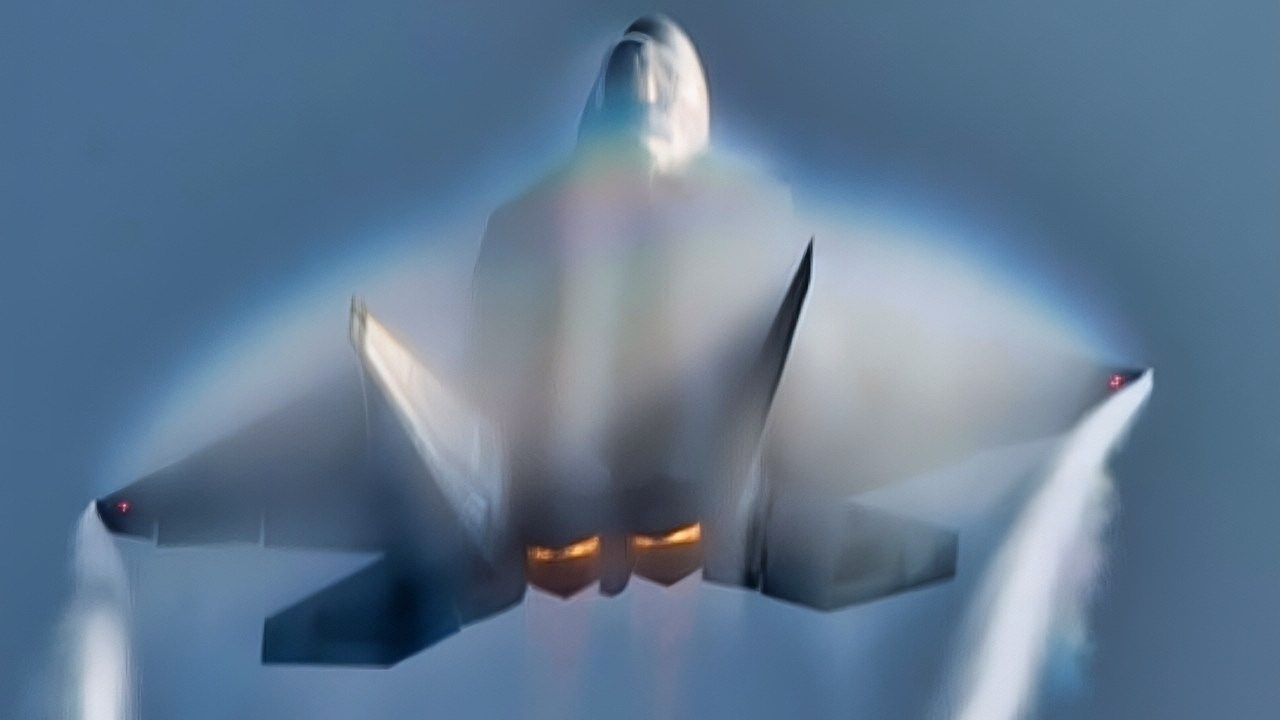
An Air Force F-22 Raptor executes a supersonic fly by over the flight deck of the aircraft carrier USS John C. Stennis. John C. Stennis is participating in Northern Edge 2009, a joint exercise focusing on detecting and tracking units at sea, in the air and on land.
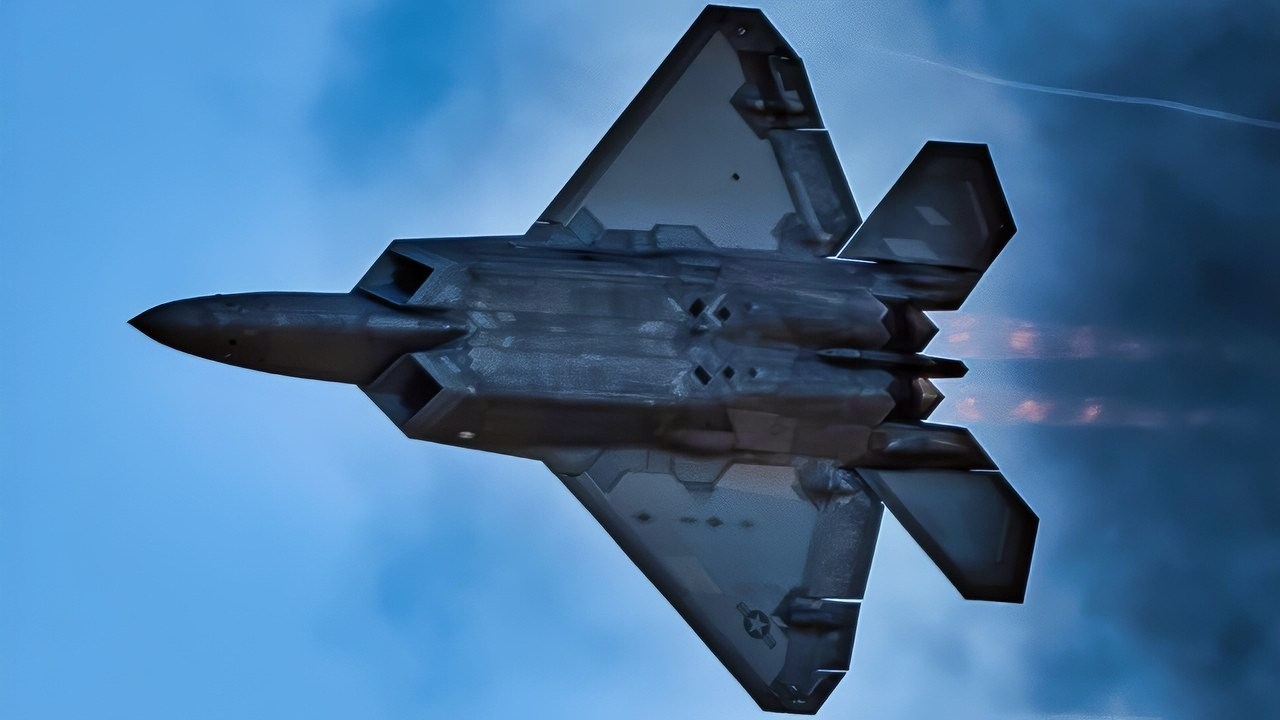
U.S. Air Force Lt. Col. Paul Lopez, F-22 Demo Team commander, flies through smoke during the Thunder over South Georgia Air Show at Moody Air Force Base, Ga., Nov. 2, 2019. Founded in 2007, the F-22 Raptor Demonstration Team showcases the unique capabilities of the world’s premier 5th-generation fighter aircraft. (U.S. Air Force photo by 2nd Lt. Sam Eckholm)
The report said that the U.S. launched the attacks after a pair of supertankers carrying Saudi oil were “struck by unknown projectiles” on Monday night, while sailing out of the Strait of Hormuz. The two supertankers were struck minutes apart, the report said.
President Trump, on Tuesday, threatened Iran on social media.
“If the failed Nation of Iran retaliates for this very justified attack, they will be hit again at a much harder and higher level, but it will not be the biggest attack of them all, that is waiting in the wings and, when it is over, there will be very little left of the Islamic Republic of Iran!,” the president said on Truth Social.
Earlier this week, the president of Iran publicly said Iran would return to the June Memorandum of Understanding if the U.S. agreed. But Trump, in another Truth Social post, didn’t appear in a conciliatory mood.
“I’m not trying to force Iran to the bargaining table, as ABC Fake News reported. I couldn’t care less if they sign a worthless, to them, agreement,” the president said on his social network.
“I like our position now much better, with almost total control of the Hormuz Strait, and their economy totally collapsing. They are just playing out the inevitable. When are the Iranian people going to rise up and fight?”
“Tanker For Tanker”
Axios, meanwhile, reported that the U.S. attacked two Iranian government tankers, which the report described as the first time in the war that the U.S. had struck Iranian tankers specifically in retaliation for Iranian attacks on ships.
The attack was carried out on tankers north of the blockade line, as the U.S. had previously struck tankers to prevent them from violating the U.S. blockade.
One official described this to Axios as part of a new “tanker for tanker” policy, approved by the president, to “further deter Iranian attacks on tankers that move through the strait.”
U.S. Struck a Wedding in Iran
Meanwhile, according to the Associated Press and other media reports, the U.S. strikes on Iran hit a home that was hosting a wedding, which killed five people and wounded dozens more, in Kuhestak in southern Iran, right near the Strait of Hormuz.
Ahmad Nafisi, Hormozgan Province’s deputy governor, told Iranian state television about the wedding attack.
“Make no mistake: these crimes will not go unpunished,” Ebrahim Azizi, chairperson of the Iranian parliament’s National Security and Foreign Policy Committee, said on social media, per the AP.
An Al Jazeera report stated that footage published by the Iranian Red Crescent Society (IRCS) “showed a building with walls and windows blown out, and debris scattered on the ground.” The IRCS also wrote a letter to the International Criminal Court, calling for an investigation into the strike.
Iran’s Parliament Speaker Mohammad Bagher Ghalibaf, the Al Jazeera report said, referred to the United States as “Satan.”
“We’re aware of the reports, which originated from Iranian state media,” CENTCOM spokesman Capt. Tim Hawkins said of the reports of the wedding strike. “The U.S. military never targets civilians, unlike the IRGC.”
“Retaliation Failed”
The IRGC said Wednesday that it launched retaliatory strikes at bases throughout the region, including in Jordan, Iraq, the United Arab Emirates, Bahrain and Kuwait.
According to the Axios report, Iran attempted to retaliate for the U.S. attacks by launching 25 ballistic missiles at bases in Kuwait and Bahrain, but most were either intercepted or failed to reach their targets.
Bahrain, the Associated Press said, accused Iran of “attacks targeting civilians,” after they intercepted drones.
The AP, meanwhile, reported that a residential complex in Kuwait had caught fire after it was hit at dawn by an Iranian drone. The blaze, however, was contained, and no casualties were reported.
MORE – Putin Could Start a War with NATO
MORE – Trump Won’t Stop Thinking About Kharg Island
About the Author: Stephen Silver
Stephen Silver is an award-winning journalist, essayist, and film critic, and contributor to the Philadelphia Inquirer, the Jewish Telegraphic Agency, Broad Street Review, and Splice Today. The co-founder of the Philadelphia Film Critics Circle, Stephen lives in suburban Philadelphia with his wife and two sons. For over a decade, Stephen has authored thousands of articles that focus on politics, national security, technology, and the economy. Follow him on X (formerly Twitter) at @StephenSilver, and subscribe to his Substack newsletter.


