
The war in the Middle East is once again escalating after over a month of non-combat between the United States and Iran.
Both sides had not struck one another since the end of July prior to last weekend, but U.S. strikes on Iranian rocket launchers have prompted retaliation from Tehran.

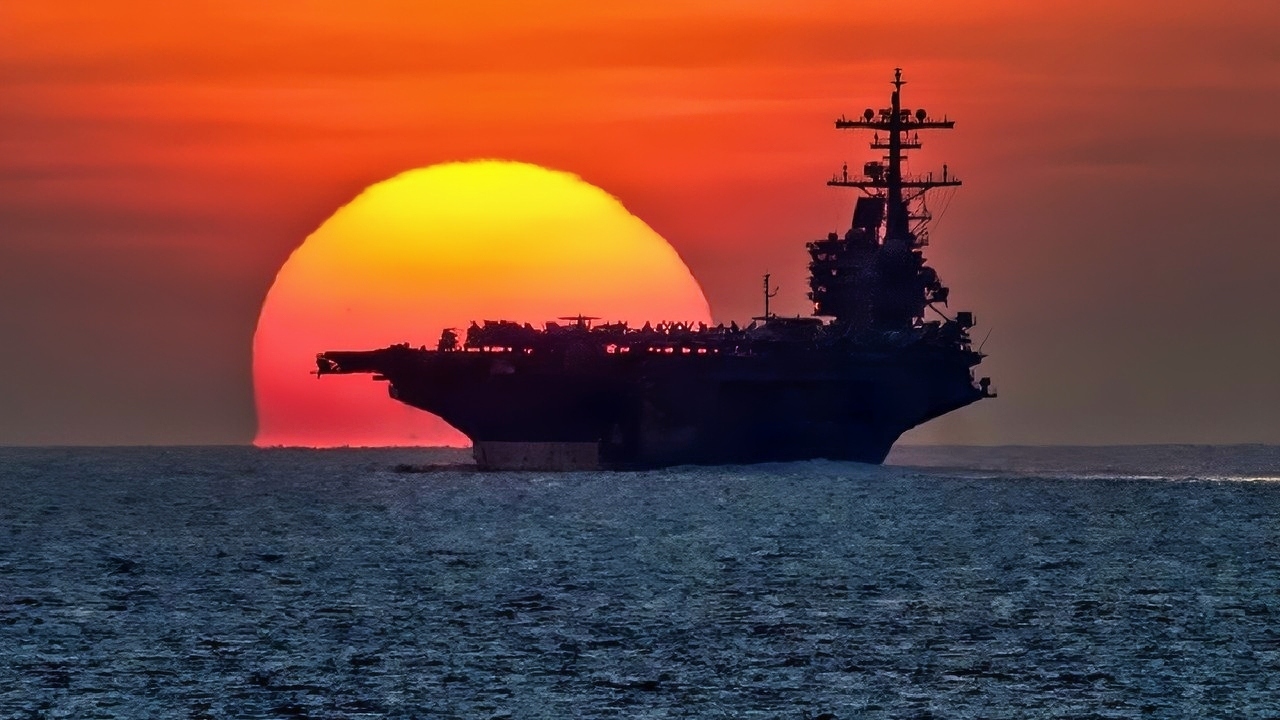
Aircraft Carrier in the Sunset. Image Credit: Creative Commons.
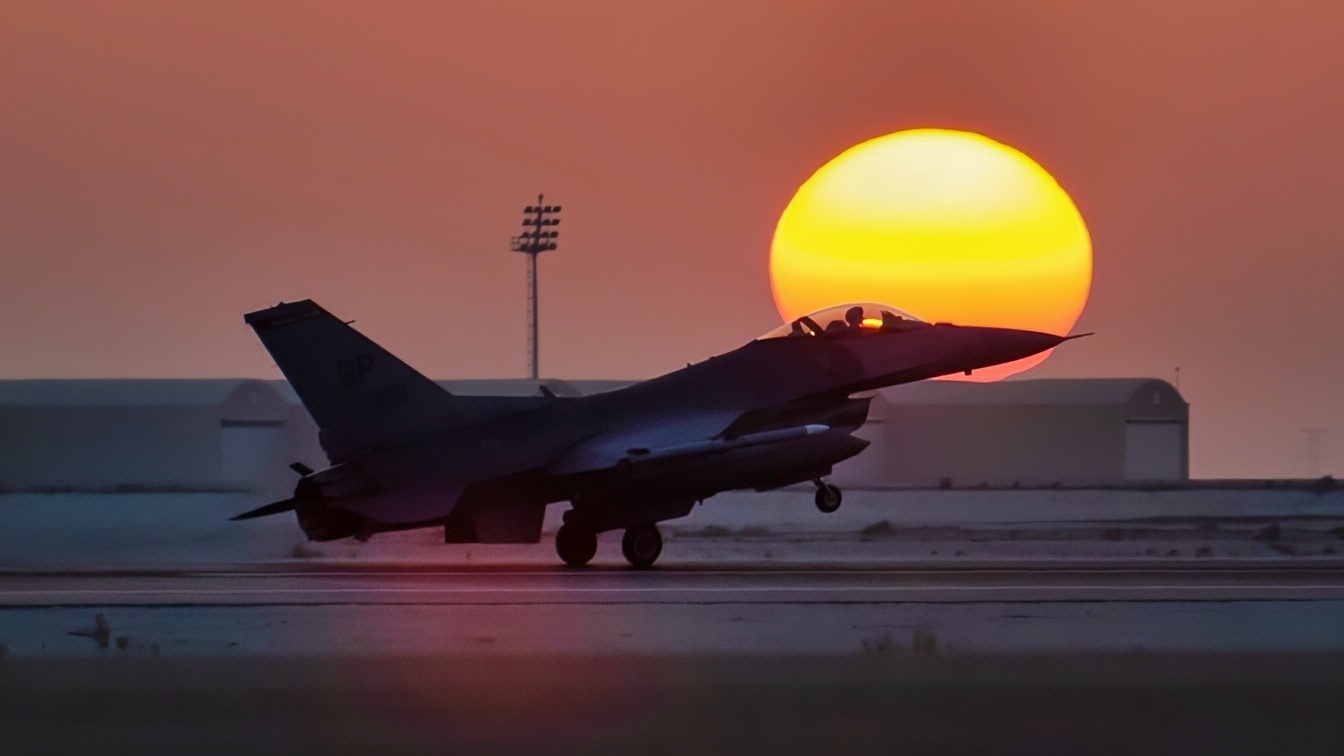
F-16 in Sunset US Air Force Photo
It marks the end of a chapter in the six-month conflict, in which both sides opted for an economic war instead.
An Issue of Mines
On Sunday, 30th August, the U.S. launched strikes on two Iranian rocket launchers on Larek Island – located south of Iran’s mainland adjacent to the Strait of Hormuz.
The U.S. Central Command (CENTCOM) said the launchers were being used to launch sea mines just days after a minesweeping operation in the strait.
In response, Iran launched missiles towards a U.S. military base in Jordon, with eight rockets intercepted by the country’s armed forces.
This prompted yet another vicious circle of retaliation, consistent throughout the conflict, as President Donald Trump promised to respond.
Since then, attacks across the region have marked the latest escalation in the war.
Tanker for Tanker
In the build-up to the U.S. response, several oil tankers were damaged in the Strait of Hormuz.
Effectively closed since the start of the war, the Strait of Hormuz is a vital shipping lane for oil exporters in the Middle East.
Iran asserts that it holds jurisdiction over the strait, which is 24 miles wide at its narrowest point.
This view is not shared by the U.S., with the Trump administration believing it to be an international waterway over which no state can or should control.
Crude prices rose on Tuesday following reports that two supertankers carrying a total of 4 million barrels of Saudi crude were struck by unknown projectiles.
Shortly afterward, the U.S confirmed a fresh wave of strikes against Iran following “recent attempted attacks by the IRGC [Islamic Revolutionary Guard Corps] against commercial shipping in the Strait of Hormuz and American service members deployed to the region.”
On the same day, reports emerged of a new “tanker-for-tanker” policy, under which the U.S. would strike an Iranian oil tanker for every attack on a commercial vessel seeking passage through the Strait of Hormuz.
Wedding Reports Spark Fury
Overnight, Iranian officials claimed that U.S. strikes had hit a wedding party in Kuhestak, not far from the Strait of Hormuz. At least five people were killed and 68 wounded, according to local officials.
Semi-official Iranian news agencies reported heavy explosions in the town, with large fireballs in the night sky visible from security camera footage.
Local media also described children being treated at a hospital in the nearby town of Minab, with footage from the Iranian Red Crescent showing rescue workers entering a destroyed home covered in debris.
“Make no mistake: these crimes will not go unpunished,” said Ebrahim Azizi, chair of the Iranian parliament’s National Security and Foreign Policy Committee, in a post on social media.
The U.S. military responded that it was aware of the reports, but added that it “never targets civilians.”
Strikes Across the Middle East
U.S. allies in the Middle East were targeted in Iran’s retaliatory attacks. On Monday, the United Arab Emirates said an incoming Iranian drone was intercepted over its waters, while Kuwait also confirmed interceptions in its own airspace on Tuesday evening.
Bahrain, home to U.S. military bases, was also targeted in the early hours of Wednesday morning.
A statement by the country’s military said: “The General Command of the Bahrain Defense Force announces that Iran is continuing its systematic hostility approach through its sinister attacks targeting civilians in the Kingdom of Bahrain,” while urging civilians to be cautious and “not to approach any strange or suspicious objects resulting from the residues of the heinous Iranian attack.”
Also on Wednesday, a fire broke out at a residential building after being struck by an Iranian drone.
The country’s government communications center confirmed the fire was extinguished, with no casualties reported.
Meanwhile, Kurdish authorities in Iraq said at least ten drones had been intercepted in the Erbil area.
The northern settlement close to the Iraqi-Iranian border is home to a U.S. military base, which the IRGC said it targeted on Wednesday morning.
Iran has repeatedly threatened and targeted U.S. allies that harbor American military bases throughout the war.
MORE – Putin Could Start a War with NATO
MORE – Trump Won’t Stop Thinking About Kharg Island
About the Author: Shay Bottomley
Shay Bottomley is a British journalist. He has written for the Western Standard, Business Insider, Maidenhead Advertiser, Slough Express, Windsor Express, Berkshire Live and Southend Echo.