

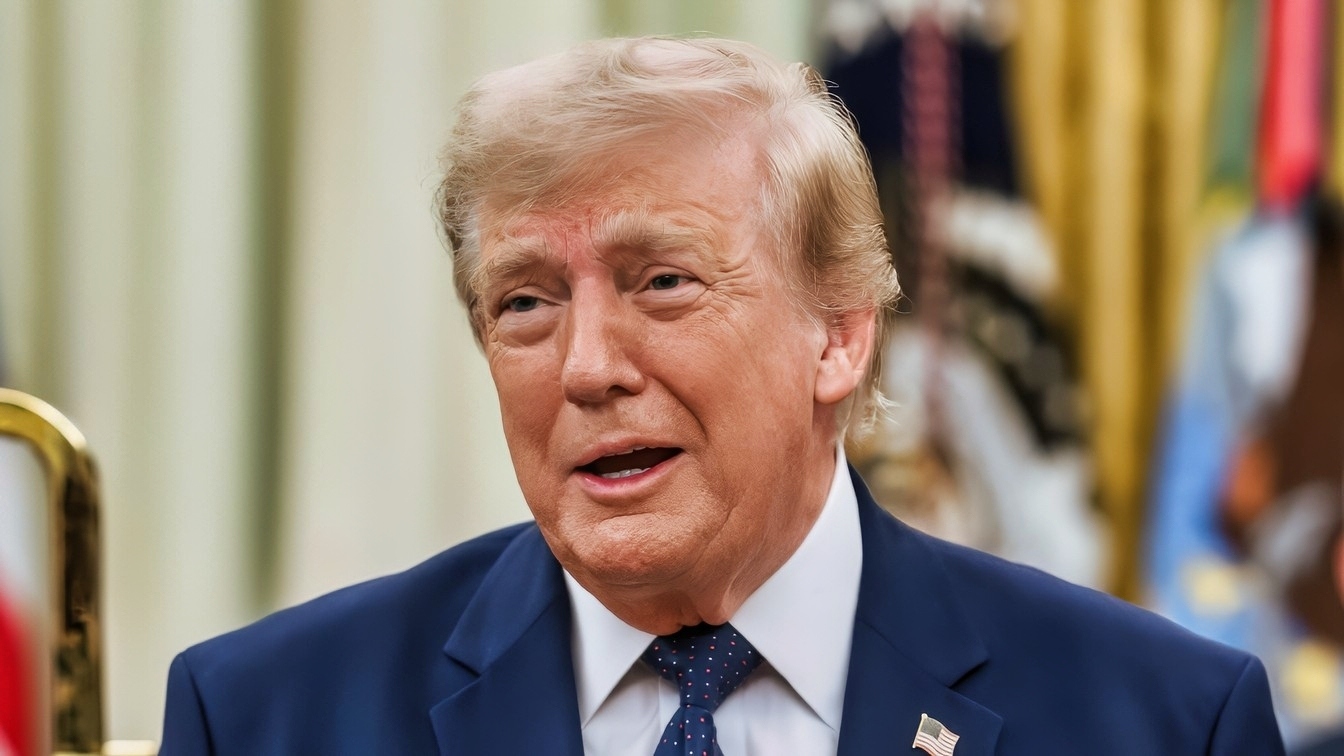
US President Donald J. Trump has said the Strait of Hormuz will be made a U.S. territory.
Speaking at a Long Island police training facility on Friday, Trump claimed Iran was getting “very badly defeated,” implying that Washington already had the ability to control the crucial waterway.
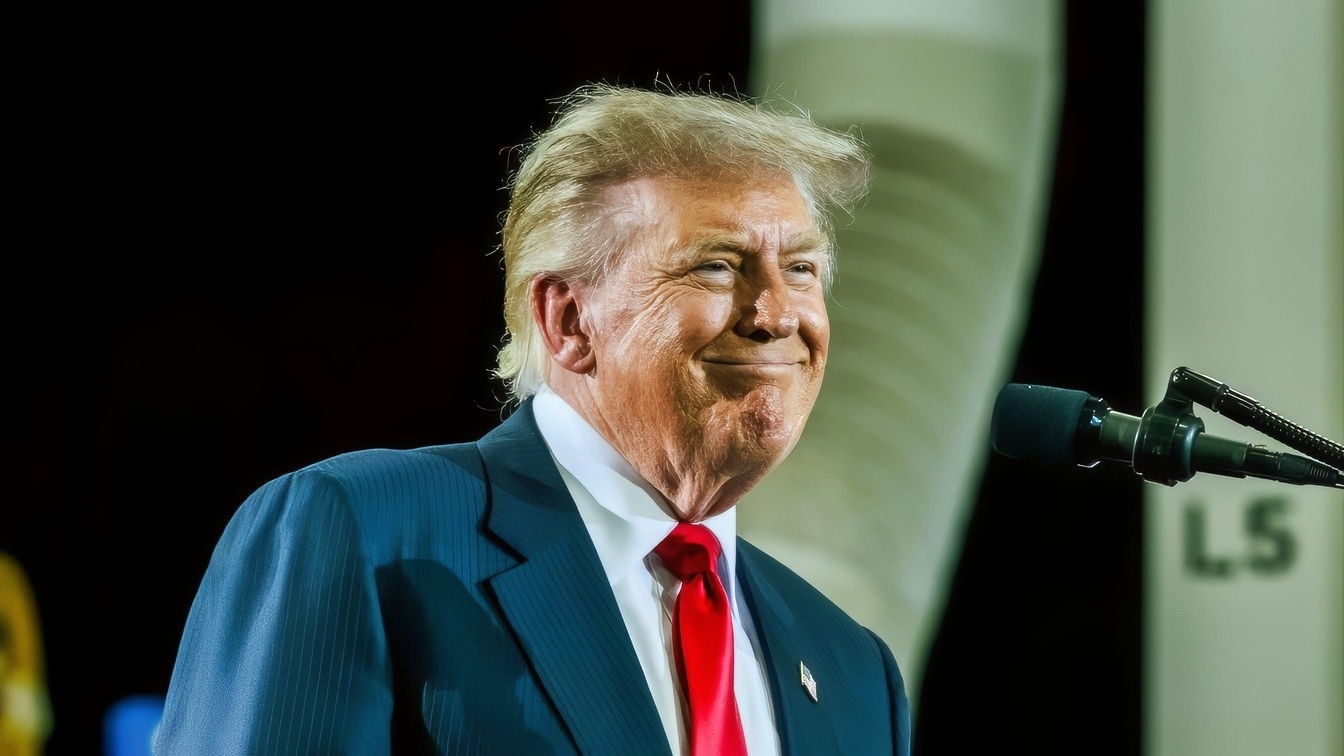
President Donald J. Trump delivers remarks at the General Motors Proving Ground in Milford, Michigan, Monday, July 27, 2026. (Official White House Photo by Daniel Torok)
“After we finish defeating Iran, which is being very badly defeated — pretty soon, I’ll be declaring the Hormuz Strait a territory of the United States,” Trump explained.
“Essentially, that’s what it is. We have the blockade. No ships get through unless we want them to.”
Iran: Hormuz ‘Cannot Be Seized’
Tehran quickly poured cold water on President Trump’s statement.
Iran’s Deputy Foreign Minister Kazem Gharibabadi argued that the Strait of Hormuz “cannot be seized by a tweet, nor by an aircraft carrier, nor by issuing an order, nor by an election speech.”
“Iran is neither afraid of threats nor intimidated by displays of power,” he went on.
The strait sits between the coasts of Iran and Oman, connecting the oil-rich Persian Gulf with the Gulf of Oman, the Arabian Sea, and the world beyond.
According to the United Nations Convention on the Law of the Sea, ships have a “right of transit passage through straits used for international navigation”. The Atlantic Council has argued that Iran’s de facto blocking of the Strait since February has violated this.
UNCLOS has never been ratified by Iran or Washington although the latter has long accepted its navigation provisions as reflective of customary international law.. Trump did not outline how the strait would be made a U.S. territory, although the American president is known for his hyperbolic remarks.
Strait’s Shipping Figures Slump
Trump’s threats to place it under full American control come amid the route’s woefully low traffic.
Kpler data show that a mere nine commercial vessels passed through the strait on Thursday. More than 130 passed through the waterway before the war.
The U.S. Energy Information Administration has estimated that fuel traveling through Hormuz averaged 4.9 million barrels per day from April 1 through June 30 this year. This is a major decrease from approximately 21.6 million barrels per day in the last three months of 2025.
The disruption is making waves well beyond the Gulf. Some one-fifth of global petroleum liquids consumption passed through the Hormuz Strait, while one-fifth of worldwide liquefied natural gas (LNG) trade was also reliant on the route.
On Friday, the United Arab Emirates (UAE) blamed Iran for attacking an ADNOC vessel transiting the Hormuz Strait. The incident marked the third attack on the Emirati state oil firm’s ships in less than a single week.
A bulk carrier was hit in the Strait on Friday, according to UK Maritime Trade Operations.
Trump: Higher Gas Prices are Worth It
Trump has also been forced to address the impact on fuel prices as the war’s impact continues to hit global fuel markets.
“For you to pay a tiny little bit more for your gasoline, just remember you’re doing it so that a very evil country cannot have a — really, it’s the No. 1 state sponsor of terror in the world — we don’t want them to have a nuclear weapon,” he told Friday’s crowd.
“You’re at $4. I’ll never apologize. I did the right thing,” he stressed, attempting to downplay the increase.
His remarks followed Vice President JD Vance’s assurance the previous day that maintaining low gas prices was the administration’s “goal No. 1” in its conflict with the Islamic Republic.
No End in Sight
Polymarket traders are currently estimating a 15 percent chance that traffic will return to normal in the Strait by September 30.
However, no direct talks are currently taking place between Iran and the U.S. On Saturday, Foreign Minister Abbas Araghchi said Tehran had made no decision yet on whether to restart negotiations.
Qatar and Pakistan have recently been used as intermediaries between the two governments. Separately, Iran has been negotiating with Oman over partially reopening shipping routes through Hormuz.
When war broke out in February, Trump initially urged opponents of the regime to “take over” the Iranian government. An uprising has failed to materialize as of yet, and Iran’s theocratic regime along with its fiercely ideological Islamic Revolutionary Guard Corps (IRGC) still dominate the country’s security and military apparatus.
About the author: Georgia Gilholy
Georgia Gilholy is a journalist based in the United Kingdom who has been published in Newsweek, The Times of Israel, and the Spectator. Gilholy writes about international politics, culture, and education.


