
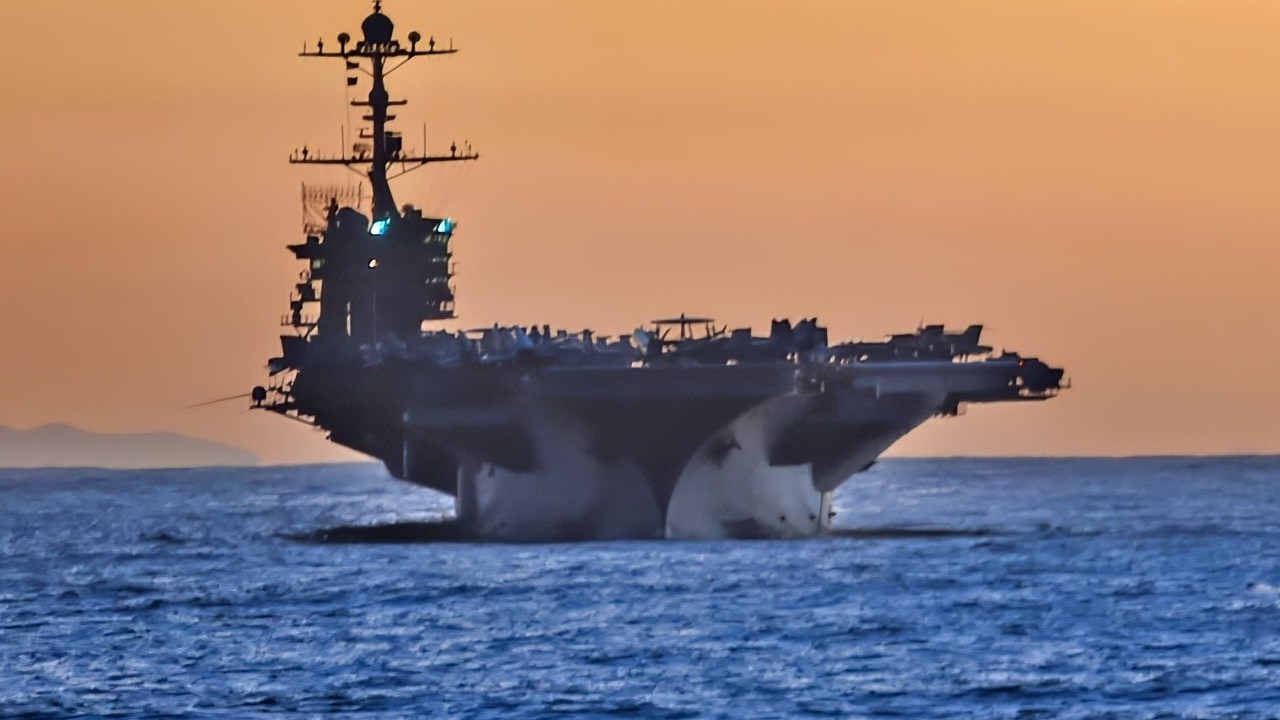
The United States struck an Iranian oil tanker off Kharg Island on Saturday, September 5, bringing U.S. military strikes to the waters surrounding Iran’s primary crude oil export hub. The island, whose infrastructure has so far not been heavily hit by the United States despite six months of intermittent bombing campaigns, handled roughly 90% of Iranian crude exports before the war began in February.
The attack was just one in an operation that saw three Iranian oil tankers hit following ballistic missile attacks directed at U.S. Navy warships by Iran’s Islamic Revolutionary Guard Corps.
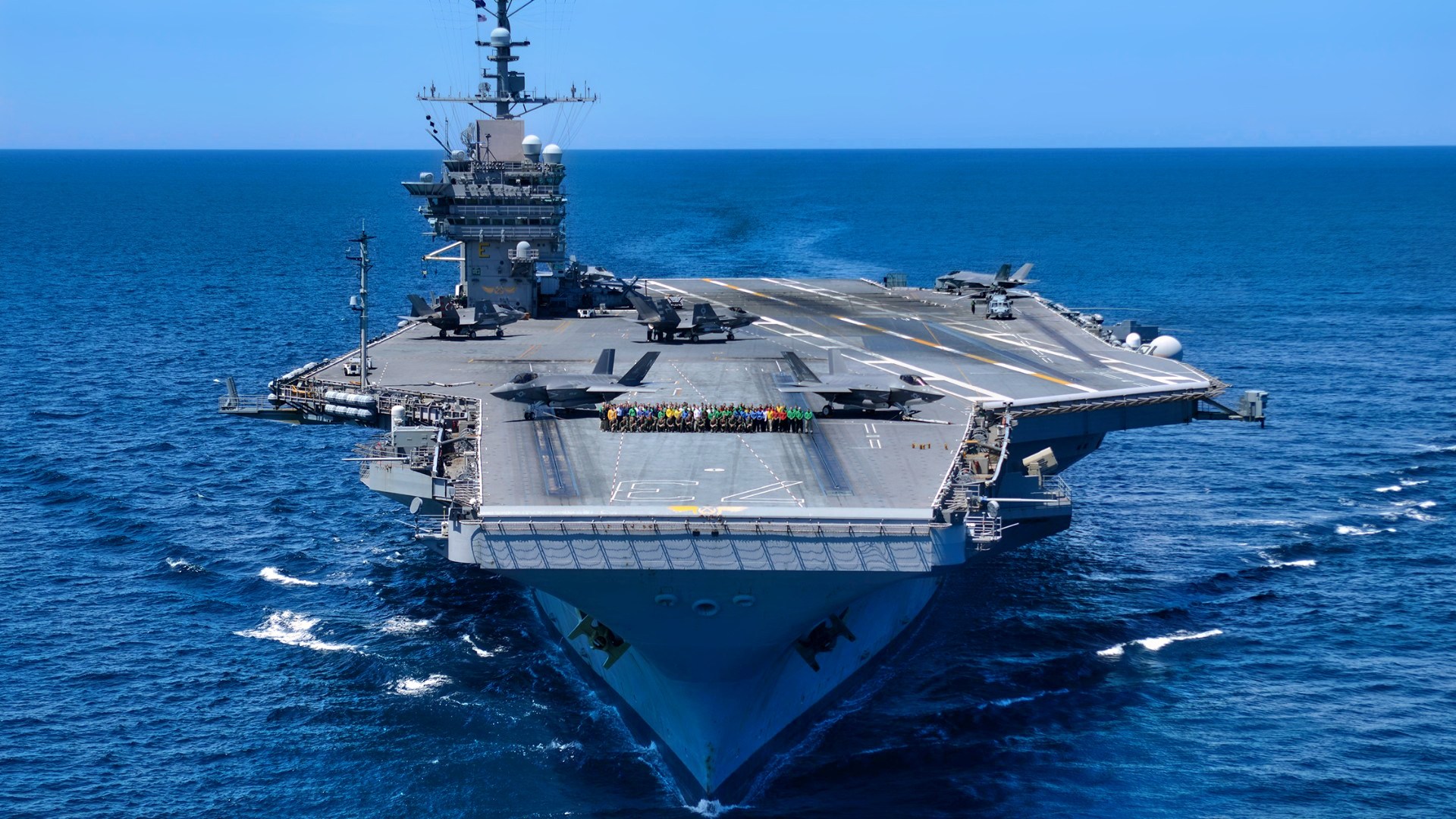
ATLANTIC OCEAN (Aug. 16, 2016) Sailors assigned to the Grim Reapers of Strike Fighter Squadron (VFA) 101, the Navy’s F-35C Fleet replacement squadron, pose on the flight deck of the aircraft carrier USS George Washington (CVN 73) during an aerial photo exercise. VFA-101 aircraft and pilots are conducting initial qualifications aboard George Washington in the Atlantic Ocean. The F-35C is expected to be Fleet operational in 2018. (U.S. Navy photo by Mass Communication Specialist Seaman Apprentice Krystofer Belknap)
U.S. Central Command said the American vessels evaded the missiles and no U.S. personnel were injured.
American forces subsequently disabled two Iranian tankers and destroyed a third.
But the location of one of those attacks is especially notable.
Kharg Island
Kharg Island is the beating heart of Iran’s oil export operations — or, at least, it was before the U.S. naval blockade was implemented.
The United States has so far refrained from hitting the site, saving it as a form of leverage, with President Trump repeatedly threatening to strike it.
But, by striking a tanker at its anchorage, Washington appears to be showing the regime in Tehran that its actions are inching closer to warranting a decisive U.S. response that could see the country’s oil infrastructure completely destroyed – and with it, Iran’s potential to return to the oil trade.
And the exchanges don’t appear to be over, with Iranian state media reporting later on Saturday that Tehran had launched another retaliatory strike operation, targeting three vessels using the Omani shipping route through the Strait of Hormuz as well as three U.S. ships – though the claims have not yet been independently confirmed.
Iran Tries to Hit a U.S. Navy Nuclear Aircraft Carrier
Saturday’s exchanges of fire began when the IRGC launched ballistic missiles at two American warships operating in the region.
U.S. Central Command (CENTCOM) said an aircraft carrier and guided-missile destroyer successfully evaded the attacks and no American personnel were injured.
These are high-value targets, and had Iran successfully struck the carrier, it would have been devastating for U.S. operations in the region and would have seriously degraded overall American preparedness for other conflicts in the medium term.
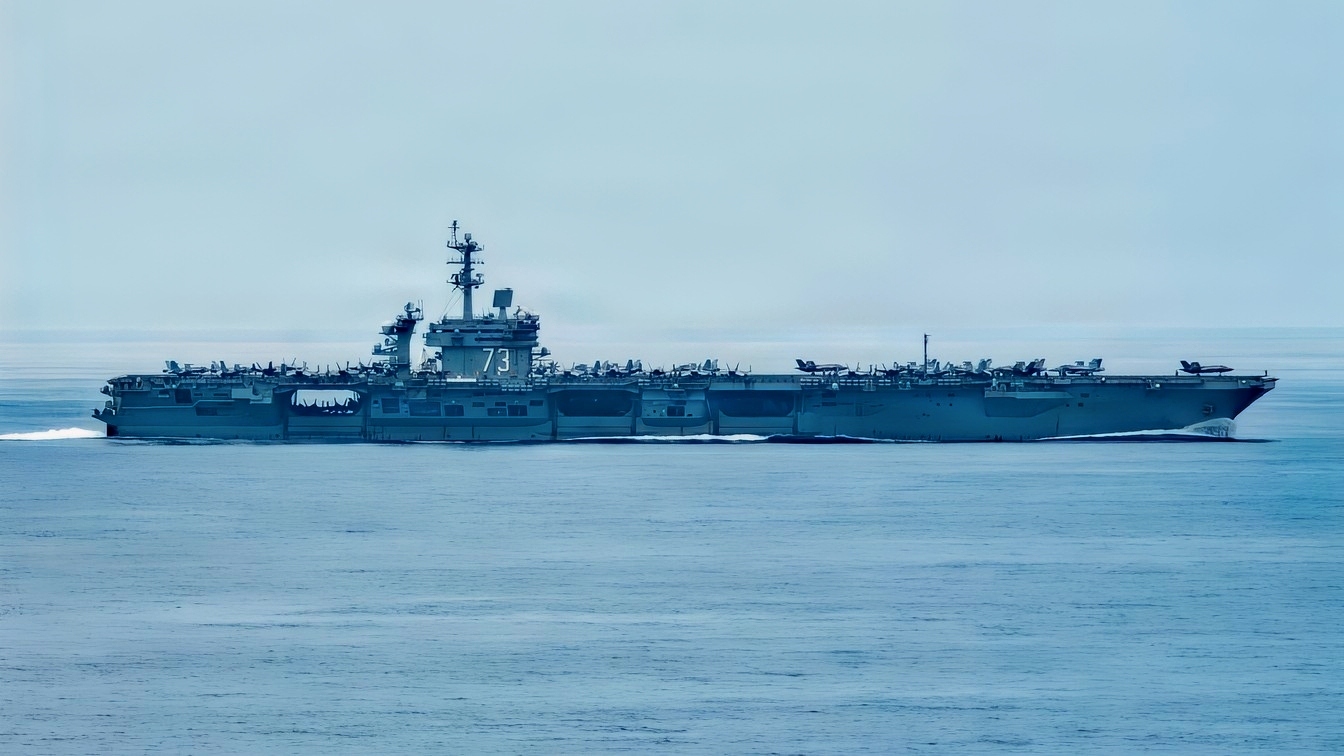
Nimitz-class aircraft carrier USS George Washington (CVN 73) conducts routine operations while underway in the South China sea July 23, 2026. The George Washington Carrier Strike Group is operating in the U.S. 7th Fleet area of operations. George Washington is the U.S. Navy’s premiere forward-deployed aircraft carrier, a long-standing symbol of the United States’ commitment to maintaining a free and open Indo-Pacific, while operating alongside allies and partners across the U.S. Navy’s largest numbered fleet. (U.S. Navy photo by Mass Communication Specialist Seaman Andrew Novak)
Nimitz-class aircraft carrier USS George Washington (CVN 73). Creative Commons Image.
Attempting to hit the carrier represents something far more serious than harassment or causing disruption to commercial shipping, and comes after reports that Iranian military leadership is moving away from a defensive posture toward an offensive one.
Iran responded later on Saturday with a warning that further American action against Iran’s attempt to control shipping through the Strait of Hormuz would result in more serious attacks against U.S. warships, too.
Specifically, Ebrahim Zolfaghari, spokesman for the Khatam al-Anbiya Central Headquarters, warned the U.S. military that Iranian attacks would become “more severe” and could expand in scope.
“If the hostility, insecurity and harassment of Iranian ships and the naval blockade of Iran continue, the strikes by the armed forces of the Islamic Republic against US military vessels in the region will be more severe than before, and there is also the possibility of their expansion,” he said.
Iran Claims New Retaliatory Strikes
Within hours of the American tanker attacks, Iran claimed to have launched another round of retaliatory strikes, meaning the exchange of fire continued into Saturday afternoon.
Iranian state broadcaster IRIB reported that Iranian forces had targeted three vessels moving through what Tehran calls an “unauthorized” Omani route in the Strait of Hormuz. Iranian forces also reportedly targeted three American ships. The IRGC then claimed that the Iranian Navy had targeted three oil tankers and three U.S.-affiliated vessels in retaliation for the three Iranian tankers attacked by American forces earlier Saturday.
At the moment, these reports should not be considered unconfirmed, at least for the moment, as Iranian state media many times fabricates or exaggerates in their reporting.
However, if true, the strikes tell Washington that efforts to dissuade Iran from further strikes by targeting critical Iranian oil tankers likely won’t work, with the regime now apparently hell-bent on fighting the United States until Washington is forced to expend vast quantities of interceptors and missiles fighting Iran.
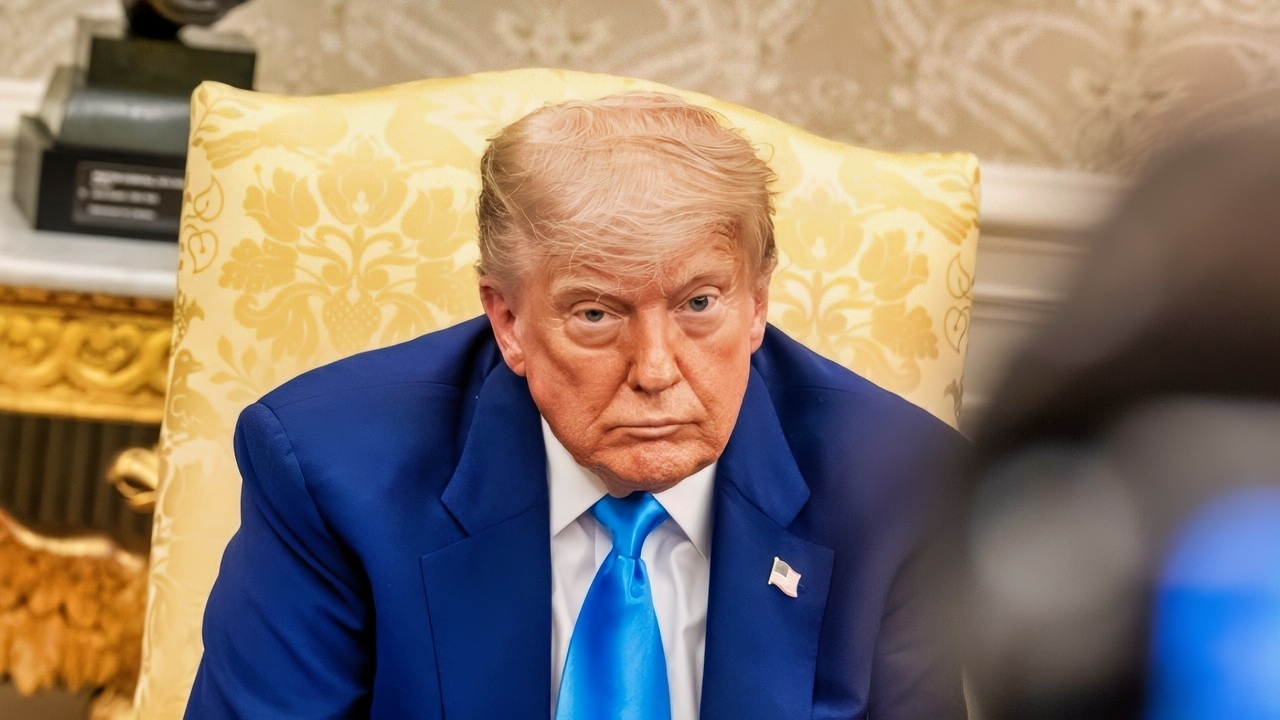
President Donald Trump meets with President of South Africa Cyril Ramaphosa, Wednesday, May 21, 2025, in the Oval Office. (Official White House Photo by Daniel Torok)
Washington is hoping that economic pressure alone will be enough to dissuade continued military action, but so far, even the chance of losing all of its oil tankers to American strikes isn’t enough to dissuade the regime from continuing the fight — even if it means the United States ultimately targets Pickaxe Mountain, critical infrastructure, and military assets.
If confirmed, Saturday’s latest attacks represent an almost immediate response to the U.S. tanker operation and could signal a return to sustained exchanges of fire in the coming days or weeks.
About the Author: Jack Buckby
Jack Buckby is a British researcher and analyst specializing in defense and national security, based in New York. His work focuses on military capability, procurement, and strategic competition, producing and editing analysis for policy and defense audiences. He brings extensive editorial experience, with a career output spanning over 1,000 articles at National Security Journal, and has previously authored books and papers on extremism and deradicalization.


