
Six months into a war President Donald Trump believed would last no longer than five weeks, Washington appears to have reached the point where it can continue to hurt Tehran but cannot translate that pressure into an end to the conflict.
And with Iran hurting so badly, it now appears to have so little to lose that the regime is willing to launch pre-emptive strikes.
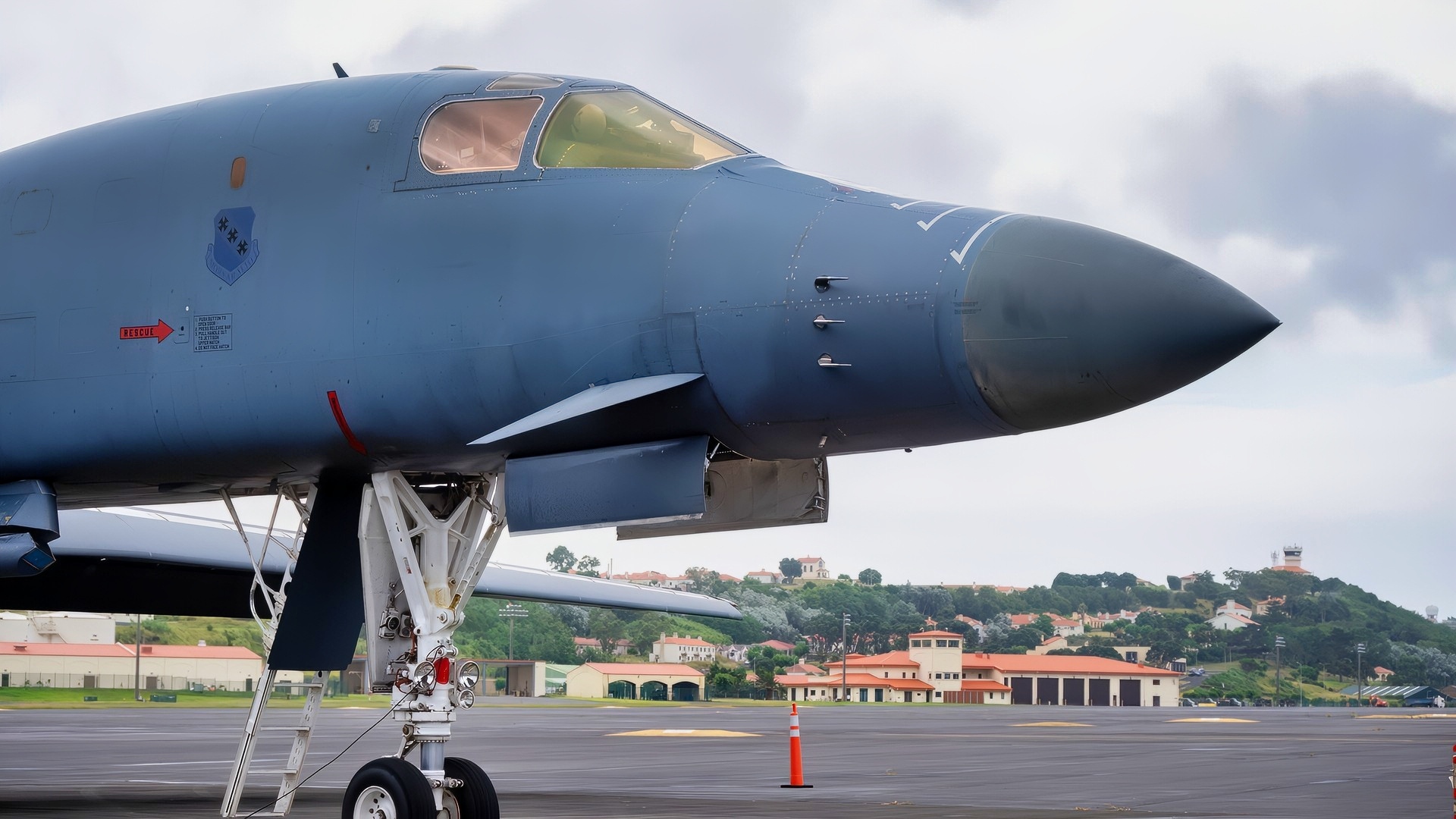
A U.S. Air Force B-1B Lancer sits on the flightline at Lajes Field, Azores, Aug. 22, 2025. The aircraft landed for a hot pit refuel during a Bomber Task Force Europe mission. (U.S. Air Force photo by Cristina Oliveira)
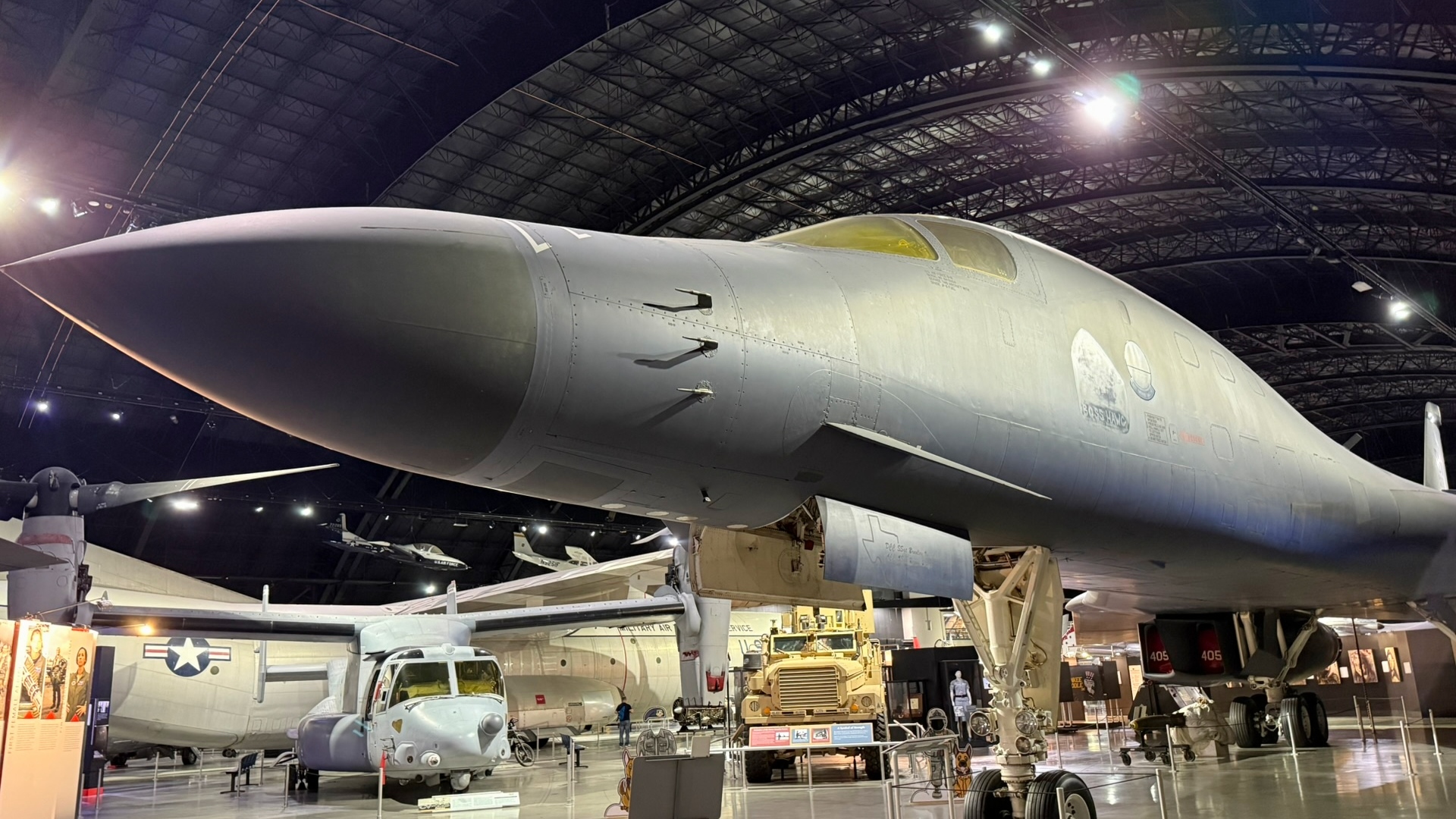
Sideview of B-1B Lancer Bomber. Image Credit: National Security Journal.
“Very clearly militarily, we are stalled,” Republican Rep. Pat Harrigan of North Carolina, a member of the House Armed Services Committee, told Bloomberg this week. “There’s no question about that.”
Many others share that assessment, reflecting a difficult reality for Washington as the country prepares to go to the polls in November.
The United States has inflicted enormous damage on Iran, blocking most of its oil trade and degrading its conventional military capabilities.
But despite proving that Iran can frequently be overpowered, the United States has not forced Iran to accept American terms; the Strait of Hormuz remains disrupted, and there are no negotiations underway to end the conflict.
Harrigan warned that Washington appears to be “stuck,” arguing that it cannot indefinitely fight a limited war while expecting to achieve much larger political objectives simultaneously.
Vance Accepts Defeat?
Vice President JD Vance also appeared to acknowledge those problems at the White House on Thursday, but appeared to backtrack on the idea that the United States was even at “war” with Iran at all.
The vice president said that he “wouldn’t call it a war” because there was no active shooting at that particular moment.
He then shifted the blame to Iran.
“But when you ask, ‘When will this end?’ You’re asking me a question like, ‘When will the Iranians stop shooting at ships?’” Vance said. “I think the reality is, I don’t know the answer to that question. You would have to ask the Iranians.”
Vance also ruled out any new negotiations while Iran continues to attack commercial ships.
But his comments also revealed Washington’s vulnerability, suggesting that the White House is eager to prevent Americans from thinking about the ongoing conflict as a war.
Washington Ramps Up Pressure
Washington is also trying to increase pressure in the hope of bringing the conflict to an end quickly.
On Friday, the Treasury Department sanctioned Turkish investment bank Golden Global Yatirim Bankasi and two subsidiaries, accusing them of facilitating trade between China and Iran’s Islamic Revolutionary Guard Corps Quds Force.
It is the first bank in a NATO country targeted under the administration’s latest sanctions campaign.
Treasury Secretary Scott Bessent has touted Operation Economic Outcast as a plan to force Tehran back to negotiations, and suggested that it may even cause so much damage that the regime collapses.
But even after months of military strikes and a naval blockade, Iran hasn’t budged.
And developments on Friday, September 4, indicate that Tehran is preparing to step up the pressure on Washington in response – a move that carries limited additional consequences now that the world’s greatest superpower is already using its military, political, and financial might to crush the regime.
Iran Says It Could Strike First
On Friday, Iran changed its doctrine and said that it will no longer act defensively.
Iranian Army spokesman Brig. Gen. Mohammad Akraminia said on state television Friday that the country’s military doctrine has been gradually moving toward pre-emptive warfare, a process he said began following Iran’s 12-day war with Israel in June 2025.
“When we face an American threat, we defend ourselves, and international law allows us to defend ourselves preemptively,” Akraminia said on state television.
The Iranian official said that Iran targeted U.S. bases from Jordan to the United Arab Emirates in recent strikes in direct response to American attacks on its missile and radar infrastructure around the Strait of Hormuz.
“Some of these bases housed radar facilities and air defense systems, which were destroyed,” he said.
“With the destruction of these systems, targeting the occupied territories and the Zionist regime’s bases in the region has become much easier than in the past,” he continued.
Another key detail that emerged on Friday was the speed of Iran’s latest response.
Akraminia said that Iranian forces began launching missiles and drones only 15 minutes after the U.S. strike on Sirik, targeting four American bases.
Iran used Fateh-2 missiles and Arash-2 attack drones, according to the state-run IRNA news agency.
Akraminia also said Tehran is increasingly combining different weapons and asymmetric tactics in its attacks — an operational necessity at this point.
The claims about damage to American facilities remain unverified, but the response time offers new evidence of Iran’s ability to launch regional strikes quickly. And, indeed, its intent to inflict as much damage as it can.
About the Author: Jack Buckby
Jack Buckby is a British researcher and analyst specializing in defense and national security, based in New York. His work focuses on military capability, procurement, and strategic competition, producing and editing analysis for policy and defense audiences. He brings extensive editorial experience, with a career output spanning over 1,000 pieces in National Security Journal, and has previously authored books and papers on extremism and deradicalization.


