
Former CIA Director Says Iran War Could Drag On For Months – Former CIA Director and Defense Secretary Leon Panetta has warned that the war with Iran is far from over and that the conflict could drag on for months more. Panetta said that neither Washington nor Tehran currently possesses a clear route to end the fighting — and his words carry weight.
Panetta is a former cabinet official, but his national security career also stretches back decades, having served as an Army intelligence officer in the 1960s and later joining the bipartisan Iraq Study Group during the Iraq War. He became CIA director under President Barack Obama in 2009 and then served as Secretary of Defense between 2011 and 2013.
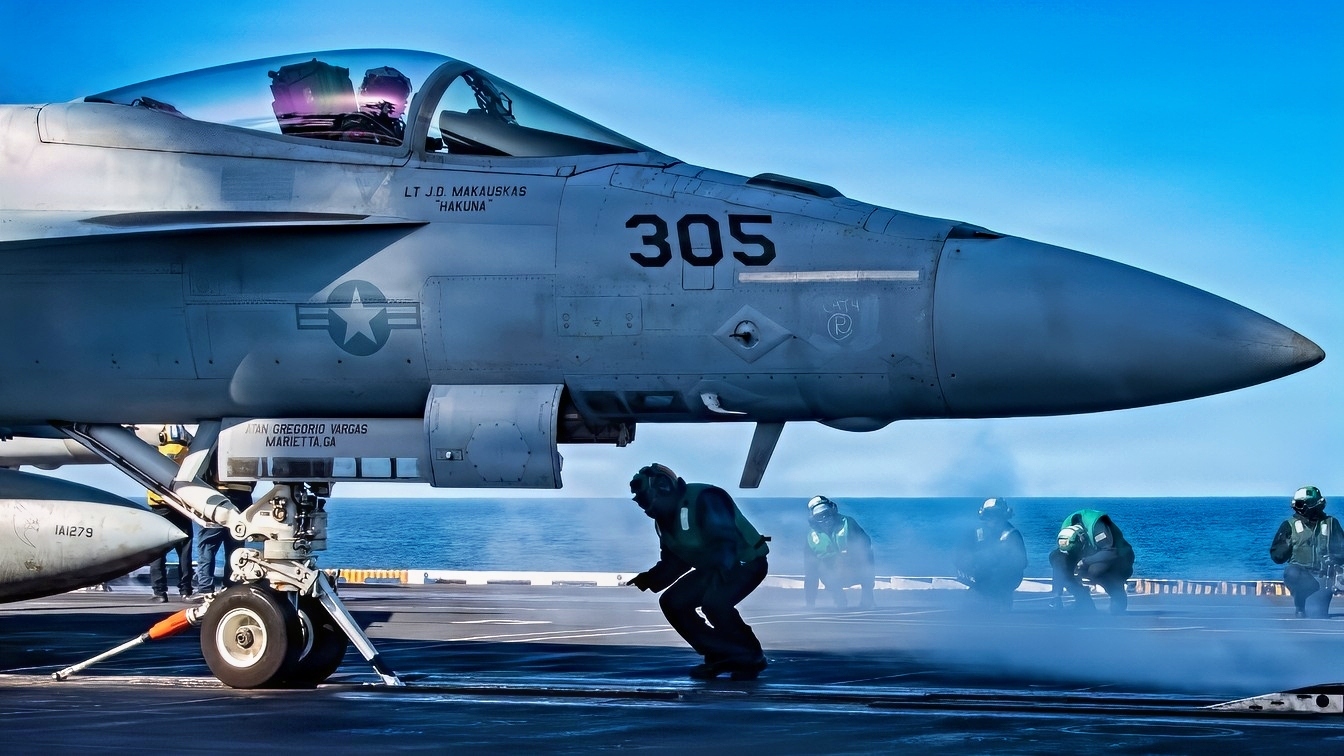
An F/A-18E Super Hornet, attached to the “Kestrels” of Strike Fighter Squadron (VFA) 137, prepares to launch from the flight deck of the Nimitz-class aircraft carrier USS Nimitz (CVN 68) in the Pacific Ocean, April 22, 2026. Nimitz is deployed as part of Southern Seas 2026 which seeks to enhance capability, improve interoperability, and strengthen maritime partnerships with countries throughout the region through joint, multinational and interagency exchanges and cooperation.
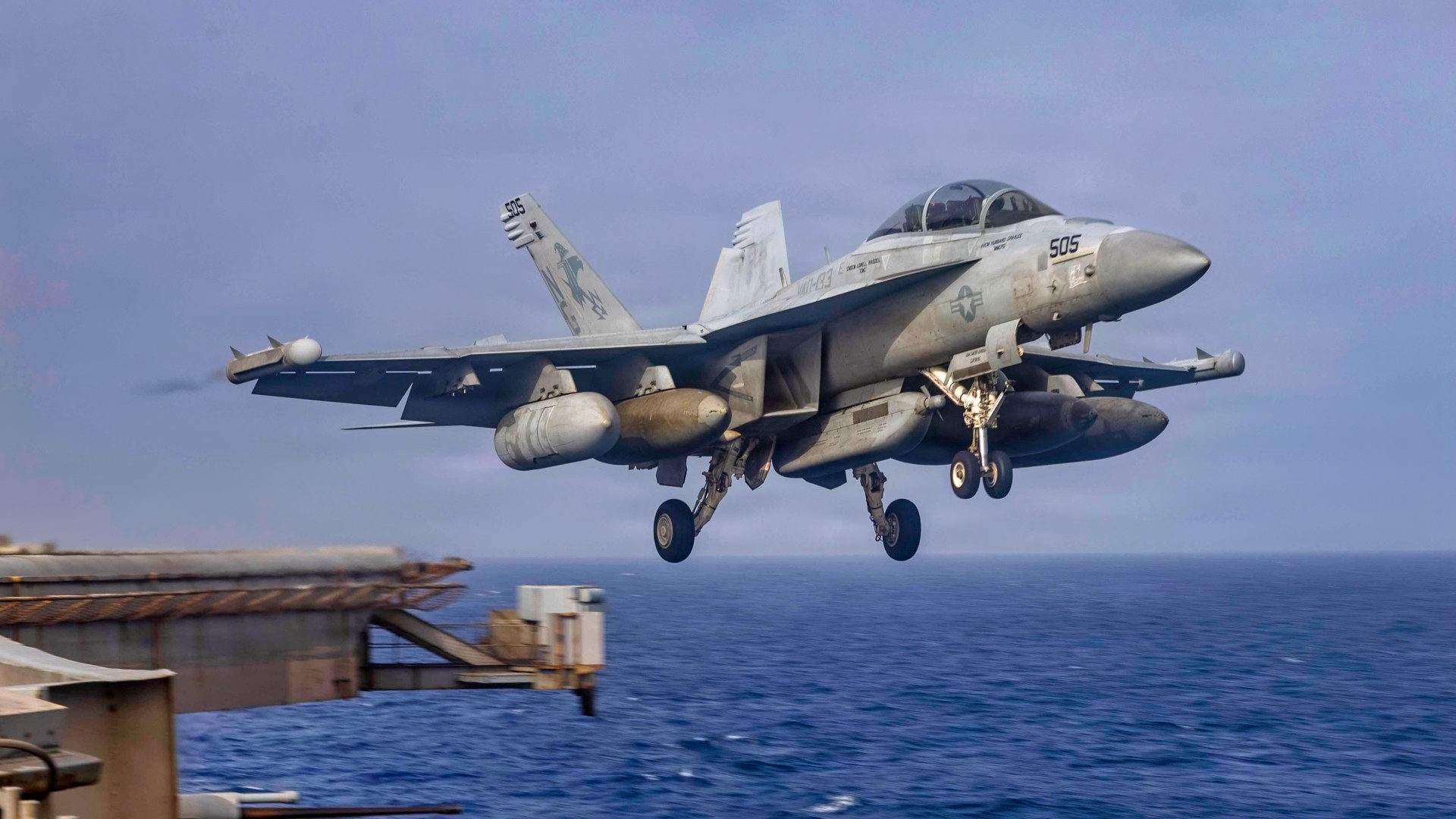
An EA-18G Growler, attached to Electronic Attack Squadron (VAQ) 133, takes off from the flight deck of Nimitz-class aircraft carrier USS Abraham Lincoln (CVN 72), May 21, 2026. Abraham Lincoln is deployed to the U.S. 5th Fleet area of operations to support maritime security and stability in the Middle East. (U.S. Navy photo)
During his time as CIA director, Panetta led the agency during the hunt for Osama bin Laden and the operation that ultimately killed him in Pakistan in 2011. Then, he took control of the Pentagon while American forces were still fighting in Afghanistan, and he oversaw the end of the U.S. military mission in Iraq.
That experience informs his view on Iran, and his recent comments warn the world that the economic trouble we see now could be just the beginning.
Panetta Sees A Long War
Speaking to the Guardian days after U.S. Army Secretary Dan Driscoll resigned, Panetta said that it is no mystery why the war has reached a stalemate.
“It’s no mystery that the United States and Iran are caught in a terrible stalemate, in which there really are very few options available to bring this war to an end,” he said, adding that the war is on track to become another “failed” conflict akin to Iraq or Afghanistan.
“I think the likelihood is this war is going to continue for another six months without being resolved,” he also said.
Panetta had direct experience with the two wars he referenced. He served on the Iraq Study Group in 2006, when the bipartisan commission was tasked with assessing the deteriorating war and proposing changes to U.S. strategy. As defense secretary, he later oversaw American military operations during the war in Afghanistan.
Panetta said that he now fears that the conflict with Iran could indeed become the next forever war in the Middle East that Trump promised not to start, with Washington technically able to inflict enormous military damage without converting that superiority into a victory or political settlement.
It’s Still Escalating
Exchanges of fire over the weekend have made it quite clear that Tehran does not intend to walk back its threats or quickly return to diplomacy.
Iranian forces fired ballistic missiles at U.S. vessels on Saturday, according to U.S. Central Command. Neither vessel was hit, and American forces responded by attacking three Iranian oil tankers, including one near Kharg Island, Iran’s main crude export hub.
And now, Iran is signaling that its response to the U.S. will become more aggressive, with Parliament Speaker Mohammad Bagher Ghalibaf saying on Sunday that Tehran would no longer restrict itself to proportionate responses. He warned that Iran would respond faster and more intensely.
That creates a cycle that Panetta has described as periodic attacks followed by retaliation without either government achieving the conditions necessary to end the war.
“He’s boxed himself in,” Panetta said.
Hormuz is the Central Question
Panetta said Washington must now work toward a clear, primary objective: reopening the Strait of Hormuz.
“It’s only winnable if there is a dramatic change in the attitude of the United States that makes clear that the objective, the primary objective by the United States at this point in time, is to reopen the Strait of Hormuz,” he said.
The U.S. is still attempting to reopen traffic and enjoyed major success recently with its nightly convoys through a protected Omani route, but the waterway is still far from normal. Panetta said that, in the face of continued disruption and rising prices, President Trump faces a choice between taking more decisive action to reopen the waterway or just accepting a prolonged stalemate.
“So the president either steps up and does what’s necessary to open up the Strait of Hormuz, or, as I said, he just continues to play … this game of pretending that somehow he’s winning a stalemate when the fact is he’s not,” Panetta said.
What stepping up means, though, is the question. President Trump believes that Operation Economic Outcast could be enough to finally force Iran back to the negotiating table, but Iran appears to be resisting so far. Worse for Washington, the country’s biggest trading partner, China, also appears to be pushing back.
For now, that leaves Panetta’s prediction of a prolonged war hard to dismiss. In fact, he might just be right.
About the Author: Jack Buckby
Jack Buckby is a British researcher and analyst specializing in defense and national security, based in New York. His work focuses on military capability, procurement, and strategic competition, producing and editing analysis for policy and defense audiences. He brings extensive editorial experience, with a career output spanning over 1,000 articles at 19FortyFive and National Security Journal, and has previously authored books and papers on extremism and deradicalization.


