
Iran Is Preparing for Economic War – Iran appears to be preparing for a prolonged conflict — and the associated economic costs. On Sunday, September 6, Iran’s Economy Ministry said it had established an “Economic War Headquarters” and begun intensifying efforts to address the problems associated with the conflict and sanctions imposed by Washington.
Economy Minister Ali Madanizadeh also promised that economic reforms were coming to address the conditions affecting the daily lives of Iranian citizens.
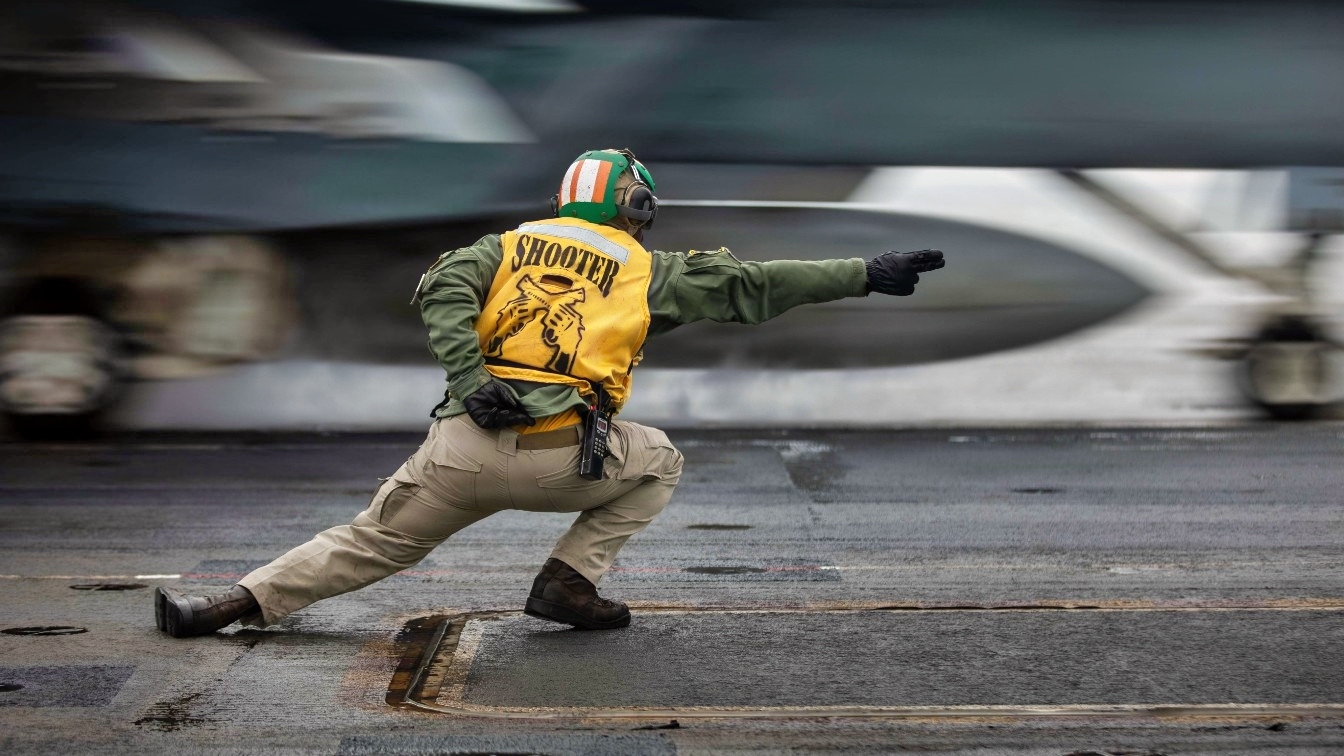
U.S. Navy Lt. Miguel Smith launches an F/A-18E Super Hornet, attached to the “Pukin Dogs” of Strike Fighter Squadron (VFA) 143, from the flight deck of Nimitz-class aircraft carrier USS Dwight D. Eisenhower (CVN 69) May 7, 2026. Eisenhower is underway conducting flight deck certification in the Atlantic Ocean in preparation for future operations. (U.S. Navy photo by Mass Communication Specialist 3rd Class Jamison Sutton)
The news is significant, not because it means Iran is taking the economic threat seriously but because it suggests Tehran could be preparing for those problems to continue. Washington has, after all, promised to lift some sanctions and bring Iran into the global financial system if it begins to cooperate, ends its nuclear program, and moderates its positions. But Tehran is pushing back as hard as it possibly can.
Iran’s Economic Problems Worsen
Iran had economic problems before the war, but the latest data shows that the country’s economy is doing worse by every measure since the U.S.-Israeli strikes began in February.
Annual inflation reached 66% in July, according to Iranian figures cited by Reuters, while the International Monetary Fund currently projects consumer prices to increase by 68.9% during 2026. The IMF also expects Iran’s real gross domestic product to contract by 5.4% this year. The rial has also fallen to levels that would have been considered extraordinary months ago, and in August the currency crossed 2 million rials per U.S. dollar for the first time.
The problem has been acknowledged by Iran’s central bank, which has said it is prepared to inject up to $2 billion into the foreign exchange market to limit volatility, among other measures.
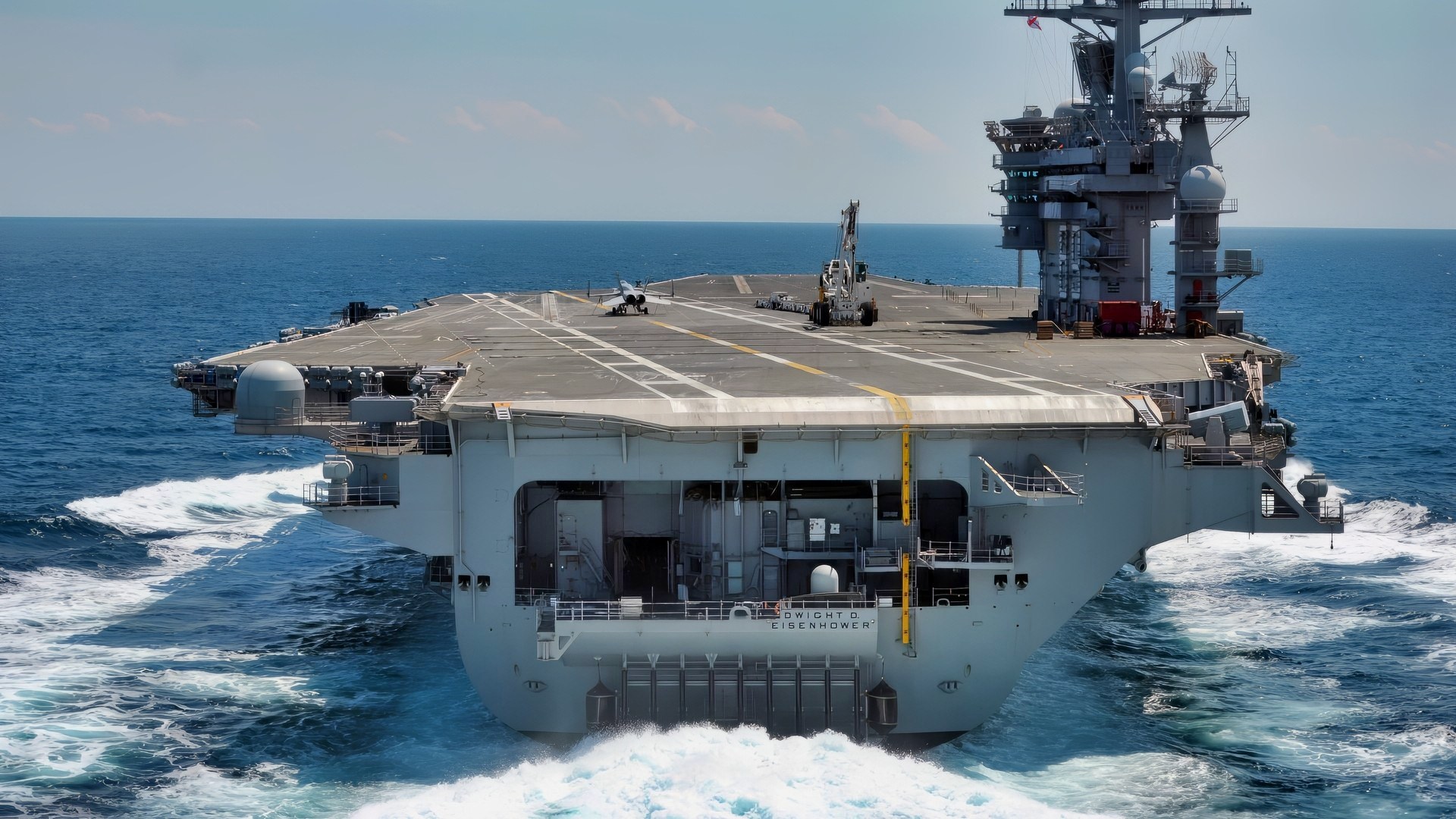
ATLANTIC OCEAN (June 14, 2011) The Nimitz-class aircraft carrier USS Dwight
D. Eisenhower (CVN 69) conducts rudder turns during sea trials. Dwight
D. Eisenhower completed a nine-month planned incremental availability at Norfolk Naval Ship Yard on June 10 and is scheduled to resume underway operations this summer. (U.S. Navy photo by Mass Communication Specialist 1st Class Christopher Stoltz/Released)
Those numbers mean that Iranian citizens’ money is worth less. Declining purchasing power directly and negatively impacts the lives of regular citizens and suggests that the cost of living in Iran is rising so rapidly that the regime is about to face major political problems. Assuming regular citizens are not fearful of the response by the government to dissent, that is.
Average monthly wages in Iran now cover less than one third of the cost of a basic household budget.
The situation is unquestionably dire—and the regime knows it.
Iran’s Trade Networks Are Cut Off
Iran is struggling under the weight of U.S. sanctions and secondary sanctions, with its trade being cut off with much of the rest of the world. China is, of course, the main exception.
But plenty of countries are playing ball with Washington as it pushes for every trading partner to sever ties with Tehran. And the plan is working.
President Masoud Pezeshkian has said Iran’s total imports and exports have declined by 25% and 35%, respectively, with imports falling more than exports. Iran has also lost one of the principal routes it previously used to keep goods and money moving despite American sanctions. The United Arab Emirates suspended commercial and financial transactions with Iran on August 19, disrupting a longstanding conduit between Iranian businesses and international markets.
Washington is targeting both Iranian companies and foreign intermediaries that allow them to operate and move goods onto the international market. The latest secondary sanctions are intended to prevent Iran from making dollar transactions necessary to finance imports and oil sales, and the U.S. naval blockade is physically preventing oil from leaving the Persian Gulf.
Three senior Iranian sources also told Reuters that the additional restrictions imposed by Washington had made Tehran’s years-old methods for evading sanctions, including the use of front companies and unregistered tankers, more expensive and increasingly difficult to use. The same sources also said that the problem is becoming so serious that Iran now has only about two months of gasoline supplies left, with no real solution on the table.
What the Economic War Headquarters Will Actually Do
Without solving these problems, there is not much Iran can do to right this ship — but that won’t stop the regime from trying.
Tehran is creating a centralized mechanism to respond to the disruption, with Deputy Economy Minister Morteza Zamanian saying on Sunday that the new department will identify problems arising specifically from wartime conditions and develop measures to address them quickly.
He said that the headquarters will start by helping businesses and financing that fall under the Ministry of Economy’s authority.
And for businesses and problems that require powers the ministry does not currently possess, those matters will be escalated to the government’s Economic Commission, which possesses greater powers.
The headquarters is essentially a way of distributing responsibility across various government departments, but it is unclear how it intends to address problems that can only be solved by trading with international partners.
About the Author: Jack Buckby
Jack Buckby is a British researcher and analyst specializing in defense and national security, based in New York. His work focuses on military capability, procurement, and strategic competition, producing and editing analysis for policy and defense audiences. He brings extensive editorial experience, with a career output spanning over 1,000 articles at National Security Journal, and has previously authored books and papers on extremism and deradicalization.


