

U.S. Destroys Five Iranian Tankers, Oil Market Responds – The United States hit and destroyed five Iranian oil tankers on Tuesday, September 8, following Iranian ballistic missile attacks against U.S. warships.
U.S. Central Command said four Iranian crude carriers — the Kaviz, Charminar, Horizon 1 and Riesco — were struck in the Gulf of Oman. A fifth vessel, the Derya, was struck near Kharg Island, Iran’s most important oil export hub. American forces reportedly ordered the crew to abandon the vessels before they were attacked. CENTCOM said that the ships were then rendered inoperable.
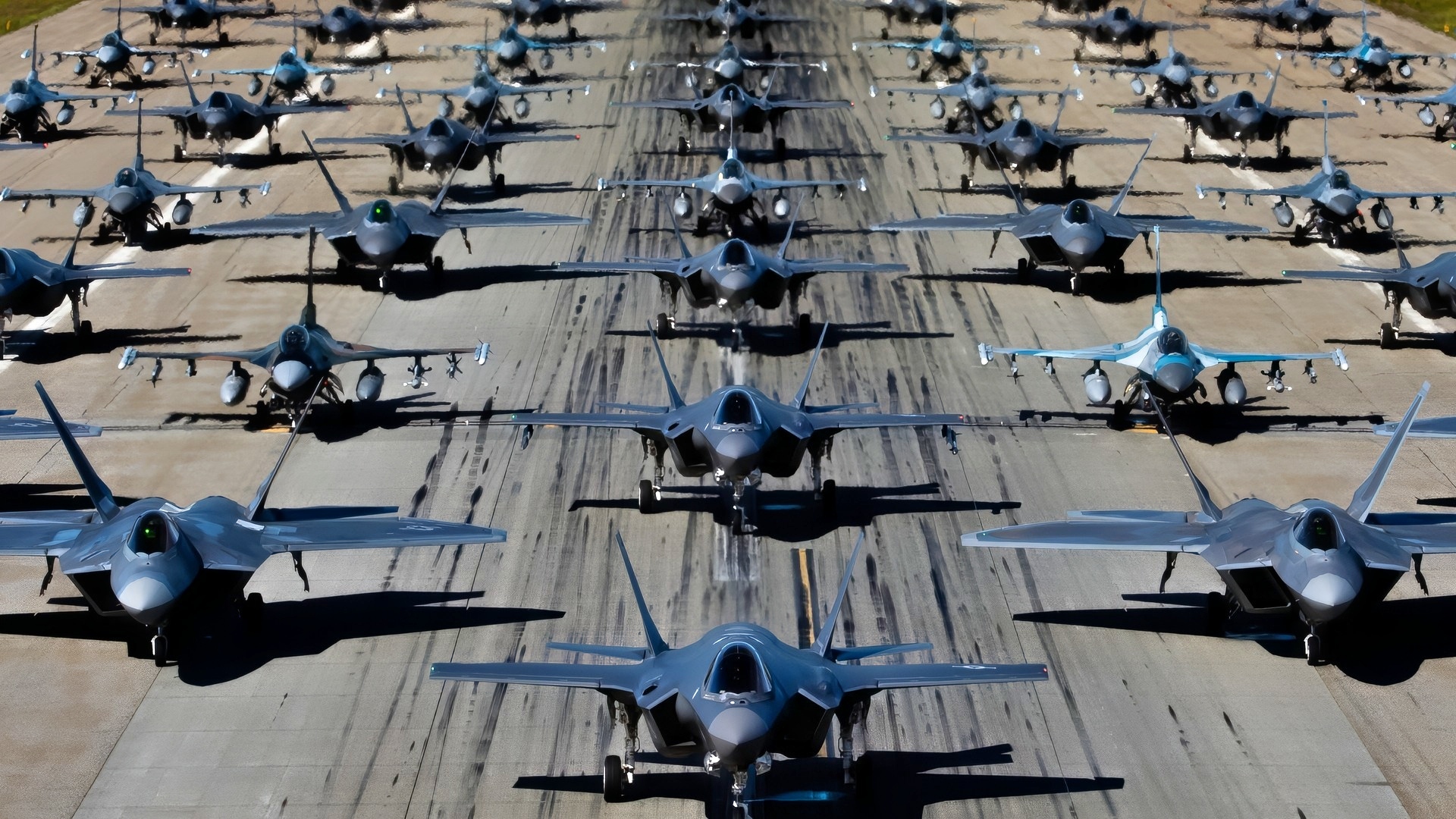
The 354th Fighter Wing conducts a 75-fighter jet formation at Eielson Air Force Base, Alaska, Aug. 12, 2022, in honor of the U.S. Air Force’s 75th Anniversary. This capabilities demonstration included F-35A Lightning II, F-16 Fighting Falcon and F-22 Raptor aircraft from across Pacific Air Forces. (U.S. Air Force photo by Senior Airman Gary Hilton)

A Polish F-16 pilot awaits instructions from his crew chief after completion of a Baltic Air Policing sortie at Šiauliai Air Base, Lithuania, Aug. 30, 2017. The Polish air force recently relinquished control of the NATO Baltic Air Policing mission to the U.S. Air Force for the forty-fifth rotation of allied protection of the sovereign skies of the Baltic region since Baltic Air Policing operations began in 2004. (U.S. Air Force photo/ Tech. Sgt. Matthew Plew)
Iran responded quickly, firing ballistic missiles toward Jordan and announcing a number of additional attacks around the Strait of Hormuz. The war then escalated again on Wednesday, September 9, when Iran claimed to have attacked 10 ships near the Strait of Hormuz. The escalation sent the price of oil soaring to above $100 per barrel.
Iran Says It Attacked 10 Ships
Iran responded to U.S. strikes against its tankers with what appears to be the largest Iranian attack on shipping since the war began in February. It holds true to Tehran’s recent promise to engage in more offensive action against U.S. forces.
The Islamic Revolutionary Guard Corps said Wednesday that its forces attacked 10 vessels near the Strait of Hormuz, including two American vessels and eight tankers. Tehran claimed the ships suffered substantial damage, although the extent of that damage has not been independently established. Iran then claimed it had struck two U.S. Navy destroyers with ballistic missiles, but the United States has disputed Tehran’s account of the attacks and said that all attempted strikes were unsuccessful.
U.S. Secretary of State Marco Rubio also said that Washington intends to keep retaliating against Iranian oil export infrastructure and vessels if Tehran continues to target U.S. naval forces.
“Iran continues to try to hit U.S. naval ships. And for every time they do that or try to do that, they’re going to lose tankers. And I think you’ll see that again today,” Rubio said to reporters on Tuesday.
The strikes bring the tally of Iranian tankers attacked by U.S. forces to eight in just a matter of days.
20 Iranian Missiles Target Jordan
Iran also launched 20 ballistic missiles toward Jordan on Tuesday, September 8, hours after the U.S. military successfully hit five Iranian oil tankers. The Islamic Revolutionary Guard Corps announced the attack later that day, saying that it had targeted U.S. forces and infrastructure at Muwaffaq Salti Air Base near Al Azraq in eastern Jordan. A statement published by Iranian media claimed that the strike destroyed aircraft hangars at the base. The IRGC announced the strikes after describing how the “defeated, desperate terrorist and aggressor American army” had hit Iranian commercial and oil tankers.
“In retaliation, the Islamic Revolutionary Guard Corps Aerospace Forces launched a punitive operation against the U.S. al-Azraq base in Jordan with heavy missile strikes, using solid- and liquid-fuel ballistic missiles. The operation targeted the repair and maintenance hangars, preparation areas and deployment positions of F-35, F-16 and F-15 warplanes, as well as fighter jet hangars, inflicting heavy damage on the enemy,” the Mehr news agency reported.
The United States disputes the claim, however, with an American official telling NBC News that Iran fired a series of missiles toward Jordan but that the strikes were ineffective.
According to the source, American integrated air and missile defenses successfully stopped the barrage and all U.S. personnel in Jordan have been accounted for.
Jordan also appeared to confirm the scale of the barrage, with a Jordanian Armed Forces spokesperson saying its air defenses intercepted 18 ballistic missiles and describing how two fell in unpopulated areas. No injuries were reported.
Commercial Ships Hit
Reports emerged on Wednesday of casualties and damage aboard commercial vessels throughout the region. One crew member was reportedly killed, and another was missing from the Hercules Star, an oil tanker, according to Peninsula, the ship’s charterer. Reports also indicated that the vessel could have been hit by a drone.
The New Andros, a Panama-flagged tanker carrying roughly two million barrels of Iraqi fuel oil, also reportedly caught fire after it was struck in Iraqi waters on Wednesday morning. According to the Iraqi Oil Ministry, all 22 crew members were unharmed following the strike, and no cargo leaked into the sea.
Oil Markets Respond
The escalation in the Gulf was quickly reflected in the global energy markets, with Brent crude climbing above $100 per barrel on Wednesday, September 9. Oil prices reached their highest level since July as traders reacted to the strikes, Iranian retaliation, and the possibility of the conflict continuing for the time being.
The increase followed Tuesday’s gains, with prices steadily rising in recent weeks. With attacks now directly hitting tankers as the U.S. scrambles to move large volumes of crude through the Strait of Hormuz, the price of oil is set to continue rising — and Iran is promising even more severe consequences if U.S. strikes continue.
About the Author: Jack Buckby
Jack Buckby is a British researcher and analyst specializing in defense and national security, based in New York. His work focuses on military capability, procurement, and strategic competition, producing and editing analysis for policy and defense audiences. He brings extensive editorial experience, with a career output spanning over 1,000 articles at 19FortyFive and National Security Journal, and has previously authored books and papers on extremism and deradicalization.


