


Things in Iran remain in a holding pattern, with the U.S. not launching any type of major attack after the midterm elections, but no real progress has been made on peace talks either.
However, on Thursday, there was a minor skirmish, although the two sides don’t appear to agree on exactly what happened.
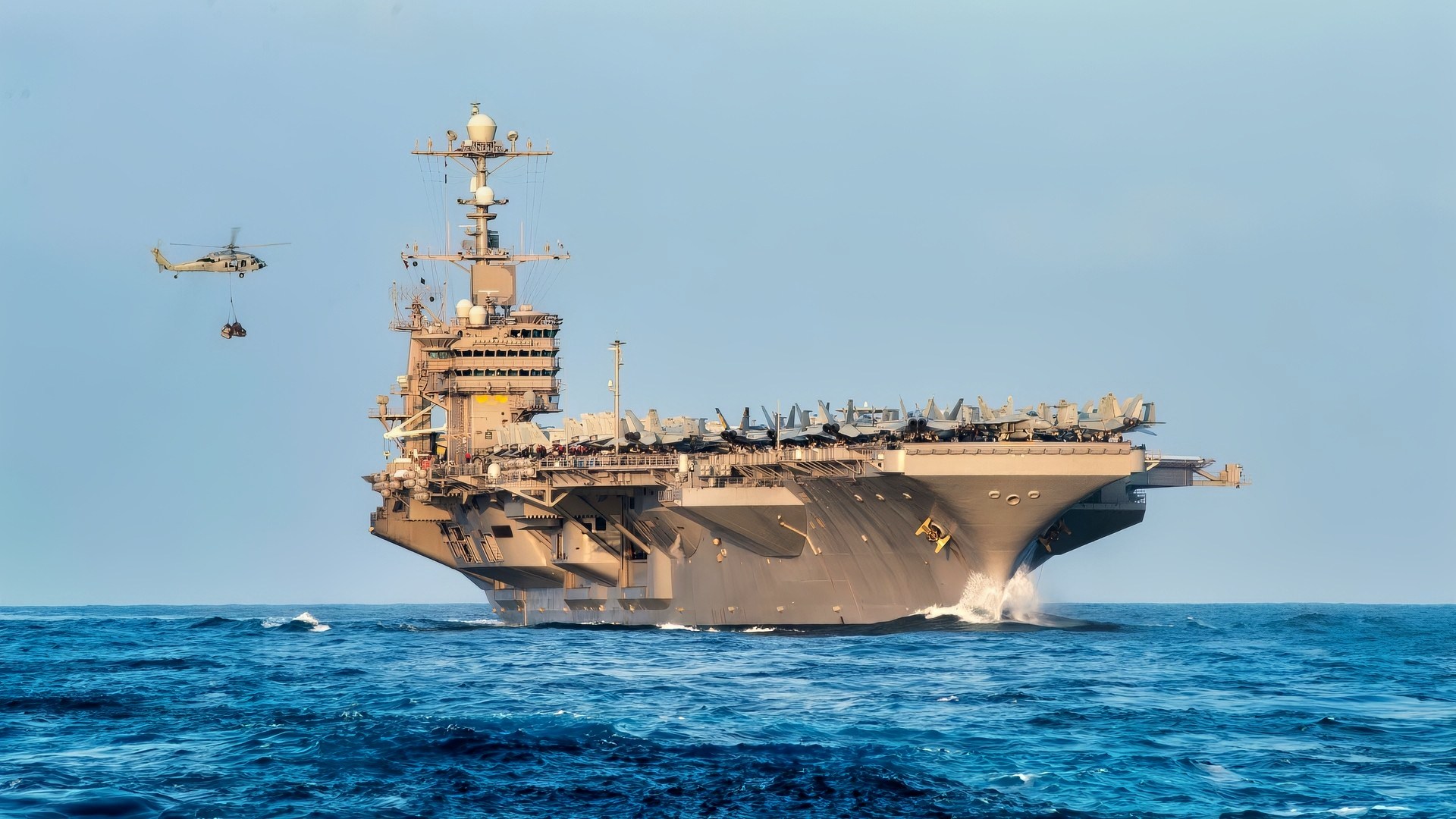
(Aug. 1, 2016) – The Nimitz-class aircraft carrier USS John C. Stennis (CVN 74) receives stores while conducting a vertical replenishment at sea, during Rim of the Pacific 2016. Twenty-six nations, more than 40 ships and submarines, more than 200 aircraft and 25,000 personnel are participating in RIMPAC from June 30 to Aug. 4, in and around the Hawaiian Islands and Southern California. The world’s largest international maritime exercise, RIMPAC provides a unique training opportunity that helps participants foster and sustain the cooperative relationships that are critical to ensuring the safety of sea lanes and security on the world’s oceans. RIMPAC 2016 is the 25th exercise in the series that began in 1971. (U.S. Navy photo by Mass Communication Specialist 2nd Class Ryan J. Batchelder)
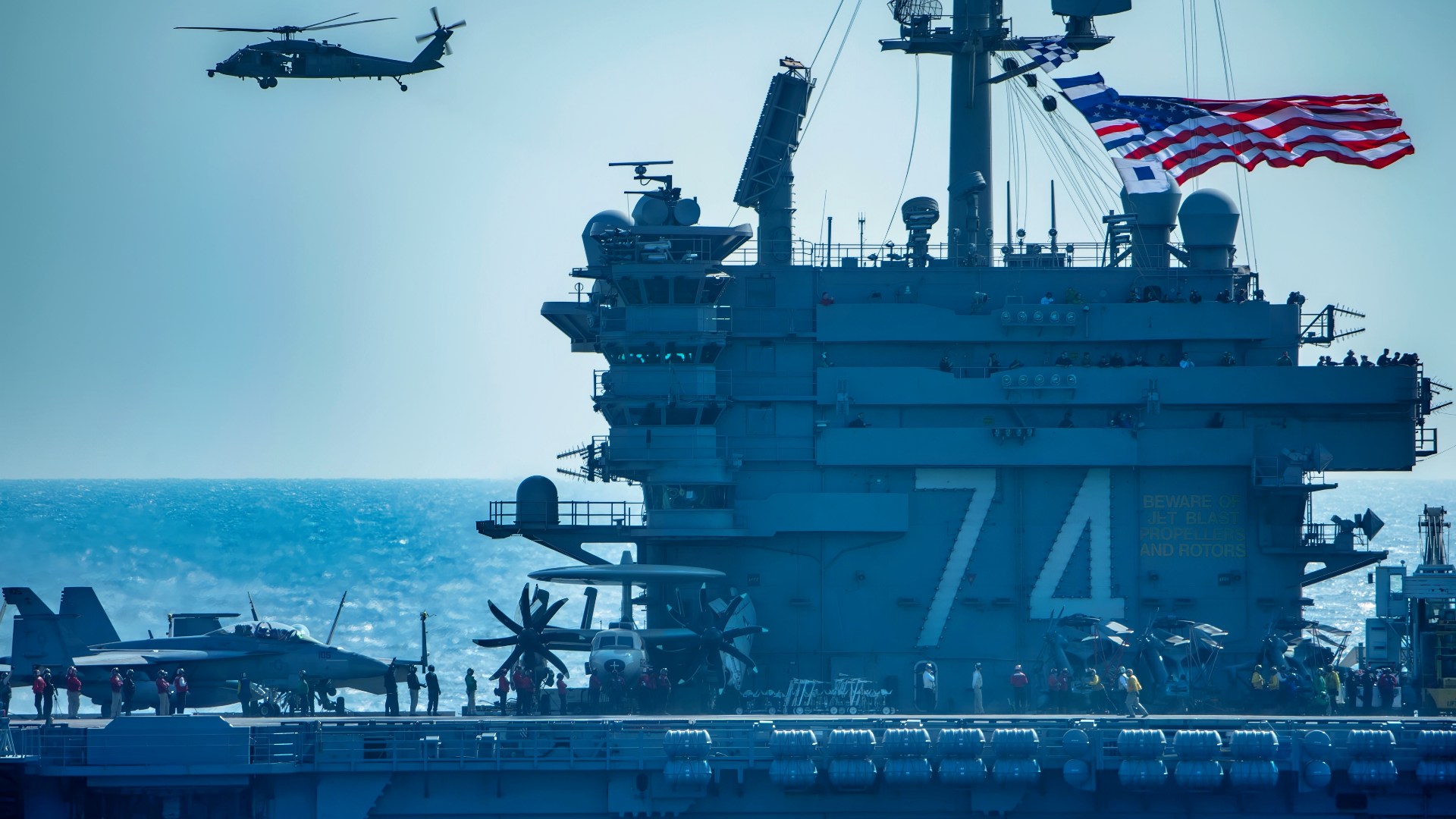
ARABIAN SEA (Dec. 14, 2018) The Nimitz-class aircraft carrier USS John C. Stennis transits the Arabian sea with the Essex Amphibious Ready Group (ARG) and 13th Marine Expeditionary Unit (MEU). The John C. Stennis Carrier Strike Group, Essex ARG, and 13th MEU are conducting integrated operations in the Arabian Sea to ensure stability in the Central Region, connecting the Mediterranean and the Pacific through the western Indian Ocean and three strategic choke points. (U.S. Navy photo by Mass Communication Specialist 3rd Class Tyler Diffie)
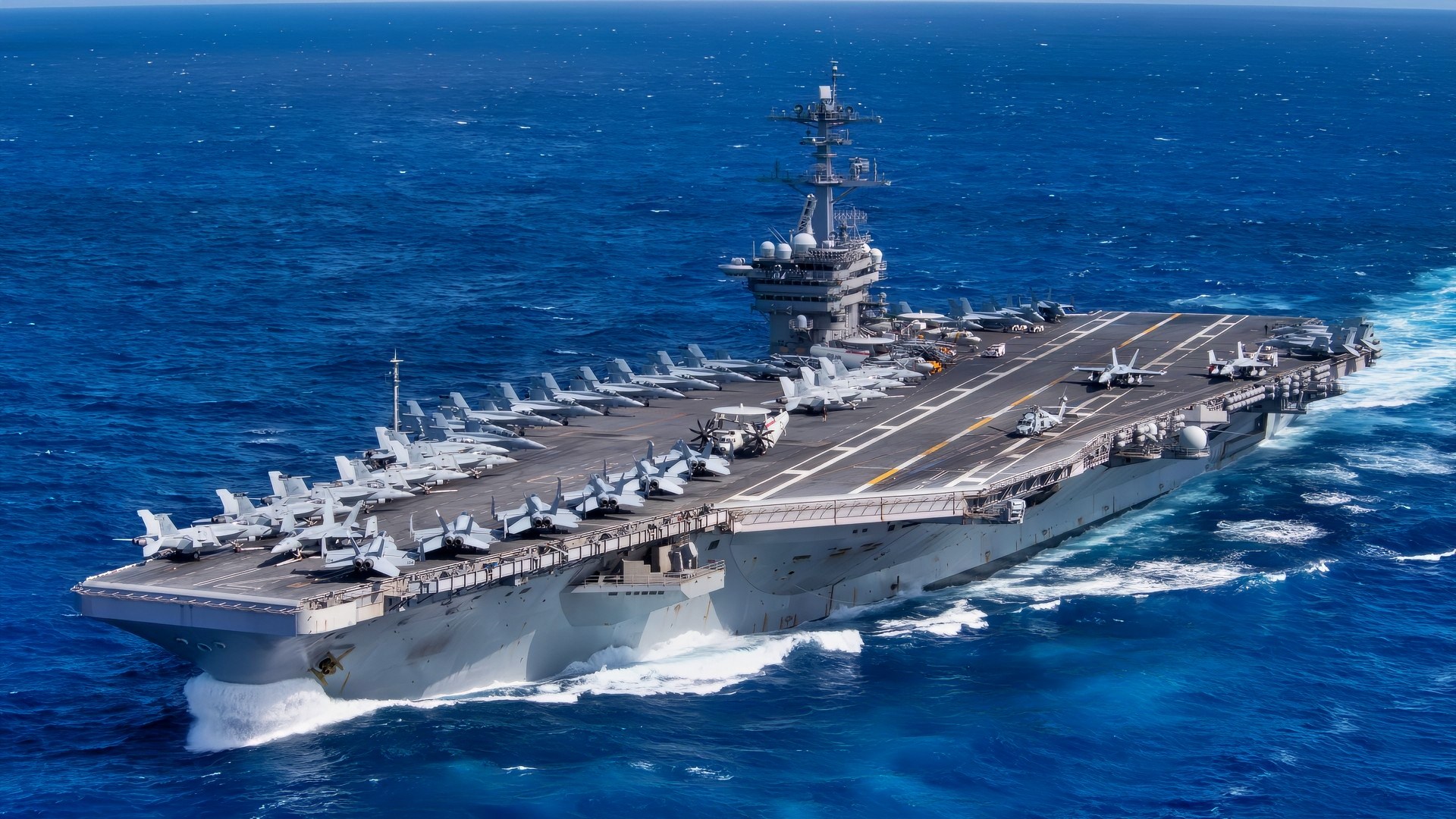
(Jan. 25, 2020) The aircraft carrier USS Theodore Roosevelt (CVN 71) transits the Pacific Ocean Jan. 25, 2020. The Theodore Roosevelt Carrier Strike Group is on a scheduled deployment to the Indo-Pacific. (U.S. Navy photo by Mass Communication Specialist Seaman Kaylianna Genier)
According to Reuters, the U.S. has denied a claim by Iran that Iran had attacked a U.S. early-warning radar in Bahrain.
Instead, the U.S. said it shot down a pair of one-way attack drones that the Islamic Revolutionary Guard Corps (IRGC) launched towards Bahrain.
Iranian state media claimed that Iran had retaliated for “an air attack on a telecommunications tower in its Hormozgan province.”
CENTCOM denied in a “fact-check” on social media that the radar had been attacked.
The Guardian described the radar attack, if it was in fact an attack, as the first attack on a U.S. military installation in months.
“This is a serious warning to the aggressor enemy to end its aerial mischief and oil smuggling in the Strait of Hormuz,” the IRGC said in its statement.
“In the event of repeated violations and aggression, the IRGC aerospace force is on full alert to confront the enemy without constraint.”
Meanwhile, in the Strait of Hormuz…
Also on Friday, according to the Associated Press, the IRGC claimed that a liquefied petroleum gas tanker struck a mine and exploded while attempting to traverse the Strait of Hormuz. IRGC made the claim through the state-run IRNA news agency.
The vessel, the IRGC claimed, had “ignored repeated warnings” while going through the Eastern portion of the Strait.
Maritime Executive reported that three tankers had been attacked in two days in or near the Strait. One was the oil tanker Dominica Prosperity, which was “hit by an unspecified projectile while adrift and waiting off the coast of Ras al Khaimah,” in the Arabian Gulf and near the approach to the Strait of Hormuz.
President Trump has said that he would only attack Iran if he has to. But that leaves out the question of what kind of action by Iran would require American retaliation.
Trump’s Iran Focus
Also this week, Trump announced a big shift in his approach to the conflict: he removed his vice president from the Iran portfolio.
According to the Associated Press, Trump announced on Truth Social Thursday that Vice President JD Vance will shift his focus away from Iran and instead to what Trump says is widespread “corruption and crime in Democratic-controlled cities and states.”
“I have asked Vice President Vance to focus his complete and total attention on the Massive Corruption and Crime taking place in Democrat run Cities and States throughout the U.S.,” Trump said on Truth Social.
Vance was seen as responsible for negotiating the Memorandum of Understanding agreement that brought a brief halt to the conflict in June but fell apart within weeks.
More recently, the vice president wrote a letter to Iran’s security chief, Mohsen Rezaei, that was seen as an attempt to create a new diplomatic opening.
But after the midterm elections last week, Vance sent a lengthy social media message, calling Iran the main reason why Republicans had lost the election.
A Regime Change Vow
Trump said something else newsworthy about Iran this week. In an interview with conservative radio host Hugh Hewitt, Trump said that while he doesn’t need a deal with Iran or to restart the war, he would consider it a failure if he leaves office with the Iranian regime still intact.
“If the Iran crazies are still in power when you leave office, will that have been a defeat for you?” Hewitt asked him.
Trump answered affirmatively.
“Yes, that would be a defeat. I would say that would be a defeat. Absolutely.”
Removing the Iranian regime from power was seen as a major goal of the war in the early going, especially since it began with the killing of longtime Supreme Leader Ali Khameini, and Israeli Prime Minister Benjamin Netanyahu has spoken openly about that as a goal.
However, the regime has proved resilient, with Khameini’s son emerging as his successor. It’s not clear what actions could be taken at this stage to remove the regime.
About the Author: Stephen Silver
Stephen Silver is an award-winning journalist, essayist, and film critic, and contributor to the Philadelphia Inquirer, the Jewish Telegraphic Agency, Broad Street Review, and Splice Today. The co-founder of the Philadelphia Film Critics Circle, Stephen lives in suburban Philadelphia with his wife and two sons. For over a decade, Stephen has authored thousands of articles that focus on politics, national security, technology, and the economy. Follow him on X (formerly Twitter) at @StephenSilver, and subscribe to his Substack newsletter.


