

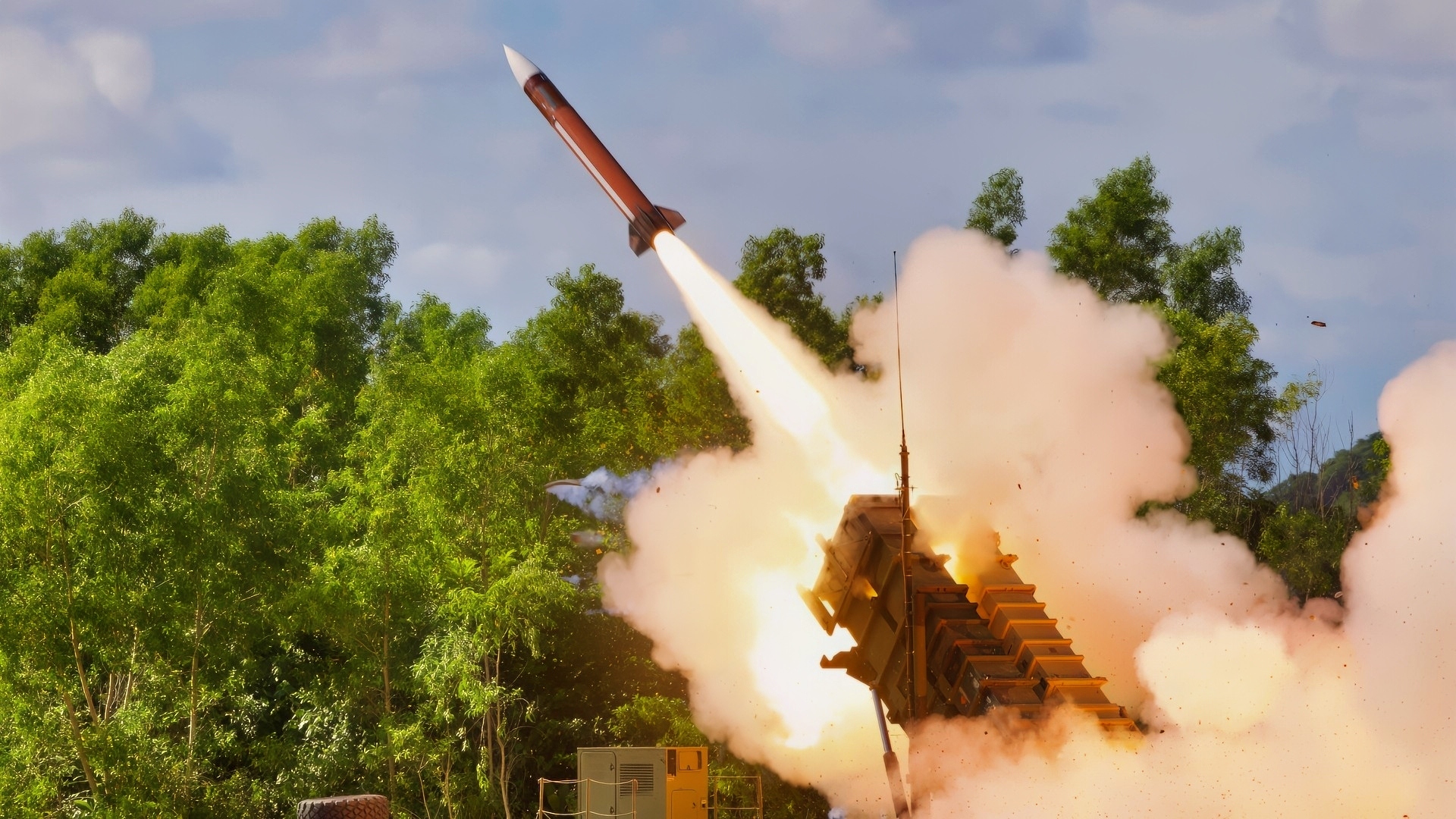
Iran claims to have replenished enough missiles to carry out a prolonged war with the United States. Meanwhile, U.S. President Donald Trump publicly claims the conflict will end after this November’s midterm elections.
One top Iranian official, who wished to remain anonymous, told Bloomberg Iran did not plan to back down as a result of the U.S. naval blockade or U.S. attacks on Tehran’s tankers.

Iran’s Drones That Russia Is Using. Image Credit: Creative Commons.
The official claimed the regime had already rebuilt military capabilities since fighting eased in April and now possessed “enough missiles for a lengthy conflict.”
On Wednesday, Trump seemed to suggest a rather different outcome, telling the press: “I think the war is going to end immediately after the election because they can’t hold out any longer.”
White House officials are allegedly considering a much more drawn-out war, behind closed doors.
This week, the Wall Street Journal reported that Vice President JD Vance, Secretary of State Marco Rubio, and other cabinet members have told Trump that Tehran could hold out against U.S. pressure through the rest of his presidency and even after January 2029.
Iran is also clearly attempting to strike the ships responsible for the strict blockade.
The Institute for the Study of War and the Critical Threats Project (ISW-CTP) said Wednesday that Iran has fired ballistic missiles at a U.S. aircraft carrier, Navy destroyers, and at least one Marine vessel since Sept. 4. U.S. officials described some of the attacks to the Journal as “close calls.”
ISW-CTP said U.S. officials believe Iran may be using “more sophisticated weapons.” Iranian officials have claimed newer Qassem Basir missiles were used.
The solid-fueled missile has a reported 1,200-kilometer range and a maneuverable reentry vehicle that can make interception harder, although ISW-CTP said it remains unclear whether Iran actually fired it in the recent attacks.
Washington has answered attacks on its warships by going after Iran’s tanker fleet. U.S. forces destroyed five Iranian crude carriers on Sept. 8 and have destroyed 10 since Sept. 5, according to ISW-CTP.
Rubio put the new policy plainly: “For every time they do that or try to do that, they’re going to lose tankers.”
Iranian retaliation is hardly limited to targeting U.S. naval vessels.
On Wednesday, Tehran claimed to have hit 10 vessels close to the Strait of Hormuz.
The New Andros, a Panama-flagged vessel transporting 2 million barrels of Iraqi oil on Tuesday, was hit by a drone in territorial waters.
Officials in Baghdad said that rescue vessels stopped the blaze and no casualties were reported.
ISW-CTP also reported that Iran is now focusing on strikes against docked or anchored commercial ships, with stationary vessels naturally making much easier targets.
Tehran’s hope is that these kinds of attacks pressure shipping firms and the rival Gulf states to call on Washington to stop hitting Iran’s own tankers.
On Tuesday, 13 Iranian ballistic missiles entered Jordanian airspace.
Amman’s armed forces claimed to have downed 10, with three others landing in rural areas.
Iran also launched drones or missiles toward U.S.-linked sites in Iraq, Bahrain, and Kuwait.
Cluster-munition ballistic missiles were used in the Iranian barrage, weapons designed to scatter smaller explosives across a broad area. A pair of U.S. officials first described the damage to American equipment as “minimal.”
After the incident, CBS claimed a slew of American aircraft had been damaged. One A-10 Thunderbolt II was heavily damaged. Roughly eight F-15s sustained lighter damage and were subsequently returned to service.
Iran Blasts ‘Economic Warfare’
The secretary of the Iranian regime’s Supreme National Security Council, Mohsen Rezaei, wrote to the X social media platform to lambast the U.S., stating: “economic warfare will be met by a maritime exclusion zone.” He also stressed that the Islamic Republic’s posture toward U.S. assets in the region had been “fundamentally recalibrated,” as a result of the ongoing blockade and sanctions.
Many non-Middle Eastern countries are also having to stomach economic impacts. On Monday, U.S. diesel prices reached a record average higher than $5.90 per gallon.
U.S. President Donald Trump claims pressure on prices will relax once the war is over, but it is unclear if and when a peace deal will emerge, and whether it will satisfy Washington’s demands.
About the Author: Georgia Gilholy
Georgia Gilholy is a journalist based in the United Kingdom who has been published in Newsweek, The Times of Israel, and the Spectator. Gilholy writes about international politics, culture, and education.


