

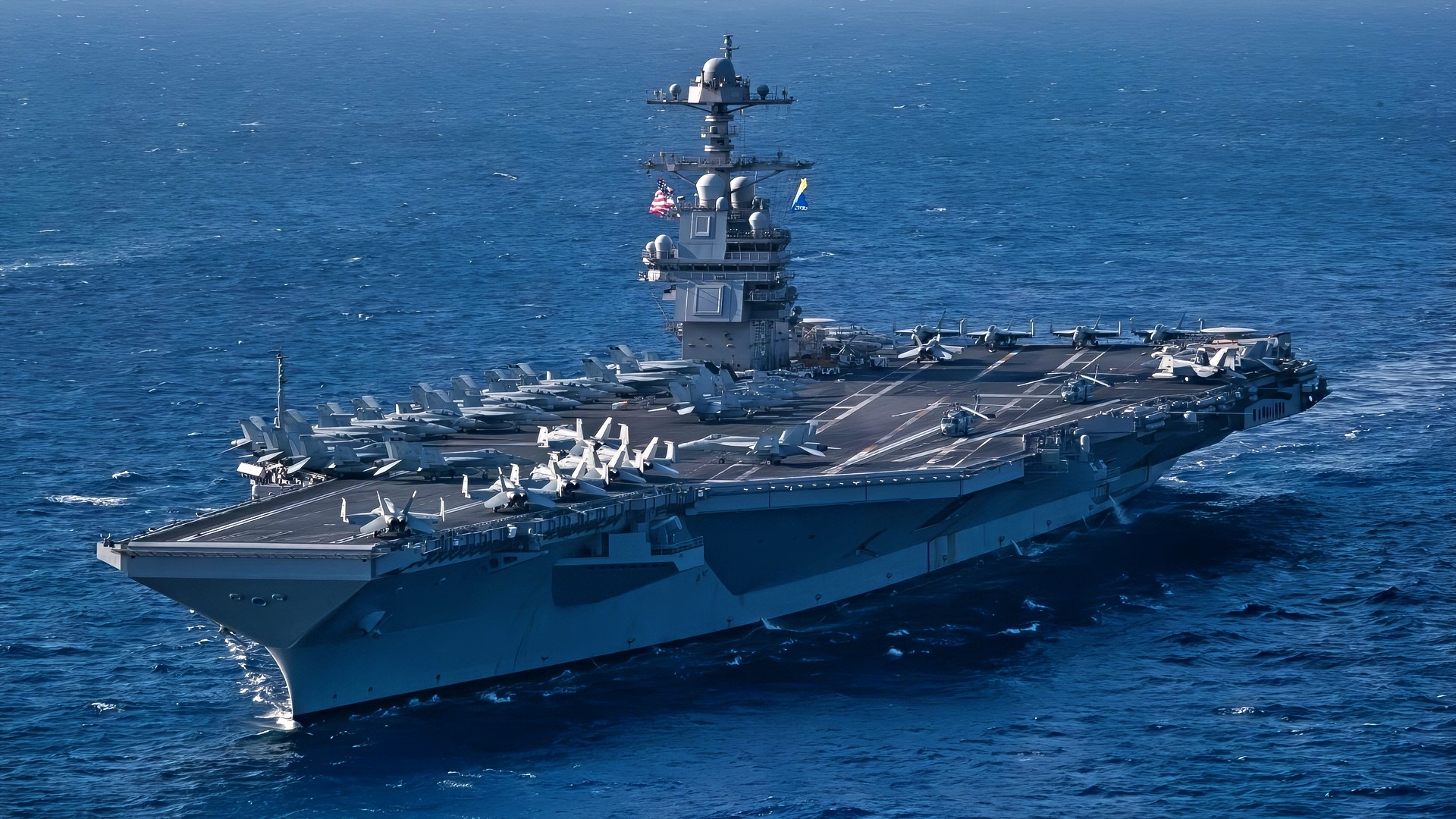
When the Gerald R. Ford-class nuclear-powered aircraft carrier was first announced as the replacement for the iconic Nimitz-class aircraft carrier, the news was met with great fanfare. After all, on paper, the Ford-class would bring many new capabilities and truly become the United States Navy’s aircraft carrier of the twenty-first century. This did not happen, though. Instead, the USS Gerald R. Ford went significantly over budget and over its scheduled development time.
That means a math problem no one can easily solve: the US Navy now simply doesn’t have enough aircraft carriers.
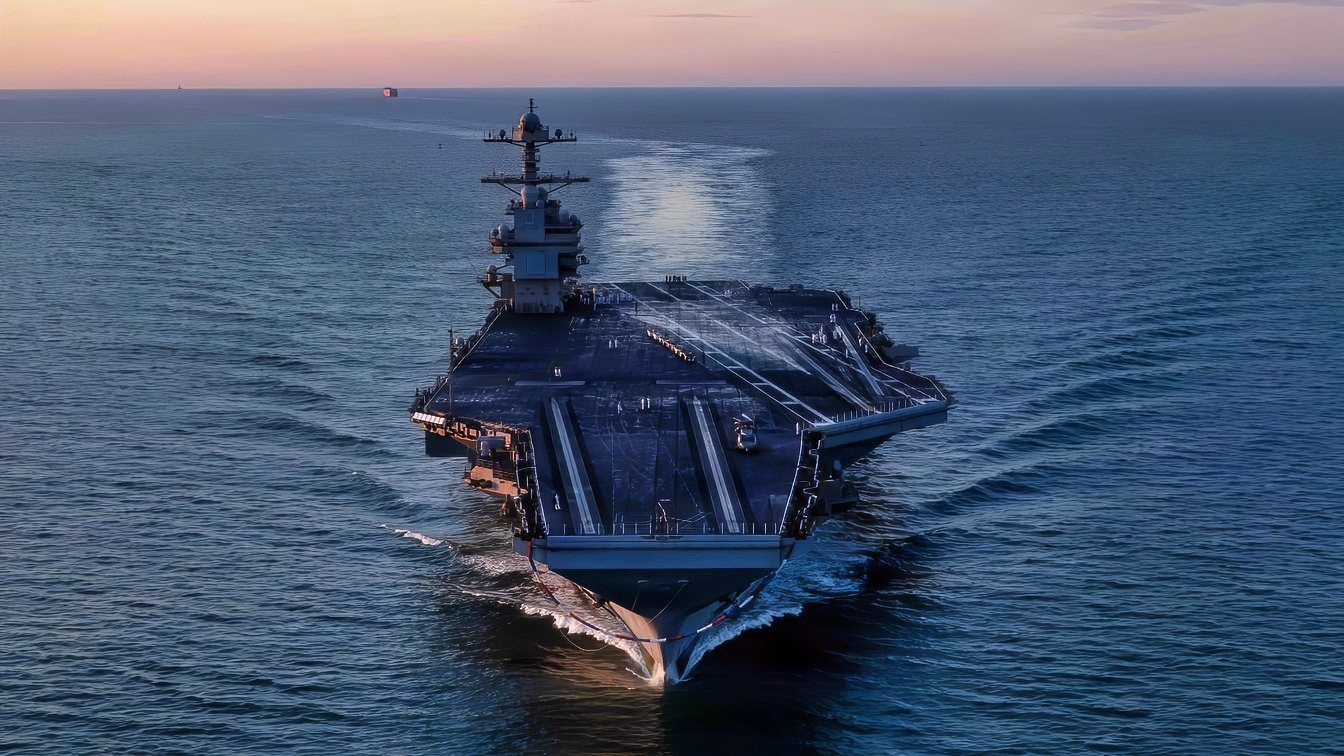
NORFOLK, Va. (May 16, 2026) USS Gerald R. Ford (CVN 78) returned to Naval Station Norfolk, May 16, 2026, following a historic 11-month deployment to U.S. 2nd, 4th, 5th, and 6th Fleets as part of the Gerald R. Ford Carrier Strike Group. Before returning to Norfolk after 326 days, the Gerald R. Ford crew conducted 23 replenishments-at-sea and sailed over 57,713 nautical miles. Embarked Carrier Air Wing 8 logged more than 5,760 flight hours and 12,200 flight launches. (U.S. Navy photo by Mass Communication Specialist 2nd Class Mike Shen)
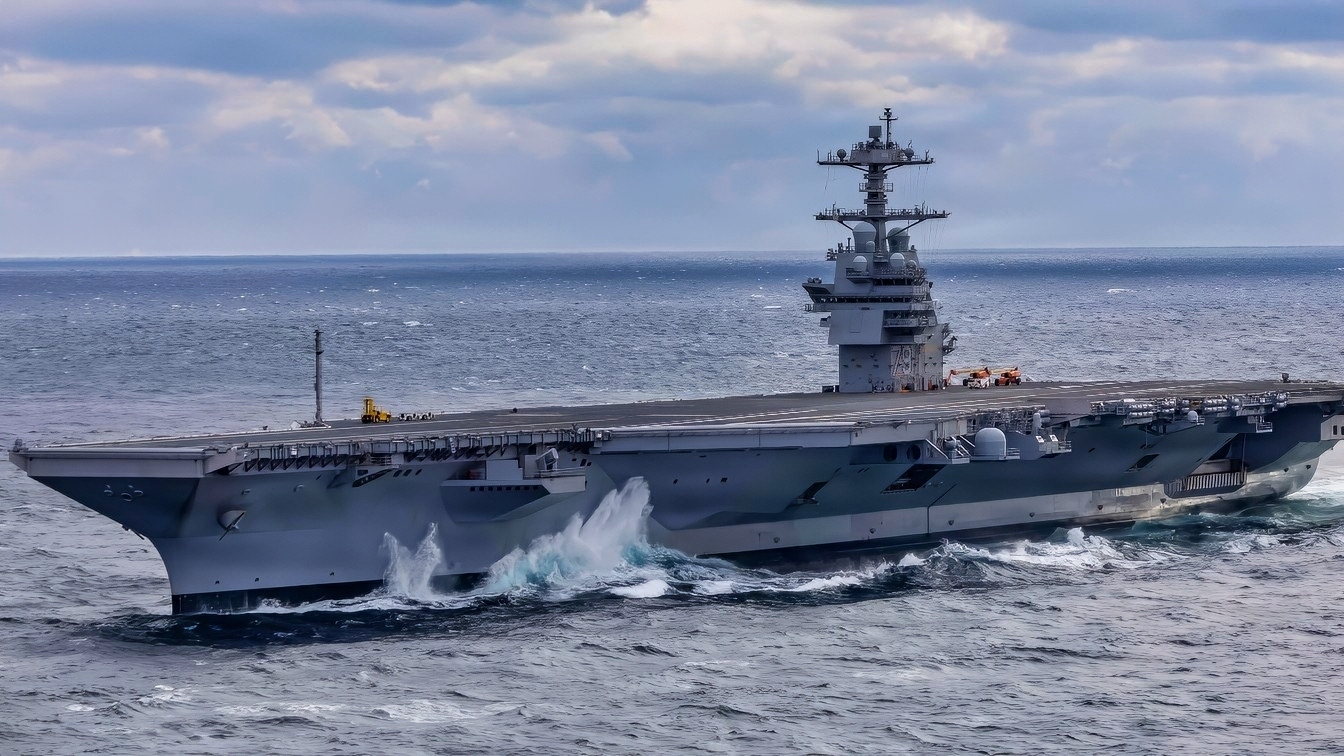
Pre-Commissioning Unit John F. Kennedy (CVN 79) transits the Atlantic Ocean during Builder’s Sea Trials, Jan. 28, 2026. Builder’s Trials provide an opportunity to test ship systems and components at sea for the first time, and make required adjustments prior to additional underway testing. (U.S. Navy photo by Mass Communication Specialist 2nd Class Kaitlin Young)
Thankfully, the USS Gerald R. Ford is serving in the fleet.
Of course, America’s newest carrier was taken to the edge of its operational limits because of a marathon deployment that resulted in a series of humiliating events, from sewage problems to an alleged laundry room fire that forced the carrier out of combat during the height of the Iran War.
An Entire Line of Messes for US Navy Aircraft Carriers
But the Gerald R. Ford is not the only aircraft carrier of its class. It is the first of what the Pentagon plans to be a force of ten. Three more Ford-class carriers are currently in various stages of development.
The USS John F. Kennedy, the USS Enterprise, and the USS Doris Miller are all being assembled in the shipyard. The Kennedy has already completed its acceptance trials, making it the next Ford-class carrier that will be deployed.
Although the USS Gerald R. Ford finally left the shipyard after years of delay and went on its marathon deployment, her sister ships are struggling to meet their timelines. Each of the three Ford-class carriers, in various stages of development, has slipped behind schedule.
That’s the result of immature new technologies, complex design retrofits, and serious shipyard bottlenecks.
Some of the underlying technologies that made the Ford-class so revolutionary were the Advanced Arresting Gear (AAG) and the Electromagnetic Aircraft Launch System (EMALS). Another was the Advanced Weapons Elevators (AWE). But these systems were persistently unreliable and struggled to pass certification.
As a result, repeated delays and delivery postponements have cost the overall Ford-class development program dearly in time and money.
One aspect of this story that might surprise readers is that America’s newest aircraft carrier class, developed alongside America’s newest fifth-generation multirole warplane, cannot launch the Navy’s F-35C Lightning II warplane.
That’s because the deck plating on the USS Gerald R. Ford melts when the F-35C launches. This wasn’t how it was originally supposed to go, but an early delay in the USS Gerald R. Ford’s design and an unplanned change to the F-35C’s engines made the two incompatible.
The Navy is desperately trying to change that dynamic because one reason for developing the Ford-class carriers was to deploy the F-35C. Right now, the deck plating melts (because it matches the original F-35C engines, while the new engines run too hot). Other associated changes to the combat systems made it harder for the Ford-class to maintain and deploy the F-35C.
Cascading Delays and Severe Bottlenecks
Another complication in building the three Ford-class carriers under development was the dual-phase delivery strategy. Beginning with the construction of the John F. Kennedy, the shipyards wanted to perform a staggered fitting-out procedure that would have saved the Navy high upfront costs. However, once supply-chain bottlenecks for the carriers became pronounced, the entire program stalled.
As a result, nothing will be ready on time because of bottlenecks the Navy can’t seem to break.
Because the carriers are built exclusively at Huntington Ingalls Industries (HII) Newport News Shipbuilding facility in Virginia, any delay in completing one carrier of this class causes significant delays for all carriers under construction there. That’s because there are not enough drydocks and assembly spaces available for subsequent ships, such as the Enterprise and Doris Miller.
Strategic Implications
Late arrivals of large, critical structural gear, coupled with the ongoing skilled-labor crisis in American shipyards, have extended timelines for completing these carriers by years. That’s not to mention the complications arising from the Trump administration’s meddling in the design of the fourth carrier of the Ford-class. Each delay with one of these carriers triggers a cascade of delays because of how the HII shipyard in Newport News is built.
This not only drives up the cost of each carrier, but also creates critical strategic gaps in America’s carrier fleet. That’s because the Navy has implemented a phased retirement program for its Nimitz-class carrier fleet. For every Nimitz-class ship retired, the Navy needs a Ford-class carrier standing by to replace it. These delays not only extend the lifespans of aging Nimitz-class carriers, but they force the Navy to do more with less. As the world destabilizes with each year, that’s not good.
About the Author: Brandon J. Weichert
Brandon J. Weichert is the Senior National Security Editor at 19FortyFive.com. He also manages The Weichert Brief on Substack. Weichert also hosts “National Security Talk” on Rumble. He is the author of four bestselling national security books, most recently A Disaster of Our Own Making: How the West Lost Ukraine (Encounter Books). Follow him via Twitter/X @WeTheBrandon.


