

The U.S. Navy has delayed delivery of the USS Doris Miller (CVN-81) aircraft carrier by 2 years. The fourth Ford-class carrier will now deliver in 2034 instead of 2032. Construction will ultimately take roughly 15 years. Newport News Shipbuilding — the only U.S. yard capable of building nuclear-powered aircraft carriers — cited construction footprint constraints. The delay cascades from problems with the USS Enterprise (CVN-80), which was itself delayed by 8 months. The USS John F. Kennedy (CVN-79) is now expected to take 16 years to build. The U.S. Navy is legally required to maintain an 11-carrier fleet. USS Nimitz service life has been extended through 2027 to compensate. Every Ford-class carrier has experienced significant delays or cost overruns.
Ford-Class Aircraft Carrier: USS Doris Miller Will Need 15 Years to Build
The U.S. Navy has delayed delivery of the future USS Doris Miller (CVN-81) by two years, pushing completion of the next Ford-class aircraft carrier to February 2034 as construction bottlenecks and industrial base problems continue rippling through America’s supercarrier fleet modernization effort.
The delay was disclosed in the Navy’s Fiscal Year 2027 budget justification documents and represents the latest setback for the Ford-class program, which has faced years of supply chain disruptions, labor shortages, and technical integration issues across multiple ships.

Nimitz-class carrier USS George H.W. Bush (CVN 77) transits the Atlantic Ocean while offloading munitions via helicopter to the world’s largest aircraft carrier, USS Gerald R. Ford (CVN 78), June 27, 2025. Gerald R. Ford, a first-in- class nuclear aircraft carrier and deployed flagship of Carrier Strike Group Twelve, incorporates modern technology, innovative shipbuilding designs, and best practices from legacy aircraft carriers to increase the U.S. Navy’s capacity to underpin American security and economic prosperity, deter adversaries, and project power on a global scale through sustained operations at sea. (U.S. Navy photo by Mass Communication Specialist Seaman Jarrod Bury)
Doris Miller, the fourth Gerald R. Ford-class carrier, had previously been expected to deliver in February 2032. According to the Navy’s budget documents, “The CVN-81 delivery date shifted from February 2032 to February 2034 due to shipbuilder construction footprint constraints limiting their ability to build CVN-81 ship modules.
The delay also means construction of the carrier will now stretch to roughly 15 years from the start of work to final delivery.
The ship is being built at Newport News Shipbuilding in Virginia, the only shipyard in the United States capable of constructing nuclear-powered aircraft carriers.
The setback also comes amid ongoing pressure on the Navy to simultaneously pursue the future USS Enterprise (CVN-80) and USS John F. Kennedy (CVN-79), while maintaining the legally mandated 11-carrier fleet amid rising tensions with China and growing concerns about long-term U.S. naval readiness in the Pacific.
Enterprise Delays Trigger Cascading Problems
According to Newport News Shipbuilding, the Doris Miller delay is directly tied to problems affecting Enterprise, the previous ship in the production line.
“CVN-81’s construction schedule has been affected by the cascading impact of CVN-80 delays on shipyard footprint capacity,” Newport News Shipbuilding spokesman Todd Corillo recently told USNI News. “In turn, these capacity constraints have hindered initial CVN-81 structural build in the dry dock. We expect to host the keel laying this year.”
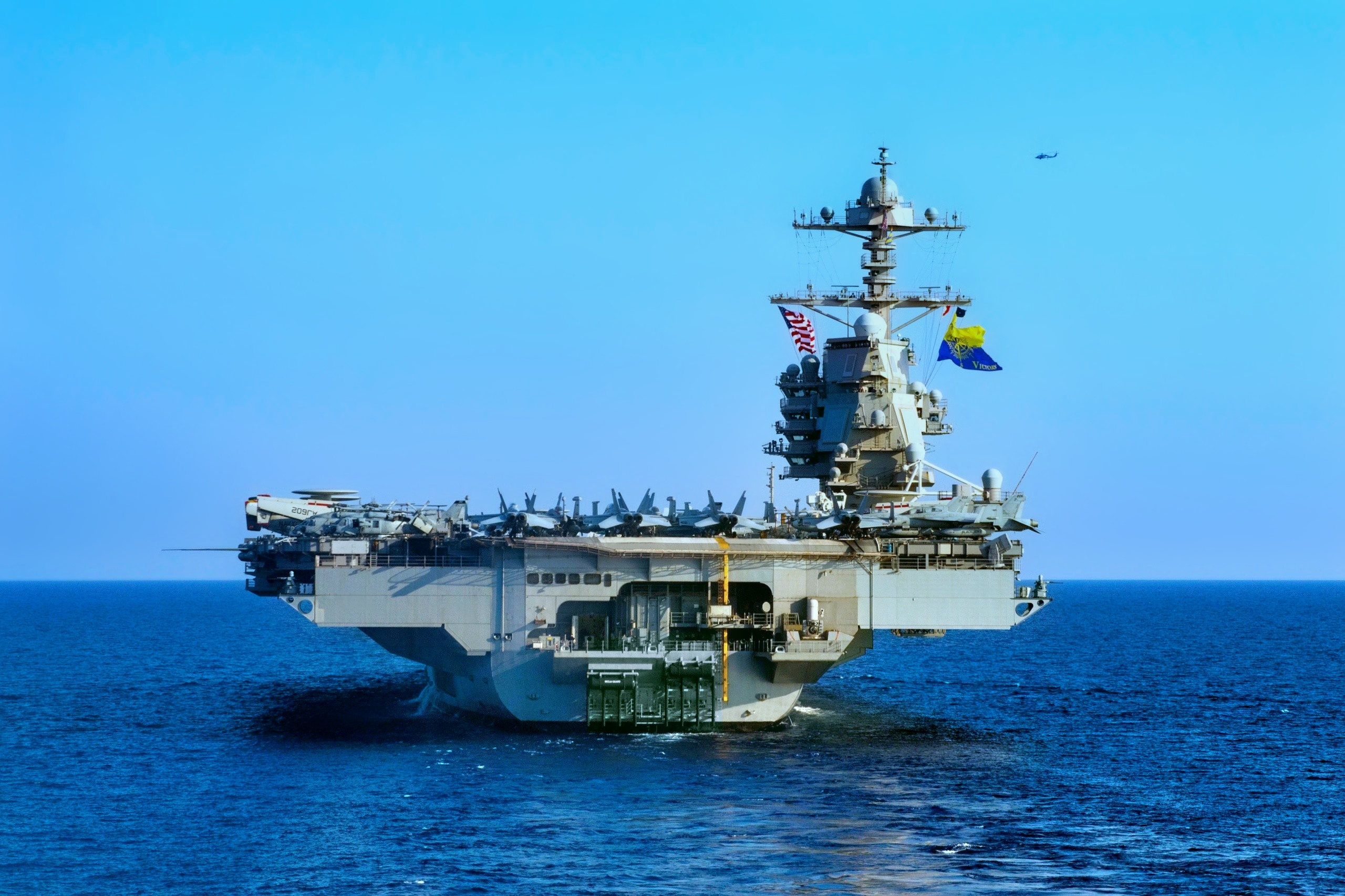
Ford-Class Aircraft Carrier. Image Credit: Creative Commons.
The construction “footprint” issue refers to the limited physical capacity within the shipyard, including dry-dock availability, module staging space, heavy crane access, and workforce allocation. Because nuclear aircraft carriers are assembled from large prefabricated sections, delays in one ship can disrupt work on multiple others simultaneously.
Enterprise itself is now expected to deliver in March 2031, rather than July 2030. The Navy has attributed that schedule slip to delays in “critical path construction required for the launch of the ship.”
Corillo also said Enterprise delays had been caused by “late arrival of large, sequence-critical equipment that hindered the initial structural build of the ship in the dry dock,” but added that “all of the delayed critical material has since arrived.”
During the Huntington Ingalls Industries (HII) earnings call last week, Newport News Shipbuilding president Kari Wilkinson said supply chain disruptions forced the yard to build portions of Enterprise out of sequence, increasing inefficiencies and slowing construction progress.
“We have been on previous calls talking about some of that missing equipment down low on the ship and having that equipment delivered now and being on pace to erect the ship is really going to help us from a performance perspective,” Wilkinson said during the call. “Those delays are costly, as you’re familiar.”
Ford-Class Carriers Face Persistent Problems
Every carrier in the Ford class has experienced significant delays or cost overruns since the program began.
The lead ship, USS Gerald R. Ford (CVN-78), struggled for years with problems involving its Electromagnetic Aircraft Launch System (EMALS), Advanced Weapons Elevators, and Advanced Arresting Gear systems. The second ship in the class, USS John F. Kennedy (CVN-79), has also repeatedly slipped behind schedule. The carrier is currently projected to deliver in March 2027, meaning construction will ultimately take roughly 16 years.
At one stage, the Navy considered delivering JFK in two phases to reduce costs and accelerate fleet availability. Congress later rejected the approach and required the ship to be fully capable of operating the F-35C Lightning II before final delivery.
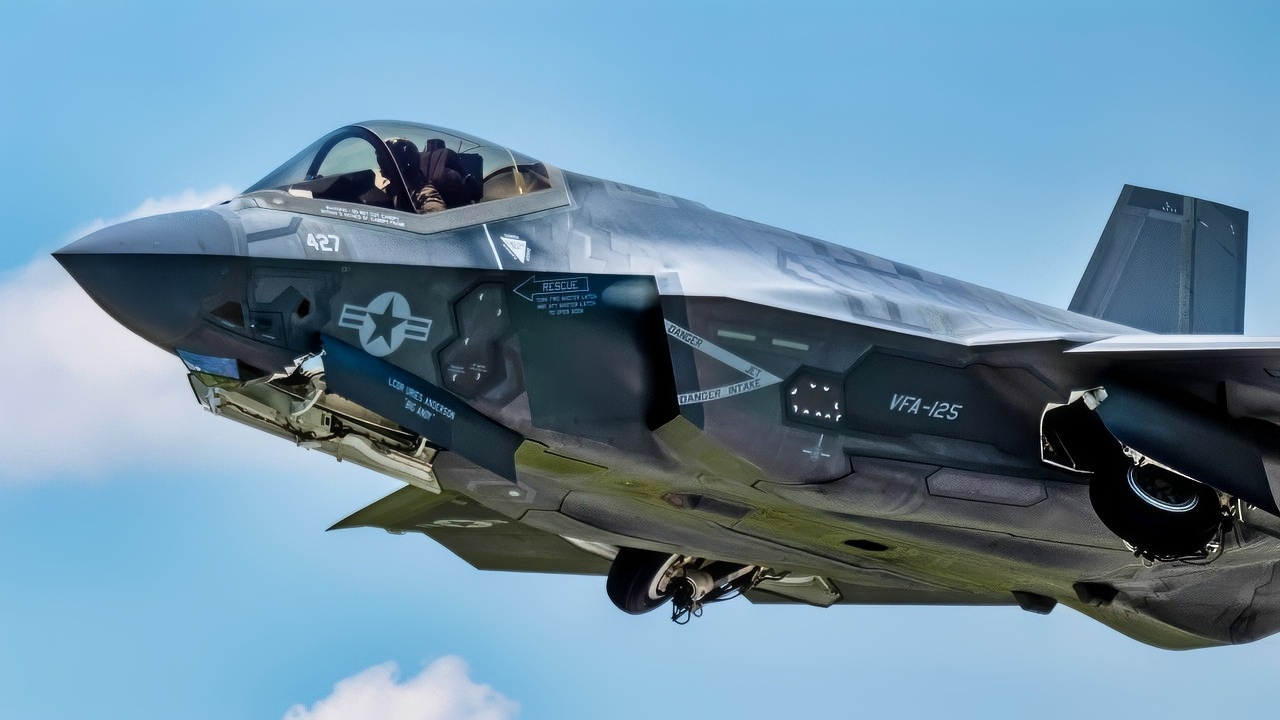
U.S. Navy Lt. Dave Hinkle, F-35C Lightning II Demonstration Pilot, performs during the 2021 Atlanta Air Show, Atlanta Regional Airport-Falcon Field, Ga., May 23, 2021. The U.S. Navy and Marine Corps’ carrier variant has larger wings and more robust landing gear than the other F-35 variants, making it suitable for catapult launches and fly-in arrestments aboard naval aircraft carriers. (U.S. Air Force photo by Staff Sergeant Thomas Barley)
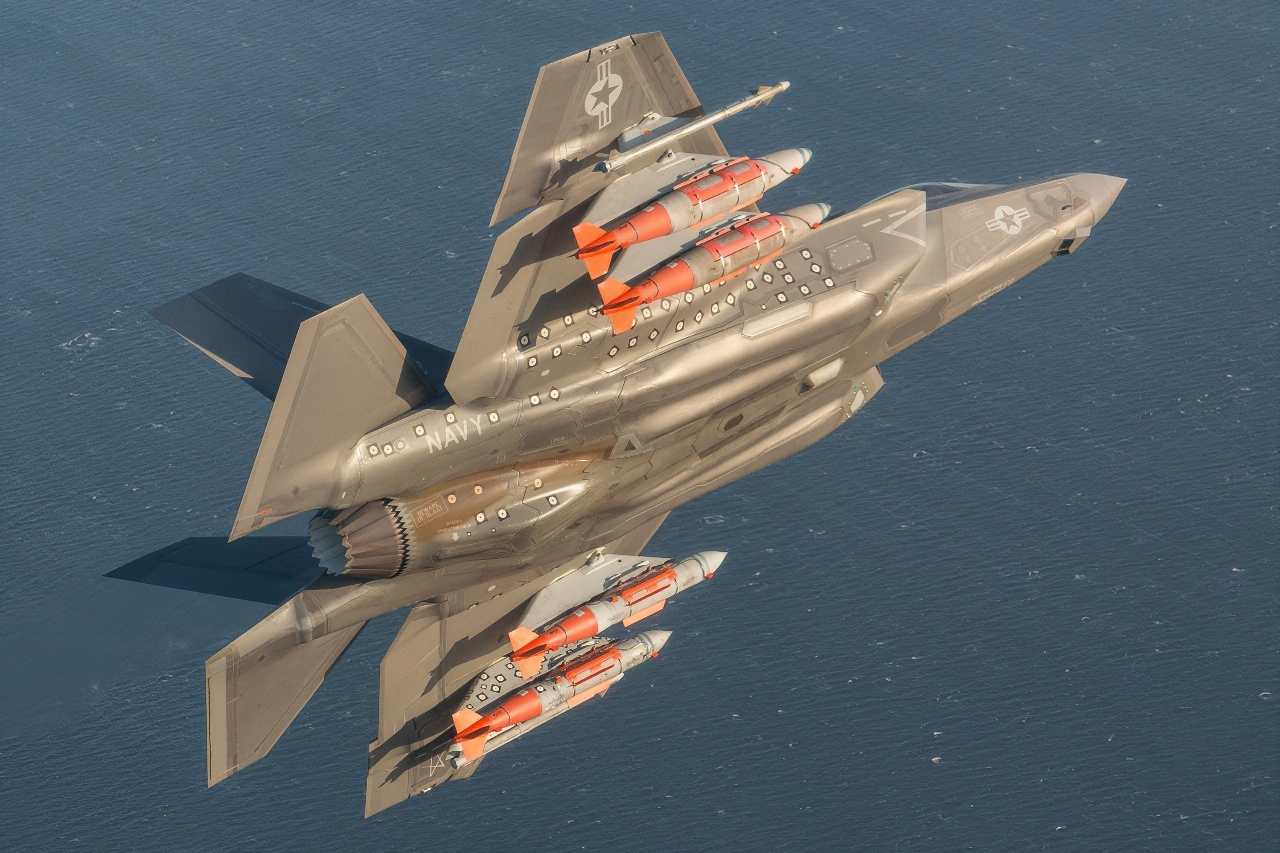
Billie Flynn, F-35 Pax River ITF, conducts an external GBU-31 and AIM-9x buffet and flutter test flight (Flt 592) from Naval Air Station Patuxent River, Maryland, April 4, 2018, in an F-35C test aircraft, CF-2. Photo courtesy of Lockheed Martin.
The Navy originally hoped that the two-ship block-buy arrangement for Enterprise and Doris Miller, announced in January 2019, would reduce costs and stabilize production timelines. Instead, ongoing industrial base problems have continued spreading across the entire carrier program.
Despite the delays, the Ford class remains central to the Navy’s long-term strategy. The carriers are designed to generate more aircraft sorties per day than older Nimitz-class ships while requiring smaller crews and producing significantly more electrical power for future systems such as directed-energy weapons and advanced radar platforms.
The U.S. Still Needs a Supercarrier
The continued investment in nuclear-powered supercarriers reflects their centrality to American military strategy despite growing concerns about Chinese anti-ship missiles and long-range strike capabilities.
Aircraft carriers effectively function as mobile sovereign airbases capable of operating almost anywhere in the world without requiring permission from allied governments.
That flexibility has made them critical for operations in the Middle East, the Pacific, and the Red Sea over the last two decades.
Carriers are also an effective deterrence tool against China as Beijing rapidly expands the People’s Liberation Army Navy and develops its own carrier fleet. China’s newest carrier, Fujian, is expected to significantly improve Chinese naval aviation capability once fully operational.
At the same time, the U.S. faces mounting pressure to maintain its 11-carrier fleet requirement while older Nimitz-class carriers near their retirement.
The Navy recently extended the service life of USS Nimitz through 2027, partly because of continuing delays involving Kennedy and the rest of the Ford-class program.
About the Author: Jack Buckby
Jack Buckby is a British researcher and analyst specializing in defense and national security, based in New York. His work focuses on military capability, procurement, and strategic competition, producing and editing analysis for policy and defense audiences. He brings extensive editorial experience, with a career output spanning over 1,000 articles at 19FortyFive and National Security Journal, and has previously authored books and papers on extremism and deradicalization.


