

Iran continues to strike tankers in the Strait of Hormuz. It refuses to reopen the Strait of Hormuz until Washington lifts the blockade and releases frozen assets.
The Pentagon is also moving substantial additional military power into the Middle East.
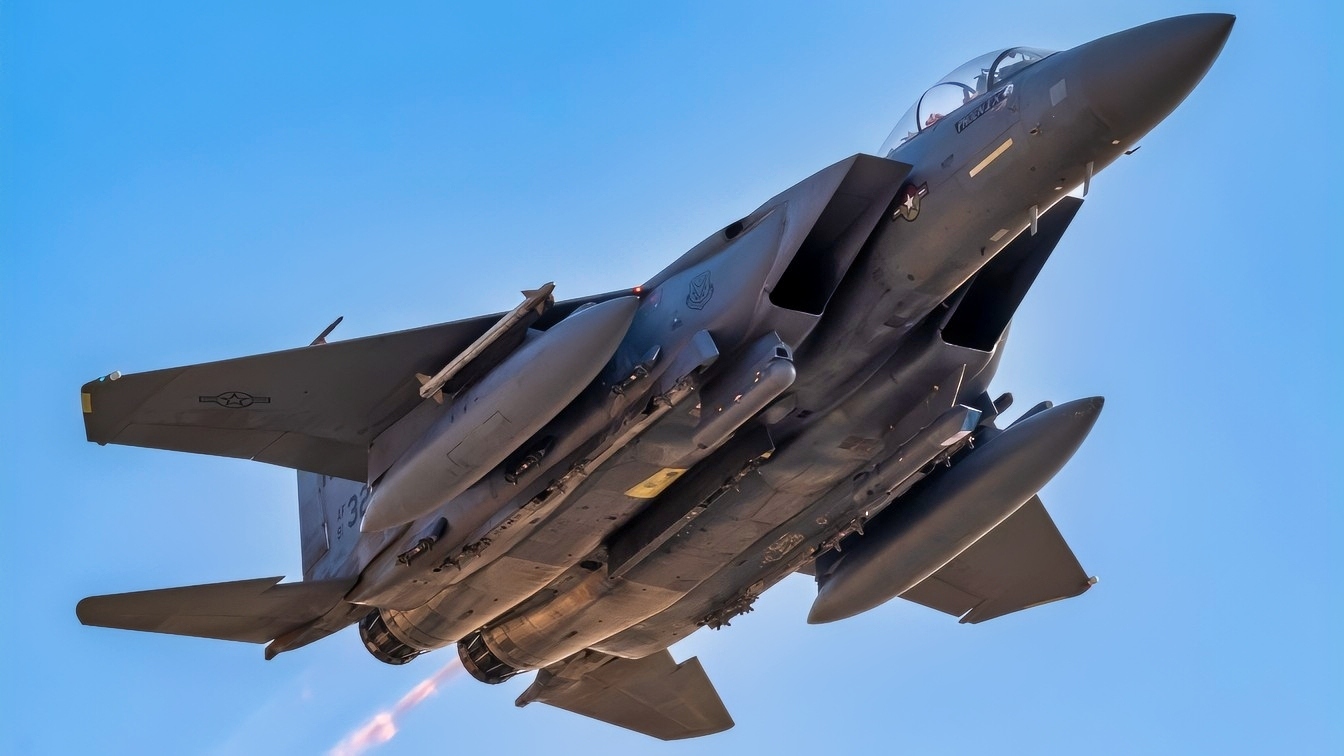
A U.S. Air Force F-15E Strike Eagle aircraft soars through the air during exercise Marauder Shield 26.1 within the U.S. Central Command area of responsibility, Nov. 11, 2025. Marauder Shield 26.1 emphasized a coordinated response to the growing threat of unmanned aerial systems. The exercise featured advanced counter-Unmanned Aircraft Systems integration between the U.S. and Kuwaiti forces, bolstering regional security and demonstrating a commitment to collaborative defense.
(U.S. Air Force photo by Staff Sgt. Tylin Rust)
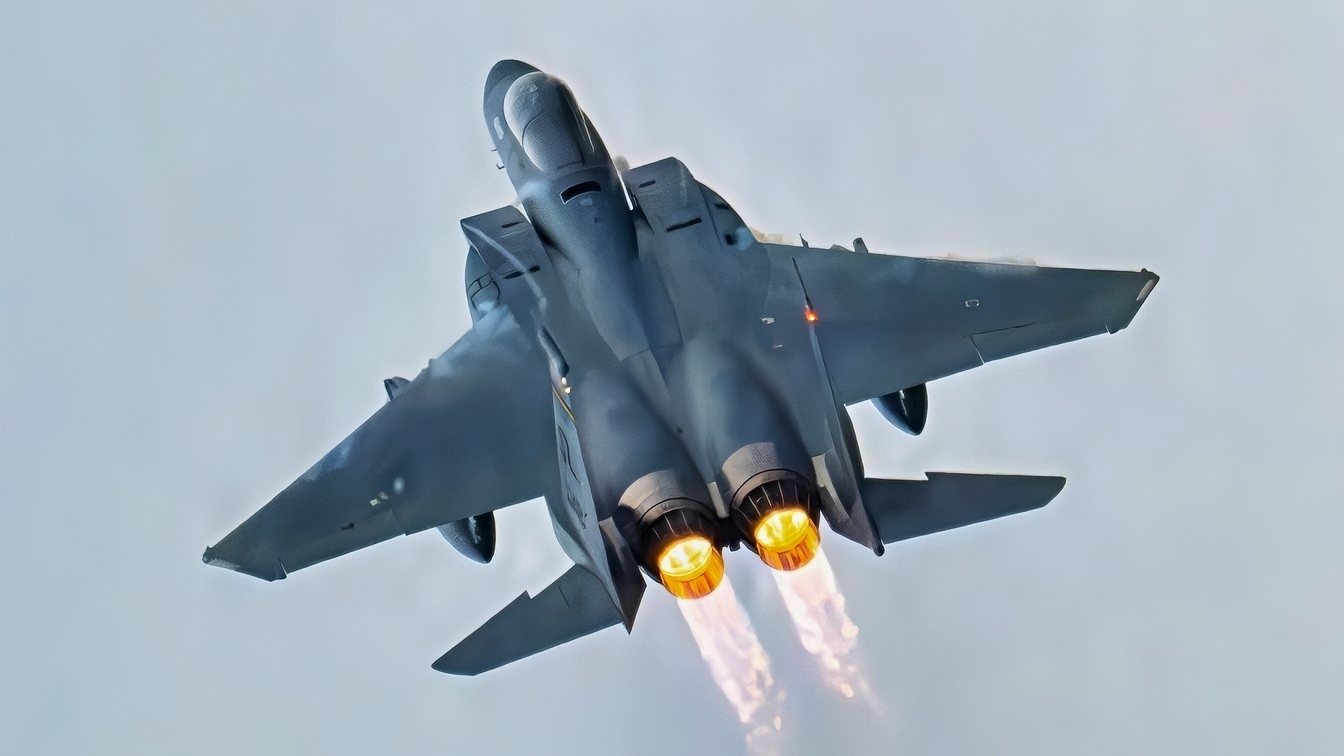
A Louisiana Air National Guard F-15C Eagle streaks above the Ohio River during the Thunder Over Louisville air show in Louisville, Ky., April 18, 2026. More than a dozen military aircraft performed during the show, including four Kentucky Air National Guard C-130J Super Hercules from the Louisville-based 123rd Airlift Wing and two UH-60 Black Hawks from the Kentucky Army National Guard’s Frankfort-based 63rd Theater Aviation Brigade. (U.S. Air National Guard photo by Dale Greer)
But for now, President Donald Trump is still resisting another major round of strikes against Iran — at least until after the November 3 midterm elections.
On Sunday, October 4, the United Kingdom Maritime Trade Operations Center reported that a projectile struck a tanker in the Strait of Hormuz, damaging its engine room.
The crew was reported safe, though UKMTO did not immediately identify who carried out the attack.
It does, however, follow a series of Iranian attacks and attempted attacks against commercial shipping in recent weeks.
Earlier in the war, repeated strikes like this might have been met with a military response from Washington – but for the time being, Washington appears to be sticking to the president’s strategy of “low-keying it” – meaning that the blockade of Iranian ports remains in effect and sanctions are intensifying by the week.
Trump is waiting for economic pressure to change Tehran’s calculations, and so far, indications suggest it might be working.
Iran’s Economy Worsens
The state of Iran’s economy proves that what Trump is doing is paying off — even if it’s unclear whether the Iranian regime will eventually buckle.
On October 3, Reuters reported that the rial fell to around 2.688 million against the U.S. dollar, up from 2.632 million the day before.
The currency has lost more than half its value over the last year, while inflation has climbed above 70%. Iran’s central bank is now selling up to $2 billion through state banks to support the currency.
The International Monetary Fund also expects the Iranian economy to contract significantly this year as the blockade deprives Tehran of its most important source of foreign currency: oil.
Iranian crude loadings collapsed from roughly 2 million barrels per day in March to only around 220,000-255,000 barrels per day in August, according to publicly available shipping data.
Since the blockade was introduced, Iran has relied partly on crude oil stored aboard tankers in Asia, but those supplies are being depleted because tankers trapped inside the blockade cannot replenish them.
Washington is also tightening sanctions, expanding Operation Economic Outcast to target Iran’s rial, automotive, manufacturing, and steel sectors.
Iran Loses Some Oil Leverage
Iran is still launching strikes against tankers in the Strait of Hormuz, but it has certainly lost some leverage, too.
With alternative pipelines, a U.S.-backed convoy system through the Strait of Hormuz, and new tanker-to-tanker transfer systems in use, Iran no longer has as much control over the waterway as it used to.
These solutions are part of that shift, but so is the pressure on the global economy.
If the world didn’t need this oil, those alternative routes and methods would not have arisen — and now, a whole new industry is being built around oil transfers outside of the Strait of Hormuz, whereby some ships take the brunt of the risk by moving in and out of the Strait of Hormuz regularly while large tankers wait outside of the waterway to receive cargoes.
That does not mean, however, that Iran has lost total control of Hormuz.
Commercial vessels are still being attacked, shipping remains dangerous, refined product exports are still constrained, and moving oil through the waterway now costs substantially more.
That said, Tehran’s best economic weapon has become less effective as the American blockade continues.
Iran Suddenly Wants A Deal
One of the best indications that the pressure might be working is Iran’s apparent interest in a deal with the United States.
On September 25, Foreign Minister Abbas Araghchi submitted a proposal through Qatari mediators: Iran would reopen Hormuz and restart negotiations if Washington lifted its naval blockade, temporarily waived oil sanctions, released frozen assets, and agreed to a broader ceasefire.
It’s clear Iran is looking for immediate economic relief, and Iran is effectively offering something Washington wants – fully restored traffic through the Strait of Hormuz – in exchange for the ability to sell oil and access its overseas assets.
What Happened to Outlasting Trump?
That offer differs sharply from Tehran’s rhetoric earlier this year.
In August, senior IRGC adviser Mohammad Reza Naghdi suggested prolonging the war until the next U.S. presidency, while former Foreign Minister Manouchehr Mottaki called for the “defeat of Trumpism” in November’s elections.
Iranian officials have even gone further, suggesting that Iran would not stop until Trump’s term as president ends in 2029.
This means either economic pressure is forcing Tehran to consider that position, as Trump predicted, or Iran still intends to outlast him and wants only temporary sanctions relief to rebuild its finances.
Either way, Washington sees little reason to relieve that pressure—at least for now.
About the Author: Jack Buckby
Jack Buckby is a British researcher and analyst specializing in defense and national security, based in New York. His work focuses on military capability, procurement, and strategic competition, and he produces and edits analysis for policy and defense audiences. He brings extensive editorial experience, with a career output spanning over 1,000 articles at 19FortyFive and National Security Journal, and has previously authored books and papers on extremism and deradicalization.


