
Iran reiterates that it will not open the Strait of Hormuz unless President Donald Trump makes substantial concessions—even as Washington actively engages with Tehran, via mediators, on a potential Memorandum of Understanding-style deal.
Iranian Parliament Speaker Mohammad Baqer Qalibaf said on Sunday, October 4, that Tehran will not fully reopen the critical waterway until the United States meets seven Iranian conditions based on the Islamabad Memorandum of Understanding, the agreement reached between Washington and Tehran in June.

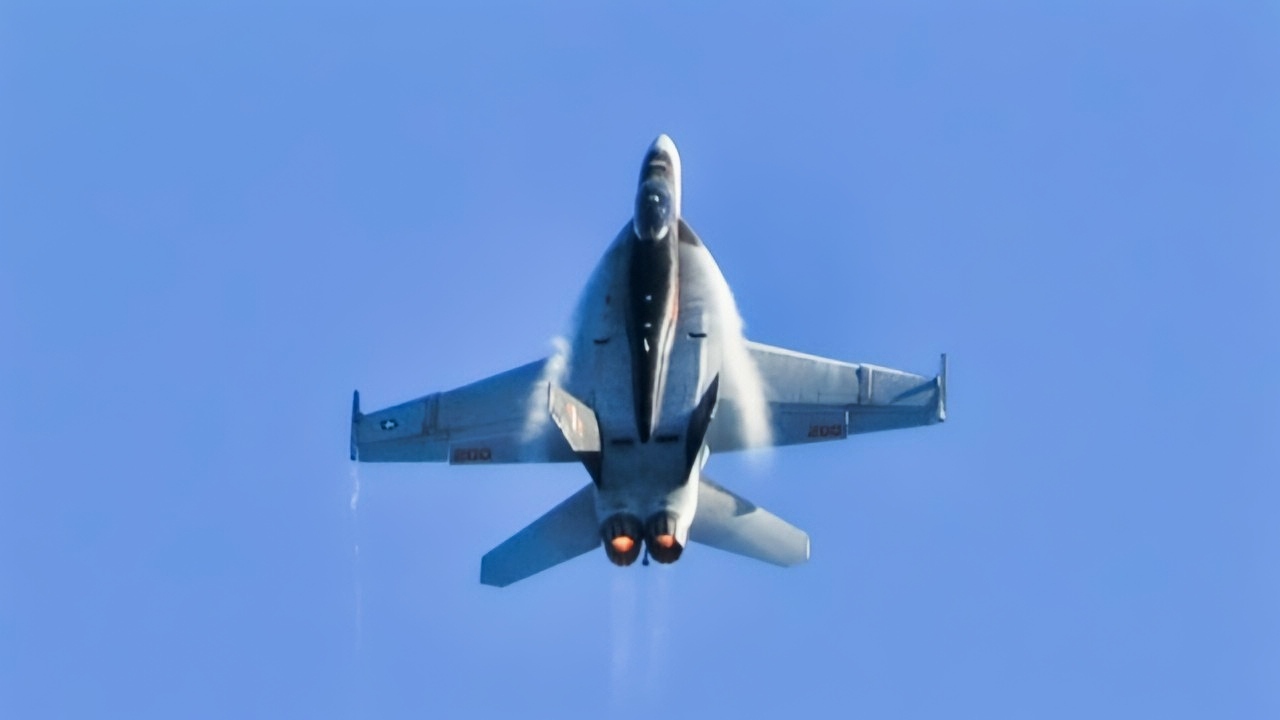
A U.S. Navy F/A-18E Super Hornet assigned to the “Gladiators” of Strike Fighter Squadron (VFA) 106 is parked on the flight line at Joint Base Andrews, Maryland, July 3, 2026. Andrews served as a staging location for military aircraft supporting the Freedom 250 celebration while the 89th Airlift Wing provided airfield support for participating organizations. (U.S. Air Force photo by AJ Bleyer)

F/A-18 Hornets and an F-22 Raptor fly in formation during the HUGE 1 flyover practice over the National Mall as part of the America 250 celebration in Washington, D.C., July 3, 2026. The formation showcased current U.S. military airpower during the nation’s 250th anniversary celebration. The flyover highlighted the joint capabilities of America’s armed forces in recognition of Independence Day. (U.S. Air Force photo by Staff Sgt. Lauren Diaz)
Qalibaf said the Islamic Republic of Iran’s position is “completely clear and firm,” and added that the strait will remain closed until all seven conditions are met.
The comments follow Iran’s submission of a new proposal to the United States at the United Nations General Assembly in New York in late September.
Under the deal, Iran proposed opening the Strait of Hormuz following a week-long process of lifting sanctions and unfreezing Iranian assets held in overseas banks and institutions.
And there lies the problem: the United States appears to be willing to make a deal with Iran, but the regime in Tehran expects the United States to make its moves first.
And Washington won’t do it.
Iran Wants America to Move First
The biggest obstacle between a deal – or, at least, a temporary ceasefire deal in the style of the failed June agreement – may be the order in which each side expects the other to move.
Iran’s latest proposal builds largely on the June agreement but changes the order in which the two countries would meet their obligations.
Tehran wants the United States to begin implementing its commitments before Iran restores normal traffic through Hormuz.
Washington, meanwhile, has pushed for earlier action by Iran. Iran’s demands, according to Foreign Minister Abbas Araghchi, include lifting the U.S. naval blockade of Iranian ports, temporarily waiving sanctions restricting Iranian oil exports, the release of frozen Iranian assets, and introducing a ceasefire that includes Lebanon.
Tehran expects those steps in exchange for a seven-day cessation of hostilities in the Strait of Hormuz, after which negotiations would resume.
But the United States is unwilling to do it — not just because it requires Washington to take action first, but because Tehran may still fail to come to an agreement over its nuclear program, and may simply use the ceasefire as an opportunity to rebuild and generate revenue before returning to hostilities later.
Iran Says Nuclear Talks Aren’t Happening Yet
Iran’s nuclear program is still a sticking point in talks.
Speaking in Tehran on Sunday, October 4, Iranian Foreign Ministry spokesperson Esmaeil Baghaei said that the latest American proposals remain focused on Iran’s nuclear program, but insisted that Tehran is not currently negotiating the nuclear issue. He said Iran’s immediate priority is securing an agreement over the Strait of Hormuz.
Baghaei also denied reports that Iran had offered to allow International Atomic Energy Agency inspectors back into its nuclear facilities in exchange for sanctions relief, saying that the Iranian side has not discussed the nuclear issue with the United States.
He also insisted that Iran would not propose exchanging nuclear concessions for sanctions relief. It puts Iran directly at odds with one of Washington’s most important demands to end the war.
On September 28, The Wall Street Journal reported that the Trump administration and mediators were pushing Iran to make nuclear concessions as part of a renewed peace agreement.
And that’s nothing new.
Trump has explicitly called on Iran to end its nuclear program not only since the beginning of the war, but for the last several decades.
During negotiations in June, after Iranian officials disputed American claims that Tehran had agreed to extensive IAEA inspections, Trump said there would be “no further negotiations” unless Iran accepted long-term, high-level nuclear inspections.
If Iran wants Washington to provide sanctions relief and other concessions before negotiations resume, it may need an escalation from the U.S. side to prove those demands will not be met—and that seems to be what President Trump is preparing to do.
Trump Prepares Another Escalation
Washington is preparing for that likelihood — and it’s no secret.
Reports this week say the Pentagon is sending a third aircraft carrier and strike group to the Middle East and could deploy more than 20,000 sailors and Marines alongside 150 carrier-based fighter aircraft.
The USS Theodore Roosevelt is preparing to join the USS George Washington and USS George H.W. Bush, while the USS Makin Island amphibious group is also heading toward the region.
Trump has also said on several occasions in recent weeks that further military action could occur after the November 3 midterm elections.
But these threats and the buildup of assets in the region may simply be deterrence; the United States could be showing Iran it will resist any Iranian demands without the regime first opening the Strait of Hormuz, and that it will launch new offensive action if it does not do so soon.
And if Iran refuses, the necessary assets will be in place to launch that offensive action.
About the Author: Jack Buckby
Jack Buckby is a British researcher and analyst specializing in defense and national security, based in New York. His work focuses on military capability, procurement, and strategic competition, and he produces and edits analysis for policy and defense audiences. He brings extensive editorial experience, with a career output spanning over 1,000 articles at National Security Journal, and has previously authored books and papers on extremism and deradicalization.


