

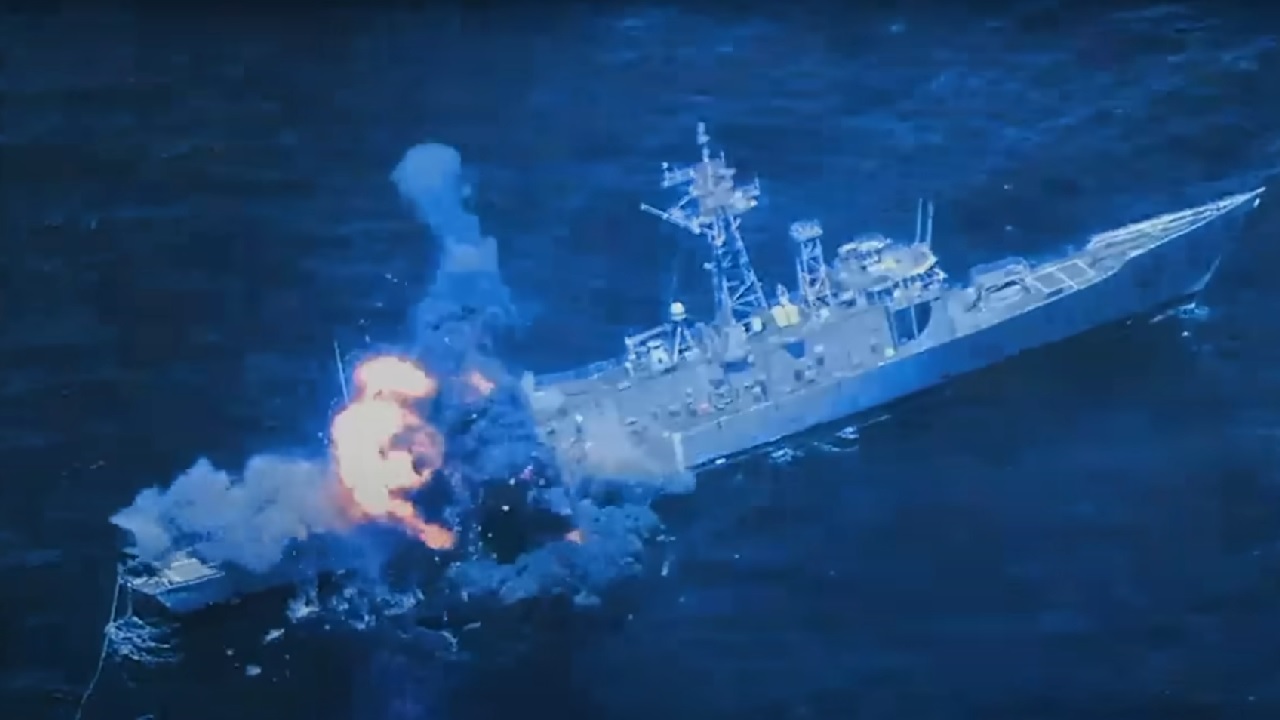
It is currently unclear who really controls the Strait of Hormuz. On the one hand, oil transit through the strategic waterway seems to have increased, with some tracking agencies noting a surge to near pre-war tanker-transit levels in September. However, oil prices remain high, suggesting the market is not yet confident the surge signals a long-term positive trend. Meanwhile, Iran continues to attack civilian tankers in the Strait, while the Houthis in Yemen continue to attack Saudi Arabian oil infrastructure. The situation in the Middle East remains unclear, as Washington and Tehran have been unable or unwilling to find an acceptable compromise.
Shipping Through Hormuz Showing Signs of Recovery
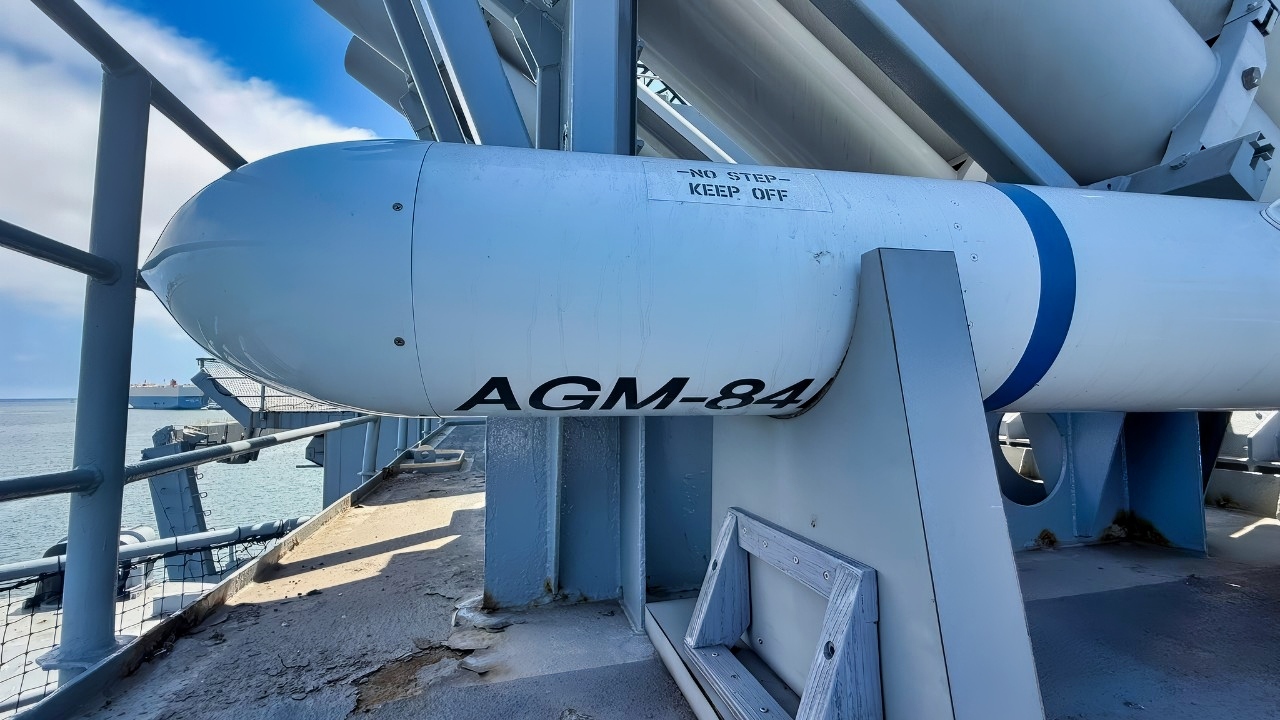
Harpoon Missile Onboard USS Iowa. Image Credit: National Security Journal.
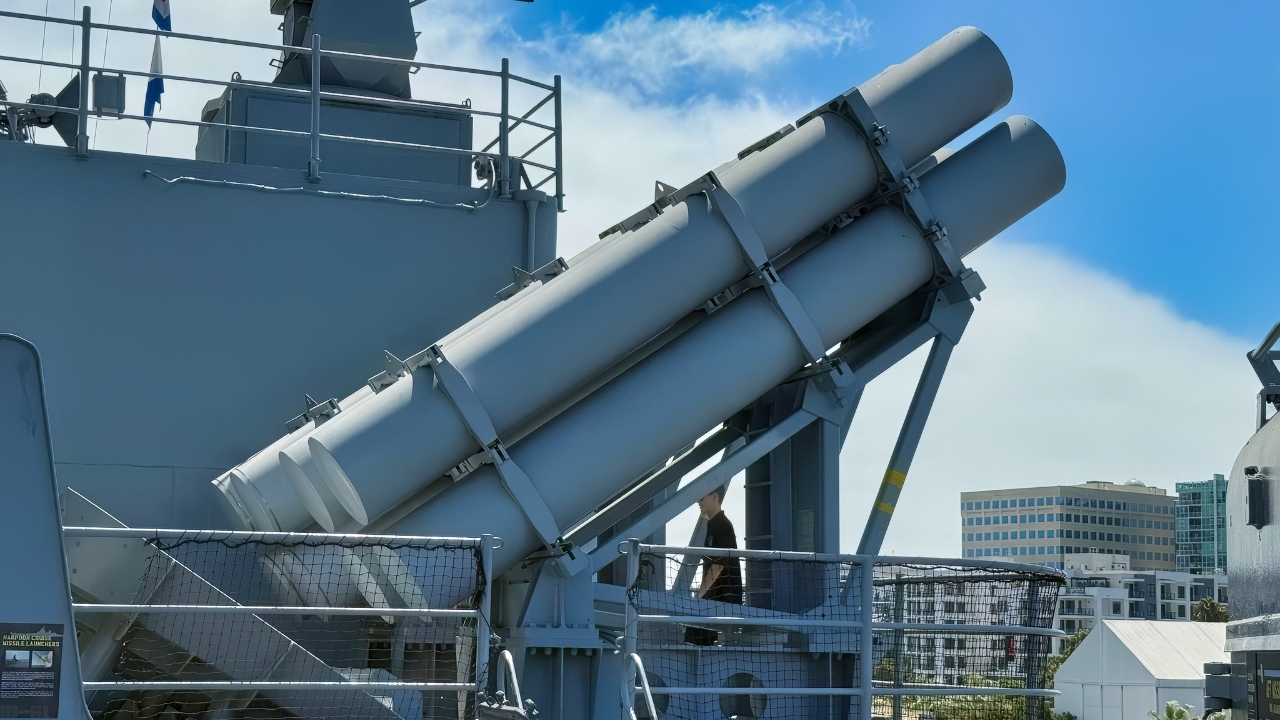
USS Iowa Harpoon Canister. Image Credit: Harry J. Kazianis/National Security Journal.
Reuters recently reported that oil exports from Gulf nations reached or exceeded pre-war levels for much of September.
According to maritime tracking agency Kpler, an average of 10 million barrels passed through the Strait per day.
Before the war, around 17 million to 20 million barrels passed through the Strait every day.
Earlier this year, shipments through Hormuz reached or exceeded pre-war levels thanks to the brief ceasefire under the Memorandum of Understanding (MoU), signed in June.
However, when the ceasefire collapsed in July, traffic through the waterway again decreased.
Since the war has tempered over the last month, traffic through the Strait has increased.
With traffic up, the U.S. appears confident the tide of the war is turning in Washington’s favor.
Ellen R. Wald, author and energy markets analyst, told RFE/RL that Iran’s “ability and/or will to attack ships in the Gulf is declining,” allowing vessels to transit under US military cover. President Trump is likewise confident that the war will end soon in America’s favor as the U.S. continues to apply economic pressure to Tehran. “That’ll be over with very soon,” the President said. “They will not have a nuclear weapon, and oil prices are going to be tumbling down just like they were before I had to make that little excursion to the Islamic Republic of Iran.” With Iran’s currency in freefall, the Administration is expecting the regime in Iran to collapse at some point in the future and appears to be taking a more hands-off approach to the war.
Iran Strikes on Oil Tankers Also Increasing
However, the good news of increased transit through Hormuz has been tempered by reports of increased Iranian attacks against civilian tankers.
Over the last five days, the UK Maritime Trade Operations (UKMTO) reported 11 separate attacks on civilian tankers in Hormuz (UKMTO published another report while I was writing this).
One affected tanker was the large crude carrier Kazimah III, owned by the Kuwait Oil Tanker Company, which was struck by an unknown projectile on October 1.
Another vessel, a Liberian-flagged Aframax tanker, Lipsi, was also struck by an unknown projectile while attempting to pass through Hormuz on October 4.
Fortunately, there are currently no reports of casualties on any of the vessels struck in the area. According to Marisks, Iran is likely not targeting individual tankers, but “Instead, available information indicates the possibility that Iranian forces are launching missiles into a predetermined engagement area or ‘kill box’, with weapons potentially acquiring and locking onto available radar signatures within that area.”
Oil prices have remained high, even after reports of oil exports nearing pre-war levels. Throughout September, Brent Crude consistently stayed above $100 per barrel, only occasionally dipping below the $100 threshold.
Although exports have increased recently, global oil supply has declined because of attacks on tankers and oil infrastructure throughout the war. Amin Nasser, the Chief Executive of Saudi Arabia’s Aramco, shared this view. “The system is already straining,” Nasser told the Energy Intelligence Forum in London. “And with precious little else the world can turn to, the supply resilience cushion is scarily thin.”
The Houthis’ War Against Saudi Arabia
While the war with Iran seems to have calmed down (recent shipping attacks aside), likely one of the larger factors keeping oil prices high is the ongoing conflict in Yemen between the Houthis and the Saudi-backed government.
The Houthis announced earlier this year that they would attack any Saudi-flagged ship passing through the Bab el-Mandeb Strait.
Since then, the conflict between the Saudi-backed government in Yemen and the Houthis has intensified. As a result, the Houthis have been attacking oil infrastructure across Saudi Arabia, which has caused another shock to the energy market.
In September, the Houthis attacked the East-West oil pipeline, which was seen as a key method of bypassing Hormuz (the facility has since been repaired).
More recently, the Houthis claimed to have hit an Aramco facility with drones and ballistic missiles, as the conflict in Yemen continues to escalate.
Between Iran’s renewed attacks on civilian tankers and the Houthis’ attacks on Saudi infrastructure, oil prices remain high, despite the increased traffic through Hormuz.
Whether traffic remains high or decreases after the latest round of attacks remains to be seen.
For the Americans in the audience, this means that gas prices will remain high in the short-to-medium term.
Despite the Trump administration’s efforts to manage the energy crisis, the war has strained global oil supply, and it will likely take a few years to recover once the war ends.
About the Author: Isaac Seitz
Isaac Seitz, a Defense Columnist, graduated from Patrick Henry College’s Strategic Intelligence and National Security program. He has also studied Russian at Middlebury Language Schools and has worked as an intelligence Analyst in the private sector.


