
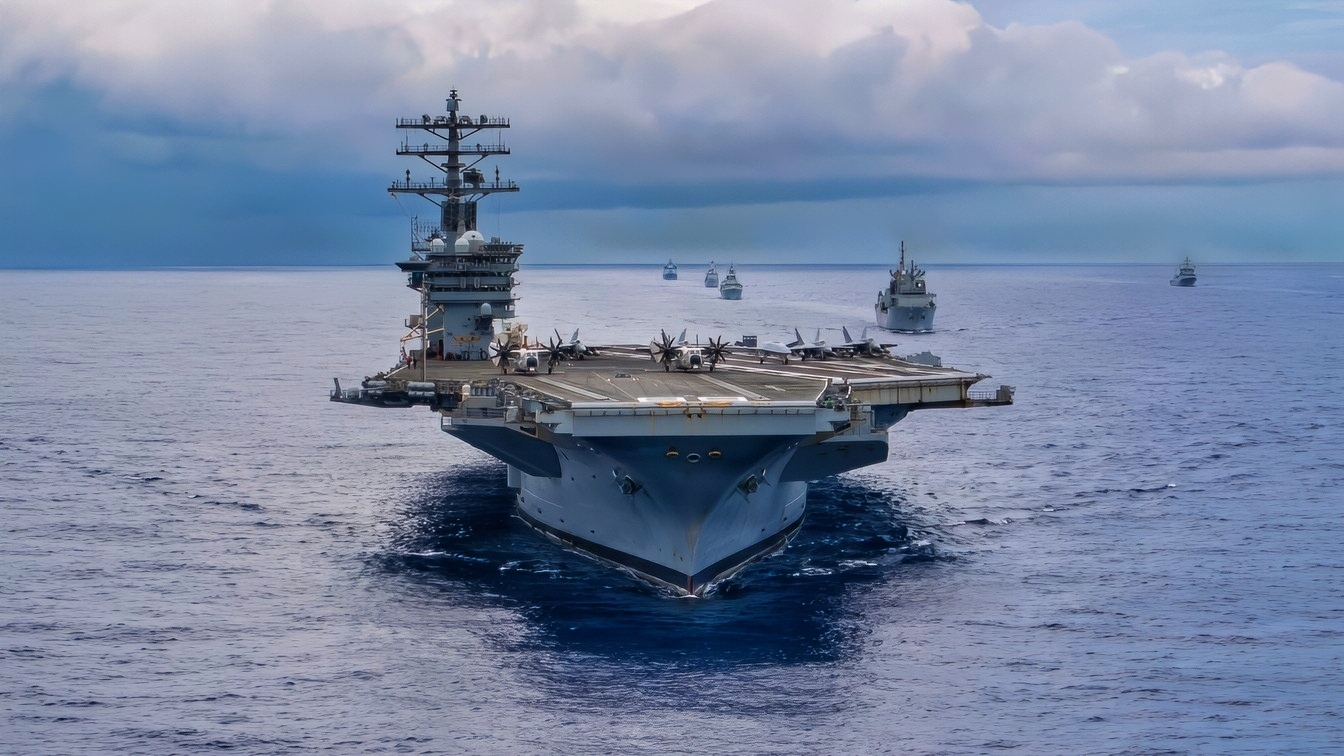
Seafaring has always been a risky business.
For centuries, vessels have been targeted by pirates, making way for attacks by crime groups operating off the coast of East Africa.
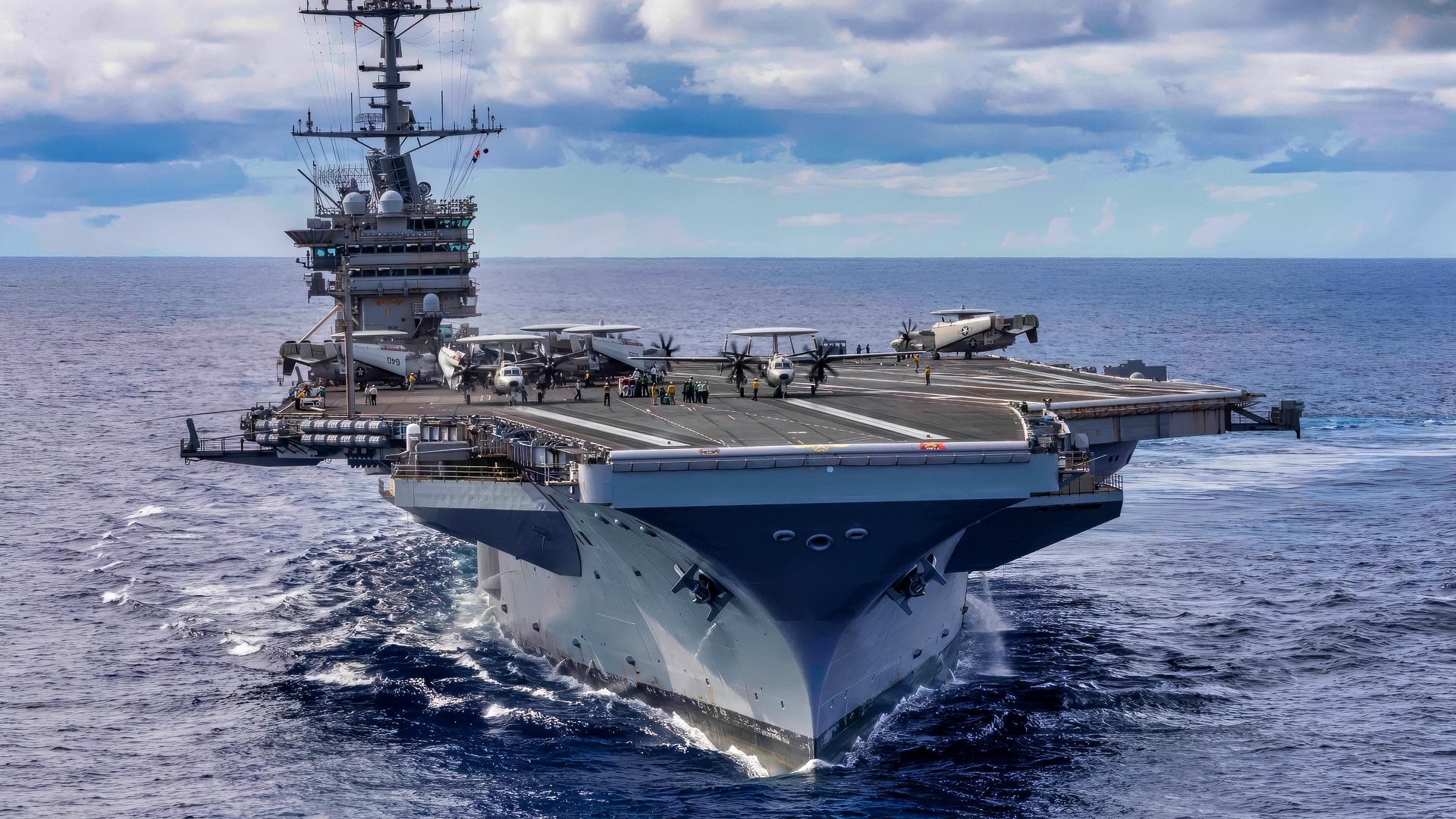
250923-N-FY193-1405 ATLANTIC OCEAN (Sept. 23, 2025) The Nimitz-class aircraft carrier USS Harry S. Truman (CVN 75) conducts carrier qualifications in the Atlantic Ocean. Truman is currently underway carrying out routine operations that support the Navy’s commitment to readiness, innovation, and future fleet lethality. (U.S. Navy photo by Mass Communication Specialist 2nd Class Mike Shen)
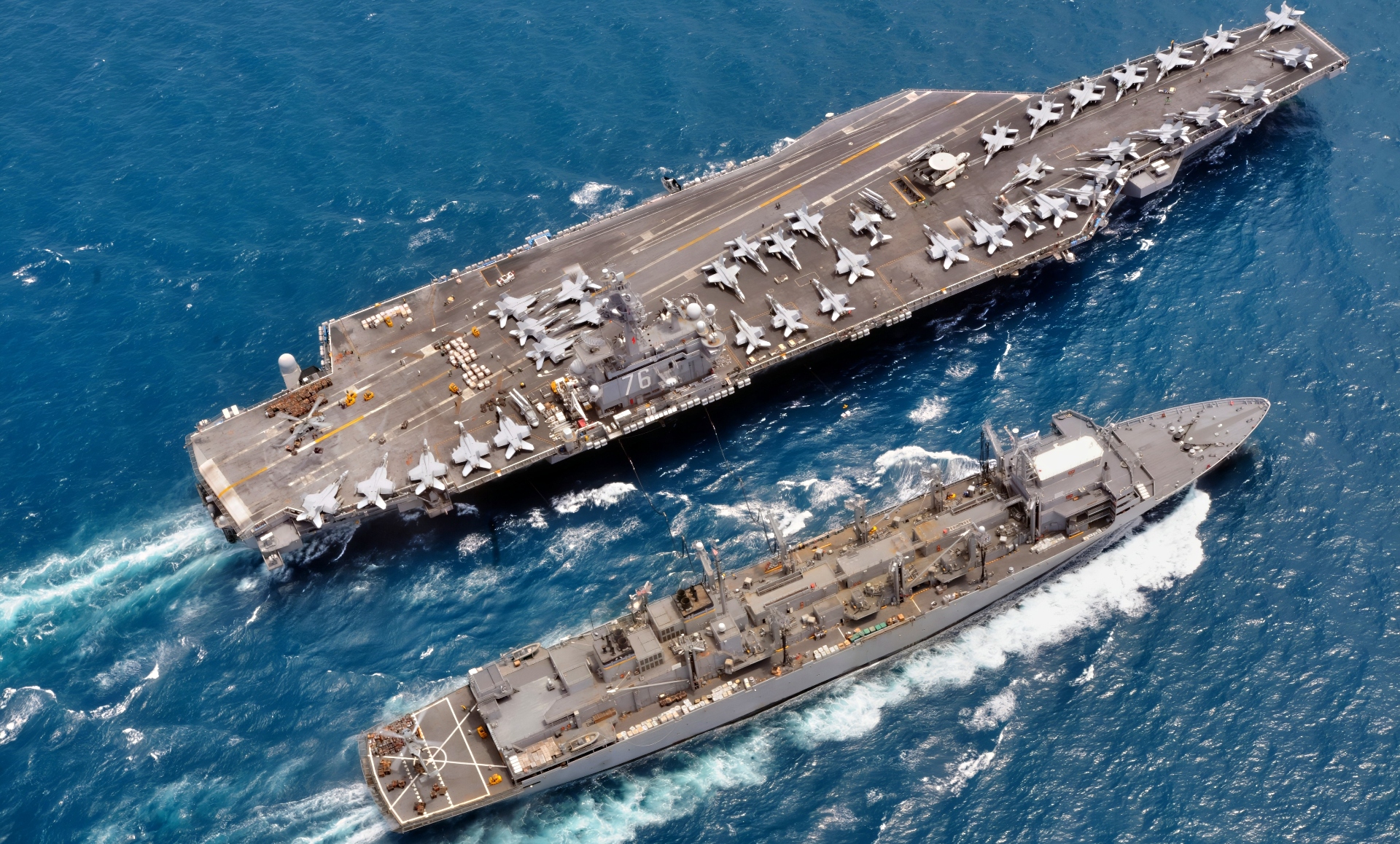
(August 15, 2008) With SH-60 helicopters moving pallets of supplies both USS Ronald Reagan (CVN 76) and USNS Bridge (T-AOE 10) work together during a replenishment at sea or RAS. With Reagan’s six galleys and approximately 4,100 Sailors it takes a lot of produce to feed that many folks and the Nimitz-class aircraft carrier got what it needed from USNS Bridge to do so.
The Ronald Reagan Carrier Strike Group is on a routine deployment in the 7th Fleet area of responsibility. Operating in the Western Pacific and Indian Ocean, the U.S. 7th Fleet is the largest of the forward-deployed U.S. fleets covering 52 million square miles, with approximately 50 ships, 120 aircraft and 20,000 Sailors and Marines assigned at any given time.
U.S. Navy photo by Senior Chief Mass Communication Specialist (SW/NAC) Spike Call
With modern sanctions, vessels from sanctioned countries may be captured by foreign militaries, just as Venezuelan seafarers discovered at the end of last year.
War’s No Different
In times of conflict, seafaring becomes even riskier, as those who operate vessels in the Persian Gulf have discovered ever since the United States and Israel went to war with Iran in February this year.
The Strait of Hormuz – a key waterway for shipping oil exports from the Middle East – has remained closed by Iran ever since, with the authoritarian regime claiming jurisdiction over what can and cannot transit through.
Iran’s objective has been to utilize a chokehold on the strait, thereby limiting exports from the Gulf states.
It’s not a declaration of war per se, but rather a tactic used to raise living costs across the world and limit global support for U.S.-Israeli operations.
The closure has seen traffic through the Strait of Hormuz drop well below pre-war levels. Some countries can bypass the strait entirely.
Saudi Arabia possesses an East-West oil pipeline, allowing the Kingdom to redirect oil exports through the Red Sea.
The United Arab Emirates, meanwhile, has an existing pipeline that bypasses the Strait of Hormuz, with plans for a second approaching completion next year.
However, the strait remains vital for countries such as Qatar, Kuwait, and Bahrain, all of which cannot bypass an Iranian closure.
Instead, they rely on covert measures to avoid detection by Iran, including ship-to-ship cargo transfers that allow smaller vessels to transport oil where larger ones cannot.
Back to the Old Ways
These smaller vessels, which complete shuttle runs through the Strait of Hormuz, face lower risk through a range of measures. First, they turn off their trackers, making them harder for Iranian radar to detect.
The shuttle runs also take place at night, with lights and phones all turned off.
Much of the journey takes place in Omani waters, making it even harder for Iranian forces on the shore, nearly 25 miles away, to spot the vessels.
“I’m just lucky because I still remember the traditional navigation, the old school,” one captain, who declined to be named, told Bloomberg. “They required no navigational lights. It’s quite challenging.”
Support from the States
To support transport through the Strait of Hormuz, U.S. forces have quietly coordinated with seafarers to plot routes and avoid Iranian sea mines.
The U.S. has “assisted thousands of ships through the Strait of Hormuz in recent months by providing coordinated protection,” according to U.S. Central Command. “We remain laser-focused and will continue working with US interagency partners, regional countries, and the shipping industry to increase the maritime traffic flow.”
The captain was often told that military support was helping him through the strait, with vessels required to check in every 30 minutes to report progress and any missile sightings.
A Risky, But Enjoyable, Vocation
Even with added precautions, seafaring through the Strait of Hormuz remains incredibly risky, with crews regularly placing sandbags and water-filled drums near the bridge in case of an Iranian attack.
The captain who spoke to Bloomberg told of how attacks have been witnessed on nearby vessels and heard over the broadcast channel, with his own ship targeted once in a near-miss.
To keep exports moving, crews are being offered extra money to transit through the strait. For a low-income sailor from the Philippines, a 500% pay rise for 30 days’ work is often too good to refuse.
For oil exporters, covert sailing is far from ideal. Nevertheless, these efforts are helping increase Middle Eastern oil supply, with exports returning to normal levels for the first time since the war began seven months ago.
It’s far from ideal, but diversifying routes and methods means oil can leave the Gulf, even if it must be done under strict circumstances at Hormuz.
It also means that if one avenue is temporarily closed, exports can continue.
The captain acknowledges that his job is dangerous. “Tankers are always at risk all the time,” he told Bloomberg.
Yet, it’s a role he enjoys, adding: “My family is quite scared, but I told them that I can handle the situation. I’m very proud. I enjoy my job, actually.”
About the Author: Shay Bottomley
Shay Bottomley is a British journalist. He has written for the Western Standard, Business Insider, Maidenhead Advertiser, Slough Express, Windsor Express, Berkshire Live and Southend Echo.