


Russia has almost finished building a sprawling new base for launching jet-powered attack drones near Ukraine, satellite images show.
The site, in Russia’s southwestern Rostov region, was a bare field on August 31, but by October 14 it was largely developed, with satellite imagery showing eight launch platforms.
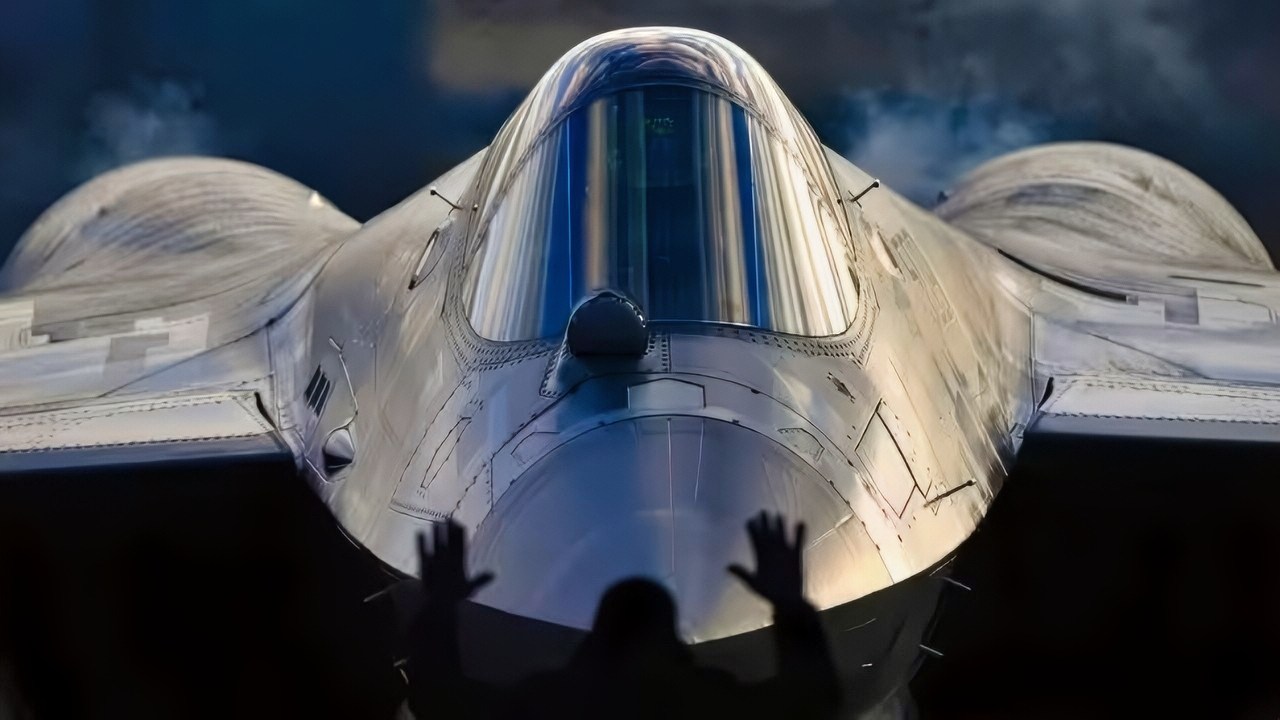
Su-57 Felon Fighter. Image Credit: X Screenshot.

Su-57 Felon Fighter from Russia. Image Credit: Creative Commons.
Two of the platforms already had launch rails mounted, and two more were under construction, according to commercial satellite imagery from Planet Labs and Airbus.
The field covers about 0.9 square kilometers (0.35 square miles), about the size of 126 soccer fields, Reuters reported.
The base could potentially launch more than 100 drones a day, adding to pressure on Ukraine’s air defenses as Russia ramps up attacks ahead of winter.
Russia’s New Drone Field Appears in Six Weeks
The imagery shows some activity at the site before August 31, when construction appears to have begun.
By October 14, eight launch platforms were visible at the site.
Mike Monnik, founder and CEO of the private intelligence company DroneSec, spotted the field on a commercial satellite image.
He recognized it as a likely site for Russia’s Geran-4 and Geran-5 jet-powered attack drones.
Monnik estimated it would likely take “weeks” for the new field to become fully operational, though it could be completed sooner.
Rob Jordan, program director at Britain’s Royal United Services Institute think tank, also reviewed the satellite images.
Jordan told Reuters that construction on the premises was “impressive.”
He said Russia’s construction effort showed confidence in its long-range strike capabilities, though it could come at the expense of other capabilities, such as its ground forces.
Russia’s Geran-5 Drones Outpace Ukrainian Defenses
The timing of the new facility’s development is significant, as Russia has dramatically increased its attacks on Ukraine using jet-powered drones.
Russian attacks using this type of weapon rose by “about six times over three months” during the summer, according to Ukrainian military figures.
The newer Geran-5 drone variant can reach speeds of about 600 kilometers per hour (373 mph), compared to slower, propeller-driven drones used previously.
Ukrainian Air Force spokesperson Yuriy Ihnat said in September that Russia’s ability to use faster, higher-flying drones has rendered some cheaper Ukrainian air defenses “not very effective.”
Events unfolding around Kyiv continue to support that assessment.
Ukrainian air-defense commander Volodymyr Serdiuk told the Associated Press earlier this month that Russian drones are extremely fast and high-flying, making them harder to intercept.
Former U.S. Marine Sean Almeida, who serves as a Ukrainian air-defender, also echoed these complaints.
These newer Russian weapons have also forced Ukrainian drone makers to redesign their interceptors.
Ukraine Races to Make Faster Interceptors
Ukrainian defense companies have unveiled new, speedier interceptors to counter Russia’s latest uncrewed aircraft.
Vyriy Drones CEO Oleksii Babenko told the Associated Press that Ukrainian manufacturers were in “a speed race” to develop new interceptors.
The problem goes beyond designing faster weapons.
Manufacturers must also secure enough engines, sensors, and operators to use their new and improved air defenses.
“We were asleep,” Stanislav Hryshyn of General Cherry, a co-founder of the company, admitted last week.
His firm is among those trying to produce faster interceptors, but it still struggles to get the miniature jet engines needed for the job.
There are some signs of progress.
Former Ukrainian defense minister Mykhailo Fedorov announced on October 12 that a Ukrainian-made interceptor destroyed two Geran-5 drones in its first week of operations.
He claimed that Ukraine’s new interceptor was already shooting down jet-powered Shaheds over Kyiv.
Ukraine’s air force has also reported using automated, machine-gun turrets to shoot down Russian drones.
However, those weapons have a limited range.
Russia’s Drone Launch Field Will Complicate Ukrainian Attacks
One other factor may work in Russia’s favor.
The new field is only about 3.5 kilometers from Millerovo air base, which hosts Russia’s 31st Guards Fighter Aviation Regiment.
DroneSec believes the new field likely falls within Millerovo’s air-defense umbrella of Millerovo, adding that it would complicate any Ukrainian attempts to attack the facility.
Monnik warned Reuters that the ability of Russia to rapidly construct large facilities for launching drones represented “a strategic vulnerability for NATO countries” as well.
But the field’s capacity “remains to be seen,” Russia’s Defense Ministry claimed. It depends on Russia having enough drones and the logistical support needed to meet its estimate of 100 or more drones per day.
Ukraine’s looming defensive challenge is growing daily.
“It’s a constant race over who gets there first,” Stanislav Hryshyn told the Guardian.
About the Author: Georgia Gilholy
Georgia Gilholy is a journalist based in the United Kingdom who has been published in Newsweek, The Times of Israel, and the Spectator. Gilholy writes about international politics, culture, and education.


