
The U.S. midterm elections are only ten days away.
Barring a remarkable political recovery not seen in modern history, the Republican Party is set to lose at least one chamber of Congress.

Vice President JD Vance gives remarks at a Sports Council announcement, Thursday, July 31, 2025, in the Roosevelt Room of the White House. (White House Intern Photo by Julian Casciano)
According to some Democratic Party insiders, they’re confident both chambers could turn blue on Tuesday, 3rd November.
But even if the election seems like a foregone conclusion, what happens afterward remains unclear.
Presidential Referendum
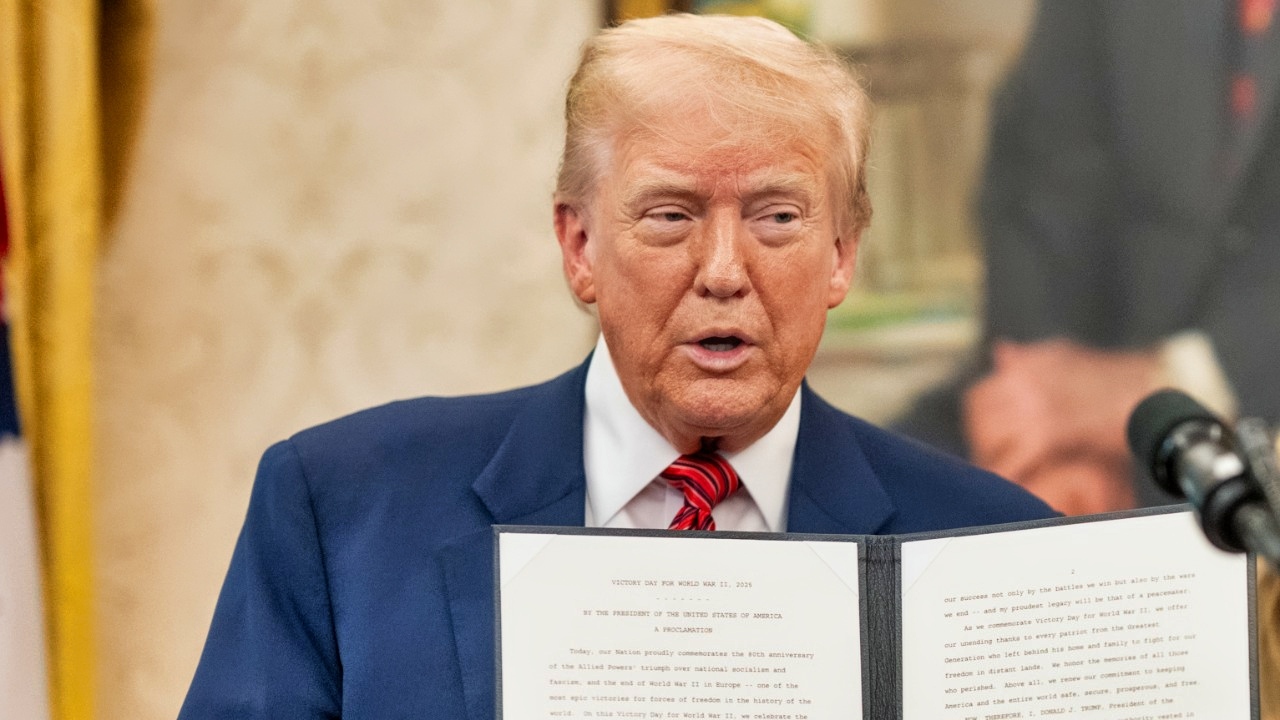
In what many experts consider unthinkable, President Donald Trump has repeatedly asked Republicans to “pretend” he is on the ballot on election day.
It’s been a recurring theme at more than 30 campaign rallies he’s set to hold by the time the country goes to the polls. And it might take a wrecking ball to GOP polling numbers.
“You have to pretend I’m on the ballot,” Trump told a rally in Georgia last week. “The story is this: we get 49% more votes when I’m on the ballot. When I’m not on the ballot… I guess it’s a compliment, but people don’t show up so much.”
Kansas Republicans received a similar message three days later. “In this election, I’m asking you to pretend please that I’m on the ballot,” Trump said. “Just pretend.”
The president’s message seems not to be reaching his own party.
An investigation by The New York Times found that mentions of Trump in GOP advertising have decreased over this electoral cycle.
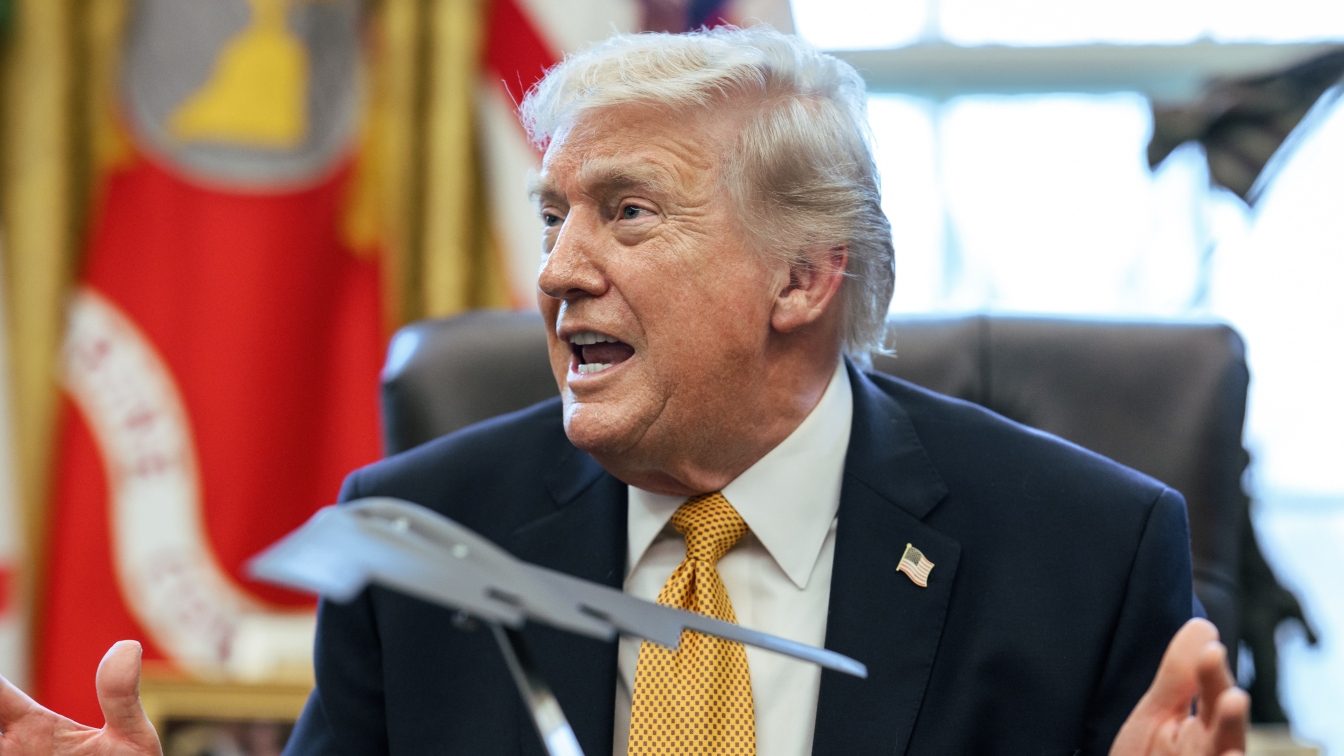
President Donald J. Trump signs an Executive Order creating an anti-fraud task force to be led by Vice President JD Vance, Monday, March 16, 2026, in the Oval Office. (Official White House Photo by Molly Riley)
Polls Not Promising
Trump’s approval rating in opinion polls makes it clear as to why Republican strategists are increasingly distancing themselves from the president.
Three polls released on consecutive days this week found Trump’s approval rating at a record low in either of his two terms so far.
In an NYT/Siena University poll, released on Wednesday, just 36% of likely voters said they approved of his performance in office.
That compares to 59% who said they disapproved, marking the Republican’s lowest approval rating of any NYT/Siena poll over either of his two terms.
A Washington Post/ABC News/Ipsos poll found similar results, with as little as 33% of Americans approving of Trump’s presidency.
Two-thirds who did not approve also included 52% of those who strongly disapproved of the Republican’s second term.
A Reuters/Ipsos poll released 24 hours later painted yet another grim outlook for the GOP, with only 31% of Americans approving of the President’s performance in office.
A Midterm Referendum
Despite their best efforts, the GOP has struggled to prevent this election from becoming a referendum on President Trump.
The NYT/Siena poll found that the Democratic Party leads nationally by 11 percentage points.
Similarly, on whether voters would prefer an opposing Democratic-led Congress or a Trump-supporting Republican one, registered voters strongly favored the former, 58% to 39%, in the Washington Post/ABC News/Ipsos survey.
Of course, the outcome could differ on election day, and pre-vote surveys have been wrong during the Trumpian era of U.S. politics.
Democratic support was overestimated in 2016 and 2020, leading to a Democratic defeat in the former and a closer-than-expected election in the latter.
However, the gulf between the two parties in the NYT/Siena poll is so large that a similar overestimation would still yield a significant Democratic victory.
What Comes Next?
It’s difficult to know the full aftermath of Tuesday, 3rd November.
Trump has already touted election fraud in some states, with Democrats suing the President earlier this week, accusing him of “bombard[ing] the American people with lies and misinformation about American elections and voter fraud.”
Any scenario other than the GOP retaining control of Congress will complicate Trump’s agenda for the final two years of his presidential career.
Yet, the President has not hidden from his extensive use of presidential power during his second term.
Speaking in Northern Kentucky on Saturday, 17th October, Trump pointed to his administration’s adoption of the name Gulf of America as evidence that his second presidency operates differently.
“I don’t think I could have done this in my first term,” Trump told supporters. “This is a much more powerful term. I can do stuff that’s unbelievable.”
America’s next foreign policy steps also remain unknown.
Trump has ruled out renewed strikes against Iran before next month’s vote but has hinted at a bombing campaign in November.
Although the election results seem all but certain, what happens next is anyone’s guess.
About the Author: Shay Bottomley
Shay Bottomley is a British journalist. He has written for the Western Standard, Business Insider, Maidenhead Advertiser, Slough Express, Windsor Express, Berkshire Live and Southend Echo.