

Two of Ukraine’s most prominent drone experts have warned that Russia will likely move toward a deep arsenal of new cruise missiles as part of its full-scale invasion.
Over the past 12 months, Moscow has increasingly used jet-powered Shahed drones, which have proven troublesome for Ukrainian air defenses.

MSTA-S Russian Army. Image Credit: Creative Commons.
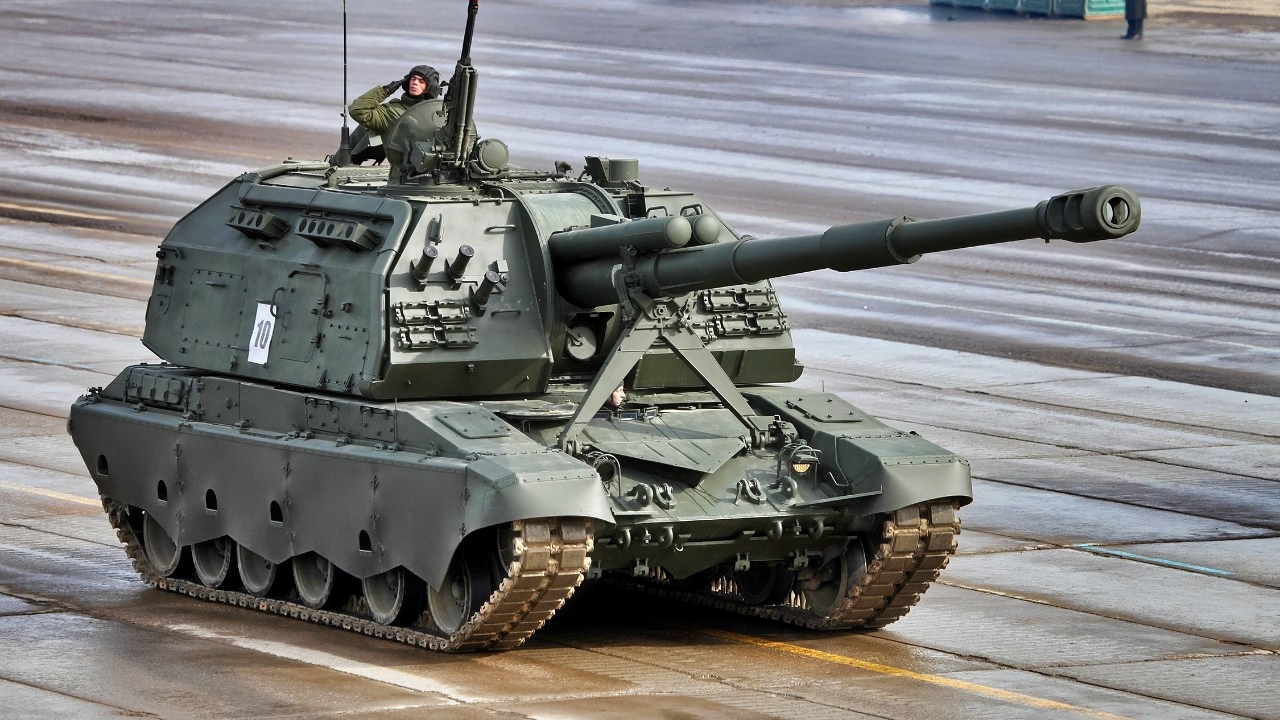
Msta-S Russian Army. Image Credit: Creative Commons.
However, two former drone advisors to Ukraine’s Ministry of Defense warned of a new form of aerial assault in separate Telegram posts this week.
Jet-Powered Drones
Capable of reaching 400mph, Russia’s jet-powered drones have increasingly tested an already struggling Ukrainian air defense system over the past year.
Ukraine’s existing interceptors, while cheap to make and increasingly effective against traditional propeller drones, have proven redundant against jet-powered weapons that are three times faster.
Ukraine has begun developing specialized interceptors to counter modernized drones.
Last month, domestic company Vluchnyk announced it had completed internal testing of an anti-aircraft interceptor drone designed specifically to counter the threat from Russian Shaheds.
Called Zorelit v5 (Starship), the drone is capable of reaching speeds of more than 250mph.
It has a range of almost 30 miles on a single charge and can stay airborne for about 17 minutes at a cruising speed of 125mph.
Zorelit v5 is equipped with an AI-based system that automatically detects, tracks, and provides terminal guidance towards targets in the final stage of flight.
“Zorelit v5 has completed all testing and is ready for military use,” said Vluchnyk CEO Stepan Radiboh in September. “We are open to direct contracts with military units, and once the product is codified, we will also make it available through the e-Points system.”
Russia Responds
Russia, aware that its jet-powered advantage in the skies may soon be limited, has developed an 11-foot winged cruise missile called the Filin.
Ukraine’s military intelligence service unveiled its development earlier this week.
The Filin is 3.5 meters long and has a 3-meter wingspan.
It can carry warheads of up to 100 kilograms and fly at both ultra-low altitudes and up to about 3.7 miles high.
It has a top speed of 497 mph and can strike targets almost 750 miles away.
It was also developed using Chinese- and American-made components, as well as those from Japan, Switzerland, Taiwan, and the Netherlands.
“The enemy continues to expand the range of weaponry used in the war against Ukraine,” the state’s military intelligence service said, adding that the Filin “reflects a trend within the Russian military-industrial complex toward developing low-cost, jet-powered, ground-launched aerial attack weapons.”
Future Warfare
Serhii “Flash” Beskrestnov, a former adviser to Ukraine’s Defense Ministry and now an adviser to President Volodymyr Zelensky, said Russia was “betting on cheap cruise missiles for the future” rather than Shahed drones on Thursday, 22nd October.
“They are faster, more maneuverable, can fly at low altitudes and carry a larger warhead than the Shahed,” Beskrestnov wrote on Telegram. “They do not need drone ports; many of them can be launched from helicopters and UAVs, and, most importantly, they can be produced from Russian components.”
Warning of Attacks
Serhii Sternenko, another former advisor to the Ukrainian Ministry of Defense who specializes in drone warfare, also commented on the Filin on Telegram.
“The [widespread] use of this type of air attack is something that awaits us very soon,” he warned on Thursday. “Then we will remember the Shahed jets as a small problem compared to this.”
Sternenko also asked a series of “rhetorical questions,” as he described them: “What is the Air Force command doing now to build up countermeasures in advance? Maybe it is introducing a fleet of small jet aircraft? Maybe it is looking for other non-standard solutions?”
Sternenko has a large domestic following, with more than 2 million YouTube subscribers.
He also runs the Sternenko Community Foundation, which, since its January 2025 launch, has become one of the largest non-governmental suppliers of drones to the Armed Forces of Ukraine.
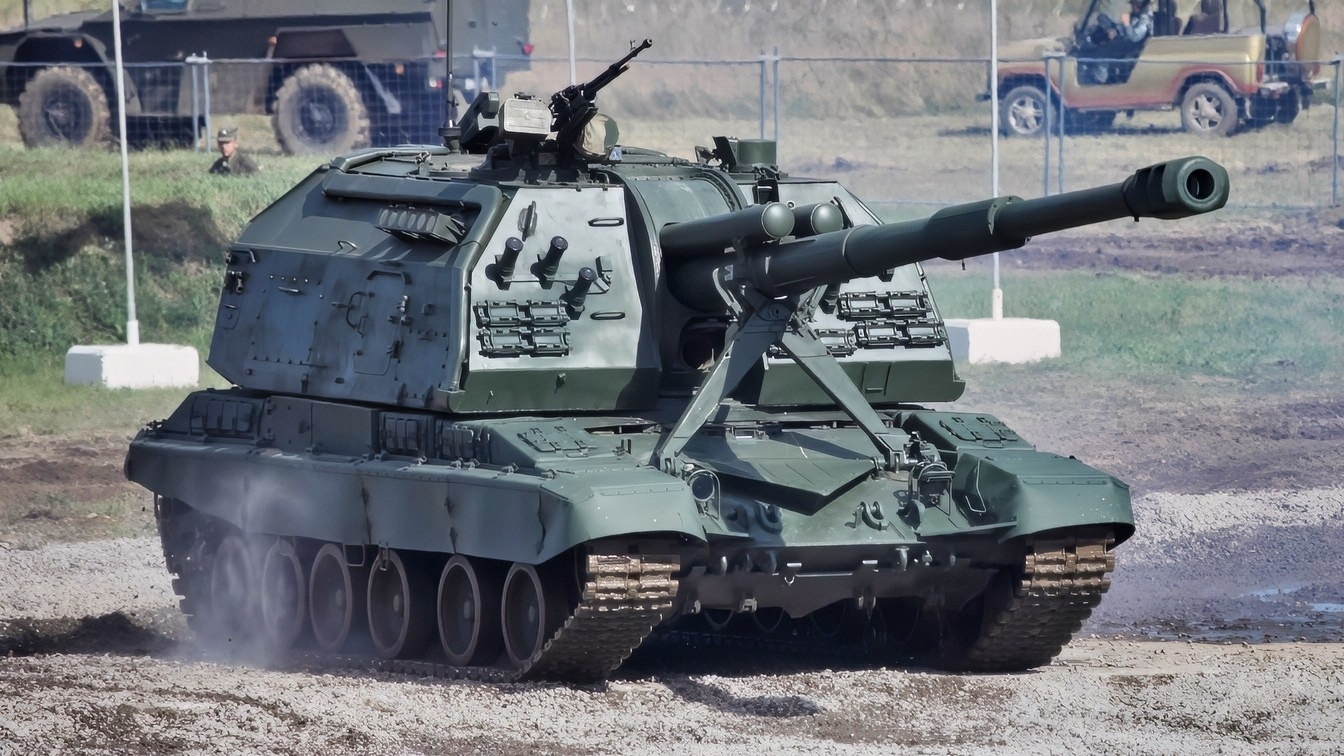
MSTA-S Russian Artillery. Image Credit: Creative Commons.
“With such approaches, the Ukrainian Air Force will not be ready for a new challenge,” Sternenko added in his social media post. “It is very strange that General [Anatolii] Kryvonozhko remains in post.”
General Kryvonozhko has served as Commander of the Ukrainian Air Force in an acting role since August 2024, before President Zelensky made his appointment permanent one year later.
About the Author: Shay Bottomley
Shay Bottomley is a British journalist. He has written for the Western Standard, Business Insider, Maidenhead Advertiser, Slough Express, Windsor Express, Berkshire Live and Southend Echo.