
Republicans are spending millions to defend congressional districts redrawn to help them win the midterm elections, trying to protect the party’s House majority.
Opinion polls throughout the campaign have pointed to a Democratic win.

White House Press Secretary Katie Zacharia holds first press briefing in the James S. Brady Press Briefing Room of the White House, Tuesday, October 13, 2026. (Official White House Photo by Andrea Hanks)

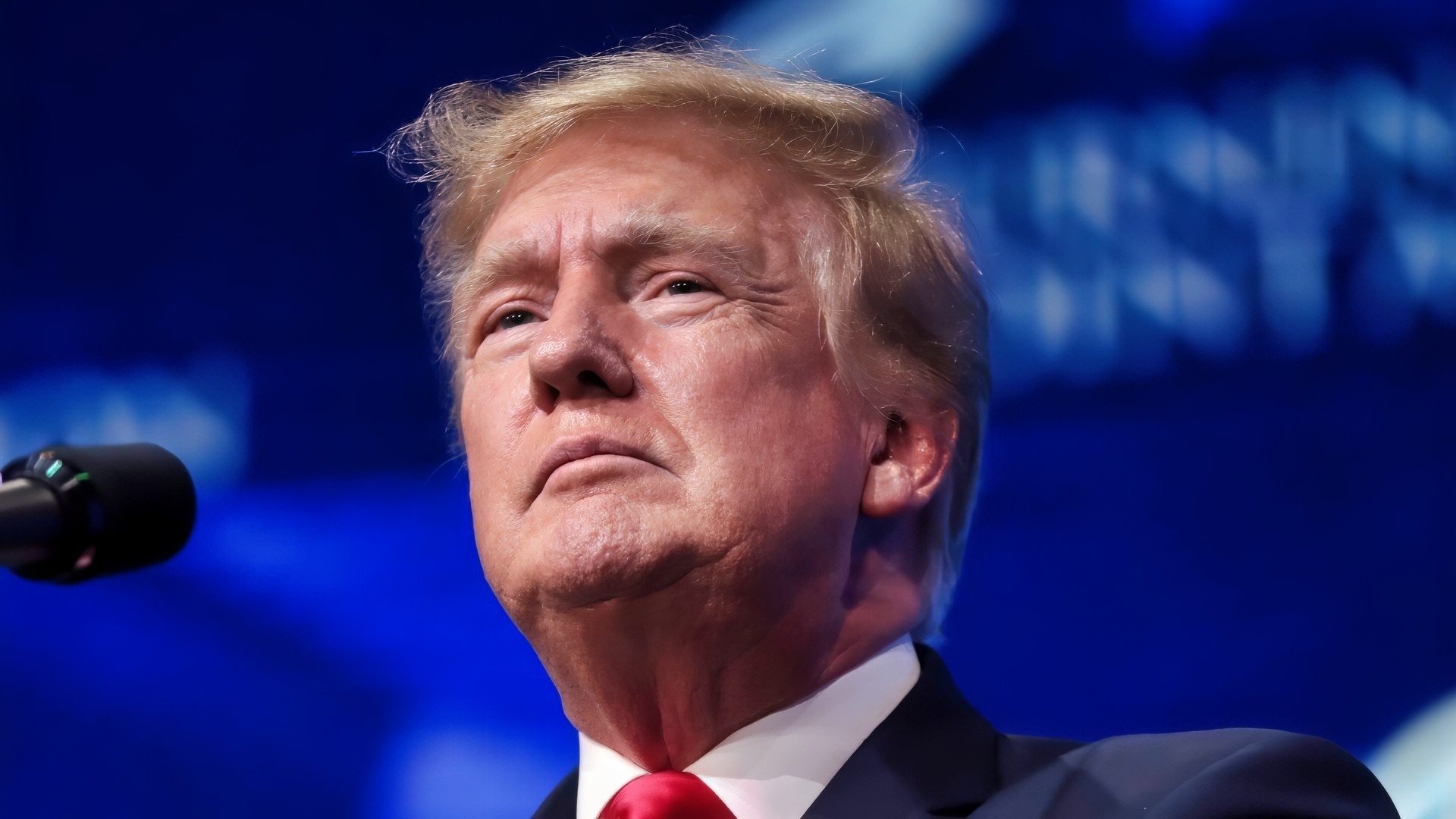
Donald Trump 2023 Rally Creative Commons Photo
Anything other than the Republican Party retaining its majority in both chambers is likely to disrupt President Donald Trump’s agenda for his last two years in office.
While a governing party often uses gerrymandering to secure majorities in otherwise competitive contests, the GOP is pumping funds into seats it expected to win on Tuesday, November 3.
What is Gerrymandering?
Gerrymandering is the process of redrawing electoral district boundaries to gain political advantage.
It is named after Elbridge Gerry, former Vice President of the United States, who, in 1812, as governor of Massachusetts, signed a bill creating a district in Boston that looked like a salamander.
Gerrymandering can be done in several ways.
A ruling party may group all likely opposition voters into a single district, for example, removing the chance of a surprise defeat in an area the party was otherwise expected to win.
More commonly, it redraws boundaries so a ruling party’s likely supporters hold a majority in more districts, increasing the chances of retaining control of a legislative body at the county, state, or federal level.
A Guaranteed Victory?
Congressional Republicans redrew key boundaries based on voting patterns that led to Trump’s victory in the 2024 presidential election.
In October 2025, GOP lawmakers approved the new North Carolina map, seeking to increase their share of the state’s 14 House seats from 10 to 11.
In the state’s 1st district, the move would have given Trump an advantage of more than 11 percentage points in 2024.
Yet Democratic Rep. Don Davis remains competitive against Republican Laurie Buckhout ahead of next week’s election, despite the new boundaries removing the former’s home from his district and adding unfamiliar coastal territory.
The GOP included Buckhout in its program supporting promising congressional candidates.
A retired Army colonel, she had lost to Davis by fewer than two percentage points in 2024.
However, Davis has retained support beyond his party.
His local campaigning helped him outperform other Democrats in the previous election, and he has continued to introduce himself to voters who moved into the district.
At a recent rally, Trump acknowledged that House Speaker Mike Johnson had requested extra attention for Buckhout and another North Carolina candidate because their races would be close.
NPR reports that the GOP has pumped more than $20 million into a seat it redrew just 12 months ago.
The Cost of Expansion
Similar problems have emerged in Texas, where Republicans redrew congressional boundaries to gain five additional seats.
Republican organizations have spent more than $14 million trying to defeat Democratic Rep. Vicente Gonzalez and another $10 million defending Republican Rep. Monica De La Cruz, according to AdImpact figures reported by the Houston Chronicle.
The Cook Political Report favors Gonzalez, while Texas’ 15th district remains a toss-up.
Florida faces a similar situation, with its map redrawn to produce four additional Republican seats. According to NPR, the GOP has spent more than $90 million trying to win two congressional districts it redrew to win.
Some Successes
The redistricting effort has not been a total failure. Jacob Rubashkin, an analyst at Inside Elections, told Reuters that while the “number of pickups is almost certain to fall well below expectation” for the GOP, “it’s also true that Republicans will still do better because they redistricted than had they lived and let live.”
Voter dissatisfaction, however, has not produced the redistricting results GOP strategists wanted. Competitive races require money and presidential attention that could otherwise support vulnerable incumbents elsewhere.
With just over a week to go, the Democrats, according to the latest Cook polling, are set to flip between 12 and 22 seats on November 3.
They need just four to take control of the House.
To secure a majority, the GOP must win its redrawn districts and hold vulnerable seats nationwide. The polls suggest that could be a tall order come election day.
About the Author: Shay Bottomley
Shay Bottomley is a British journalist. He has written for the Western Standard, Business Insider, Maidenhead Advertiser, Slough Express, Windsor Express, Berkshire Live and Southend Echo.