
Iran says that it is prepared for another major war with the United States and Israel — and the Pentagon is moving closer to being fully ready to launch a new offensive against Iranian nuclear sites and energy infrastructure.
Iranian officials have warned in recent days that another round of strikes would trigger a much broader conflict in the Gulf region, with new Iranian targets including American bases, oil installations, energy infrastructure, and even critical undersea communications cables throughout the Middle East.
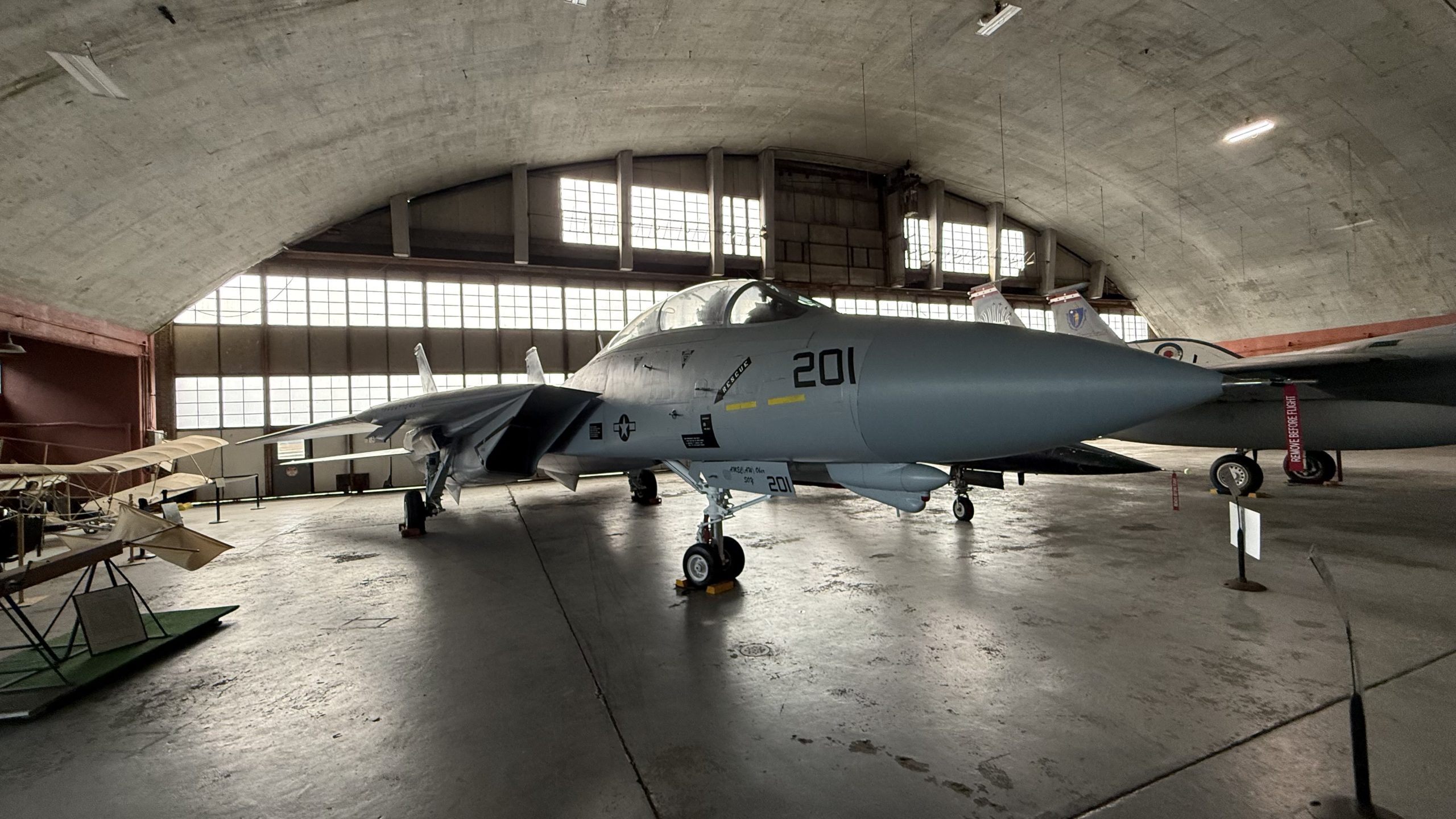
F-14 Tomcat like flown by Iran. 19FortyFive.com photo taken by staff.
The warnings come as Tehran expects a massive new campaign from the United States, which is widely expected to begin shortly after the November 3 midterm elections. Reports on Sunday, October 25, said U.S. forces are already positioned to launch a major offensive within 96 hours of receiving a presidential order — but President Trump has reportedly not yet authorized the operation.
Meanwhile, reports also confirmed on Monday, October 26, that Iranian authorities are preparing for the likelihood of renewed American and Israeli attacks, as American diplomats leave several Middle Eastern countries and mediators work to encourage Tehran to make concessions to the United States to avoid a much larger conflict.
Iran Says It’s Ready
Iranian Foreign Minister Abbas Araghchi warned on Thursday, October 22, that Tehran considers another U.S.-Israeli attack to be a realistic possibility, even as Iranian officials insist that negotiations and diplomacy remain on the table.
Speaking to Iranian state media, Araghchi said that Iran was preparing for both negotiations and a military confrontation.
“Any scenario is conceivable, including the possibility of an attack by the U.S. and Israel,” he said.
He also said that Iran is “just as prepared for diplomacy” as it is for war.

Iran’s Drones That Russia Is Using. Image Credit: Creative Commons.
Officials in Tehran believe that President Trump could be preparing to intensify U.S. military operations to break the stalemate that has persisted since the United States and Israel first launched their strike campaign against Iran on February 28.
On October 20, Reuters reported that senior Iranian officials were deliberately prolonging negotiations with Washington, in large part to avoid handing President Trump a diplomatic victory before Americans went to the polls.
One senior official told the news agency that Tehran was preparing for war more than it was for a peace agreement.
However, Tehran continues to insist that a diplomatic settlement is possible — but only if the United States makes a series of major concessions before Tehran ends its strikes on commercial shipping in the Strait of Hormuz.
U.S. Forces Could Strike – Soon
The warnings from Tehran come as the Pentagon prepares for its next strike campaign — and the evidence it’s coming is becoming hard to ignore.
Two U.S. officials told CNN that sufficient forces are already deployed in the Middle East to begin a major offensive within four days of President Trump issuing the order.
The Pentagon and U.S. Central Command (CENTCOM) have reportedly already prepared an extensive list of potential targets that include Iran’s remaining nuclear facilities, its energy infrastructure and oil sites, military installations, and more.
But unlike the limited strikes that were previously carried out against Iranian radar systems and missile launcher sites, the proposed new operation would be much larger and more intense.
The strike campaign will be short-lived and intended to cause lasting damage to Iran’s military capabilities.
However, nobody can be certain when the strike will occur.
Analysts largely agree the president is likely to order the strikes after the November midterm elections—not least because the White House has repeatedly insisted no new strikes will occur before Americans go to vote.
However, as this outlet has noted previously, major national polls now largely agree that the Republicans are set for major losses in November, meaning that a new U.S. campaign against Iran may make little difference to the party’s chances in less than two weeks.
President Trump has also told reporters that nobody knows whether he will order the strike before or after the elections.
Regional Powers Want to Prevent Another War
As Iran threatens to broaden the scope of its attacks, surrounding countries are rushing to help prevent another war.
On October 26, reports described how senior officials from Saudi Arabia, Pakistan, and Turkey were visiting Tehran to take part in urgent negotiations aimed at preventing another war — or more specifically, preventing attacks on infrastructure in their respective countries.
Saudi Defense Minister Khalid bin Salman met with Pakistani military chief Asim Munir and Turkish intelligence chief Ibrahim Kalin, along with senior Iranian officials, including Supreme National Security Council secretary Mohsen Rezaei.
The delegations aim to broker an agreement between Washington and Tehran before President Trump proceeds with the planned strikes.
The meeting also comes amid the war in Yemen and ongoing attacks by Iran-backed Houthi rebels against Saudi Arabia.
About the Author: Jack Buckby
Jack Buckby is a British researcher and analyst specializing in defense and national security, based in New York. His work focuses on military capability, procurement, and strategic competition, and he produces and edits analysis for policy and defense audiences. He brings extensive editorial experience, with a career output spanning over 1,000 articles at 19FortyFive and National Security Journal, and has previously authored books and papers on extremism and deradicalization.


