

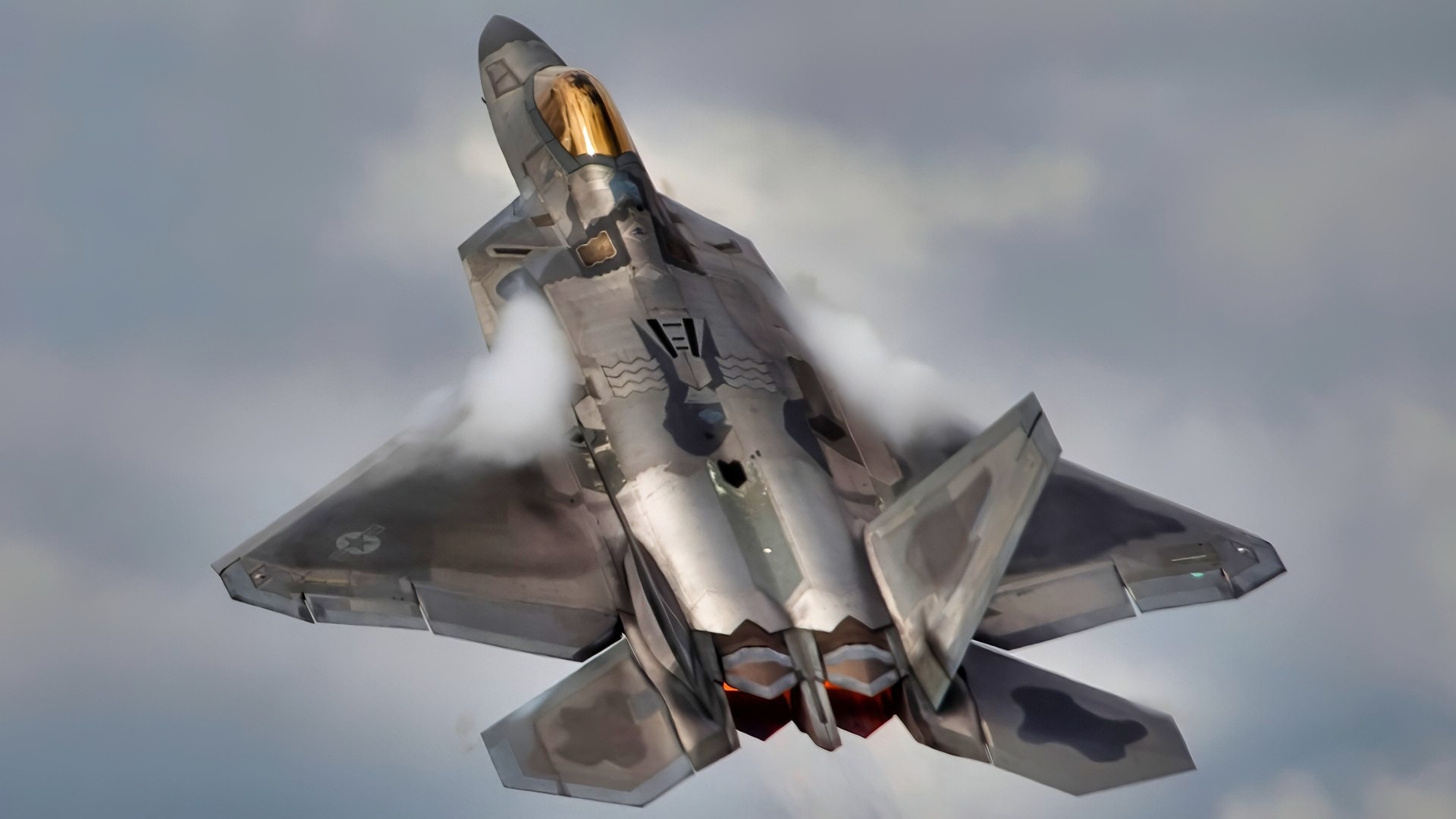
U.S. Could Strike Iran Within 96 Hours – U.S. forces in the Middle East are ready to mount a large-scale new assault on Iran within four days of a go-ahead from President Donald Trump, U.S. officials close to the military preparations said.
While the Pentagon has put together a plan to attack Iranian nuclear sites, military installations and energy facilities, Trump has yet to give the go-ahead. The White House said it will not authorize new U.S. strikes until after the midterm elections on November 3.
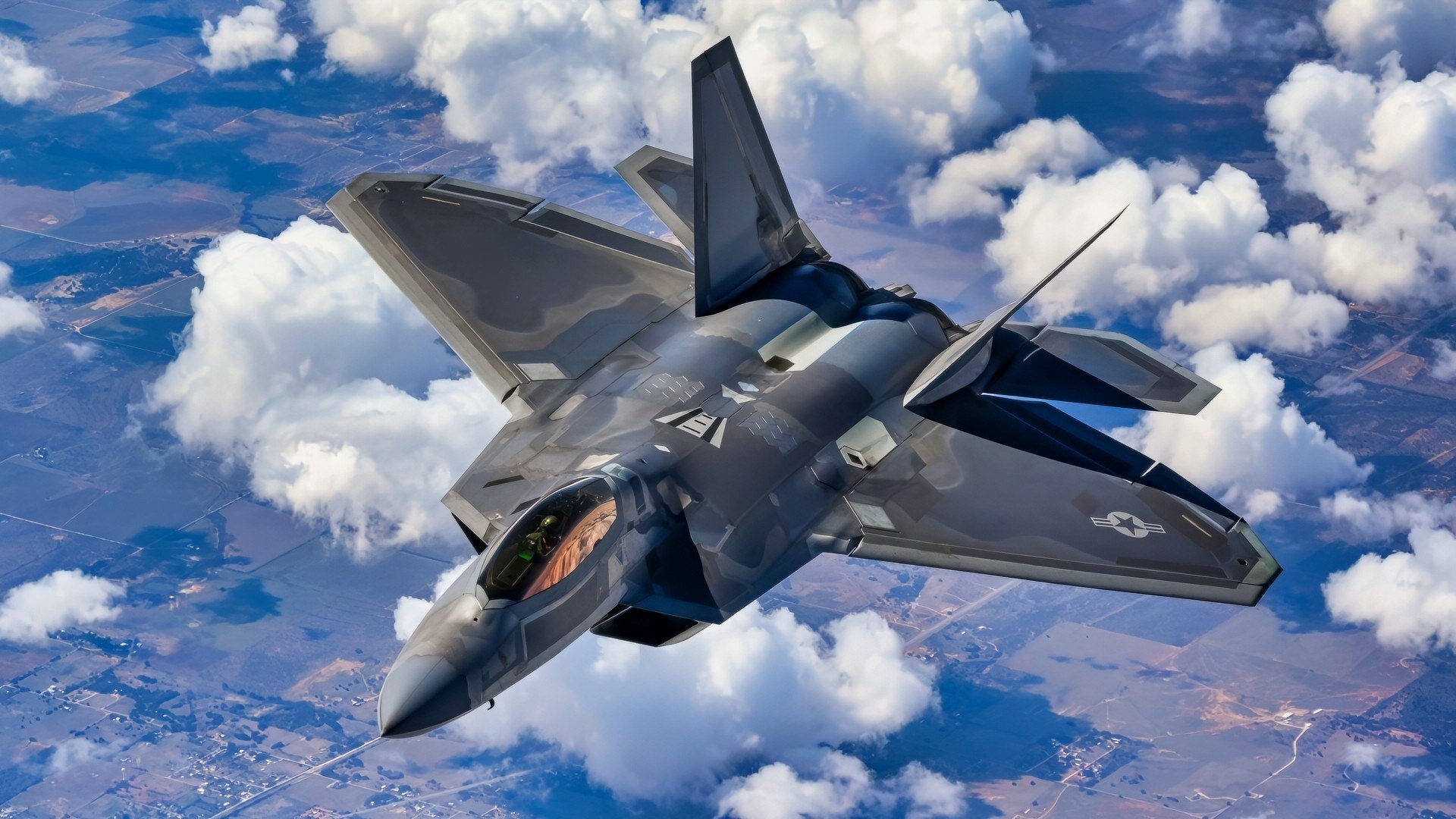
An F-22 Raptor Demonstration Team pilot flies towards Joint Base Langley–Eustis, Va., March 8, 2021. The F-22 team, assigned to Air Combat Command, received fuel from the 507th Air Refueling Wing during their flight back to home station after performing at an air show. (U.S. Air Force photo by Senior Airman Mary Begy)
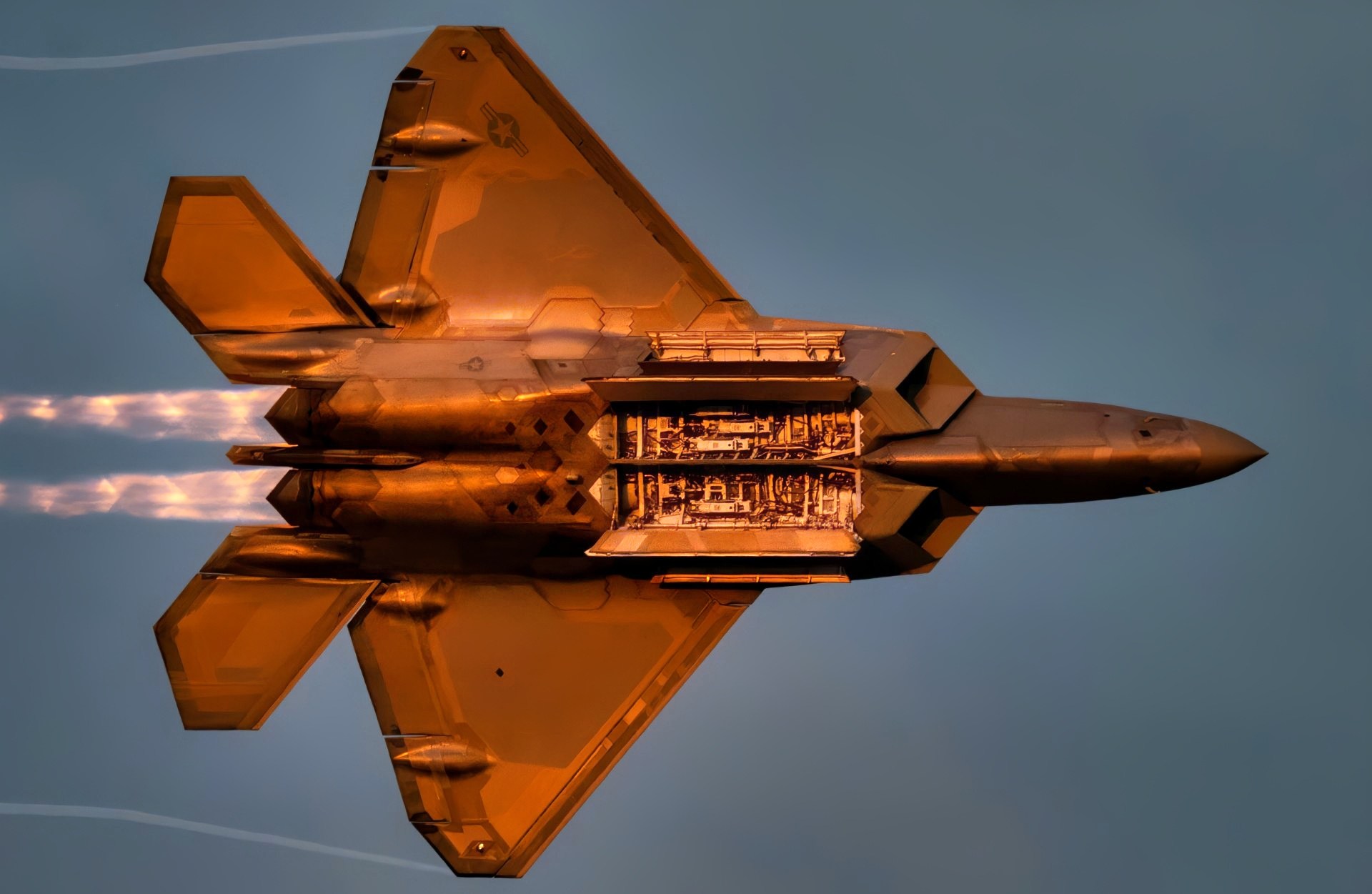
An F-22 Raptor assigned to the U.S. Air Force F-22 Raptor Demonstration Team
performs aerial maneuvers at Experimental Aircraft Association (EAA) AirVenture
Oshkosh in Oshkosh, Wis., July 29, 2023. The demonstration team performs aerial
maneuvers to showcase its combat capabilities to a public audience. (U.S. Air Force photo by Bill Guilliam)
Pentagon Preparing For Large-Scale New Offensives
U.S. forces could be launched within 96 hours of the president’s go-ahead, two U.S. officials told CNN.
“It will be a big effort,” one said.
This would go far beyond the low-scale attacks carried out since Trump paused full-scale combat operations earlier this year. It would involve more than just destroying Iranian radar systems, missile launchers, and other equipment that can easily be replaced.
CNN has reported that U.S. Central Command and the Pentagon have drawn up a list of targets to hit Iran’s nuclear program, military facilities, and oil sector.
A senior Pentagon official declined to comment on specific operations but noted, “The Department is a planning organization, and its job is to develop and execute military options ordered by the President.”
ABC News reported on October 22 that U.S. and Israeli military commanders had discussed launching new joint attacks. This came during a visit to Israel by Defense Secretary Pete Hegseth.
Two Israeli officials said it was “only for Trump to decide.”
Another said, “Hunting season is open as soon as the elections end and it’s obvious that they’re not going to wait long.”
Trump Has Not Given The Go-Ahead
On October 8, he said Washington was having “productive discussions” with Tehran and that no strikes would take place on Iran before November 3.
However, his stance on what comes next is far less certain.
On September 30, Trump suggested that “blowing them [Iranian leaders] up” could be an option.
Iranian officials are preparing for the possibility that Trump decides to go with the first option.
“Iran is preparing for renewed Israeli and US attacks,” one senior Iranian official told Reuters on October 20.
Tehran has also been accused of dragging out negotiations.
“Iran is influencing the US election without taking any unlawful action,” Iranian analyst Saeed Leylaz said.
However, U.S. officials warned CNN that Trump has previously second-guessed major military decisions.
Intelligence Warns of Iranian Retaliation
Washington is also preparing for possible Iranian attacks on U.S. personnel abroad.
Director of National Intelligence Jay Clayton warned Secretary of State Marco Rubio in a memo on October 23 that Iran had “substantially increased efforts to target US personnel.”
Suspected assassination plots by Iran were at “advanced stages” in the Middle East and some other countries, the memo obtained by Reuters said.
The State Department ordered all non-essential U.S. government personnel and their families to leave Saudi Arabia on October 23 due to “security threats posed by Iran and the Houthis”.
Tehran has also threatened to broaden its attacks.
Tehran’s plan for another war would involve “zero red lines”, Mehdi Mohammadi, an adviser to Iranian parliament speaker Mohammad Ghalibaf, told The Guardian.
Iranian security officials have named Gulf oil facilities, undersea communication cables and data centers as possible targets.
“A third wave of war would not stay contained. Power grids, desalination plants, refineries and ports across the region would burn,” said Reza Nasri, an international lawyer close to Iran’s Foreign Ministry.
Hormuz, Netanyahu And The Prospect Of Another War
Adm. Brad Cooper, head of U.S. Central Command, traveled to the Strait of Hormuz on Sunday. U.S. forces have been protecting commercial vessels in the area.
Over the past six months, CENTCOM has protected more than 3,000 commercial vessels and helped Gulf partners export more than 1.5 billion barrels of crude oil since the summer.
“We continue to stand shoulder to shoulder with our Gulf partners and the shipping industry,” Cooper said.
Israel Would Welcome Iranian Regime Change
Israeli Prime Minister Benjamin Netanyahu has openly welcomed regime change in Tehran. He said in a Channel 12 interview on Sunday, “I instructed the IDF and the Mossad to topple the [Iranian] regime.”
However, reports of disagreements between Netanyahu and Israeli military chief Eyal Zamir have emerged ahead of Israel’s election on October 27.
Israel Katz, Israel’s defense minister, denied claims Israel was planning to launch an attack before the vote, saying reports of disagreements were “completely baseless and false.”
About the Author: Georgia Gilholy
Georgia Gilholy is a journalist based in the United Kingdom who has been published in Newsweek, The Times of Israel, and the Spectator. Gilholy writes about international politics, culture, and education.


