
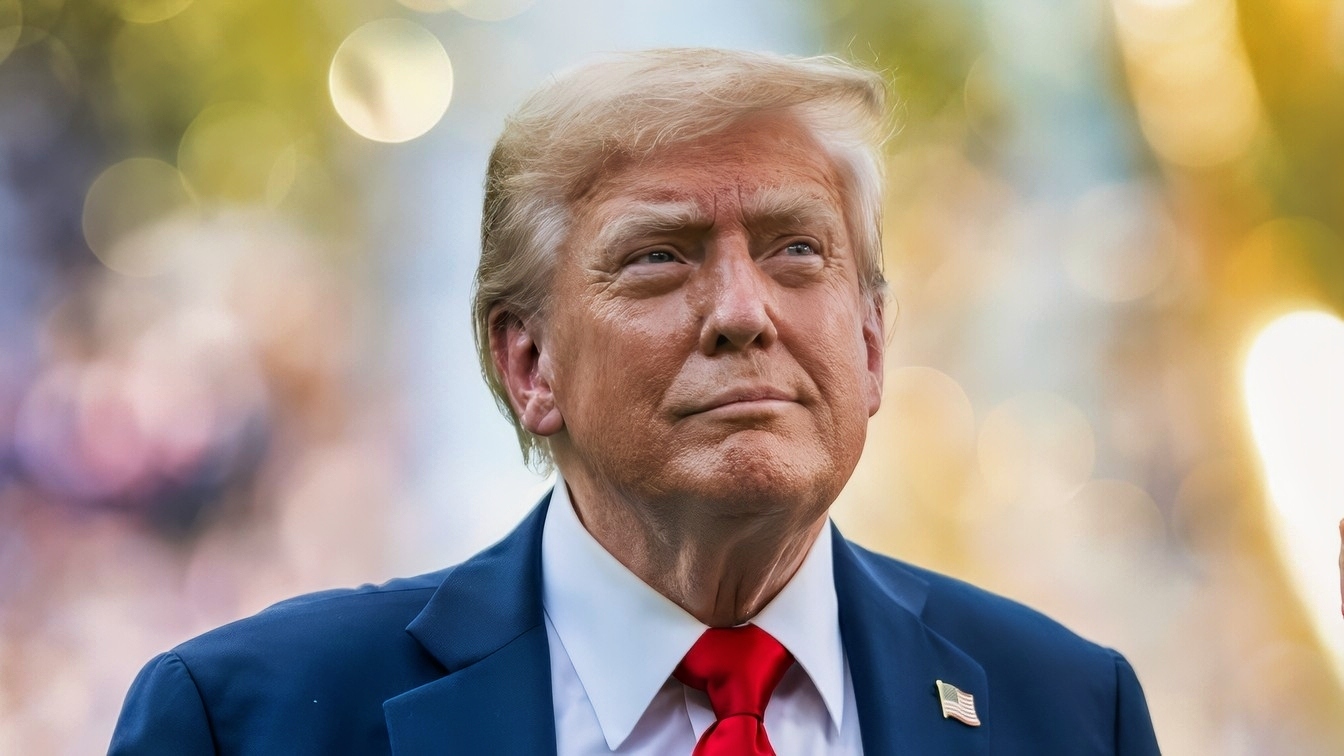
Even as President Donald Trump struggles to wind up the war with Iran, a conflict that his administration suggested in February would be over quickly, he appears to be raising the possibility of an American military intervention in Cuba.
And Secretary of State Marco Rubio is making similar suggestions.

B-1B Lancer Bomber. Image Credit: Creative Commons.

A B-1 Bomber, 77th Weapons Squadron, Dyess Air Force Base, Texas, performs a fly by for the crowd during an Air Force Firepower Demonstration at Indian Springs Air Force Auxiliary Field, Nev., Oct 8. The Firepower Demonstration is held twice a year and gives the general public a glimpse into the Air Force’s ability to perform its wartime mission.
USAF Photo by MSgt Robert W. Valenca (Released)
On October 23, the president suggested that U.S. Navy warships returning from the war against Iran may make a stop near Cuba and force its leaders to begin negotiations with the United States. Rubio, meanwhile, has encouraged Cubans to cooperate with the Central Intelligence Agency (CIA) to help bring about political change on the island.
The latest threats are just another escalation in the Trump administration’s ongoing campaign against Cuba, which has already seen the imposition of an oil blockade and new sanctions.
The White House has repeatedly indicated that it would like to see the country’s communist government replaced, but has not yet announced any plans for a military intervention.
The comments also come as Cuba faces worsening economic conditions and fuel shortages.
Trump Says Cuba Is Next
During a speech at a campaign rally in Fort Myers, Florida, President Trump explained that American warships currently in the Middle East may be used to pressure the Cuban government — but only after the war with Iran is over.
The president described a “little stopover” by U.S. military vessels, noting, “we’ll take care of Cuba on our way back from Iran.”
He said that he would have the boats “stop about 50 yards off the coast.”
“They’ll raise their hands, and then we’re going to send Marco Rubio to finish up the deal.”
He did not explain whether he was proposing a military operation or simply using American naval power to coerce Havana to enter negotiations.
The comments are interesting for several reasons.
First, they mark a shift in tone from September, when the president predicted the United States and Cuba could reach an agreement without military intervention.
Second, the war in Iran has proven extraordinarily unpopular with voters, and a conflict in Cuba would likely be equally unpopular.
For the president, however, launching another operation against Cuba would carry no real personal consequences, should it get that far, because he would face no electoral tests for the remainder of his presidency.
Trump, then, may see Cuba as an opportunity to secure a victory without a major military engagement, thereby helping restore his legacy after hypothetically winning the war against Iran.
That may be the White House’s thinking, at least.
Rubio Encourages Cubans to Cooperate
Secretary of State Marco Rubio followed the president’s comments with a public social media appeal.
Writing on X on October 23, Rubio said that “now is the time” for Cubans to help overthrow their leaders.
“To those who seek to create positive change in Cuba – now is the time,” he wrote.
“The disappointment of failed promises, corruption, and the privileged lives of only a few; seize this opportunity to create the change you desire through a discreet partnership with the CIA.”
The CIA backed Rubio up, posting its own appeal in Spanish and providing specific instructions for Cubans who would like to contact American intelligence officials with information.
“To those seeking to create positive change in Cuba – This is the moment. The disappointment of failed promises, the corruption, and the privileged lives of a few – Seize this opportunity to create the change you desire through a discreet partnership with the CIA,” the post reads.
It was accompanied by a video that showed a series of pages of instructions.
Rubio, whose parents moved to the United States from Cuba, has been one of the most prominent advocates of political change in Havana during the Trump administration, and his latest remarks suggest Washington backs his call to encourage internal opposition to the Cuban government.
Cuba Responds to Washington
Some Cuban officials have already pushed back against the Trump administration’s threats and have warned that any American military intervention will be met with a response.
On October 23, Cuban Foreign Minister Bruno Rodríguez Parilla responded directly to the president.
“We reject all threats regarding U.S. ambitions toward Cuba,” Rodríguez Parilla said.
“On our shores, there are beautiful beaches, but also dogtooth, inhospitable to those who arrive with hostile intentions and desires for domination,” he continued.
The Cuban official was referring to jagged limestone formations along parts of Cuba’s coastline, often called “dogtooth.” The comments warned that any American forces attempting to invade the island would face fierce resistance as well as logistical constraints.
Cuban President Miguel Díaz-Canel also responded to the threats, accusing Washington of seeking to dominate the island and insisting that Cubans are determined to defend their independence.
In July, the Cuban president told Sky News that the government is “not afraid” of a war, and that the country will fight “to the very last drop of blood.”
About the Author: Jack Buckby
Jack Buckby is a British researcher and analyst specializing in defense and national security, based in New York. His work focuses on military capability, procurement, and strategic competition, and he produces and edits analysis for policy and defense audiences. He brings extensive editorial experience, with a career output spanning over 1,000 articles at National Security Journal, and has previously authored books and papers on extremism and deradicalization.


