


In just over a week, the United States will hold midterm elections. Tomorrow, Israel will hold its own elections.
Could both countries soon go back to full-on war in Iran?

An F-15EX Eagle II Fighter Jet assigned to the 85th Test and Evaluation Squadron, Eglin Air Force Base, Florida, taxis out from Nellis Air Force Base, Nevada, Oct. 21, 2021. The new F-15EX aircrafts are at Nellis AFB to test how effective and suitable the aircraft is for future use in our Air Force. (U.S. Air Force photo by William R. Lewis)
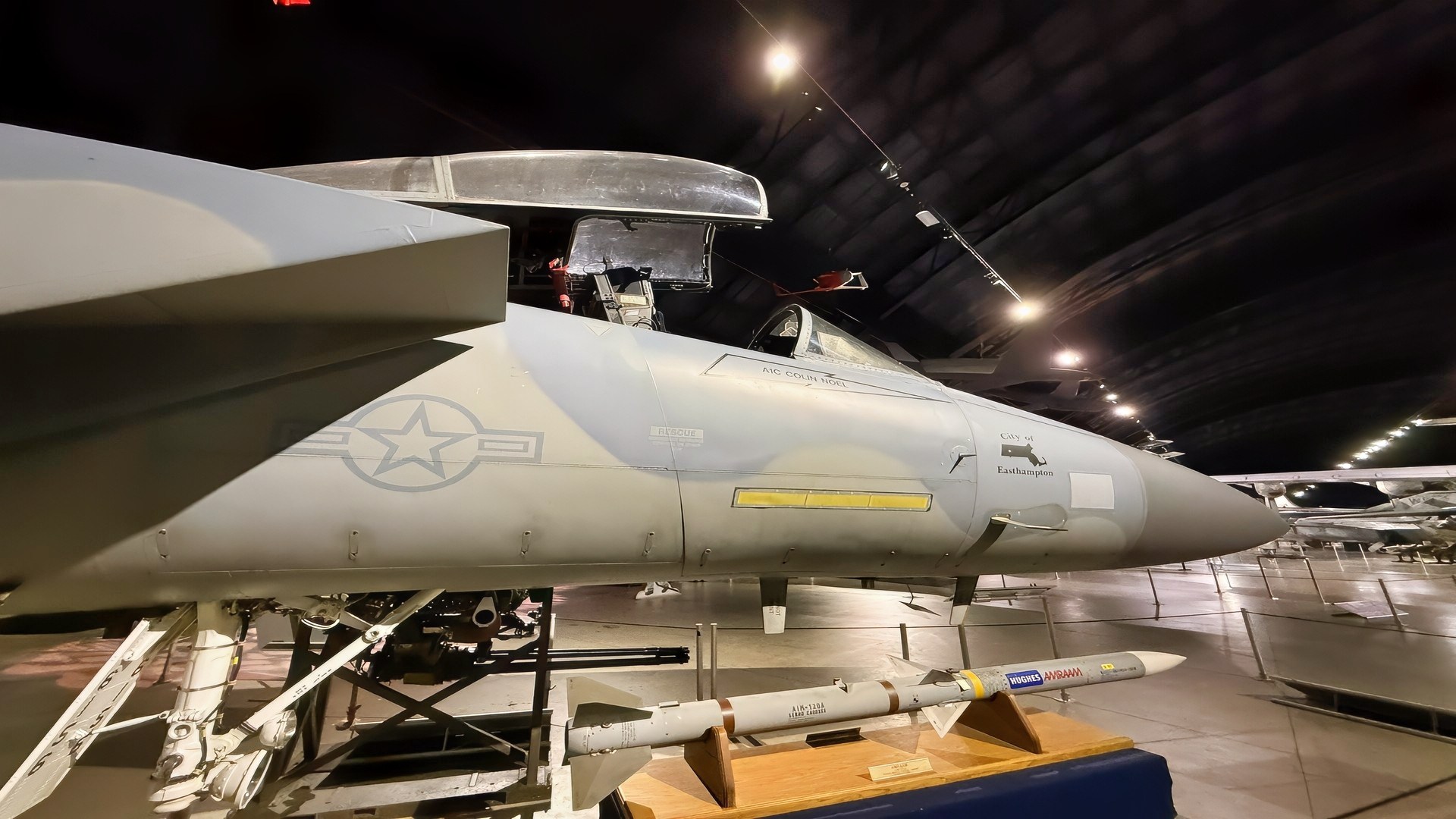
F-15 Fighter at the U.S. Air Force Museum. Image Taken on July 19, 2025 by National Security Journal.
According to an Associated Press report on Monday, Iran says they “fear” a return to all-out war in the near future, once the U.S. and Israel have completed elections in which Iran is seen as an issue of contention.
As noted by the AP, Israeli Prime Minister Benjamin Netanyahu, whose coalition is vying to remain in power, has called for the elimination of Iran’s regime.
At the same time, Trump has vowed to “finish the job” in Iran. The U.S. president, who faces the potential loss of his party’s Congressional majorities, promised earlier this month that he would not attack Iran before the midterm elections. Still, he has strongly hinted that he will launch new attacks after the vote.
The AP spoke with Tehran residents anxious about the war’s resumption, as well as one former government official.
Iran’s leadership is “planning for the scenarios so they can take remedial measures,” Sasan Karimi, a former Iranian government official who is now at the University of Tehran, told the Associated Press. “They’ve accepted that he will attack us again, before or after the elections,” he added.
What form could those “remedial measures” take? Per the AP, Iran could attack the military bases of American allies in the Middle East, and they have also threatened to go after new targets, including undersea data cables.
Additionally, Iran’s President Masoud Pezeshkian said this week that Iran is now at “a dangerous turning point” in the war.
But what does a new phase of war look like?
Worries About Escalation
The New York Times reported over the weekend that Trump Administration officials are fearing that Iran is in “advanced stages” of planning new attacks against American officials. Yet at the same time, Iranian officials believe that the U.S. and Israel are on the verge of launching attacks of their own.
This all creates a situation in which, according to the Times’ analysis, “the political calendars in the United States and Israel, and the potential for all sides to be seeking pretexts for action” are all factors that could lead to a new phase of violence.
Various scenarios, from an explosion near a bunker where Iranian officials are located to shots fired near U.S. officials, could “touch off a conflagration.”
Strikes After Defeat?
The Times also noted that both Trump and Netanyahu could follow an electoral loss with “one last strike.” The big difference is that the Israeli prime minister could lose his premiership. At the same time, if Trump’s party suffers losses next week, Trump would remain president for two more years and maintain effective control of the nation’s military forces.
Could the U.S. Suffer Losses at Home?
Since the start of the war, Iran has struck U.S. forces; they have hit American ships or, in some cases, military bases in allied U.S. countries; the fear exists that Iran could find a way to strike inside the U.S.
Iran’s Unit 840, according to the Times, has “carried out kidnappings and assassinations around the globe,” and is thought to aspire to “kill U.S. ambassadors in the Middle East and American officials on U.S. soil.” However, the newspaper noted that the Iranian unit is thought to lack the capability to carry out such actions, as the Times says, “history suggests Iran’s desires often outstrip its capabilities,” as in some cases assassins have been arrested before they could carry out their mission.
A “Flurry of Diplomacy”
Meanwhile, the Times reported that representatives of Saudi Arabia, Turkey and Pakistan recently traveled to Tehran for a diplomatic mission, amid “widespread concerns” that war would soon get underway again.
Saudi Arabia, Turkey and Pakistan joined the “Mecca Pact,” a new collective defense agreement, earlier this year. The representatives met with Masoud Pezeshkian, Iran’s president.
The Times story added that Qatari mediators are working on a peace agreement between the U.S. and Iran, but that the major roadblock has been “determining when each side would make its concessions.”
About the Author: Stephen Silver
Stephen Silver is an award-winning journalist, essayist, and film critic, and contributor to the Philadelphia Inquirer, the Jewish Telegraphic Agency, Broad Street Review, and Splice Today. The co-founder of the Philadelphia Film Critics Circle, Stephen lives in suburban Philadelphia with his wife and two sons. For over a decade, Stephen has written thousands of articles on politics, national security, technology, and the economy. Follow him on X (formerly Twitter) at @StephenSilver, and subscribe to his Substack newsletter.


