

A Russian drone strike killed at least 14 people at a railway station in the Ukrainian city of Dnipro on Thursday, October 29.
Regional authorities said the strikes injured 14 more people.

Tu-160M Bombers from Russia. Image Credit: Creative Commons.
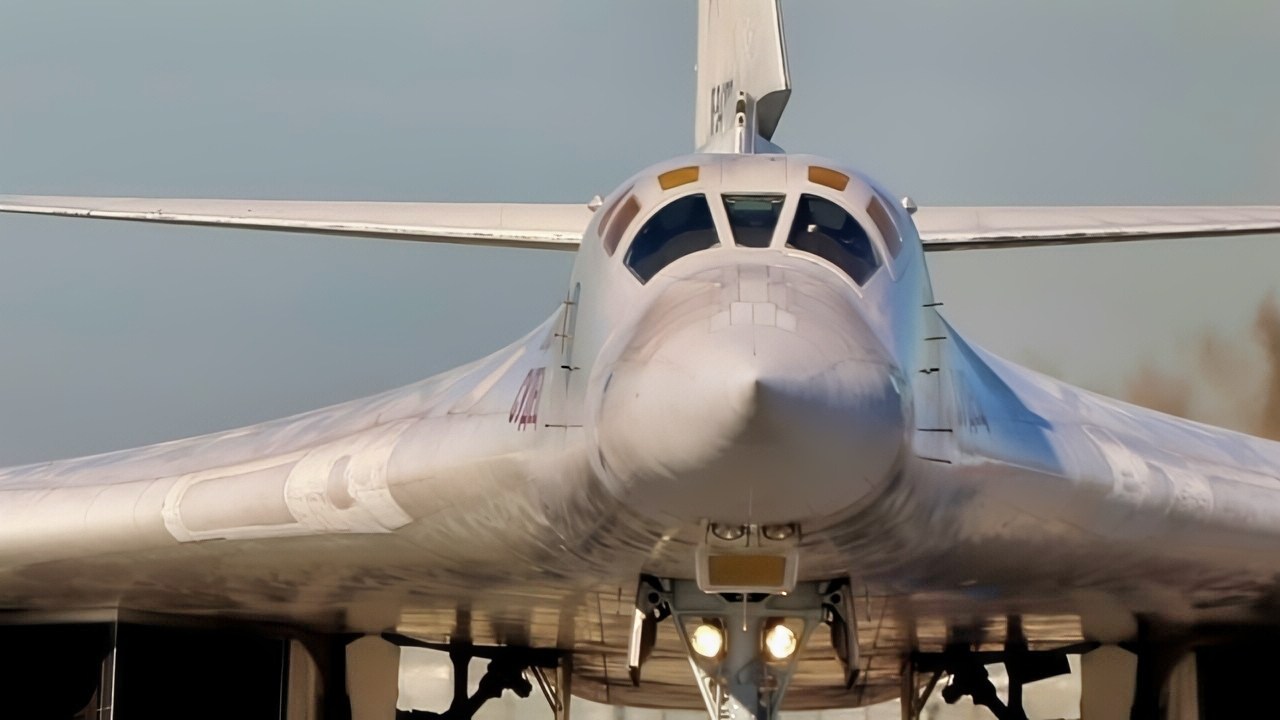
Tu-160 Up Close. Image Credit: Creative Commons.
Ukrainian President Volodymyr Zelensky and other European leaders strongly criticized the attack.
A Crowded Platform
Ukraine’s state railway operator said a jet-powered drone struck the platform on Thursday morning, when train No. 866, running from Dnipro to Zaporizhzhia, was stationed there.
Dnipropetrovsk regional military administration chief Oleksandr Hanzha said 14 people were killed in the drone strike.
In a Telegram update on Thursday afternoon local time, Hanzha confirmed that the strike wounded 14 more people. “Six are in critical condition, including an 11-year-old boy,” Hanzha said. “All have sustained multiple shrapnel wounds. A 40-year-old man has had both legs amputated.”
Emergency services remained at the scene providing life-saving support to the wounded, Hanzha added.
A “Horrific” Strike
President Zelensky shared footage of the strike on social media, featuring blurred imagery of the deceased lying on the platform.
“A horrific Russian strike on the railway station in Dnipro,” Zelensky wrote. “The Russians launched a drone attack on a platform where an ordinary commuter train and a scheduled passenger train were standing.”
After sharing his condolences with the families and loved ones of those killed or wounded, Zelensky asked: “Just how many terrorist strikes has Russia carried out against our people since sanctions were lifted on certain Russian oligarchs and the Russian energy sector, rather than de-escalating?”
He added: “This is precisely why Ukraine has always said that just and decisive action by America and Europe is needed in response to Russian escalation — sanctions against Moscow and its war machine must not be eased for as long as this Russian war continues.”
The Ukrainian president called for “new, stronger sanctions steps by the EU, the United States, and the G7” following the latest strike on civilians.
European Condemnation
Several European leaders condemned the attacks on the Dnipro railway station. French President Emmanuel Macron offered his condolences to Zelensky and the Ukrainian people, adding: “In this context, we must aspire to far more than a localized ceasefire like the one that has just been negotiated in Oleshky. It is intolerable that Russia continues to oppose all proposals to this end, continuing to bet on escalation and targeting civilians.”
He added: “Together, we must redouble our efforts for a just and lasting peace, and bring Russia to the negotiating table.”
Zelensky replied that since the strike in Dnipro, Russian drones had killed 15-year-old girls in Chernihiv, with a further three killed by a jet-powered Shahed in Kremenchuk.
He noted that the injury toll from the three attacks amounted to 56 injuries, including ten children.
“These are deliberate strikes against civilians, brazen in their cruelty, and the Russians are carrying them out right as the humanitarian operation in Oleshky is unfolding,” the Ukrainian president added. “Russia’s signals are clear — they want the war to continue, and everyone around the world must still work very hard to achieve major de-escalation through strong steps and appropriate pressure on the aggressor.”
“Peace is needed — and for that to happen, Russia must end its war and terror,” President Zelensky added.
“Inexcusable”
President of Czechia, Petr Pavel, described the Russian attack as “inexcusable.”
“Ukraine has repeatedly publicly confirmed this year that it is prepared to negotiate for peace,” Pavel added. “It is up to Russia to finally demonstrate the same willingness through its actions as well.”
He continued: “The foundation of peace negotiations must be the protection of civilians and the return of abducted Ukrainian children to their families. Ukrainians have our support in this, because like us, they deserve to live in safety in their own country.”
Last week, U.S. special envoy Steve Witkoff visited Oslo and Moscow to meet with the leaders of Ukraine and Russia’s leaders, respectively.
While optimism remains about potential trilateral talks between the U.S., Russia, and Ukraine after the meetings, the Kremlin remains unconvinced of the latest proposals, which include Ukraine ceding the Donbas to Russia in exchange for a future security guarantee from NATO.
“In terms of resolving the Ukraine crisis, there wasn’t much there that was useful,” said Putin’s foreign policy aide, Yuri Ushakov, on Wednesday, October 21.
About the Author: Shay Bottomley
Shay Bottomley is a British journalist. He has written for the Western Standard, Business Insider, Maidenhead Advertiser, Slough Express, Windsor Express, Berkshire Live and Southend Echo.