
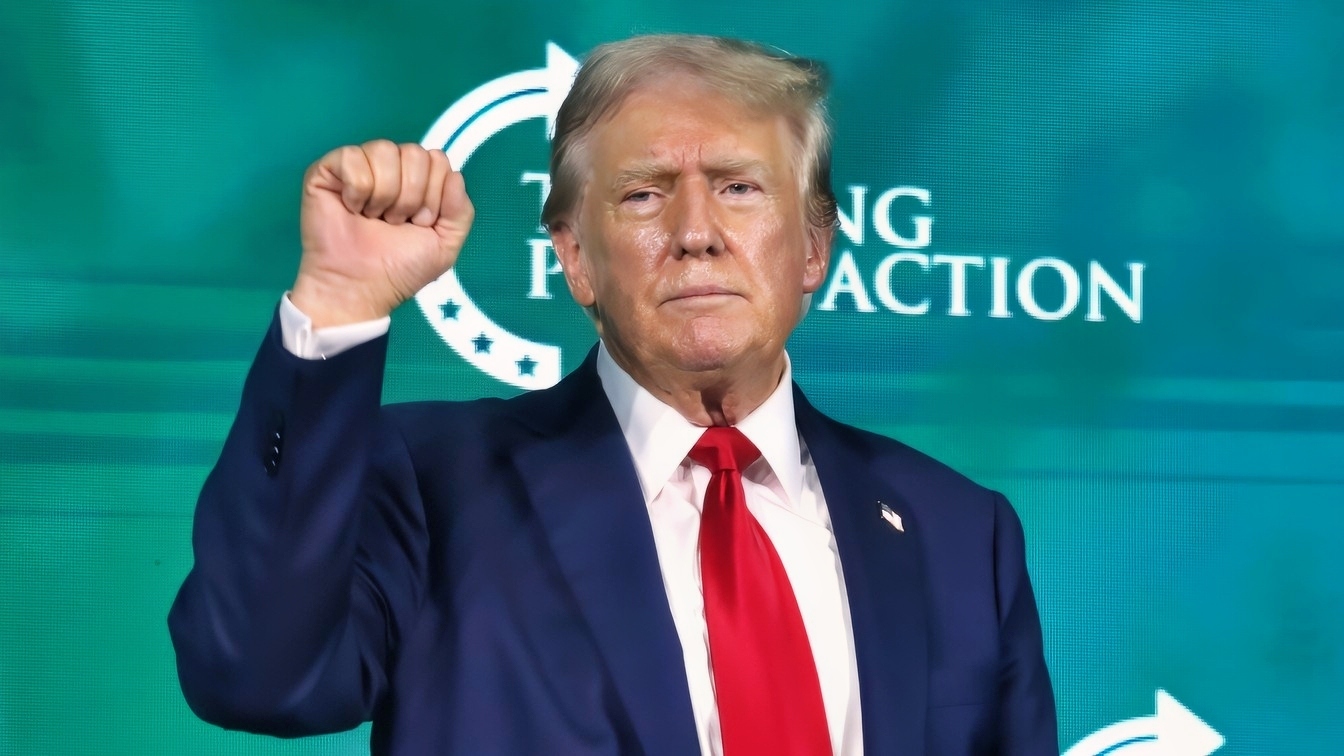
President Donald Trump faces a potentially extraordinarily damaging midterm election.
The Democratic Party, barring a political miracle for the Republicans, is set to take at least one of Congress’s two chambers if the polls are to be believed.

Vice President JD Vance attends a bilateral meeting with President Donald Trump and Israeli Prime Minister Benjamin Netanyahu, Monday, April 7, 2025, in the Oval Office. (Official White House Photo by Emily J. Higgins)
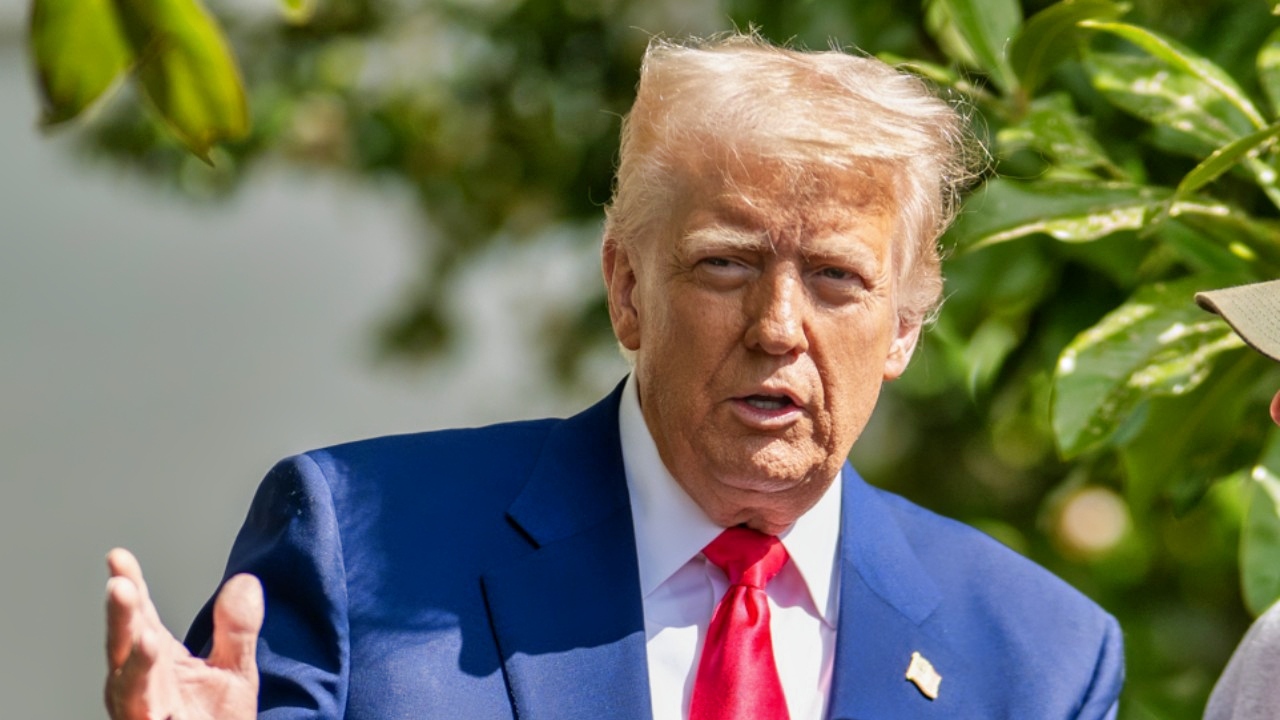
President Donald Trump participates in a commemorative tree-planting ceremony at the South Portico of the White House, Tuesday, April 8, 2025, to replace the Jackson Magnolia with a descendant sapling. (Official White House Photo by Daniel Torok)
However, even a landslide Democratic victory would still leave the Trump administration in power with a legacy that will take years to eradicate.
For a party that is facing internal divisions, that’s going to be a challenging task.
Advantage: Democrats
An October 26 Reuters/Ipsos poll put Trump’s approval rating at 32%, one point above the previous week’s record low. Registered voters favored Democrats over Republicans by 47% to 36% on the generic congressional ballot — a Democratic lead well outside the poll’s three-percentage-point margin of error.
No, Trump is not on the ballot — despite his insistence that supporters pretend he is — and the generic congressional ballot does not reflect individual races that will ultimately make up Congress from January 2027.
However, it does reflect an ongoing trend.
A separate NPR/PBS News/Marist survey conducted October 19–20 gave Democrats a 52%–44% advantage among likely voters, with 44% of voters considering their vote retaliatory against the president.
The Democratic Party, all too familiar with overestimations ahead of polling day, will only be concerned about the poll on Tuesday, November 3.
Congressional Changes
Any circumstance other than the Republican Party retaining its majority across both chambers is likely to disrupt President Trump’s agenda for his last two years in office.
At a minimum, congressional scrutiny of the administration will intensify, with Democratic lawmakers able to challenge executive actions, demand information, and hold hearings.
Congressional oversight powers belong to the chambers and their authorized committees, rather than to individual lawmakers acting independently.
A majority therefore offers more than an enlarged platform for criticism.
It would not, however, transfer executive authority to Democrats. Trump would retain the presidency and the ability to veto legislation.
Overriding a veto requires a two-thirds vote in both chambers, with a quorum present.
Democratic Divisions
A united Democratic Party in Congress is the biggest obstacle to the Trump administration should the Democrats win tomorrow night.
However, divisions within the party still run deep, two years after a particularly dismal election night for the Democrats.
The best example comes from Michigan, where on Sunday, November 1, Democratic Rep. Haley Stevens endorsed Republican Senate nominee Mike Rogers.
Stevens had lost the Democratic primary to Abdul El-Sayed and previously supported him, but switched allegiances following a public dispute over Israel and antisemitism.
“As you may have seen, our Democratic nominee for U.S. Senate, Abdul, said I was no longer welcome in his campaign and that I should stay away, and he’s right,” Stevens said in a video on social media. “And that’s why I am endorsing Mike Rogers for the U.S. Senate today.”
In response, El-Sayed said: “None of this matters,” adding that his focus was affordability for parents in Michigan.
Nevertheless, Stevens’ endorsement of a Republican highlights an issue that stretches beyond Michigan’s borders.
More broadly, it exposes the difficulty of holding together Democrats who disagree significantly over Israel, campaign rhetoric, and the party’s ideological identity.
Polling suggests voters recognize the Democratic Party’s internal problems. A recent AP-NORC survey found that 48% of registered voters believed Democrats could not solve important problems; 55% said the same of Republicans — a smaller percentage-point difference than the generic congressional ballot.
Trumpism After Trump
Despite his publicly stated wishes, Trump cannot remain in office as president beyond January 2029.
While Trump may remain an influential figure for years to come, the exact nature of his legacy is hard to determine at this stage — but if nothing changes, it could be one bogged down in war and endless controversy.
At this stage, that seems fairly likely.
Republicans can retain his positions, campaign methods, and grievances after he leaves office.
Democrats cannot assume that defeating candidates associated with him will eliminate the demand for the political style that saw Trump win two presidential elections and three consecutive Republican primaries.
The divisions within the Democratic Party will also challenge the belief among some progressives that Trumpism is set to end tomorrow evening.
The polls suggest that even though a majority of voters disapprove of Trump himself, the Republican Party he has shaped over the past decade remains preferable to almost half the electorate.
A divided opposition, even with congressional control, may do little to convince voters that Democratic ideals are the best path forward.
About the Author: Shay Bottomley
Shay Bottomley is a British journalist. He has written for the Western Standard, Business Insider, Maidenhead Advertiser, Slough Express, Windsor Express, Berkshire Live and Southend Echo.