
President Donald Trump was presented with several military options for potential new military strikes against Iran on Thursday, October 29, as the Pentagon continues to move additional military equipment into the Middle East.
The briefing, which was delivered by U.S. Central Command (CENTCOM) chief Adm. Brad Cooper, comes as Washington considers options to resume major combat operations against Tehran.

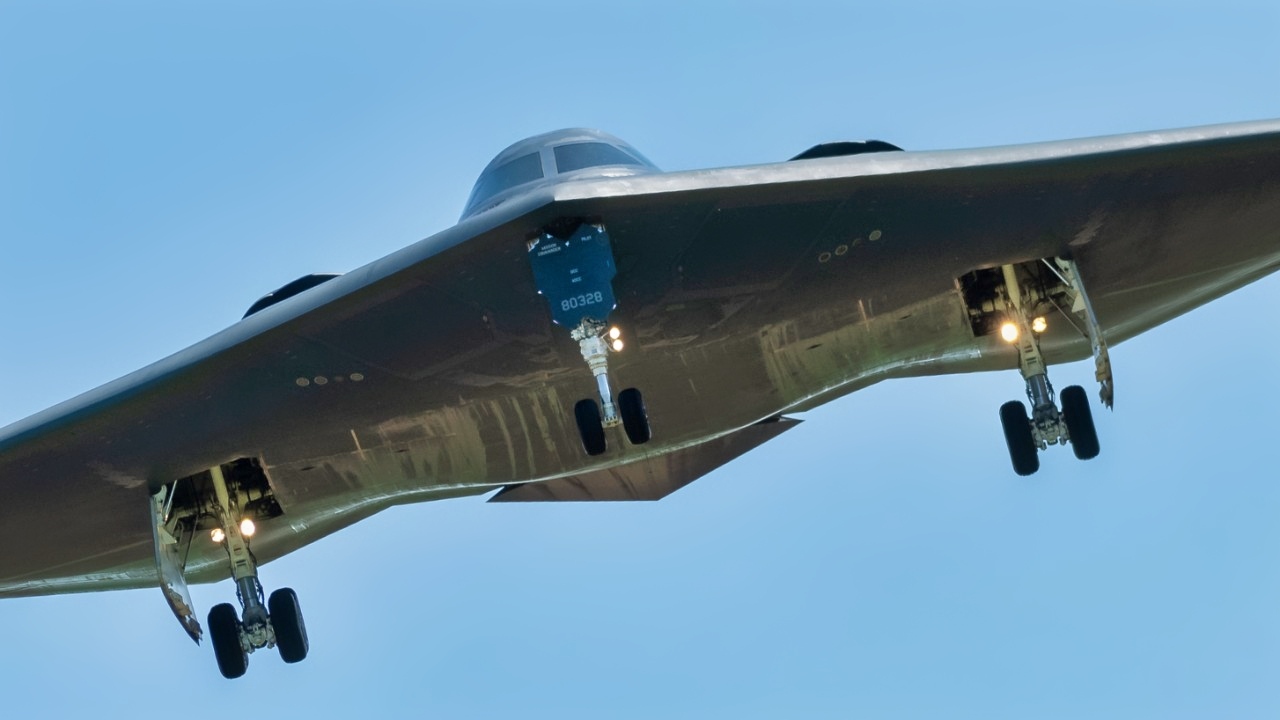
A United States Air Force B-2 Spirit Bomber from Whiteman Air Force Base, Missouri, undertook a hot pit refueling operation at Lajes Field, on September 12, 2023. The B-2 Spirit Bomber stop at Lajes highlights the readiness and capability of the men and women of the 65th Air Base Group to support global operations when called upon. (U.S. Air Force photo by Cristina Oliveira)

Airman 1st Class Tommy Day (left), Senior Airman Phillip Ruiz (center) and Tech. Sgt. Dwayne Bolles prepare to load a BDU-56 bomb on a B-2 Spirit bomber at Andersen Air Force Base, Guam, on April 11, 2005. The airmen are Air Force weapons specialists deployed from the 509th Aircraft Maintenance Squadron, Whiteman Air Force Base, Mo.
(DoD photo by Master Sgt. Val Gempis, U.S. Air Force. (Released))
According to The Wall Street Journal, which first reported the meeting, senior military officials are preparing for a likely new campaign.
At the same time, the White House continues to pursue a diplomatic resolution ahead of the November 3 midterms.
CENTCOM Commander Briefs Trump
Adm. Brad Cooper reportedly met with President Trump at the White House on October 29 to discuss military options, according to U.S. officials and people familiar with the meeting.
Defense Secretary Pete Hegseth and Chairman of the Joint Chiefs of Staff Gen. Dan Caine also attended.
The meeting was particularly interesting because CENTCOM commanders rarely brief the president in person.
And, according to Axios, President Trump directly requested an assessment of the effectiveness of the ongoing U.S. naval blockade against Iranian ports – likely to determine whether a new round of strikes is necessary or his policy of “low-keying it” and subjecting Iran to economic turmoil might still be sufficient.
Cooper also reportedly updated the president on efforts to continue escorting commercial tankers through the Strait of Hormuz.
The briefing came after another meeting between senior military officials and Vice President JD Vance on Wednesday.
The discussions have fueled speculation about an imminent military campaign, but no official confirmation has been made that President Trump has approved another round of strikes.
Pentagon Keeps Moving Military Equipment
Meanwhile, the Pentagon continues to move military hardware and ammunition to the Middle East, with Fox News reporting on October 29 that the movements were intended to give President Trump several options should he decide to resume operations against Iran.
The deployments include another aircraft carrier strike group and Marine expeditionary unit, and U.S. forces are also continuing of replenish ammunition supplies after months of operations.
Reports this week also described how a Patriot missile defense battery is being moved from Texas to Israel as part of efforts to strengthen defenses against a potential retaliation by Tehran.
Some U.S. personnel are also being moved away from military installations considered particularly vulnerable to attacks.
This follows a CNN report on October 25 that American forces could launch new, major operations within 96 hours of receiving an order from President Trump.
Gulf States Warned
Washington is also warning allies in the Gulf to prepare for another major U.S. military campaign against Iran shortly after the November 3 midterms.
The Associated Press reported on October 28 that two unnamed diplomats familiar with the warnings said that U.S. officials have advised regional governments to prepare for strikes and the likelihood of retaliation by Iran.
The warnings reportedly suggested that the U.S. and Israel are preparing a short but intense operation targeting Iranian military infrastructure and nuclear sites.
Axios also reported on October 28 that American and Israeli military planners were preparing one possible tactic that involved one week of extensive strikes on Iranian nuclear infrastructure and leadership figures.
The plans have been communicated to some lawmakers, with Democratic Sen. Chris Murphy warning on October 29 that restarting major operations against Iran would be a mistake.
Murphy also described the plans he had been shown as “insane.”
Qatar Facilitates Emergency Negotiations
As Gulf states brace for a likely Iranian retaliation campaign, which could see undersea communications cables and Gulf energy infrastructure targeted by Iranian strikes, Qatar is attempting to facilitate emergency negotiations and prevent another round of attacks.
Reports on October 30 described how Qatari mediators returned to Tehran in another attempt to secure an agreement before the elections. This follows a proposal reportedly delivered on October 25 that outlined steps to end the conflict.
Those proposals, however, were again rejected by Tehran, which continues to demand that Washington end its blockade of Iranian ports.
Trump Says War Could End Soon
Meanwhile, President Donald Trump is continuing to claim that the war in Iran is likely to end soon.
The president has made this claim repeatedly since March.
In an interview on October 30 with Kansas City radio station KCMO, President Trump expressed confidence that the war would end soon, but did not provide any details.
The president again reiterated that Iran must provide guarantees that it will never acquire nuclear weapons to end the American campaign.
And with the midterm elections only days away, and Iran still refusing to end its nuclear ambitions, it is becoming increasingly likely that the U.S. will launch a new wave of strikes.
About the Author: Jack Buckby
Jack Buckby is a British researcher and analyst specializing in defense and national security, based in New York. His work focuses on military capability, procurement, and strategic competition, and he produces and edits analysis for policy and defense audiences. He brings extensive editorial experience, with a career output spanning over 1,000 articles at National Security Journal, and has previously authored books and papers on extremism and deradicalization.


