
Iran Threatens Global Retaliation As Trump Considers New Strikes – Tehran’s leaders are warning that Iran’s military could attack a wider range of American and Israeli interests, including some outside of the Middle East, if President Donald Trump orders a new round of military strikes. The country’s supreme leader has also warned that the U.S. could target its financial assets globally.
The warnings come as negotiations between Washington and Tehran, which have been ongoing via mediators, continue to struggle to produce an agreement between the two sides, and as commercial vessels remain under attack throughout the Persian Gulf.
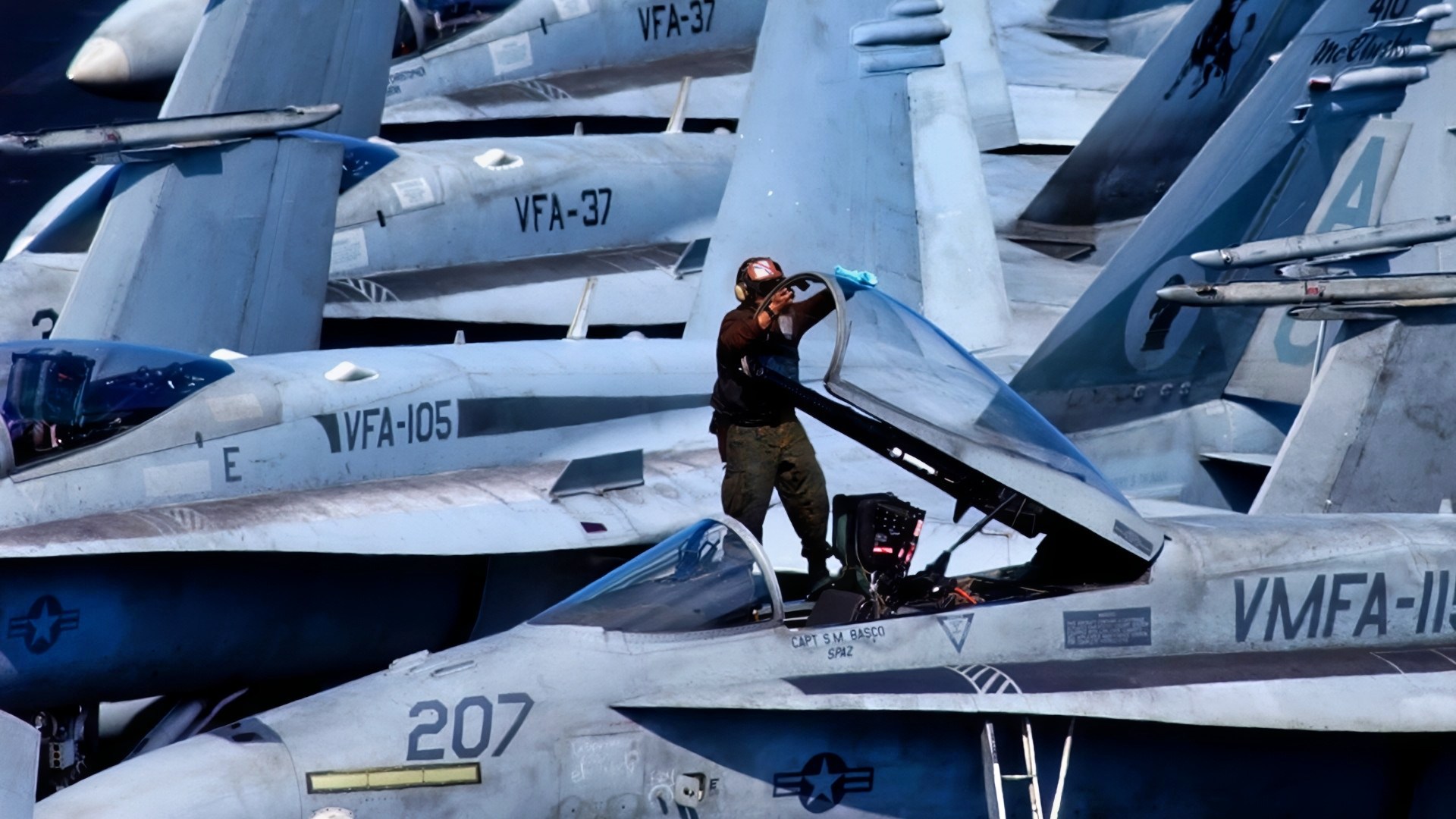
Marine Cpl. Rodger Lagrange cleans the canopy of a Marine F/A-18A+ Hornet onboard the USS Harry S. Truman (CVN 75) while the aircraft carrier operates at sea on Feb. 14, 2005. The Truman Strike Group and Carrier Air Wing 3 are conducting close air support, intelligence, surveillance, and reconnaissance missions over Iraq. Lagrange is attached to Marine Fighter Attack Squadron 115 deployed from Marine Corps Air Station Beaufort, S.C.
(DoD photo by Airman Philip V. Morrill, U.S. Navy. (Released))
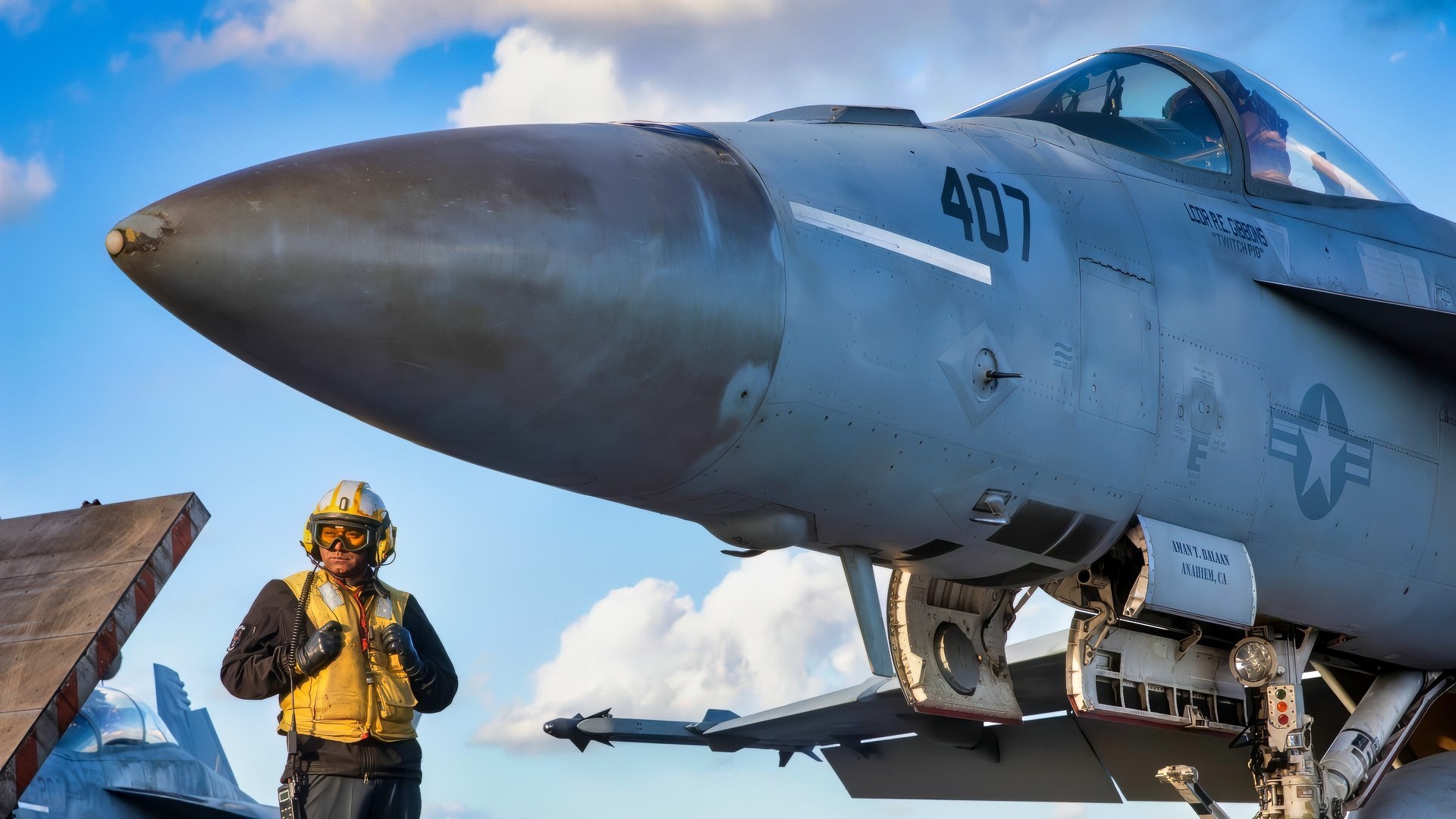
Aviation Boatswain’s Mate (Aircraft Handling) 1st Class Jose Mejiacastro, assigned to Air Department aboard the world’s largest aircraft carrier, USS Gerald R. Ford (CVN 78), prepares to signal to a Carrier Air Wing 8 F/A-18E Super Hornet attached to Strike Fighter Squadron 87 on the flight deck, Sept. 26, 2025. Gerald R. Ford, a first-in-class aircraft carrier and deployed flagship of Carrier Strike Group Twelve, is on a scheduled deployment in the U.S. 6th Fleet area of operations to support the warfighting effectiveness, lethality and readiness of U.S. Naval Forces Europe-Africa, and defend U.S., Allied and partner interests in the region. (U.S. Navy photo by Mass Communication Specialist 2nd Class Mariano Lopez)
On Monday, November 2, Reuters also reported that Qatari-mediated negotiations ended after several days without a breakthrough. Communications between the U.S. and Iran, however, reportedly continue.
Supreme Leader Mojtaba Khamenei issued the new warnings on Saturday, October 31, claiming that his country’s military would not limit its response to a specific geographic region. It leaves the Trump White House at risk of triggering a wider global conflict if it moves forward with the rumored coming strikes after Americans vote on November 3.
Iran Threatens Global Assets
Iranian Supreme Leader Mojtaba Khamenei ordered the country’s armed forces on Saturday to expand their list of potential targets for retaliatory strikes to include U.S. and Israeli financial interests and other assets all over the world. Specifically, Khamenei warned that Iran’s response would be “without any geographical limitations” and said that “data bank of targets should be updated so that the armed forces could hit all kinds of financial and non-financial assets.”
The new threat means Iran is preparing a much larger response if the U.S. resumes its strike campaign against Tehran’s nuclear assets, and potentially its leadership. Reports have recently described how Iran is looking to launch attacks against undersea communications cables and data centers. Analysts have also raised concerns about various forms of asymmetric warfare, including cyberattacks.
Hamidreza Azizi, a senior Iran analyst from the International Crisis Group, has warned that Tehran looks to be moving away from its usual strategy of launching proportional retaliatory strikes and is instead favoring an offensive approach intended to make the cost of launching new strikes even greater.
“This language suggests a further evolution in Iran’s military strategy,” he wrote on social media site X. “Since the beginning of the war, Tehran has increasingly moved away from its traditional emphasis on proportionate response and retaliation toward a more offensive approach aimed at imposing costs on adversaries.”
Importantly, though, Tehran’s targets differ from those it can realistically strike. The extent to which Tehran could operate outside the region is uncertain, but asymmetric attacks—or proxy attacks—are likely.
U.S. Prepares New Strikes
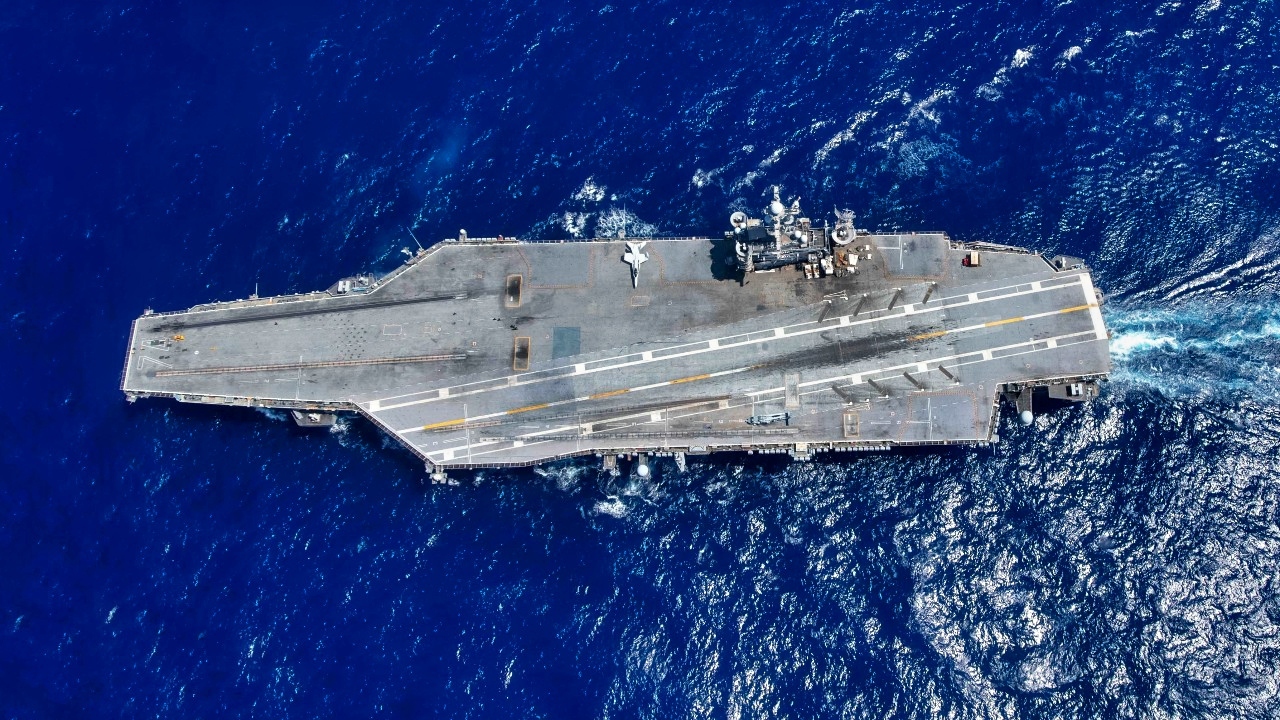
The United States is positioned to resume its military strikes against Iran, having spent weeks reinforcing its military presence in the Middle East even as Tehran insists that Washington withdraw its forces from the region.
The Pentagon is deploying a third aircraft carrier strike group and additional Marine Corps forces to the region, adding as many as 10,000 new personnel. U.S. forces have also been replenishing ammunition supplies, and additional air defenses have been moved into position. Those operations come as the U.S. military continues its operation to keep commercial shipping moving through the Strait of Hormuz, even as Iran stepped up its attacks — including the more frequent deployment of limpet mines — against ships moving through the Strait of Hormuz.
Reports also revealed that the operation is costing Washington heavily, too — an estimated $2-3 billion every month. U.S. forces have also escorted more than 3,000 commercial vessels through the waterway over the last six months, but continued Iranian attacks are putting considerable pressure on American resources and raising the price of moving oil out of the Persian Gulf.
Another military campaign would be far from ideal for Washington, as the Navy already struggles to manage its extended deployments.
Gulf States Prepare for Retaliation
America’s allies in the Gulf are preparing for the likelihood that the U.S. and Israeli campaign will resume, despite efforts to prevent it. On Monday, The Wall Street Journal reported that regional governments are conducting security drills and advising people to avoid public events. Some schools have also been moved online.
Recent reports also note growing concerns that Iran may be considering strikes against desalination plants and communications networks, not just energy infrastructure sites. Bahrain, which hosts the U.S. Navy’s Fifth Fleet, is considered particularly vulnerable to a new round of strikes.
If Trump proceeds with his plans, it could plunge America’s Gulf region partners into severe economic distress and trigger major security consequences, even if they do not participate directly in the next campaign.
About the Author: Jack Buckby
Jack Buckby is a British researcher and analyst specializing in defense and national security, based in New York. His work focuses on military capability, procurement, and strategic competition, and he produces and edits analysis for policy and defense audiences. He brings extensive editorial experience, with a career output spanning over 1,000 articles at National Security Journal, and has previously authored books and papers on extremism and deradicalization.


