

Iran has claimed that two tankers, including a supertanker, were damaged after hitting mines in the Strait of Hormuz.
Separate alerts from British authorities reported projectile attacks by unidentified attackers.
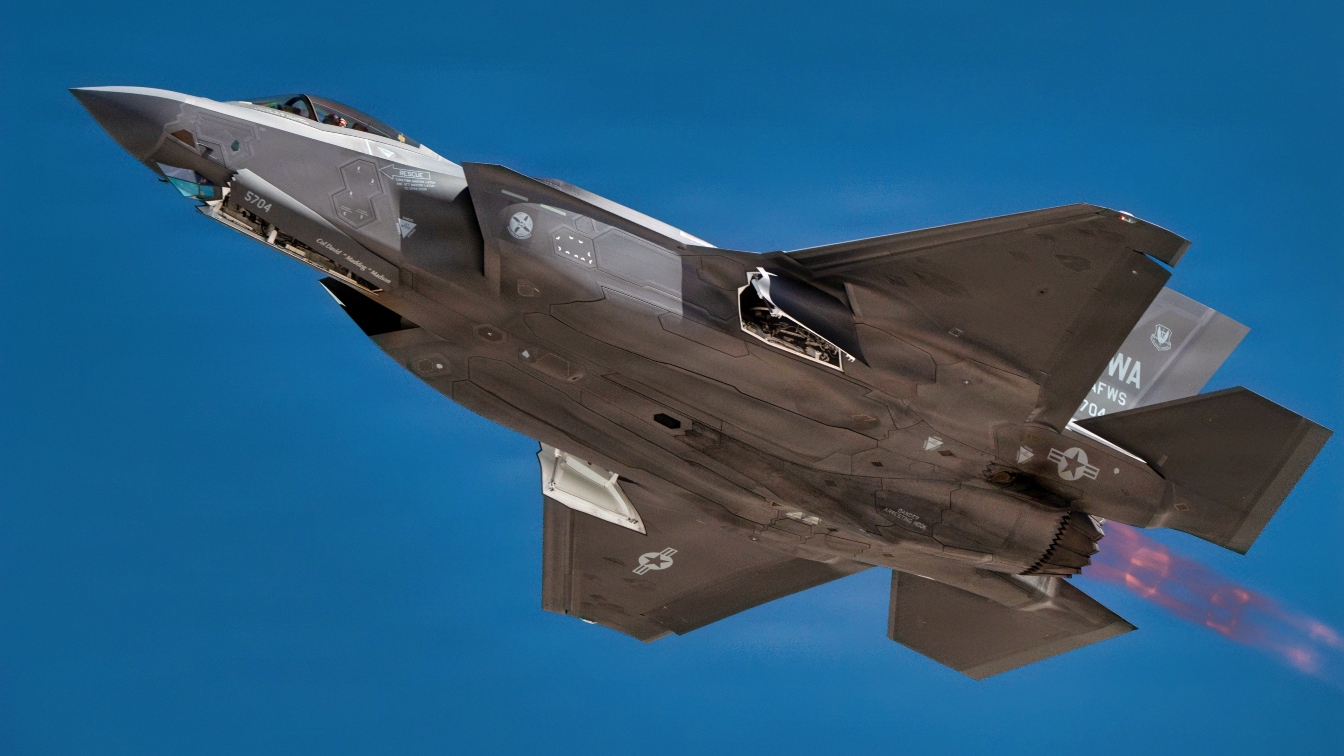
A U.S. Air Force F-22 Raptor aircraft assigned to the 433rd Weapons Squadron takes off during the U.S. Air Force Weapons School Integration at Nellis Air Force Base, Nevada, June 9, 2026. WSINT is a graduate-level training event that integrates multi-domain assets in large-force scenarios, enabling U.S. Air Force and joint service members to refine tactical expertise and employ advanced capabilities in a dynamic threat environment. (U.S. Air Force photo by Airman 1st Class Bella Swarr)
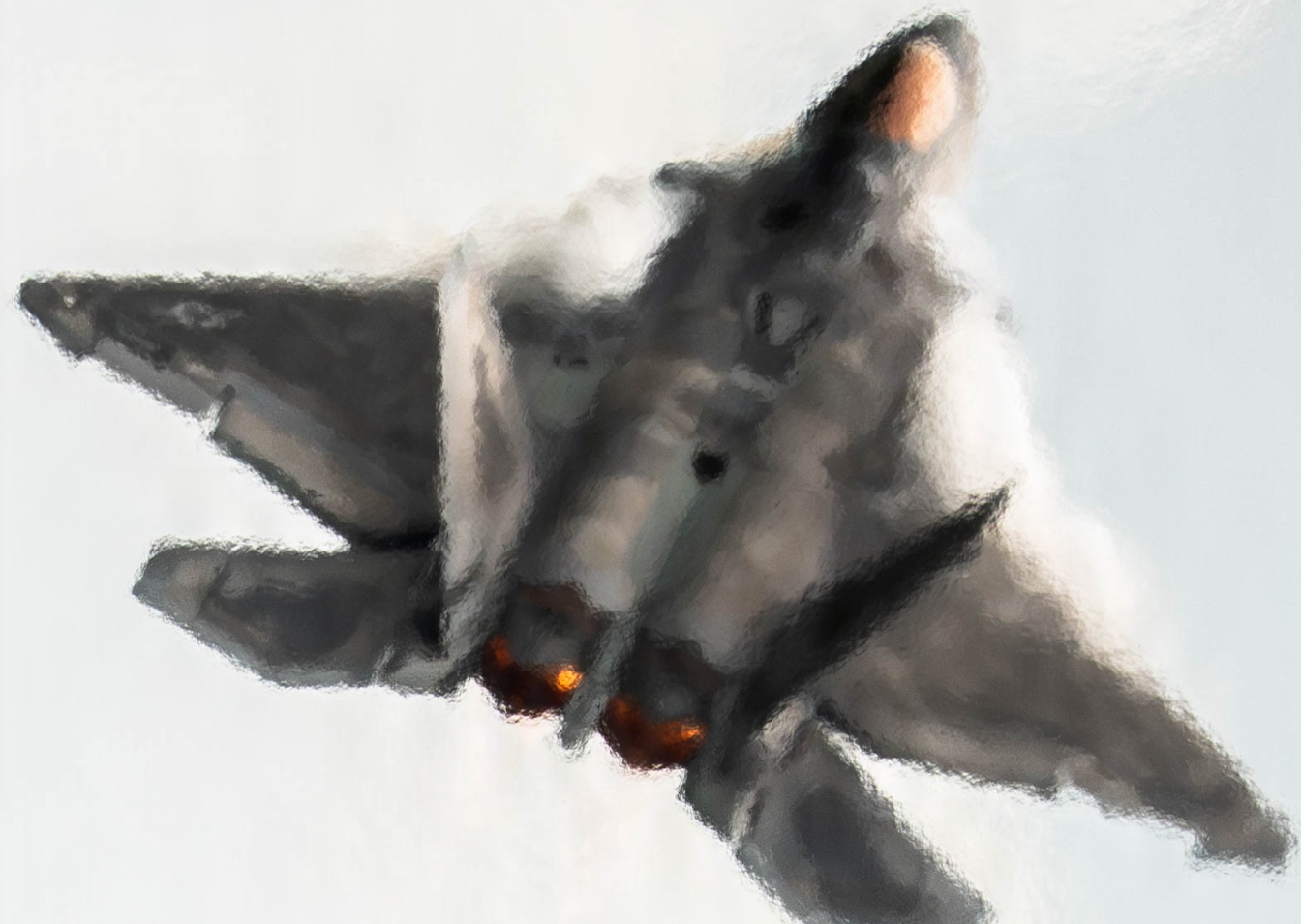
U.S. Air Force Capt. Nick “Laz” Le Tourneau, pilot and commander of the F-22 Raptor Aerial Demonstration Team, performs an aerial demonstration during the Spirit of St. Louis Air Show and STEM Expo in Chesterfield, Missouri, June 7, 2026. Aerial demonstrations are conducted to showcase the capabilities of the F-22 and provide the public an opportunity to observe Air Force operations, gaining a better understanding of its mission. (U.S. Air Force photo by Staff Sgt. Mary Bowers)
These reports come amid speculation that the U.S. and Israel could resume strikes on Tehran’s nuclear facilities after Tuesday’s midterm elections.
Iran: Struck Supertanker On Fire
The Islamic Revolutionary Guard Corps (IRGC) Navy alleged that the tankers had switched off their navigation and identification systems and taken “an unauthorized route in the Strait.”
The IRGC, which arms and trains terror proxies including Hamas and Hezbollah, is listed as a terrorist group by Washington and the European Union.
“One of the vessels is a supertanker; it is currently engulfed in flames following a powerful explosion,” The Jerusalem Post quoted the spokesperson as saying.
He said both vessels tried to pass through the strait with U.S. military support. This claim was not mentioned in the maritime alerts.
The IRGC failed to name the vessels or provide casualty information. It was unclear whether the tankers were the same vessels involved in the reported projectile attacks.
UKMTO Reports Several Strikes at Sea
Two incidents were reported.
In the first, the United Kingdom Maritime Trade Operations (UKMTO) said in an alert on Monday that two unidentified projectiles struck a tanker on its port side, 72 nautical miles east of Ras al-Khafji, Saudi Arabia, as it traveled southeast through the Gulf.
“All crew is accounted for, and there is no reported environmental impact at this time,” it said.
A second alert said a merchant vessel’s captain had relayed a mayday call from another vessel struck by an unidentified projectile inside the Strait of Hormuz on Sunday.
Neither alert identified the attackers, and the UKMTO has continued to advise that all vessels in the region “transit with caution.”
Qatari Gas Carrier ‘Hit But Safe’
The Qatar Gas Transport Company, Nakilat, separately confirmed that its liquefied natural gas carrier Al Mayeda was hit by unidentified projectiles while traveling through the Gulf on Friday evening, October 30.
The company said no crew members were injured, and there was no environmental impact.
“The vessel is in a safe condition, operational, and the impact of the incident is being assessed,” it said.
Qatar’s Foreign Ministry condemned the attack on Sunday, calling it “a dangerous act that threatens the safety of maritime navigation and the security of global energy supplies.”
The ministry said it has launched investigations into the incident and those responsible. It also warned of possible harm to the marine environment and regional water security if such attacks continued.
Iranian negotiators left Doha on Sunday, and a draft proposal was being circulated, an official briefed on the talks told Reuters.
A follow-up meeting was floated, and one official told the wire service that the departure was not due to difficulties in the negotiations.
Iranian Foreign Ministry spokesperson Esmaeil Baghaei said reopening or securing Hormuz depended on ending the U.S. naval blockade and meeting Tehran’s demands.
“Our demands have been articulated very clearly and transparently,” he said.
According to the Iranian regime’s Foreign Minister, Abbas Araghchi, discussions are ongoing over a “two-day proposal”. This would involve reopening the strait 48 hours after a deal was struck. Over the weekend, he claimed the discussions were “ongoing and progressing,” but no deal had been reached.
Washington Could Renew Strikes
The International Energy Agency notes that an average of 20 million barrels of crude oil and petroleum products passed through the Strait of Hormuz daily in 2025, accounting for around a quarter of the world’s oil traded by sea.
Routing those supplies over other maritime and land routes is possible, but has proved costly and cumbersome.
China and India received 44% of crude oil exports through the strait between them in 2025. Almost 20% of global LNG trade also passed through the strait that year.
These continued diplomatic efforts come ahead of Tuesday’s U.S. midterm elections.
President Donald Trump said on Sunday: “Either they’ll make a deal, or we’ll just end it.”
Secretary of State Marco Rubio also said over the weekend that Trump “hasn’t made a decision” about further military action, but added that Washington “would prefer to do it peacefully.”
As it stands, it is unclear exactly how, or who, might achieve what they “prefer” in this complex geopolitical scenario.
About the Author: Georgia Gilholy
Georgia Gilholy is a journalist based in the United Kingdom who has been published in Newsweek, The Times of Israel, and the Spectator. Gilholy writes about international politics, culture, and education.


