

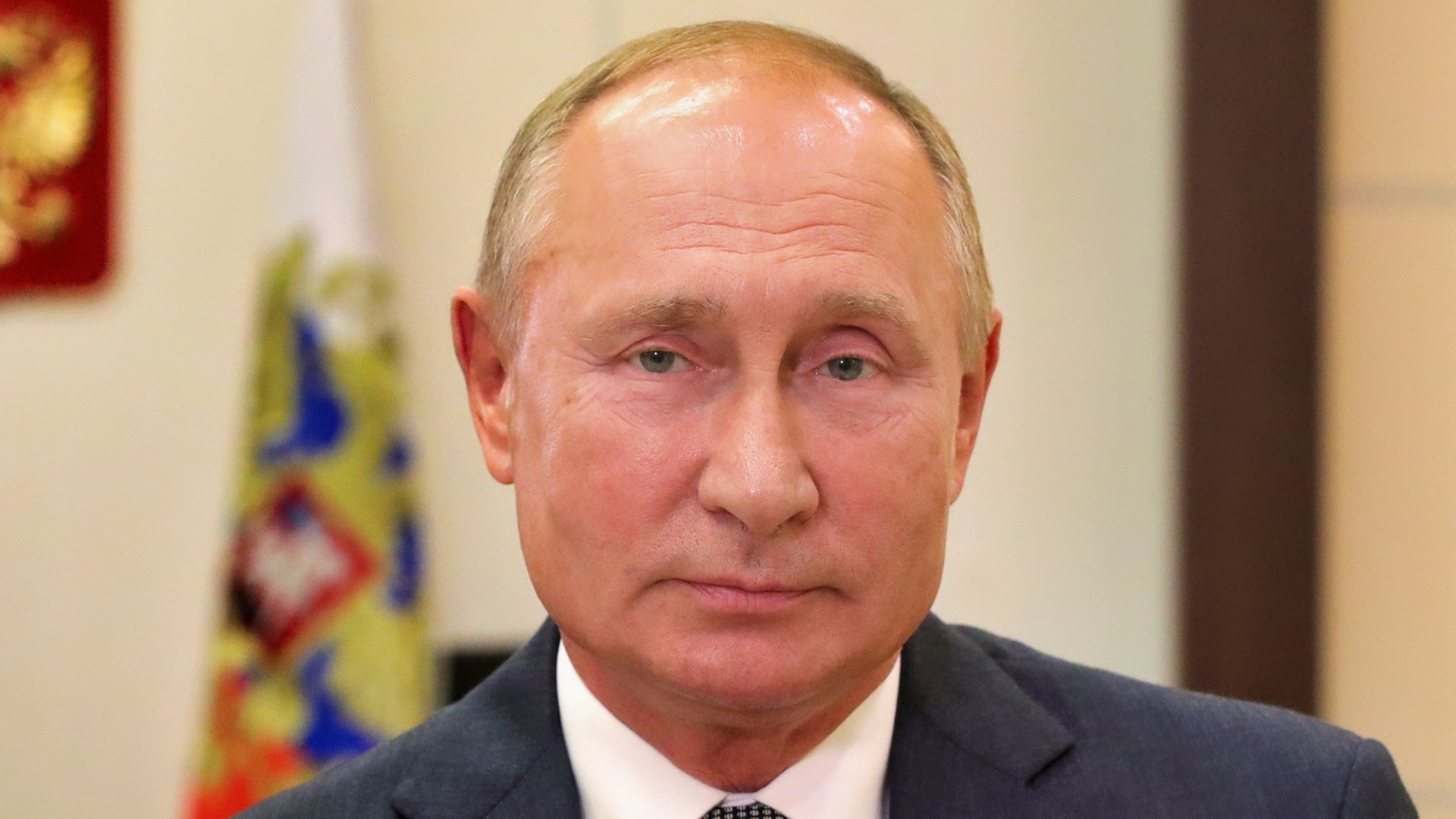
Moscow knows exactly when Washington isn’t looking. Or is just completely ignoring what it is doing to Ukraine. While Americans are finishing up at the polls on Tuesday to decide control of Congress, Russia launched one of its heaviest combined air assaults of the fall against Ukraine’s power grid.
President Volodymyr Zelenskyy said Russian forces fired 289 attack drones, 17 ballistic missiles, and 59 cruise missiles at Ukraine overnight, according to the Kyiv Post.
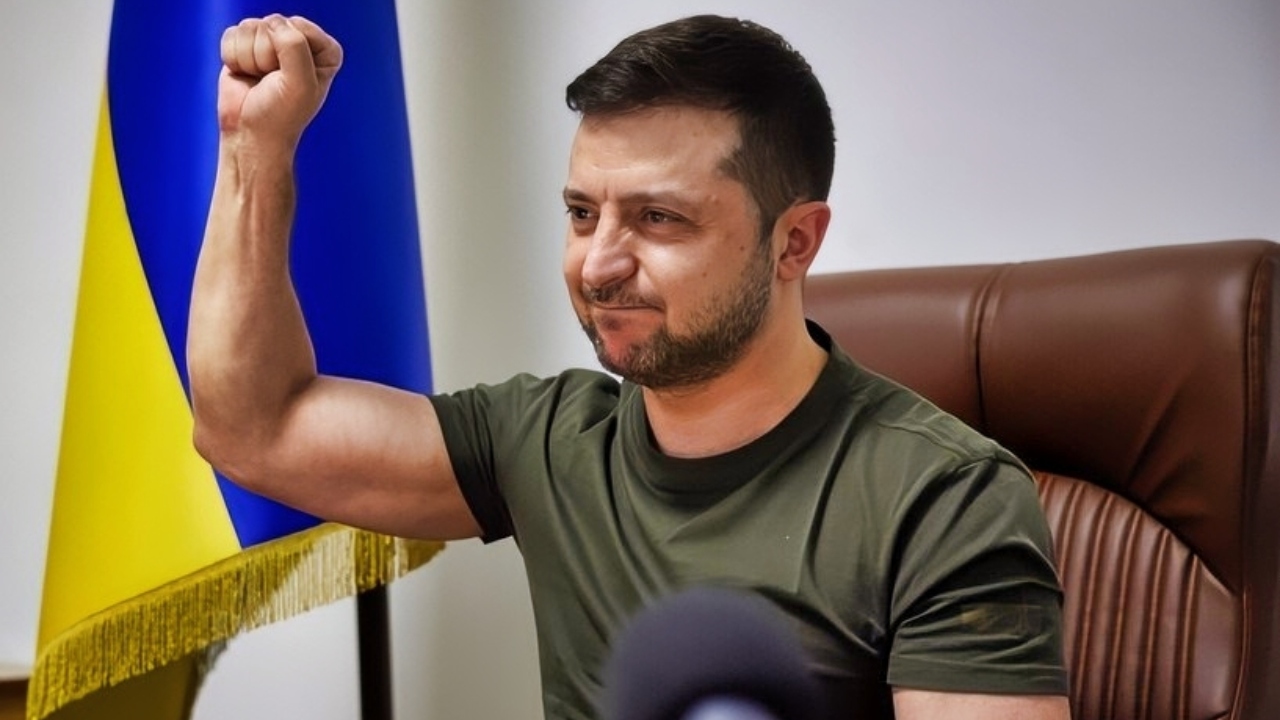
Zelensky Speaking in UK Ukraine Government Photo

Ukraine President Zelensky 2026 Creative Commons Photo
That’s 76 missiles and nearly 300 drones in a single night, with power generation facilities and substations as the primary targets.
Zelenskyy didn’t bother hiding his read on the timing.
He said Moscow likely figured the strikes would slip by unnoticed with Americans focused on the midterm elections. Speaking to Reuters, he put it bluntly, saying such terror “must be noticed and stopped.”
He’s right.
And he saw it coming.
And anyone in Washington who says otherwise hasn’t been paying attention for four and a half years.
The Grid Was The Target
This wasn’t a scattershot raid. The Kyiv Post’s overnight breakdown shows a deliberate, layered strike package.
By late evening on Nov. 2, three Tu-160 bombers had lifted off from the Ukrainka airbase in Russia’s Amur region.
At least six Tu-95MS bombers later launched from Olenya in Murmansk.
By 2 a.m., four Tu-160s and nine Tu-95MS aircraft were reportedly airborne.
Around 3 a.m., the ballistic missiles started falling on the Dnipropetrovsk and Vinnytsia regions, Kharkiv, and Zmiiv. Kh-101 and Kh-55SM cruise missiles followed, along with jet-powered Shahed-type drones.
That’s a classic sequence.
Ballistic missiles stress the air defense network; cruise missiles and drones finish the job while defenders reload and reposition.
The damage map tells the rest.
Zelenskyy listed hits in the Odesa, Cherkasy, Zhytomyr, Vinnytsia, Kharkiv, Dnipropetrovsk, Chernivtsi, Chernihiv, and Rivne regions.
National grid operator Ukrenergo ordered emergency power cuts in Kyiv, the Kyiv region, and Dnipropetrovsk.
In Dnipro, a thermal power plant in the Samarskyi district took a hit.
In the Vinnytsia region, most settlements lost electricity outright.
Then came the gut punch for Ukraine’s private power sector. DTEK, the country’s largest private generator, said three of its five thermal power plants were knocked offline. Three out of five. In November.
Moscow’s Justification Rings Hollow
Russia’s Defense Ministry claimed its troops struck electricity facilities that power military factories and the Ukrainian army.
Say what you will about that claim.
That’s beside the point.
In Kharkiv, a Russian strike hit a city clinical hospital and injured 73 people, damaging the cardiology ward where patients were being treated.
More than 1,000 windows blew out across the facility and surrounding apartment buildings.
A cardiology ward doesn’t power a tank or a drone factory.
The night before, Russian airstrikes hit Komyshuvakha in the Zaporizhzhia region, striking a school where humanitarian aid was being handed out and a shelter where civilians were staying.
By Zelenskyy’s latest count, 31 people are dead, with others still trapped under the rubble.
Rescue crews are working only when conditions allow, because the area remains under threat of follow-up strikes.
A follow-up strike on a site where rescuers and survivors gather is no accident.
It’s a choice.
The Russians have made it repeatedly.
Zelenskyy Saw It Coming
In Kyiv, none of this surprised anyone.
On Nov. 2, Zelensky warned in his evening address that Ukrainian intelligence had uncovered Russian preparations for another massive strike on energy and logistics infrastructure, likely timed to exploit the world’s attention on the US vote.
In a post on X, he also urged Washington to target Russia’s oil and gas revenues.
The warning didn’t stop anything.
Knowing an attack is coming and having enough interceptors to stop it are two very different problems.
Ukraine has the first one solved.
The second one keeps getting worse.
The Refinery Pause Nobody Reciprocated
Here’s what should bother people in Washington. According to a Wall Street Journal report cited by the Kyiv Post, Kyiv paused its long-range drone strikes on Russian refineries in mid-October under US pressure, with fuel prices a sensitive issue heading into the midterms.
Ukraine reportedly asked for one of two things in return.
Russia would stop hitting Ukrainian energy, or Washington would send more Patriot interceptors.
Not surprisingly, neither has happened.
Reuters notes that President Trump announced in September and October that both sides had agreed to halt energy strikes, though neither Moscow nor Kyiv confirmed it.
However, the bombardment of Ukraine’s grid never let up.
And on the same night as Tuesday’s barrage, Russian officials said Ukrainian drones set a refinery in Yaroslavl on fire.
Whatever was left of that arrangement looks finished.
All of this lands a week before US-brokered peace talks are due to resume in Abu Dhabi.
What Moscow Is Actually Saying
The timing of these strikes was the message.
Russia has hit Ukraine’s grid every year of this war, and those attacks get worse as winter approaches. Striking on election day was Moscow telling Washington that the energy-truce talk means nothing to it, and that Ukraine’s air defenses are the pressure point it intends to keep squeezing.
Washington eased sanctions on Russian oil for a few tankers full of diesel.
And Russia repaid it. By aiding Iranian missile targeting of US and Saudi infrastructure in the Middle East. But President Trump keeps blaming Zelenskyy, which makes no sense.
Zelenskyy’s request was simple.
Help Ukraine defend its skies, or Russia will keep launching missiles.
That’s not a diplomatic flourish.
It’s an inventory problem.
On Friday, the State Department approved the sale of 500 Patriot air interceptors to Ukraine, which is more symbolic than tangible.
Why?
Ukraine, Military Times noted, will “likely not receive the missile interceptors quickly. Weapons sales typically take years to fulfill, and two people briefed on the U.S. decision said the missiles — which are yet to be manufactured — are not expected to be delivered until a couple of years into the 2030s.”
Every Patriot interceptor fired at a Kh-101 is one that isn’t there for the next wave, and the Russians know precisely how many waves they have left to send before the hard freeze.
Russia bet that nobody in Washington would be looking on Tuesday.
We’ll find out soon enough whether it was right.
Or the administration could just be continuing to ignore what Putin and Moscow have been doing for years.
About the Author: Steve Balestrieri
Steve Balestrieri is a National Security Columnist. He served as a US Army Special Forces NCO and Warrant Officer. In addition to writing on defense, he covers the NFL for PatsFans.com and is a member of the Pro Football Writers of America (PFWA). His work was regularly featured in many military publications.


