

What really drove the midterm election wave on Tuesday that put Democrats in control of both houses of Congress?
According to a CNBC post-election poll, the economy was the main reason.

Social Security Check. Image Credit: Creative Commons.

Social Security Check. Image Credit: Creative Commons.
The poll supports the conventional wisdom many pundits shared after Tuesday’s result: Trump swept back into office, promising an improved economy while also vowing to combat inflation.
After nearly two years back in office, Trump has not delivered that result, especially on the cost of living.
In fact, many voters blame specific actions taken by the president, whether it’s the Iran War that has led to higher gas prices or his tariffs that have caused numerous goods to go up in price, for their economic conditions.
Even a healthy stock market, economic growth, or low unemployment has not overcome the cost-of-living issue, similar to the major political problems that befell the Biden-Harris Administration and brought Trump back into office.
What Voters Care About
According to the CNBC Voter Poll, when voters were asked about their most important issue in the midterm elections, 39 percent answered “the economy,” while 32 percent said “the state of democracy.” Immigration came in third at 14 percent, followed by health care with 8 percent, foreign policy with 4 percent, and crime at 3 percent.
Furthermore, CNBC reported that nine out of ten voters said the cost of living was “a crucial or major factor in their vote for Congress,” with ten percent calling it a minor factor and just 1 percent “not a factor.” In addition, three out of four respondents rated the economy as “poor” or “not so good,” while only 2 percent called it “excellent.”
And as a bookend to Trump asking on the campaign trail two years ago whether voters were better off than they were four years earlier, the CNBC poll found that “Fewer than one out of every five voters said their family’s financial standing was better than it was two years ago.” That was a clear recipe for historic losses for the president’s party in the midterm elections.
Per CNBC, 64 percent of voters said that Trump’s tariff policies hurt the economy in their era, while only 14 percent said they helped. On Trump’s overall economic policies, 65 percent of CNBC’s survey respondents said they worsened economic conditions, 27 percent said they improved them, and 8 percent said they had no effect.
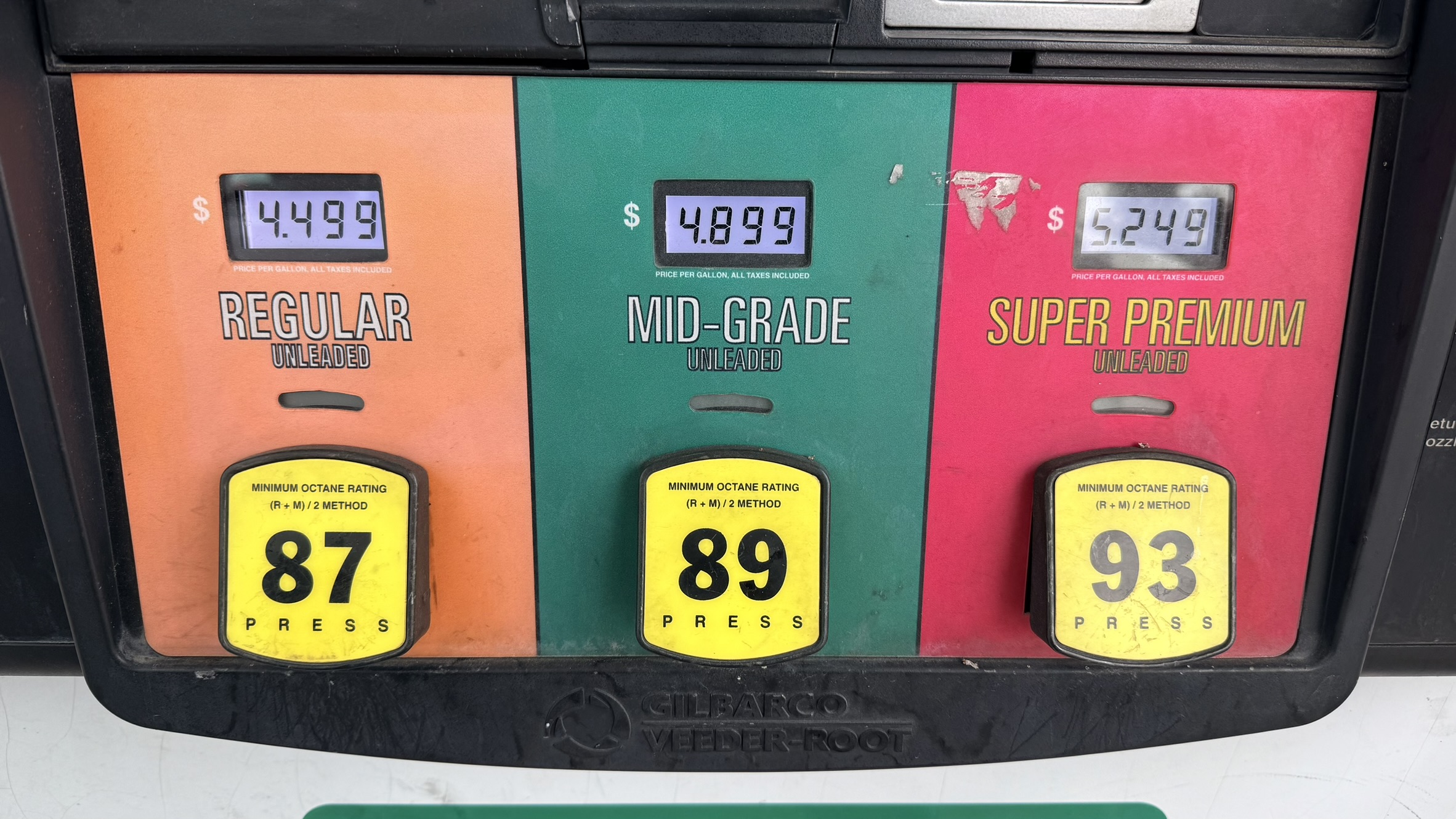
Gas Prices on May 9 outside of Orlando, Florida. Image Credit: Harry J. Kazianis for National Security Journal.
And when it came to the parties, when asked which one they favor on the economy, 43 percent answered the Democrats, 37 percent the Republicans, and 19 percent said neither.
Experts Agree
“It was all about the economy,” Mark Zandi, chief economist at Moody’s Analytics, told CNBC after the election results came in. “Most Americans are struggling with the high inflation and have been for quite some time, and they’re just angry.
Zandi pointed to data showing that the average American household has spent an additional $1,300 on gas and other energy products since the Iran War began in January.
“America sent a very clear message,” Patrick De Haan, head of petroleum analysis at GasBuddy, told CNBC about the gas price factor, which Americans who drive have clearly noticed. “Going into an election with prices that on Election Day have never been higher is something that garners a lot of frustration from consumers.”
Iran Matters, Too
CNBC’s poll also found that voters had soured on the Iran War, which affected how they voted.
According to CNBC, “nearly three out of every four people said the war was a crucial or major factor in their vote for Congress.” Vice President JD Vance appeared to agree in his lengthy post-election manifesto that he posted to X, calling Iran the main reason why the GOP lost in the midterms. (“The reason we lost is the war,” Vance wrote.)
Marc Thiessen, a hawkish columnist for The Washington Post, in a Friday column called Vance’s statement about Iran a “stunning act of disloyalty” in a Friday column and blamed Vance for “incorrectly” advising Trump to make the “memorandum of understanding” deal in June, rather than decisively ending the war. Thiessen went on to declare that if Vance cannot back the war more fully, he “has no business seeking the GOP nomination” for president, and that Trump should not consider endorsing him.
About the Author: Stephen Silver
Stephen Silver is an award-winning journalist, essayist, and film critic, and contributor to the Philadelphia Inquirer, the Jewish Telegraphic Agency, Broad Street Review, and Splice Today. The co-founder of the Philadelphia Film Critics Circle, Stephen lives in suburban Philadelphia with his wife and two sons. For over a decade, Stephen has authored thousands of articles that focus on politics, national security, technology, and the economy. Follow him on X (formerly Twitter) at @StephenSilver, and subscribe to his Substack newsletter.


