

Before his 2024 election victory, Donald Trump promised to end the inflation seen under then-President Joe Biden. Many experts believe inflation was a core reason so many Americans changed their tune during the Biden presidency.
“When I win, I will immediately bring prices down,” Trump reiterated on the campaign trail.

President Joe Biden delivers remarks regarding unifying the nation after the attempted assassination of former President Trump, Sunday, July 14, 2024, in the Oval Office. (Official White House Photo by Adam Schultz)

President Joe Biden speaks at the NAACP Convention, Tuesday, July 16, 2024, at the Mandalay Bay Resort and Casino in Las Vegas, Nevada. (Official White House Photo by Adam Schultz)
At its peak, inflation hit 9.1% in June 2022. By the time Biden left office, two and a half years later, inflation was at 3%.
Yet, with a week to go until the midterm elections, Trump’s campaign pledges have not come to fruition, and voters look set to punish the Republican Party when they cast their ballots on Tuesday, November 3.
Inflationary Pressures
For sure, Trump’s administration has not seen the major inflationary peaks of his predecessor. Inflation did not rise above 3% throughout 2025 and fell to 2.4% in February this year.
However, it is no coincidence that inflation has risen since U.S. military operations began against Iran.—the inflation rate shot up to 4.2% by May, then fell to around 3.5%.
Elections can be decided by voter appetite at the time they are held, and with inflation rising again in September to 3.7%, the electorate is feeling the economic strain.
Gasoline Costs
Gasoline drove much of September’s inflation, with pump prices jumping 9.1% in a single month. According to the Bureau of Labor Statistics, it accounted for more than half of the overall monthly rise in consumer prices, with the Bureau of Labor Statistics reporting a 0.6% increase driven purely of higher gas prices.
The broader energy index rose by a total of 5.2%.
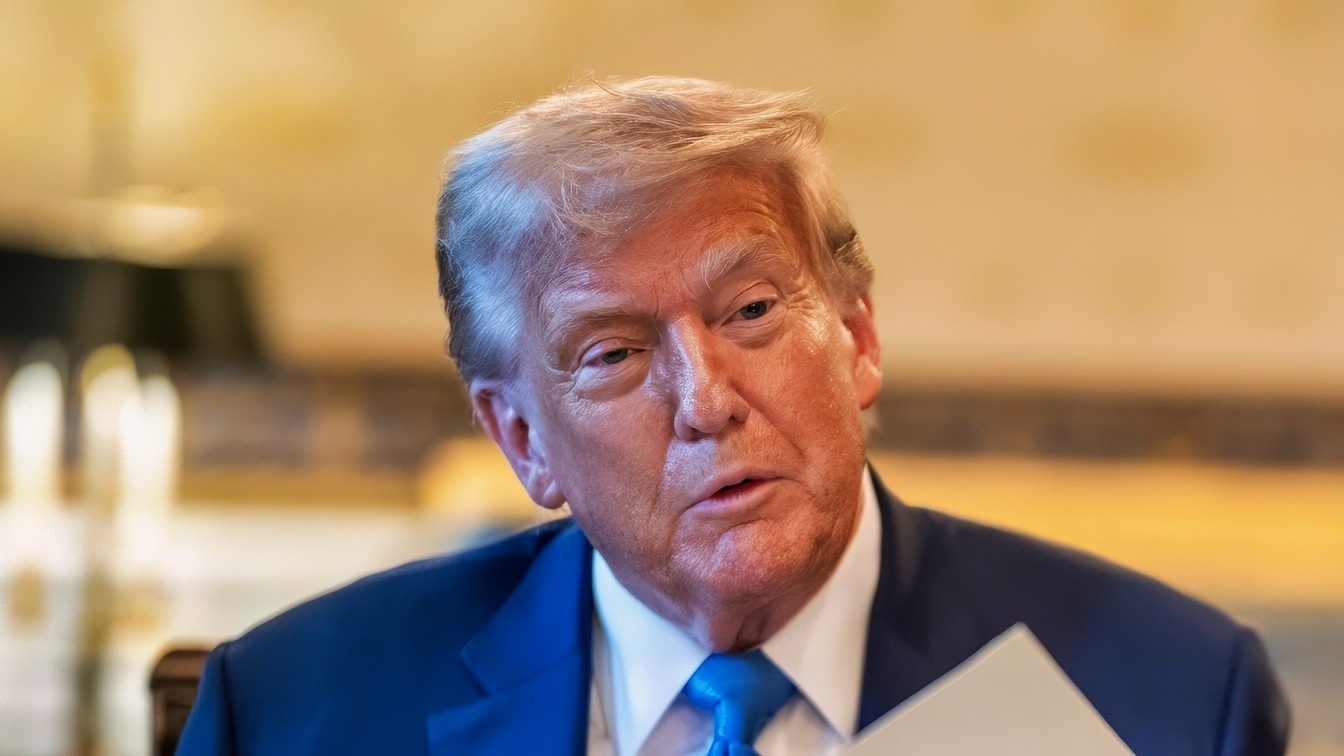
President Donald Trump hosts a bilateral dinner for Israeli Prime Minister Benjamin Netanyahu, Monday, July 7, 2025, in the Blue Room. (Official White House Photo by Daniel Torok)
Although oil exports returned to pre-war levels at the end of September, Iran has continued to attack vessels that it deems to be breaching its regulations over transit through the Strait of Hormuz.
Despite U.S. insistence that the strait is safe and open for passage, shipowners remain anxious over risking their vessels and crew amid ongoing Iranian strikes.
There is also the consideration of rising insurance costs and freight rates, which have fed into the additional cost of gasoline even while oil flows are returning to normal.
Troublesome for Trump
Rising gasoline prices are one of the few measures of inflation that consumers can see for themselves, with a comparatively higher fuel bill showing the rising cost of gasoline every time a driver fills up at the gas station.
Before the Iran war began, the average price of gasoline in the United States was $2.78 per gallon. Since then, it has shot up as high as $4.50 per gallon, with the average price of gasoline not falling below $3.78 since March.
Even those who don’t rely on an automobile notice the impact of Trump’s foreign policy decisions on their disposable income.
Much like gasoline, diesel prices have soared over the past year.
It’s an unavoidable commodity, given its importance in the production and transport of food. When prices rise, sellers pass them on to consumers.
Arguably, inflation is tolerable when wages grow accordingly.
A workforce is better off when its salary increases more than inflation, and worse off when it doesn’t.
Since the conflict began, American workers have seen their paychecks stretch less far than before.
In February this year, workers were earning an inflation-adjusted average of $38.28 per hour.
As of September, that average dropped to $37.81 per hour — equivalent to a loss of $18.80 per week, and nearly $1,000 across the year when adjusted for inflation.
Economies and Elections
Affordability is set to be the deciding factor for around half of the country’s voters, according to a recent Reuters/Ipsos poll.
That’s an issue for a GOP battling to hold on to its slim congressional majority, with a recent Washington Post/ABC News/Ipsos poll finding that almost half of the country feels financially worse off since Trump returned to office — the highest such figure of any comparable poll since 1986.
“Our nation is doing better now than ever before,” Trump has claimed on the campaign trail, describing “affordability” as a term that’s “a con job by the Democrats” that “doesn’t mean anything to anybody.”
However, with more Americans struggling financially, Trump’s rhetoric resonates with a minority, rather than the majority required for the Republican Party to win the midterms next week. Even if Trump believes the American economy is performing well, the polls suggest voters disagree.
About the Author: Shay Bottomley
Shay Bottomley is a British journalist. He has written for the Western Standard, Business Insider, Maidenhead Advertiser, Slough Express, Windsor Express, Berkshire Live and Southend Echo.